The Gut-Brain Diet: A 7-Day Eating Plan for Mental Wellbeing
A practical 7-day gut-brain eating plan built around four evidence-based food categories: fermented foods daily, prebiotic-rich vegetables 3–5 times per week, polyphenol-rich foods daily, and oily fish 2–3 times per week.…

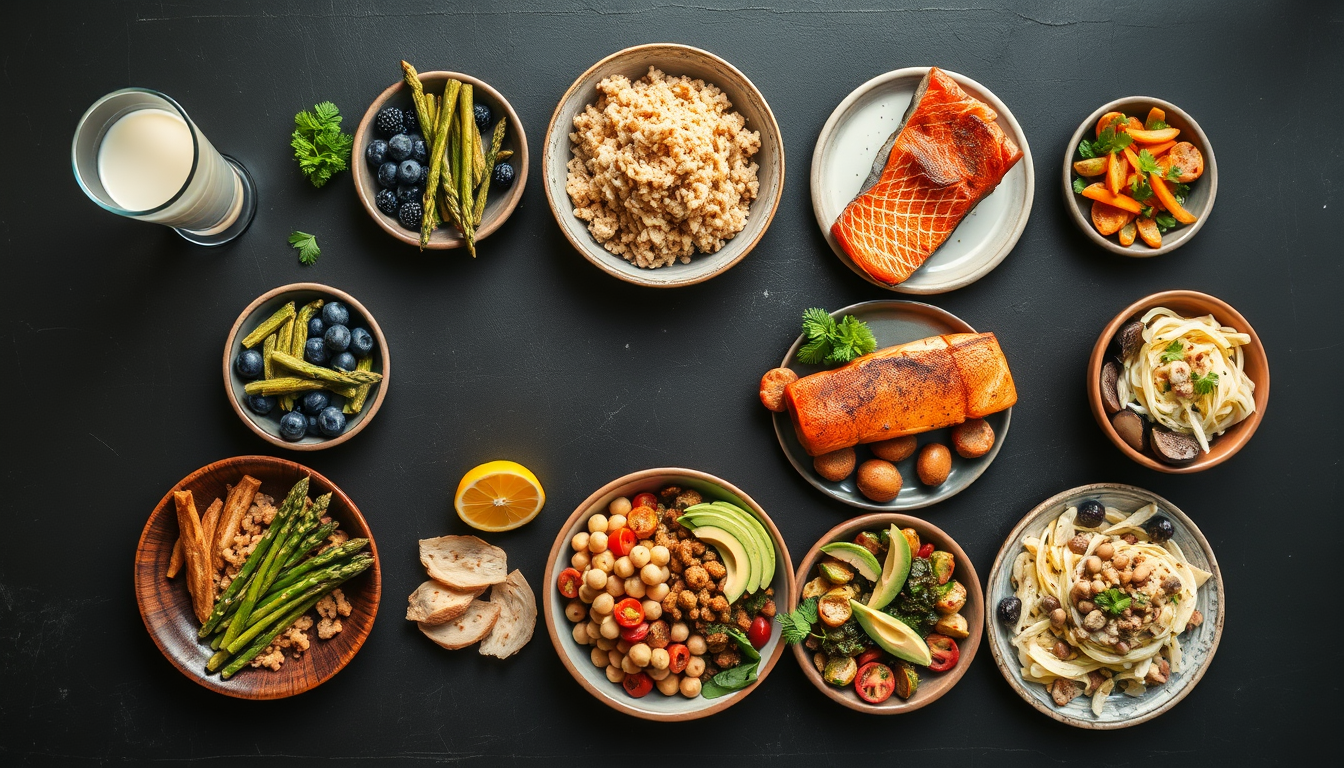
A gut-brain diet for mental wellbeing targets four evidence-based food categories: fermented foods (delivering live microorganisms that increase microbial diversity and reduce neuroinflammation), prebiotic vegetables (feeding SCFA-producing bacteria linked to GABA production and cortisol regulation), polyphenol-rich foods (acting as selective prebiotics and direct anti-inflammatory agents), and omega-3 fatty acids (reducing neuroinflammation and supporting gut barrier integrity). A practical 7-day framework built on these categories targets 30+ different plant foods per week — the single most evidence-supported dietary intervention for microbiome diversity and downstream mood outcomes.
Diet is the most accessible intervention for the gut-brain axis — but the gap between general advice ("eat more fermented foods") and practical implementation is real. What does a week of gut-brain eating actually look like? This plan is built directly from the clinical evidence on which food categories have the strongest mechanisms and outcomes for microbiome-driven mood support. It is not a calorie-restricted diet. It is a diversity-and-category framework.
The four food categories driving this plan are: fermented foods, prebiotic-rich vegetables, polyphenol-rich foods, and omega-3 fatty acids. Each targets a distinct gut-brain axis mechanism. For the full science behind why these categories matter, see Best Foods for Gut Health and Mental Wellbeing.
The Framework: What You Are Building Toward
Before the day-by-day plan, the structural targets:
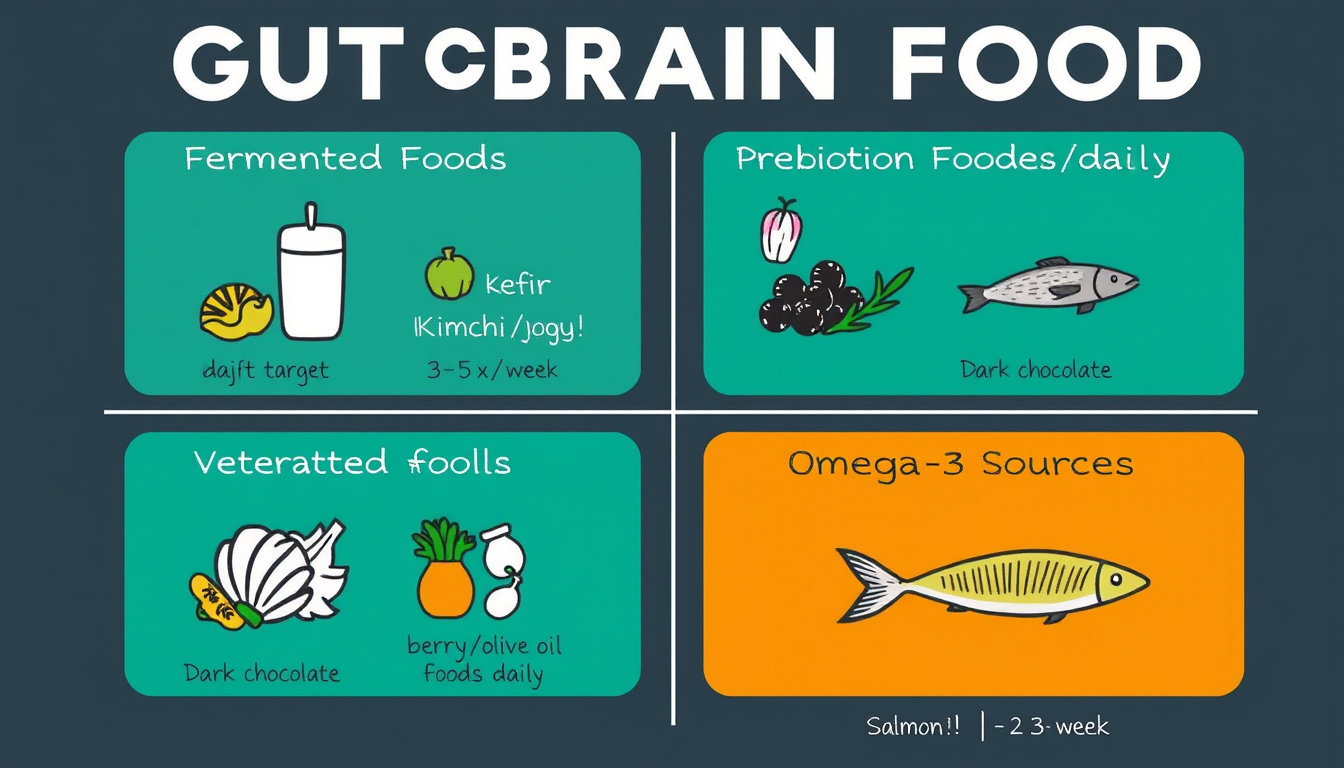
Fermented foods: daily. Aim for at least one serving per day — a portion of kefir, live-culture yoghurt, kimchi, sauerkraut, miso, or kombucha. These deliver live microorganisms that directly increase microbial diversity and reduce inflammatory cytokines. The 2021 Wastyk et al. RCT in Cell Host & Microbe showed that sustained high-fermented-food intake over 17 weeks reduced 19 inflammatory proteins — including IL-6 — more effectively than a high-fibre diet.
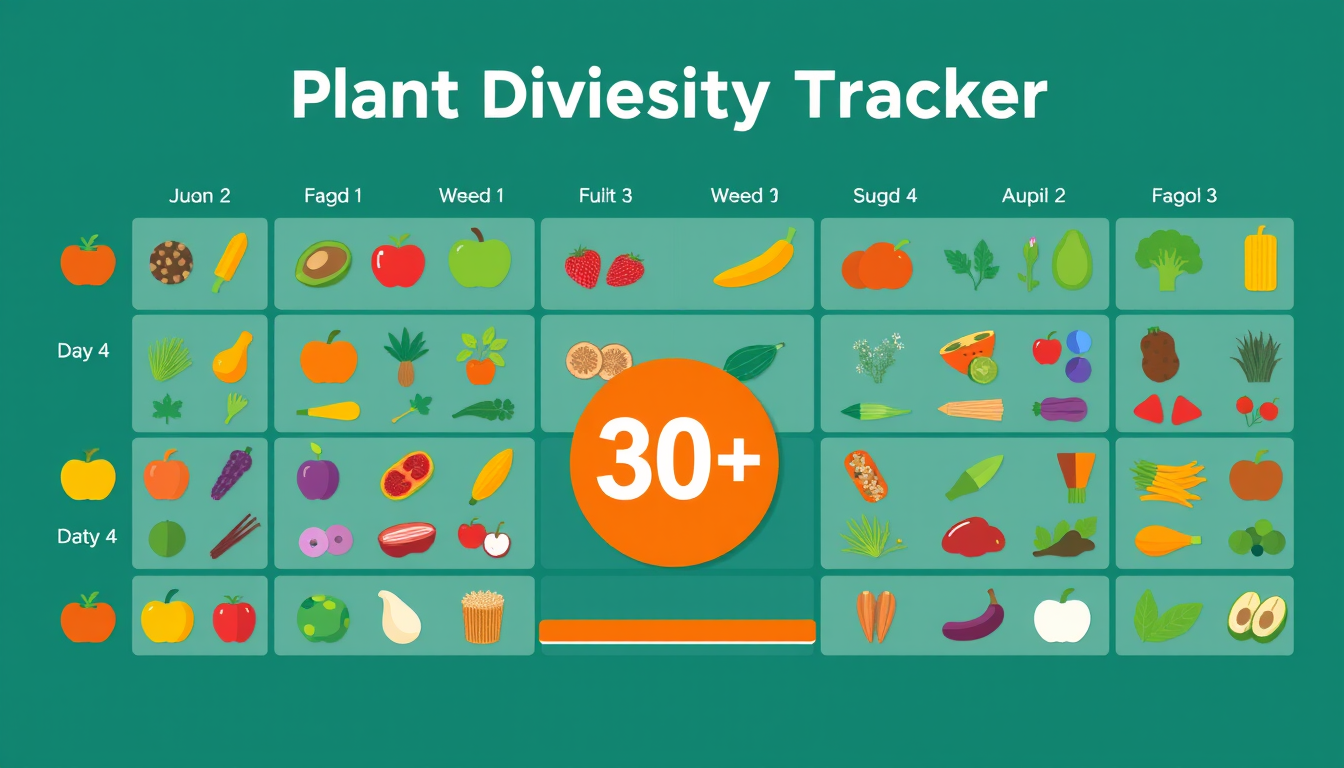
30+ different plant foods per week. Counting distinct plant species (vegetables, fruits, legumes, grains, nuts, seeds, herbs, spices all count) across the week. This diversity target, from the American Gut Project, predicts microbiome diversity more reliably than any single superfood or volume of intake.
Prebiotic-rich vegetables: 3–5 times per week. Jerusalem artichokes, garlic, onions, leeks, asparagus, chicory, and cooked-then-cooled potatoes are the highest-inulin sources. These feed Bifidobacterium and Faecalibacterium prausnitzii — the species most associated with butyrate production and reduced neuroinflammation.
Omega-3 rich oily fish: 2–3 times per week. Salmon, mackerel, sardines, or herring. EPA supplementation at ≥1g/day produced antidepressant effects comparable to medication in populations with elevated baseline inflammation (Molecular Psychiatry meta-analysis, 2022).
Dark berries and polyphenol foods: daily. Blueberries, blackberries, extra-virgin olive oil, dark chocolate (70%+), green tea. These act as selective prebiotics and reduce LPS-driven neuroinflammation.
Day-by-Day Plan
Day 1 — Monday: Foundation Day
Breakfast: Plain kefir (150ml) with blueberries, oats, and a tablespoon of ground flaxseed. (Fermented + polyphenol + prebiotic fibre + omega-3 ALA)
Lunch: Lentil soup with garlic, onion, and leek base, served with sourdough. Side of sauerkraut. (Prebiotic + fermented + legume diversity)
Dinner: Baked salmon fillet with roasted asparagus, cherry tomatoes, and olive oil drizzle. (Omega-3 + prebiotic + polyphenol)
Snack: Small square of dark chocolate (70%+) and a green tea. (Polyphenol double)
Plant foods today: oats, blueberries, flaxseed, lentils, garlic, onion, leek, asparagus, cherry tomatoes. Running plant total: 9
Day 2 — Tuesday: Fermented Foods Focus
Breakfast: Live-culture yoghurt with mixed seeds (pumpkin, sunflower, sesame), sliced banana, and cinnamon. (Fermented + diverse seeds + prebiotic banana)
Lunch: Kimchi fried rice with egg, spring onions, edamame, and sesame oil. (Fermented + diverse plant bases)
Dinner: Mackerel with roasted sweet potato, wilted spinach, and tahini dressing. (Omega-3 + diverse veg + sesame)
Snack: Apple with almond butter. (Polyphenol fruit + nut)
New plant foods: yoghurt cultures, mixed seeds, banana, cinnamon, spring onion, edamame, sweet potato, spinach, tahini/sesame, apple, almond. Running total: 20
Day 3 — Wednesday: Prebiotic Power
Breakfast: Overnight oats with chia seeds, raspberries, and a spoon of live-culture yoghurt. (Fermented + prebiotic oat + polyphenol berry + omega-3 chia)
Lunch: Jerusalem artichoke and leek soup, topped with a dollop of crème fraîche and fresh parsley. Sourdough rye bread. (Highest-inulin prebiotic day)
Dinner: Chicken thighs with roasted chicory, olives, cherry tomatoes, and extra-virgin olive oil. (Prebiotic chicory + polyphenol EVOO + Mediterranean base)
Snack: Kefir smoothie with frozen mango and ginger. (Fermented + new plant species)
New plant foods: chia seeds, raspberries, Jerusalem artichoke, parsley, rye, chicory, olives, mango, ginger. Running total: 29
Day 4 — Thursday: Omega-3 and Polyphenol Day
Breakfast: Smoked mackerel on sourdough with cucumber, lemon, and capers. Green tea. (Omega-3 + polyphenol tea)
Lunch: Large mixed salad — rocket, beetroot, walnuts, pomegranate seeds, feta, olive oil and balsamic dressing. (Diverse polyphenols + nuts)
Dinner: Sardines on wholegrain pasta with garlic, cherry tomatoes, spinach, and chilli. (Omega-3 + prebiotic garlic + diverse veg)
Snack: A small bowl of mixed berries (blueberries, blackberries, strawberries) with dark chocolate shavings. (Polyphenol peak)
New plant foods: cucumber, capers, rocket, beetroot, walnuts, pomegranate, feta (minor), wholegrain pasta wheat, chilli, blackberries, strawberries. Running total: 40 ✓ 30-plant target met by Day 4.
Day 5 — Friday: Gut Diversity Day
Breakfast: Miso soup with silken tofu, seaweed, and spring onion. Boiled egg on rye crackers. (Fermented miso + diverse micronutrients)
Lunch: Buddha bowl — brown rice, roasted chickpeas, avocado, red cabbage slaw, edamame, tahini, lemon dressing. (Maximum diversity in one bowl)
Dinner: Herring fillets with cooked-then-cooled potato salad (resistant starch), dill, and mustard dressing. (Omega-3 + resistant starch prebiotic)
Snack: Kefir with sliced kiwi. (Fermented + vitamin C)
New plant foods: miso/soy, seaweed, tofu, chickpeas, avocado, red cabbage, brown rice, dill, mustard seed, kiwi. Running total: 50+
Day 6 — Saturday: Mediterranean Day
Breakfast: Greek yoghurt with honey, walnuts, and sliced figs. (Fermented + polyphenol + prebiotic)
Lunch: Grilled aubergine, courgette, and red pepper with hummus, olives, and warm pitta. (Mediterranean plant diversity)
Dinner: Salmon with lemon, capers, served with a warm quinoa salad with roasted red onion, sun-dried tomatoes, fresh basil, and pine nuts. (Omega-3 + diverse seeds + varied plants)
Snack: A square of dark chocolate with a handful of mixed nuts (Brazil, cashew, pecan). (Polyphenol + diverse nuts)
Day 7 — Sunday: Rest and Restore
Breakfast: Sourdough with avocado, kimchi, poached egg, and chilli flakes. (Fermented + prebiotic + omega-3 egg yolk)
Lunch: Leftover grain bowls or soup-based meal using remaining veg from the week — the goal is using varied ingredients. (Maximise remaining diversity)
Dinner: Slow-cooked bean stew (mixed beans, cannellini, kidney, black beans) with tomatoes, garlic, smoked paprika, and live-culture yoghurt swirled in at the end. (Maximum legume diversity + fermented)
Snack: Kombucha and dark chocolate.
Key Rules for the Week
Count plants, not portions. A small pinch of a herb counts. A new spice counts. The goal is breadth. Seven different vegetables in a stir-fry beats one vegetable repeated seven times.
Fermented food every day, not occasionally. The microbiome impact of fermented foods is dose-dependent. Daily exposure is more effective than intermittent large servings.
Cooked-then-cooled starches for resistant starch. Potatoes, rice, and pasta eaten cold or reheated after cooling contain significantly more resistant starch than when freshly cooked — substantially increasing their prebiotic value.
Extra-virgin olive oil as your primary cooking fat. EVOO's hydroxytyrosol and oleocanthal content makes it the most evidence-supported cooking fat for gut-brain health. Refined vegetable oils lack this polyphenol profile.
Reduce ultra-processed foods over this week, don't just add to them. The gains from fermented foods and prebiotics are partially offset if ultra-processed food intake remains high — emulsifiers in UPF directly damage the gut mucus layer and increase LPS translocation.
What to Expect
Digestive changes (increased transit, some bloating from fibre increase) typically begin in the first week — this is normal microbiome adaptation. Mood and energy improvements, when they occur, are generally noticeable by weeks 4–8 of sustained eating in this pattern. For timeline expectations, see How Long Does It Take to Improve Gut Health for Better Mood?.
For the full gut-brain axis science explaining why this dietary pattern works, see The Gut-Brain Axis: How Your Microbiome Controls Your Mood. For specific probiotic strains to consider alongside dietary change, see What Are the Best Probiotics for Mental Health?. For the complete Gut Health & Mental Wellbeing resource hub, see the Gut Health & Mental Wellbeing hub.
Frequently Asked Questions
Q: What is the best diet for gut health and mental wellbeing? The Mediterranean diet has the strongest evidence base for both gut health and mental health outcomes. A practical gut-brain framework adds a specific emphasis on fermented foods (daily), high-inulin prebiotic vegetables (3–5 times per week), and targeting 30+ different plant foods per week — the diversity metric most predictive of microbiome richness in large human studies.
Q: How many plant foods should I eat per week? The American Gut Project found that consuming 30+ different plant species per week was the threshold at which microbiome diversity significantly increased, regardless of dietary pattern (vegan, omnivore, etc.). Counting distinct plant species across all food categories — vegetables, fruits, legumes, whole grains, nuts, seeds, herbs, and spices — is the most actionable framework.
Q: Is kefir or yoghurt better for gut-brain health? Kefir typically contains up to 61 different microbial species compared to 2–5 in most commercial yoghurts, making it the more potent fermented dairy option for microbial diversity. However, live-culture yoghurt with named bacterial strains is meaningfully beneficial and more accessible. The evidence for both is positive; kefir has a slight edge in the clinical trial data for inflammatory marker reduction and anxiety scores.