Body Types Explained: Your Biggest Questions Answered
Learn what the 3 body types really mean, how they affect fitness, and how to train and eat for your ectomorph, mesomorph, or endomorph body type.

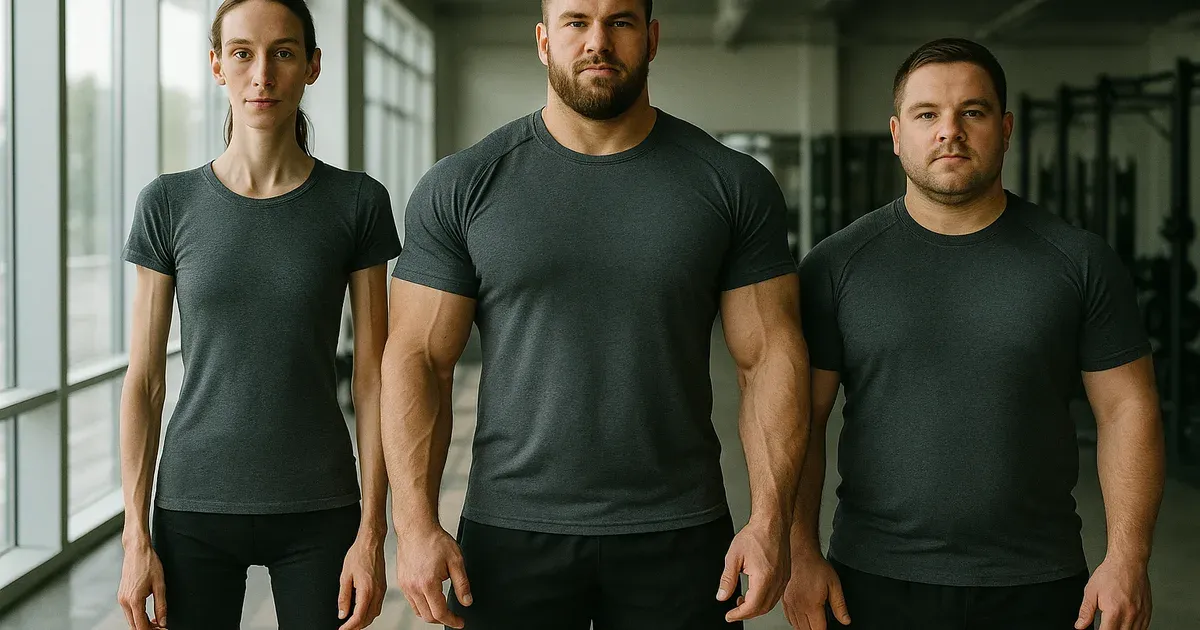
Figuring out why your body responds differently to diet and exercise than a friend's can feel genuinely baffling. The concept of body types — formally called somatotypes — offers a science-backed framework for understanding your natural tendencies. Knowing whether you're an ectomorph, mesomorph, or endomorph doesn't lock you into a destiny, but it does give you a powerful starting point for customising your nutrition and training plan to work with your biology, not against it.
Jump to Your Question
What are the 3 main body types?
What is an ectomorph body type?
What is a mesomorph body type?
What is an endomorph body type?
What is the difference between ectomorph, mesomorph, and endomorph?
Can your body type change over time?
How does body type affect athletic performance?
How should you train and eat for your body type?
What are the 3 main body types?
The three main body types are the ectomorph, the mesomorph, and the endomorph. These categories were introduced in the 1940s by psychologist William Herbert Sheldon, who called them "somatotypes" — a classification system based on natural body structure and composition tendencies.
While some of Sheldon's original theories have been challenged or debunked, the core framework remains a useful lens. Contemporary research continues to find meaningful differences in how each body type responds to exercise and diet.
Most people are not a pure expression of one type. Many individuals sit somewhere on a spectrum, or display characteristics of two types — sometimes called a "combination somatotype."
What is an ectomorph body type?
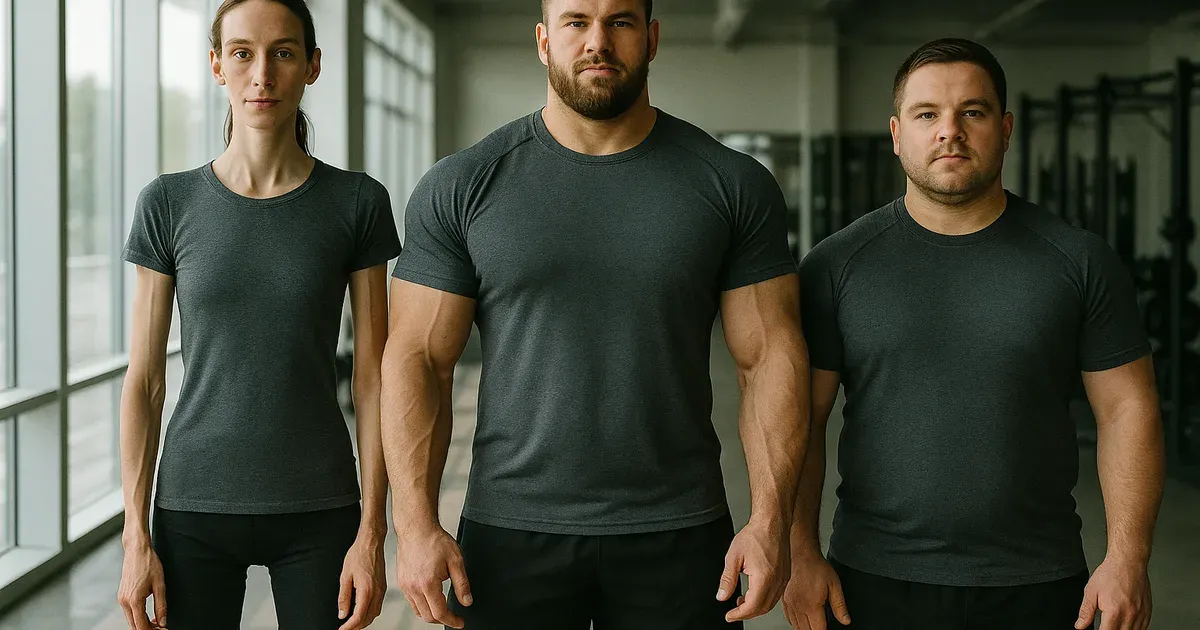
An ectomorph is someone who is naturally lean, has a fast metabolism, and finds it difficult to gain either muscle or body fat. The classic ectomorph has narrow shoulders and hips, long limbs, and small muscle bellies.
People sometimes call ectomorphs "hardgainers" because even with consistent training and large food intake, the scale barely moves. Even when an ectomorph does add weight, they may still appear leaner than they actually are — particularly in areas like the calves and forearms.
Being an ectomorph is not a disadvantage in every context. Ectomorphs can become remarkably strong and fit. The key challenge is consuming enough calories and protein consistently to support muscle growth.
Typical ectomorph characteristics:
- Naturally thin build
- Narrow shoulders and hips
- Fast metabolism
- Long limbs, small muscle bellies
- Struggles to gain weight

What is a mesomorph body type?
A mesomorph has a naturally athletic, middle-of-the-road build — wide shoulders, a narrow waist, relatively thin joints, and round, well-defined muscle bellies. This somatotype is often described as having the best of both worlds.
Mesomorphs tend to gain muscle and lose fat with comparative ease. They also appear to "bounce back" from periods of inactivity more readily than the other two body types. However, this advantage is not a free pass — poor nutrition and inconsistent training will catch up with any body type over time.
If you identify as a mesomorph, your challenge is consistency and preventing complacency. Your body responds well to training, which means the returns on a structured programme can be significant.
Typical mesomorph characteristics:
- Wide shoulders, narrow waist
- Naturally muscular appearance
- Responds quickly to training
- Relatively thin joints
- Medium to fast metabolism
What is an endomorph body type?
An endomorph tends to have a wider, stockier build with a heavier bone structure, wider hips, a thicker ribcage, and a slower metabolism. Endomorphs gain weight more easily than the other body types and often find fat loss more challenging.
One frequently overlooked advantage of this body type is that endomorphs often carry more muscle mass than ectomorphs or mesomorphs. That additional muscle can be a genuine asset in strength-based sports and activities.
The main obstacle for endomorphs is that gaining muscle without simultaneously adding body fat can require very deliberate nutrition and training strategies. It is harder, but it is absolutely achievable.
Typical endomorph characteristics:
- Wider, squarer torso
- Heavier bone structure
- Slower metabolism
- Wider waist and larger hips
- Tendency to store fat easily

What is the difference between ectomorph, mesomorph, and endomorph?
The three body types differ primarily in metabolism speed, natural muscle mass, fat storage tendencies, and skeletal structure. Understanding these differences at a glance can help you quickly identify where you fit.
| Feature | Ectomorph | Mesomorph | Endomorph |
|---|---|---|---|
| Build | Slim, lean | Athletic, muscular | Wider, stockier |
| Metabolism | Fast | Moderate–fast | Slower |
| Fat gain | Difficult | Moderate | Easy |
| Muscle gain | Difficult | Easy | Moderate |
| Bone structure | Small, narrow | Medium | Larger, wider |
| Main challenge | Gaining weight | Maintaining consistency | Losing fat |
No single body type is inherently superior. Each comes with distinct advantages and challenges depending on your fitness or performance goals.
Can your body type change over time?
Yes — research shows that both diet and training can meaningfully influence your somatotype over time. You are not permanently locked into the body type you start with.
Your somatotype describes your natural tendencies, not a fixed biological ceiling. Consistent resistance training, smart nutrition, and lifestyle habits can shift your body's composition and even some of its structural characteristics over months and years.
This is important context: the somatotype framework is a starting point, not a sentence. An endomorph who trains consistently and eats well can achieve a leaner, more muscular physique. An ectomorph who commits to a caloric surplus and progressive overload can build substantial muscle mass over time.

How does body type affect athletic performance?
Body type has measurable implications for athletic performance, including both strength output and aerobic capacity. This is not just anecdotal — peer-reviewed research supports the connection.
A 2018 study published in PLoS One found that mesomorph men outperformed ectomorphs on squat and bench press tests. The researchers concluded that body type could predict up to a third of an individual's strength potential — a meaningful figure.
On the cardiovascular side, a 2005 study in the British Journal of Sports Medicine found that combination mesomorph-ectomorph individuals showed the greatest capacity to improve aerobic fitness through training. This suggests that different body types may be naturally primed for different athletic disciplines.
Key performance takeaways by body type:
- Ectomorphs — often suited to endurance sports and activities requiring a low body weight
- Mesomorphs — tend to excel across both strength and cardio disciplines
- Endomorphs — may have an edge in strength sports due to greater muscle mass
How should you train and eat for your body type?
Training and nutrition strategies that align with your natural body type will produce faster, more sustainable results than a generic approach. Each somatotype has a different metabolic baseline and responds differently to calories and exercise stimulus.
For ectomorphs, the priority is eating in a consistent caloric surplus — often significantly larger than feels comfortable. Resistance training focused on compound lifts (squat, deadlift, bench press) helps stimulate maximum muscle growth. Excessive cardio can work against muscle-building goals.
For mesomorphs, a balanced approach combining resistance training and moderate cardio tends to work well. Nutrition should be dialled in to match specific goals — whether that is adding muscle or maintaining leanness — because the natural advantage can breed complacency.
For endomorphs, a nutrition strategy that manages caloric intake carefully is essential, with an emphasis on protein and fibre to support satiety. Resistance training is especially valuable because building muscle raises resting metabolism over time, making fat management progressively easier.
Bottom LineThe three body types — ectomorph, mesomorph, and endomorph — describe natural tendencies in metabolism, muscle gain, and fat storage.No body type is superior; each has genuine strengths and specific challenges to manage.Body type is not fixed — consistent training and smart nutrition can shift your somatotype over time.Research confirms that somatotype influences both strength performance and aerobic capacity.The best fitness plan is one tailored to your body type, not copied from someone with a different one.