Can Gut Bacteria Cause Anxiety?
Yes — gut bacterial dysbiosis directly contributes to anxiety via GABA depletion, glutamate excess, HPA axis dysregulation, and LPS-driven neuroinflammation. Human cohort studies and animal models consistently support this bidirectional causal relationship.

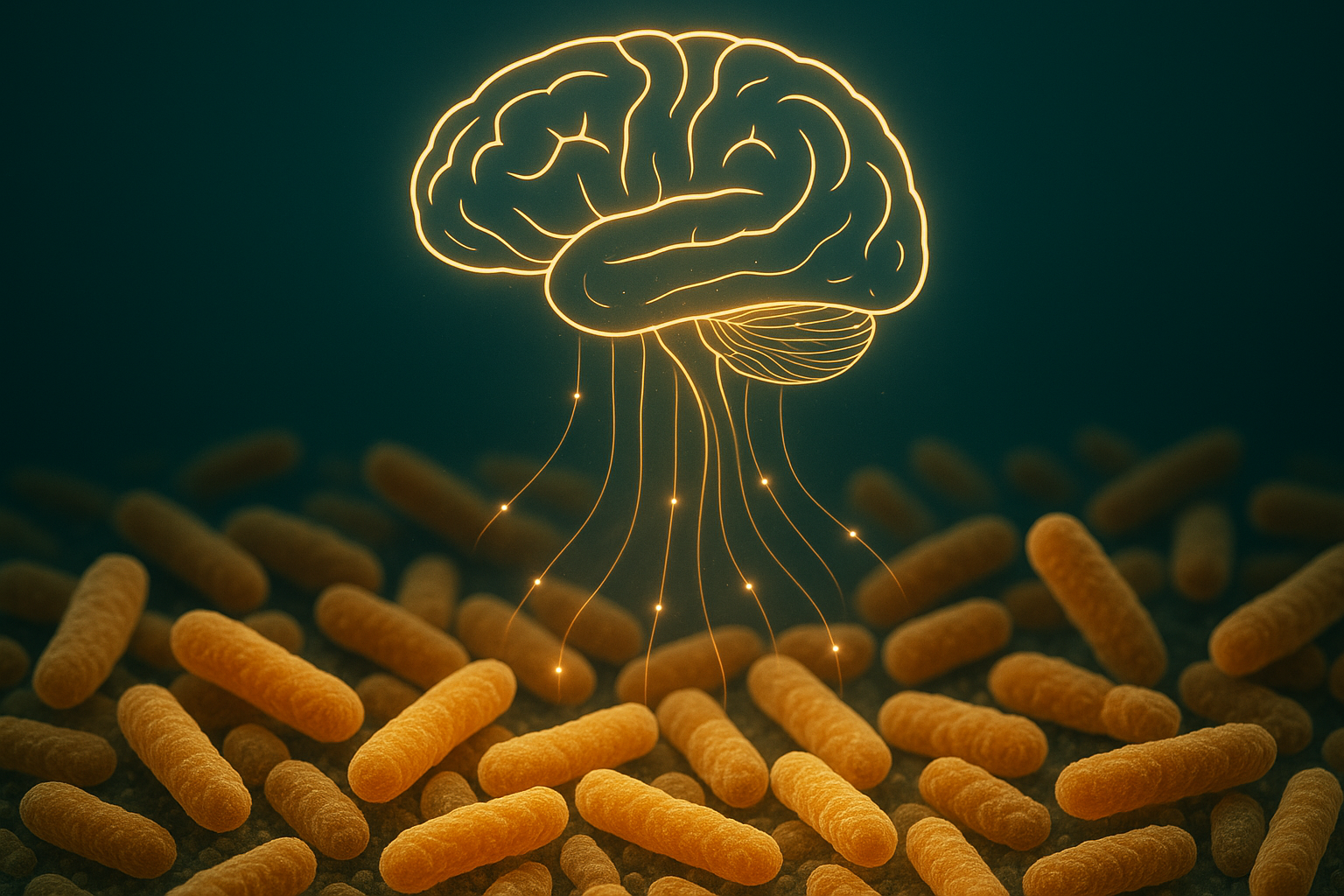
Yes — gut bacterial dysbiosis can contribute to anxiety through direct physiological mechanisms: depletion of GABA-producing *Lactobacillus* species, elevated glutamate from proteobacteria overgrowth, impaired HPA axis calibration resulting in exaggerated cortisol responses, and neuroinflammation driven by increased gut permeability and LPS translocation. Human cohort studies and animal models consistently support this causal relationship, with the effect operating bidirectionally via the gut-brain axis.
Yes — gut bacteria can contribute to anxiety through multiple direct physiological mechanisms. This is not a metaphor or a correlation: the microorganisms living in your gastrointestinal tract produce neuroactive compounds, regulate the brain's primary inhibitory neurotransmitter, and calibrate the stress response system. When the microbial balance is disrupted, these regulatory functions fail in ways that measurably increase anxiety-like physiology and behaviour.
The Short Answer
Gut bacteria influence anxiety by controlling GABA production, regulating cortisol sensitivity, and managing the neuroinflammatory signals that reach the brain. When beneficial species are depleted — a state called dysbiosis — these protective functions are impaired, creating a biological environment that predisposes the nervous system toward heightened threat detection and anxiety.
Research from PNAS (2011) showed that mice fed Lactobacillus rhamnosus JB-1 showed dramatically reduced anxiety behaviour and altered GABA receptor expression in the brain. When the vagus nerve was severed, these effects disappeared — directly implicating the gut-brain axis rather than systemic circulation.
The Science Behind It
GABA depletion. Lactobacillus and Bifidobacterium species produce GABA — the brain's primary inhibitory neurotransmitter — in the gut and signal its production centrally via the vagus nerve. Lower populations of these bacteria, as seen in dysbiosis, reduce GABAergic tone and increase anxiety vulnerability.
Glutamate excess. In dysbiotic states, proteobacteria overgrowth increases gut-derived glutamate (the brain's primary excitatory neurotransmitter). Elevated glutamate in the amygdala — the brain's threat-detection centre — is a core feature of anxiety neurobiology.
HPA axis dysregulation. Germ-free animal studies show that mice with no gut microbiome release two to three times the cortisol of normally colonised mice in response to mild stressors. Human studies confirm that lower microbial diversity correlates with higher cortisol awakening response and greater stress reactivity (Psychoneuroendocrinology, 2020).
Neuroinflammation via LPS. When gut barrier permeability increases, bacterial lipopolysaccharides (LPS) enter systemic circulation and trigger neuroinflammatory cytokines (IL-6, TNF-alpha) that activate the brain's threat-response circuitry. Elevated plasma LPS has been documented in patients with anxiety disorders.
What This Means For You
Gut bacteria are one contributing factor to anxiety — alongside genetics, life experience, sleep, and other variables. However, microbiome-targeted interventions (dietary change, targeted probiotics) have demonstrated anxiety-reducing effects in RCTs, suggesting that addressing gut health is a meaningful and actionable component of anxiety management.
Microbiome-targeted interventions — including specific probiotic strains such as Lactobacillus rhamnosus JB-1 and Bifidobacterium longum — have demonstrated anxiety-reducing effects in clinical trials. For the full science of how gut and anxiety interact bidirectionally, see Gut Health and Anxiety: What the Science Really Says and the comprehensive Gut-Brain Axis Guide. For the complete Gut Health & Mental Wellbeing resource hub, visit the Gut Health & Mental Wellbeing topic page.
Related Questions
Can anxiety damage gut bacteria? Yes — anxiety activates the sympathetic nervous system, which reduces digestive blood flow, alters motility, increases gut permeability, and suppresses Lactobacillus and Bifidobacterium populations. This creates a reinforcing cycle where anxiety worsens dysbiosis and dysbiosis amplifies anxiety signals.
How quickly can gut bacteria affect mood? Vagal signalling operates within milliseconds. Neurotransmitter changes following dietary intervention are typically measurable within 2–4 weeks. Sustained improvements in anxiety scores in clinical trials are generally seen after 6–12 weeks of consistent intervention.
Do all gut bacteria cause anxiety, or just specific ones? Not all bacteria are equal in their anxiety-related effects. Beneficial species (Lactobacillus rhamnosus, Bifidobacterium longum, Faecalibacterium prausnitzii) are associated with lower anxiety. Overgrowth of proteobacteria and depletion of these keystone species is the dysbiotic pattern most consistently linked to anxiety outcomes.