Cycle Syncing Workouts: Does the Science Add Up?
Cycle syncing workouts are trending, but experts say the science is thinner than social media suggests. Here's what the evidence actually shows.


You've probably seen it splashed across social media feeds — the promise that timing your workouts to your menstrual cycle will unlock better performance, faster recovery, and a body that finally works with you instead of against you. The idea is compelling, especially for anyone who has noticed that some days a run feels effortless while others feel like wading through concrete.
But experts are urging caution. Cycle syncing workouts are trending hard, yet the scientific evidence backing the approach is far thinner than the influencer content might suggest. Before you restructure your entire fitness routine around your cycle phases, here's what the research — and researchers — actually say.

What Is Cycle Syncing, Exactly?
The premise of cycle syncing is deceptively simple. Rather than following a fixed workout schedule throughout the month, you adjust the type, intensity, and volume of exercise to match whichever phase of your menstrual cycle you're currently in. The menstrual cycle is typically divided into four phases: menstrual, follicular, ovulatory, and luteal.
Proponents argue that shifting hormones during each phase create genuinely different physiological conditions — and that your workouts should reflect that. During the follicular phase, for example, rising estrogen is said to support higher-intensity training. During the luteal phase, when progesterone climbs, advocates suggest scaling back to yoga, walks, or light strength work.
The appeal is obvious. It frames what many women already experience — fluctuating energy levels, varying strength, and changing moods across the month — as something workable rather than something to push through or ignore. Hormones do fluctuate across the cycle, and that much is not in dispute.
What Experts Are Actually Saying
The critical question is whether those hormonal fluctuations are significant enough to meaningfully alter exercise performance — and whether a rigid, phase-based workout plan is the best response even if they do. Several sports scientists and gynecologists have raised serious concerns about the gap between the theory and the available data.
First, menstrual cycles vary enormously between individuals. A "typical" 28-day cycle with textbook-perfect hormonal shifts is far less common than wellness content implies. Cycle length, phase duration, and hormonal profiles differ substantially from person to person — and even from month to month for the same person.
Second, the research base for cycle syncing is genuinely limited. Many studies on hormones and exercise performance are small, use inconsistent methodologies, and have rarely been replicated at scale. The evidence that exists is intriguing but not yet conclusive enough to prescribe specific workout types for specific cycle phases across the board.

The Four Phases and What Cycle Syncing Prescribes
Understanding what cycle syncing actually recommends helps clarify both its logic and its limitations. Here is a breakdown of the four-phase framework commonly used:
1. Menstrual Phase (Days 1–5) Estrogen and progesterone are both low. Cycle syncing proponents recommend rest, gentle movement, or restorative yoga. The idea is to honour the body's natural low-energy state rather than fight it.
2. Follicular Phase (Days 6–13) Estrogen begins to rise. This is positioned as the ideal window for higher-intensity training — think strength work, HIIT, or longer cardio sessions. Energy and motivation are supposedly at their peak.
3. Ovulatory Phase (Days 14–16) Estrogen peaks and a surge of luteinising hormone triggers ovulation. Supporters suggest this is prime time for personal bests — high-intensity group classes, competitive exercise, or maximum-effort sessions.
4. Luteal Phase (Days 17–28) Progesterone rises and estrogen drops again. The recommendation here is to dial back intensity — prioritising moderate cardio, Pilates, or light strength training as the body prepares for menstruation.
The framework is internally coherent, but experts note that it assumes a level of hormonal predictability and physiological uniformity that simply doesn't exist across the population.
Where the Science Genuinely Does Support Listening to Your Body
There is real and well-established science suggesting that how women feel during different cycle phases is not imaginary. Fluctuating hormones can influence energy availability, perceived exertion, core temperature, and even injury risk — particularly to the ACL, which some research suggests may be more vulnerable around ovulation due to estrogen's effect on ligament laxity.
Research has also shown that some women experience significant reductions in strength, endurance, and motivation in the days before menstruation — a period sometimes called the late luteal phase. For these individuals, backing off high-intensity training may be genuinely beneficial rather than just culturally fashionable.
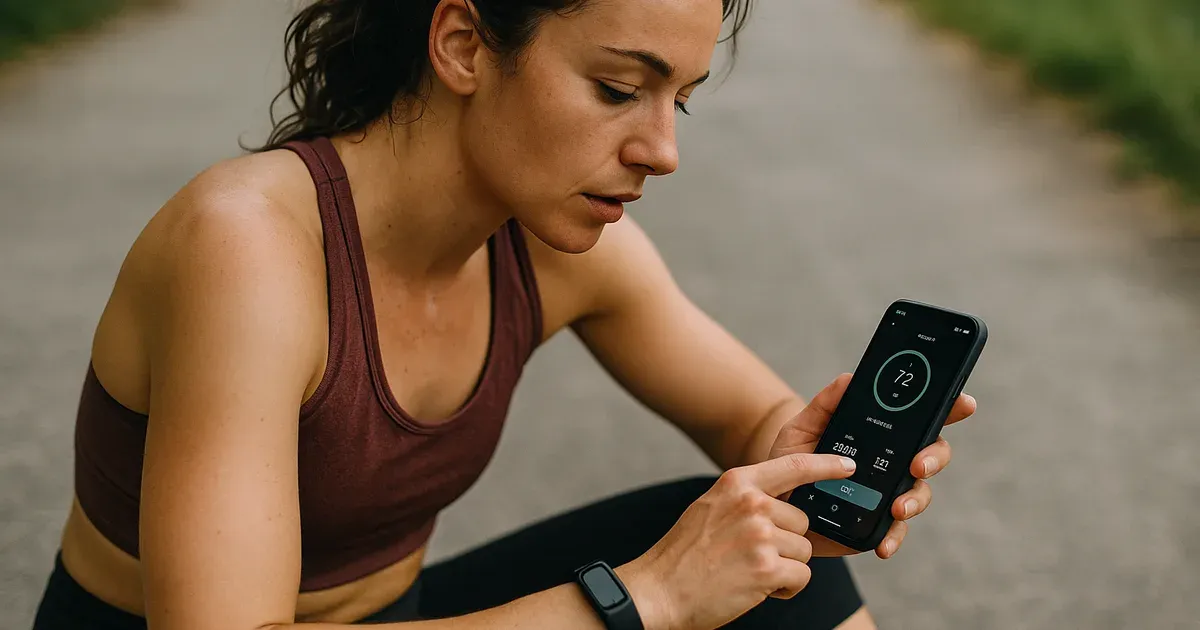
The distinction experts draw is between personalised self-awareness and prescriptive phase-based protocols. Tracking your own energy, strength, and recovery patterns across several months — and adjusting your training accordingly — is a practical and evidence-adjacent approach. Following a generic social media cycle syncing plan because it claims scientific backing is a different matter.
The Problem With One-Size-Fits-All Cycle Plans
One of the most significant criticisms from exercise scientists is that cycle syncing, as it is typically presented online, treats all menstruating people as physiologically identical. It doesn't account for those with irregular cycles, polycystic ovary syndrome (PCOS), endometriosis, perimenopause, or those using hormonal contraception — which actively suppresses the natural hormonal fluctuations the entire framework depends on.
If you're on the pill, for instance, you don't have the same cyclical hormonal shifts as someone who isn't. Applying a cycle syncing protocol in that context is, at minimum, based on a false premise.
There's also a psychological dimension worth considering. For some people, building a fitness routine around perceived limitations tied to their cycle may reinforce avoidance rather than resilience. Others, however, report that cycle syncing helped them shed guilt around rest days and reduced the pressure to always perform at maximum intensity — which is a legitimate benefit, even if the mechanism is more psychological than hormonal.
What a More Evidence-Based Approach Looks Like
Rather than rigidly following a four-phase cycle syncing plan, sports medicine professionals generally recommend a more flexible, individualised approach. Here are the principles they tend to support:
- Track your own patterns. Use a journal or app to note energy, mood, strength, and recovery across at least two to three full cycles before drawing conclusions.
- Adjust intensity based on how you actually feel, not what phase a calendar says you're in. Some people feel strongest in the luteal phase; the framework doesn't predict individual variation well.
- Don't skip training wholesale based on phase. Consistent movement across the month is still better for overall health than dramatic swings between intense training and complete rest.
- Consult a professional if cycle-related symptoms are affecting your workouts significantly. Severe fatigue, pain, or mood disruption that disrupts daily function — including exercise — may warrant medical attention rather than a fitness workaround.
Hormones are a real and important part of the story, but the science of how they interact with exercise performance is nuanced, still developing, and far more individual than a four-phase calendar can capture.

The Bottom Line on Cycle Syncing Workouts
Cycle syncing workouts are not without merit as a concept, but the version circulating on social media significantly outpaces the evidence currently available. The core idea — that your physiology changes across the month and that your training might reasonably reflect that — is grounded in real biology. The specific prescriptions attached to each phase are not robustly supported by research.
The most useful takeaway is this: pay attention to your own body across your cycle, adjust your training based on personal patterns rather than generic protocols, and be sceptical of any wellness trend that claims more scientific certainty than the science itself provides.
For most people, the best workout plan is one they can sustain consistently — and if tracking your cycle helps you do that, the benefit is real, whatever the mechanism turns out to be.