What Are the Best Probiotics for Mental Health?
The probiotics with the strongest human trial evidence for mental health are: Lactobacillus rhamnosus JB-1 (anxiety via vagal GABA pathway), Bifidobacterium longum NCC3001 (depression scores in IBS patients), Bifidobacterium longum 1714 (cortisol and stress resilience), and the L.…

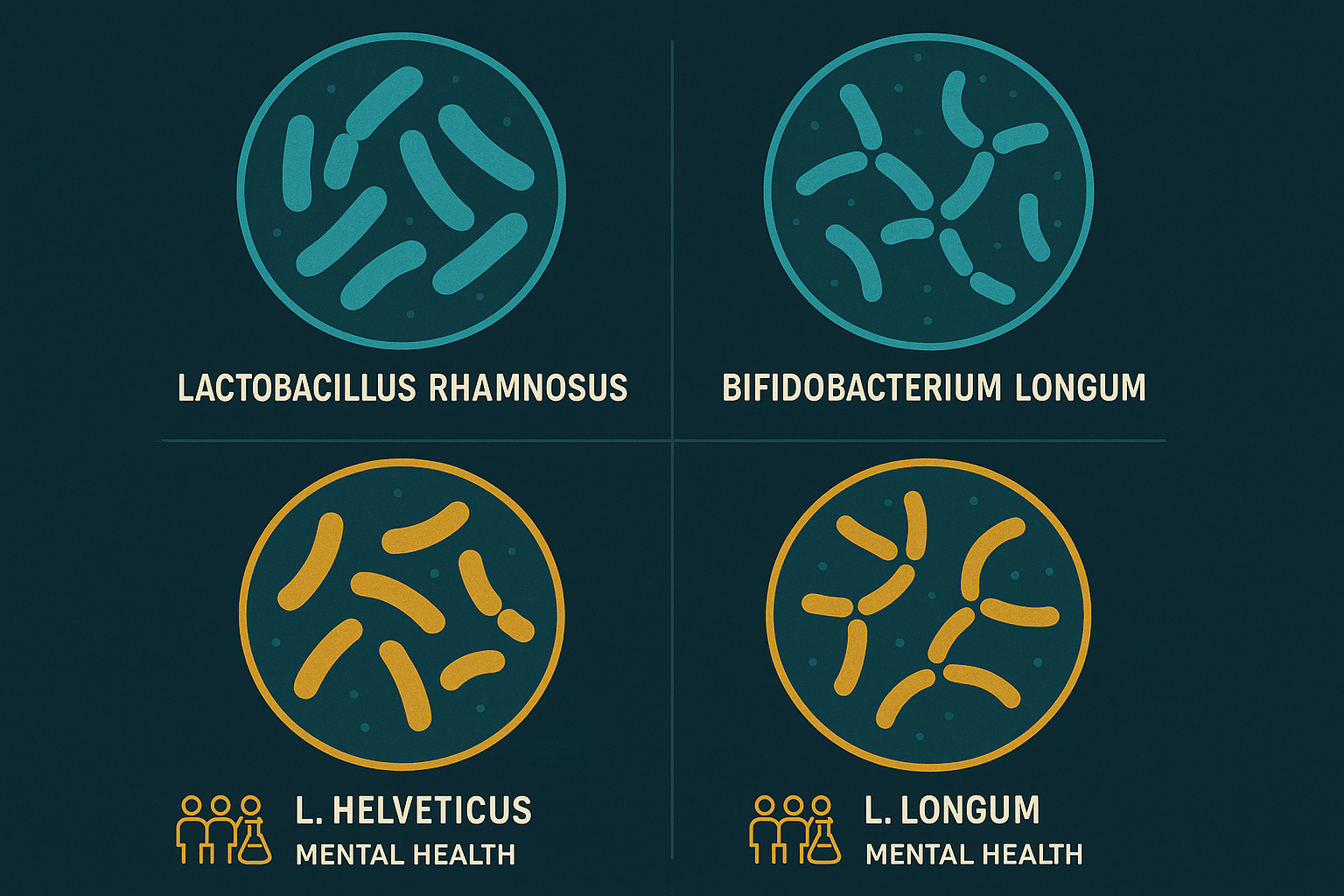
The probiotic strains with the strongest human clinical trial evidence for mental health benefits are *Lactobacillus rhamnosus* JB-1, *Bifidobacterium longum* NCC3001, *Bifidobacterium longum* 1714, and the combination of *Lactobacillus helveticus* R0052 with *Bifidobacterium longum* R0175 (sold as Probio'Stick). These psychobiotics reduce anxiety and depression scores on validated clinical scales via gut-brain axis mechanisms including GABA upregulation, HPA axis modulation, and reduced neuroinflammation. Effective protocols use 8–12 week supplementation periods.
The best probiotics for mental health are specific strains — not generic "probiotic" products — that have demonstrated measurable effects on anxiety, depression, or stress in human randomised controlled trials. These strains are collectively called psychobiotics, a term coined by researchers Ted Dinan and John Cryan in 2013 to describe live organisms producing a quantifiable mental health benefit via the gut-brain axis.
The Short Answer
The four strains with the strongest human trial evidence are Lactobacillus rhamnosus JB-1, Bifidobacterium longum NCC3001, Bifidobacterium longum 1714, and the L. helveticus R0052 + B. longum R0175 combination. Multi-strain products generally outperform single-strain formulations in meta-analyses. Effective durations are 8–12 weeks minimum. The mechanism varies by strain but consistently involves GABA pathway modulation, HPA axis recalibration, and reduced systemic inflammation.
The Science Behind It
Lactobacillus rhamnosus JB-1. The most studied psychobiotic strain. A 2011 PNAS study found that mice fed L. rhamnosus JB-1 showed reduced anxiety behaviour, lower corticosterone levels, and upregulated GABA(B1b) receptor expression in the cortex and hippocampus. Crucially, these effects disappeared when the vagus nerve was severed — confirming the gut-brain-axis mechanism. Human trials have been mixed in clinical anxiety populations but consistently show benefits in healthy individuals under stress.
Bifidobacterium longum NCC3001. A 2019 RCT in Gastroenterology found that 6 weeks of B. longum NCC3001 significantly reduced anxiety scores and improved quality of life in patients with irritable bowel syndrome — a population with very high anxiety comorbidity. MRI data showed reduced responses to negative emotional stimuli in brain regions associated with anxiety.
Bifidobacterium longum 1714. A 2022 RCT in Nutrients found that 8 weeks of B. longum 1714 supplementation in healthy students under academic stress significantly reduced cortisol awakening response, subjective stress, and Hamilton Anxiety Scale scores compared to placebo. It is the most rigorously studied strain for stress-related anxiety in non-clinical populations.
Lactobacillus helveticus R0052 + Bifidobacterium longum R0175. This combination (marketed as Probio'Stick by Lallemand) is the most studied two-strain formula for psychological stress. A 2011 RCT in British Journal of Nutrition found this combination reduced cortisol, psychological distress, and anxiety scores on the Hopkins Symptom Checklist in healthy volunteers over 30 days.
A 2019 meta-analysis in BMJ Nutrition covering 15 RCTs confirmed that multi-strain probiotic products produced larger and more consistent reductions in anxiety symptoms than single-strain products, with effects peaking at 8–12 weeks of supplementation.
What This Means For You
When choosing a probiotic for mental health, prioritise products listing specific strain designations (genus, species, AND alphanumeric strain code) on the label — not just "contains Lactobacillus." The strain code is what links the product to clinical evidence. Colony-forming unit counts matter less than strain specificity: 1 billion CFUs of a clinically validated strain outperforms 50 billion CFUs of an unstudied one.
For dietary foundations that make probiotic supplementation more effective, see Best Foods for Gut Health and Mental Wellbeing and the full Gut Health & Mental Wellbeing hub. For the anxiety-specific evidence base, see Gut Health and Anxiety: What the Science Really Says.
Related Questions
How long do probiotics take to work for mental health? Clinical trials showing significant anxiety and depression score reductions typically run for 6–12 weeks. Microbiome compositional changes are measurable within 2 weeks of supplementation, but downstream mood effects take longer. Benefits appear to persist during supplementation but may diminish if discontinued without dietary support.
Are probiotics safe for mental health conditions? Probiotics are generally considered safe for healthy adults. However, they should not replace prescribed medications for clinical anxiety or depression without discussion with a healthcare provider. They are best understood as an adjunct to — not a replacement for — evidence-based treatments.
Do probiotic foods work as well as supplements? Fermented foods (kefir, kimchi, yoghurt) deliver live cultures but typically at lower, more variable doses and without strain specificity. They are excellent for general microbiome health but are unlikely to deliver the specific strains in the doses used in clinical trials for mental health. Using both together is the most evidence-supported approach.