How Long Does It Take to Improve Gut Health for Better Mood?
Microbiome changes begin within 3–5 days of dietary change. Inflammatory markers start shifting within 2 weeks. Mood and anxiety improvements in clinical trials typically occur at 4–8 weeks, with the strongest probiotic effects at 8–12 weeks.…

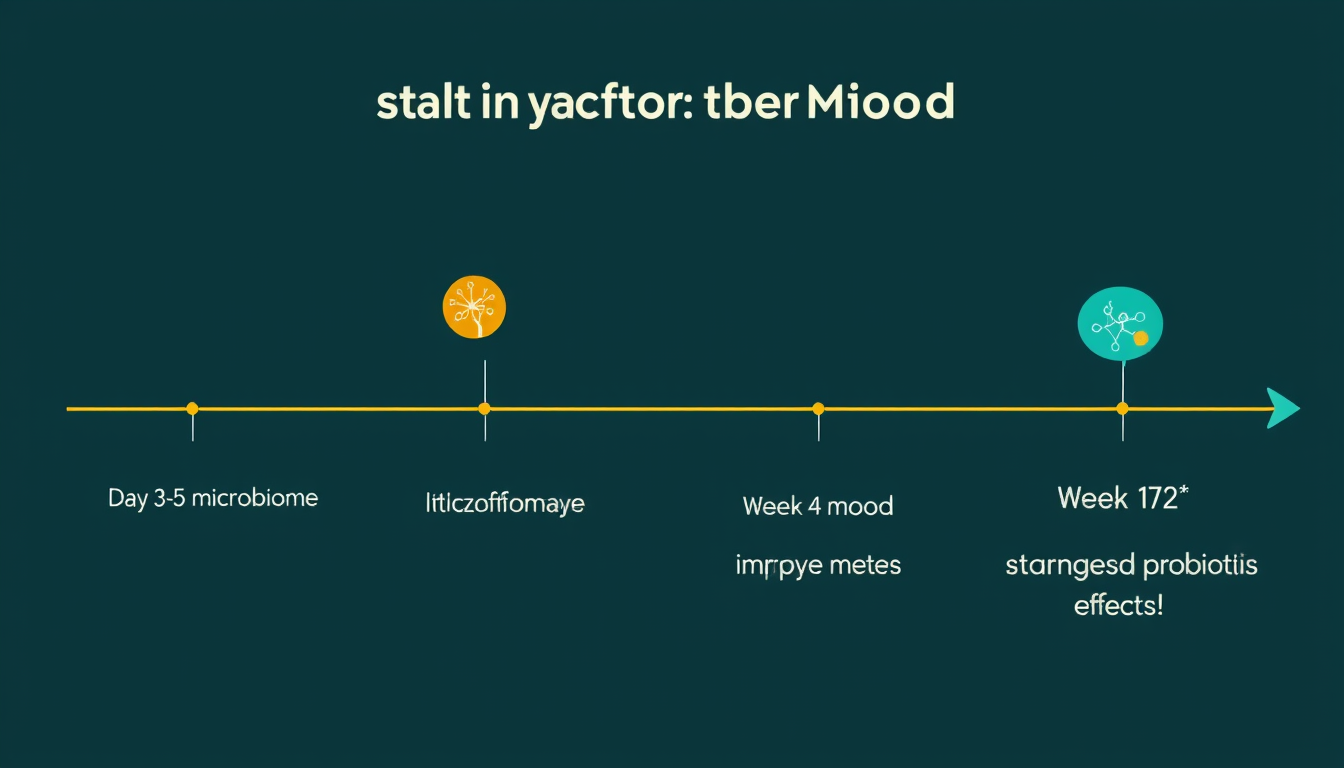
Measurable gut microbiome changes occur within 3–5 days of dietary change, but clinically significant mood improvements typically require 4–8 weeks of consistent intervention. The timeline depends on intervention type: fermented food diets show inflammatory marker reductions within 2 weeks; probiotic supplementation trials demonstrate anxiety and depression score improvements at 4–12 weeks; dietary pattern overhauls (Mediterranean-style) show the most durable outcomes at 8–17 weeks. Individual variation — baseline dysbiosis severity, antibiotic history, stress levels — substantially affects response time.
Timelines matter. If you are changing your diet or starting probiotics hoping to feel better mentally, knowing what to expect — and when — shapes how consistently you stick with the intervention. The honest answer is: measurable biological changes begin faster than most people expect, but meaningful mood improvements require weeks, not days. Here is what the research actually shows.
The Short Answer
Gut microbiome composition begins changing within 3–5 days of dietary intervention. Inflammatory markers — a key mediator of gut-to-brain signalling — start shifting within 2 weeks of sustained change. Mood, anxiety, and depression scores in clinical trials typically improve at 4–8 weeks, with the strongest effects seen at 8–12 weeks. Dietary diversity improvements show the most durable long-term mood benefits at the 17-week mark and beyond.
The Science Behind It
Days 3–5: Microbiome composition shifts begin. The gut microbiome is remarkably responsive to dietary change. A 2015 study in Nature found that switching from a plant-based to an animal-based diet — and vice versa — produced measurable microbiome compositional changes within 3–4 days. This plasticity is good news: the microbiome is not fixed. However, these early shifts are shallow and transient unless sustained by consistent dietary change.
Weeks 2–4: Inflammatory markers begin improving. The 2021 Wastyk et al. RCT in Cell Host & Microbe showed that a high-fermented-food diet produced measurable reductions in 19 inflammatory proteins — including IL-6 and IL-12p70 — within the first two weeks, with progressive improvement through week 17. Reduced neuroinflammation is the primary mechanism linking gut changes to mood improvement, meaning this timeline corresponds to the beginning of meaningful brain-relevant change.
Weeks 4–8: Mood and anxiety scores improve in clinical trials. The majority of probiotic RCTs showing statistically significant mood benefits report their primary outcomes at 4–8 weeks. A 2022 RCT in Nutrients found significant reductions in anxiety and depression scores after 4 weeks of kefir consumption. A 2020 RCT in Psychopharmacology found reduced cortisol awakening response after 4 weeks of prebiotic supplementation. These are measurable — but modest — improvements. The 8-week mark is where effects become more clinically meaningful.
Weeks 8–12: Strongest probiotic effects. The 2019 meta-analysis in BMJ Nutrition covering 15 probiotic RCTs found that studies with durations of 8 weeks or longer showed significantly larger anxiety reductions than shorter trials. The B. longum 1714 RCT (Nutrients, 2022) found its maximum effect on cortisol and Hamilton Anxiety Scale scores at 8 weeks. Multi-strain protocols and psychobiotics (L. rhamnosus JB-1, B. longum NCC3001) consistently show their peak effects in this window.
Weeks 17+: Durable improvements from dietary pattern change. The most sustained improvements come from whole dietary pattern shifts rather than single-supplement protocols. The Wastyk et al. fermented-food RCT ran to 17 weeks and showed continued microbiome diversity gains. The Mediterranean diet literature shows its most robust effects on depression and anxiety risk over periods of 6 months to years.
What This Means For You
Three practical points from the clinical literature:
First, expect a delay. Biological changes begin in the first week, but you are unlikely to notice subjective mood improvement in the first two weeks. The 4-week mark is the realistic earliest point at which meaningful change becomes noticeable for most people.
Second, consistency matters more than perfection. The microbiome responds to sustained dietary patterns, not individual meals. Missing one day is less important than maintaining the overall trajectory over 8+ weeks.
Third, individual variation is real. Baseline gut health, antibiotic history, stress load, and sleep quality all modulate how quickly the gut-brain axis responds. People with severe baseline dysbiosis or a recent antibiotic course may take longer to see mood-relevant microbiome changes.
For specific foods and interventions to start with, see Best Foods for Gut Health and Mental Wellbeing. For the full gut-mood mechanism underlying these timelines, see the Gut Health & Mental Wellbeing hub.
Related Questions
Does diet or probiotics work faster for mood? In short-term trials (under 4 weeks), fermented food diets tend to show faster inflammatory marker changes. Probiotics show more targeted effects on anxiety scores in 4–8 week trials. Combined approaches — dietary change plus targeted probiotics — are not well-studied head-to-head but are likely additive based on mechanism.
Can mood get worse before it gets better when changing diet? Possibly, in the early stages. Rapid dietary change — particularly large increases in fibre — can cause temporary bloating, gas, and gut discomfort. This is a microbiome adaptation effect, not damage. Managing the rate of fibre increase (gradual over 2–3 weeks) reduces this. There is no evidence that mood worsens as a direct early effect of gut-healthy dietary change.
How do you know if your gut health is improving? Subjective indicators include improved stool regularity and consistency, reduced bloating, and better energy levels — often appearing within 2–4 weeks. Objective markers include improved mood scores, reduced anxiety, and (in research settings) measurable changes in microbiome composition via stool testing or inflammatory markers via blood tests.