Fibermaxxing: The High-Fiber Food Trend Taking Over
Fibermaxxing — the pursuit of exceptionally high dietary fiber intake — is reshaping menus and packaged foods across Southern California, driven by gut health s

Protein has dominated wellness food culture for over a decade. From protein-spiked waters to protein chips and breakfast bowls engineered to hit 40 grams before noon, the macronutrient has enjoyed an almost unassailable reign over functional food marketing. But a quieter, arguably more important nutrient is now staging a serious comeback — and the movement has a name: fibermaxxing.
Fibermaxxing is the deliberate, enthusiastic pursuit of exceptionally high dietary fiber intake through food, drink and snacks. And while it may sound like a niche internet subculture, it is rapidly becoming a mainstream wellness priority — particularly in Southern California, a region with a well-documented history of incubating the nation's next big food movements.
If 2026 has a defining nutrition story, this may well be it.
Why Fibermaxxing Is Having Its Moment Right Now
The timing is not accidental. A convergence of gut health awareness, microbiome science and a troubling rise in colorectal cancer diagnoses among younger adults has made digestive wellness a topic of urgent, mainstream conversation. Fiber — long treated as a footnote on nutrition labels — is now being recognised for what decades of research have always suggested: it is foundational to long-term health.
The average American consumes roughly 15 grams of fiber per day. The recommended daily intake sits between 25 and 38 grams depending on age and sex. That gap is enormous, and a growing number of health-conscious consumers are not only aware of it — they are actively trying to close it.
Social media has amplified this awareness considerably. Discussions around the gut-brain axis, the role of the microbiome in mood and immunity, and the link between low-fiber diets and chronic disease have migrated from academic journals into everyday wellness conversations. Fibermaxxing is, in many ways, the behavioral response to that information reaching critical mass.
Colon cancer rates among adults under 50 have risen sharply in recent years, and that statistic has proved particularly galvanizing. When a cancer once considered a disease of older adults begins appearing in people in their 30s and 40s, attention shifts — and dietary choices come under a new kind of scrutiny.
How Southern California Restaurants Are Responding
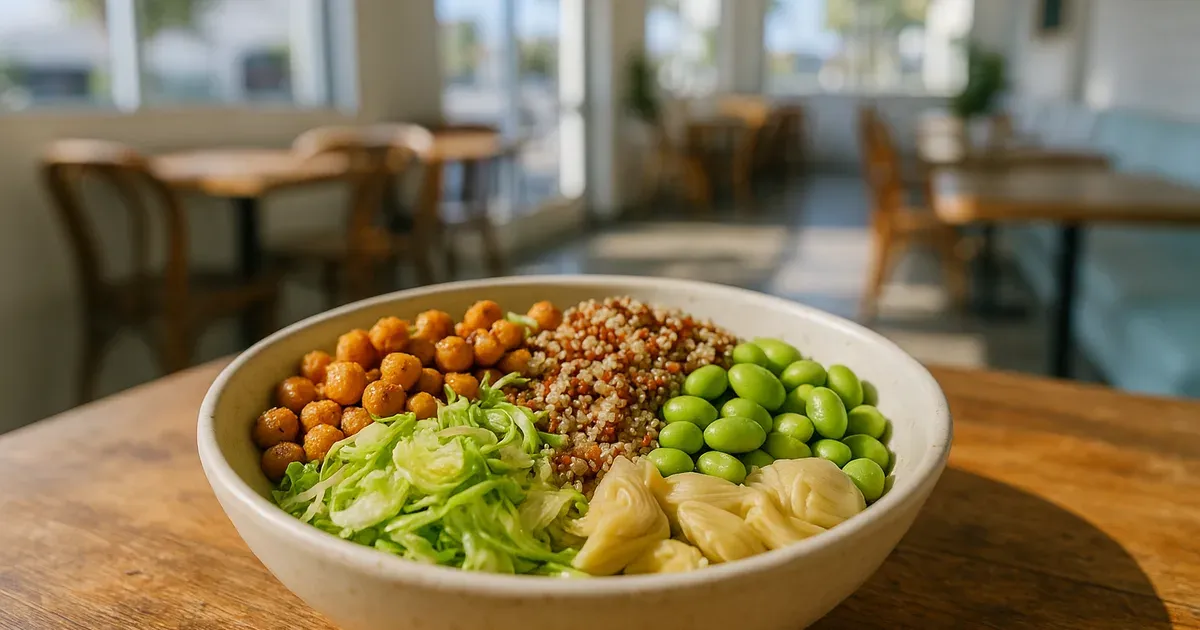
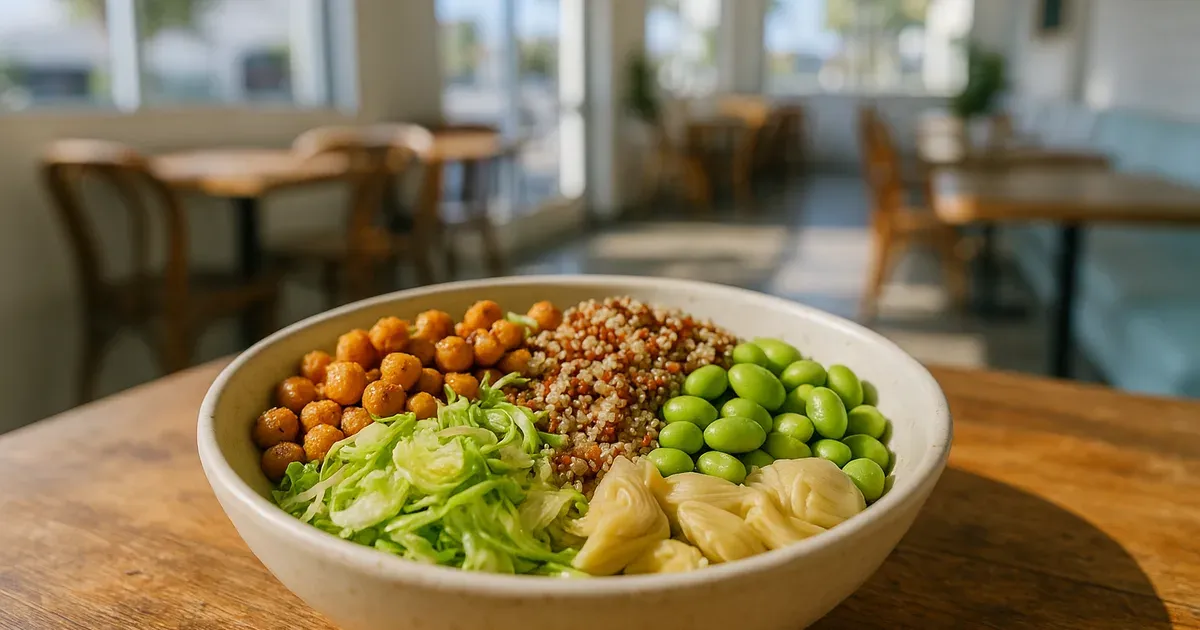
From Santa Monica to San Diego, restaurants are rethinking what ends up in the bowl. The humble chickpea salad has evolved into something far more ambitious: roasted chickpeas alongside artichoke hearts, shaved Brussels sprouts, barley, hemp seeds, edamame and quinoa, layered into formats specifically engineered to deliver 15 grams of fiber or more in a single meal. That is, notably, the equivalent of what most Americans eat across an entire day.
Several Southern California restaurant groups are already leading the charge:
- M Cafe (Melrose) — Specialises in macrobiotic meals built around whole grains, beans and fresh vegetables. The chilled kale salad and quinoa-based dishes have long been staples for fiber-forward diners.
- True Food Kitchen (various locations) — Seasonal, health-conscious menus featuring kale salads, quinoa burgers and vegetable-dense bowls that align naturally with fibermaxxing principles.
- Sweetgreen (various locations) — Customisable bowls and salads anchored by high-fiber staples like chickpeas, broccoli and kale, with transparent nutritional labelling.
- Maple Meat Block Company (Culver City) — Bridges the gap between protein-forward and fiber-forward eating, with fiber-rich sides like kale salad alongside its better-known smoked proteins.
- Kreation Kafe (various locations) — A wide roster of organic salads and plates offering accessible, everyday fiber density without the clinical feel of a supplement.
The bowl format, already entrenched in California food culture, is proving an ideal vessel for fibermaxxing. Its modular, customisable structure lets restaurants stack high-fiber ingredients without compromising the eating experience — and gives consumers visible evidence of what they are putting into their bodies.
Fibermaxxing Beyond the Restaurant: Packaged Foods and Beverages
The trend has moved well beyond sit-down menus. Specialty food aisles from Chatsworth to San Clemente are filling up with products that wear their fiber claims prominently — and in some cases, make fiber the entire brand identity.
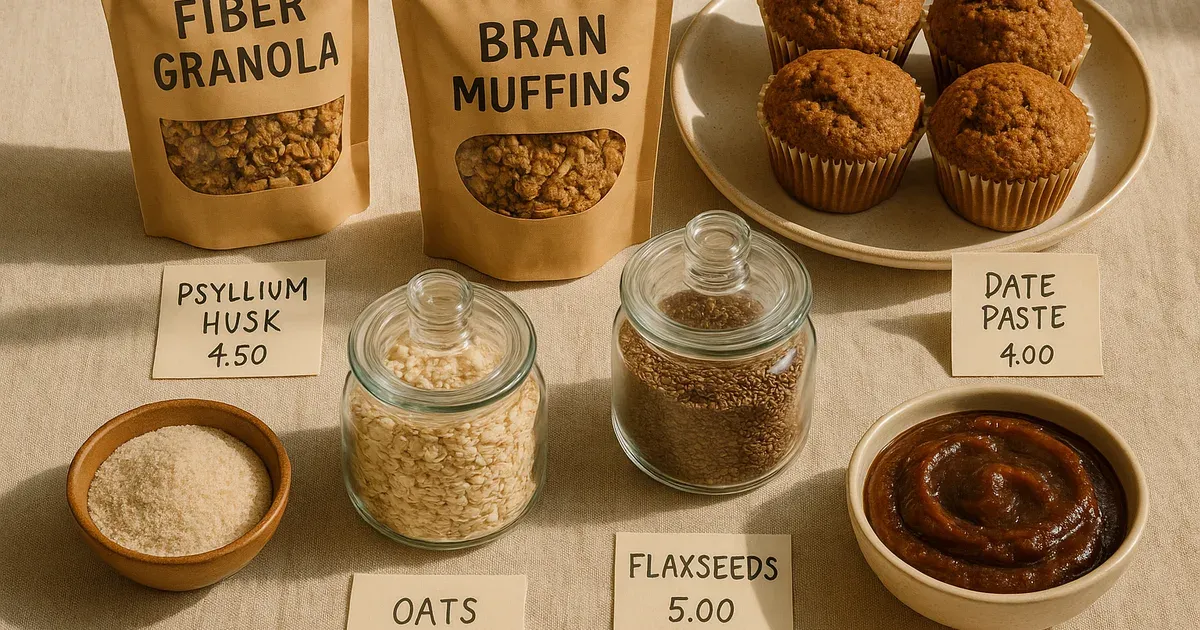
At local farmers markets, vendors are selling fiber granolas sweetened with date paste and dense with oats, quinoa flakes and psyllium husk — a soluble fiber prized for its digestive and cholesterol-lowering properties. Orange County bakeries are baking bran muffins loaded with wheat bran, oat bran and flaxseeds, with signs proudly advertising nine grams of fiber per serve.
Beverages are perhaps the most surprising front in the fibermaxxing movement. Cold-pressed juices and functional drinks are incorporating inulin, chicory root and resistant starch as headline ingredients. OLIPOP, a prebiotic soda brand with growing national distribution, delivers nine grams of fiber per can in flavors like Tropical Punch, drawing on chicory root and botanical blends. Early adopters report improved digestion and better satiety — and the product has found a loyal following among consumers who would never have considered a fiber supplement.
The mainstreaming of fiber in beverage formats signals something significant: this is no longer a category driven by necessity or medical advice. It is being driven by desire.
The Supply Chain Reality Behind the Fiber Boom
Enthusiasm for fibermaxxing is running well ahead of supply chain readiness. As restaurants and brands race to incorporate high-fiber ingredients, the sourcing realities behind those ingredients are proving more complicated — and more costly — than many anticipated.
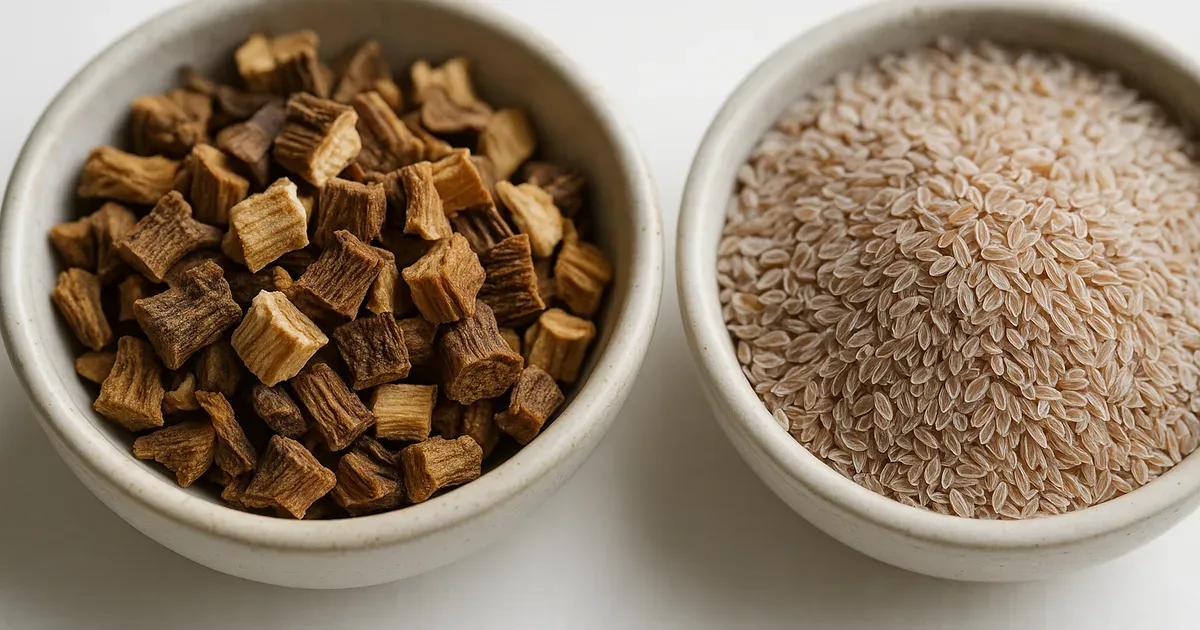
Chicory root, one of the most common sources of inulin fiber, is predominantly grown in Europe and not widely cultivated in the United States. Surging demand from food manufacturers has placed pressure on already constrained supply lines, driving up prices and pushing some buyers to lock in long-term contracts simply to secure inventory. What was once a niche, small-batch ingredient is now contested at scale.
Psyllium husk, derived from the seeds of Plantago ovata and sourced primarily from India, has faced its own volatility. Crop variability and logistics disruptions have introduced pricing unpredictability that puts pressure on brands positioning fiber content as their primary value proposition. For companies working with thin margins, a supply shock can mean reformulation — or the quiet removal of a fiber claim from packaging.
Formulation presents its own set of challenges that go beyond procurement. Fiber is not an inert additive. It changes texture, mouthfeel and product stability in ways that require genuine food science expertise to manage. Resistant starches can thicken beverages. Soluble fibers can alter the crumb structure of baked goods. High-fiber drinks may separate over time if not carefully engineered. And dense, chewy snacks — however nutritious — will not survive consumer taste tests if they feel like eating cardboard.
Food scientists and product developers working in this space are investing significant time in research and development, often collaborating with texture specialists to ensure that fiber-rich products are genuinely pleasant to eat and drink. The gap between a product that is technically high in fiber and one that people actually want to consume is wider than it looks from the outside.
What Fibermaxxing Means for Gut Health and the Microbiome
The science behind the fibermaxxing trend is more robust than most food movements can claim. Dietary fiber — particularly the fermentable, soluble varieties found in chicory root, psyllium husk, oats and legumes — serves as the primary fuel source for beneficial gut bacteria. A well-fed microbiome produces short-chain fatty acids like butyrate, which support the gut lining, regulate inflammation and appear to influence everything from immune function to mental health.
The gut-brain axis — the bidirectional communication network linking the gastrointestinal system and the central nervous system — is increasingly understood to depend in part on microbial health. Fiber intake shapes that microbial environment in ways that low-fiber, highly processed diets simply cannot replicate with supplements alone.
Colorectal cancer risk is the starkest downstream consequence of chronic low fiber intake. Studies consistently show that higher dietary fiber consumption is associated with reduced risk of colorectal cancer — a relationship mediated partly through the microbiome and partly through the mechanical effect of fiber speeding transit time through the colon. As younger adults face rising diagnosis rates, this data point has shifted from background knowledge to front-of-mind concern.
Fibermaxxing, at its core, is a behavioral response to this science finally reaching a broad audience.

The Bottom Line on Fibermaxxing
Fibermaxxing is not a fad in the traditional sense. Unlike many wellness trends built on proprietary supplements or exotic ingredients with limited evidence behind them, this one is grounded in some of the most consistent findings in nutritional science. Fiber matters. Most people do not get enough of it. And the consequences of that deficit — across gut health, metabolic health and cancer risk — are well documented.
What is new is not the science. What is new is the cultural moment: the convergence of microbiome awareness, colon cancer concern and a food industry in Southern California actively racing to meet demand with genuinely delicious, fiber-dense products.
For restaurants and food brands, the opportunity is real — but so are the challenges. Supply chains need development. Formulation requires investment. And consumer education remains a work in progress; not everyone is yet fluent in the difference between soluble and insoluble fiber, or between prebiotic fiber and standard roughage.
But if Southern California's track record as a national food trend incubator holds, fibermaxxing is not staying regional for long. After years in protein's long shadow, fiber is finally getting its moment — and the appetite for it shows no sign of slowing.