Gut Health Explained: Your Biggest Questions Answered
A 2026 ISAPP consensus statement finally defines gut health as normal GI function without active disease or quality-of-life-affecting symptoms. This FAQ unpacks


The phrase gut health is everywhere — on supplement labels, in wellness articles, across social media feeds — yet almost nobody agrees on what it actually means. A landmark 2026 consensus statement published in Nature Reviews Gastroenterology & Hepatology finally tackled that confusion head-on. Whether you are trying to make sense of conflicting advice or simply want to know what your gut is telling you, the answers below cut through the noise.

Jump to Your Question
- What is the official definition of gut health?
- What is the difference between gut health, digestive health, and gastrointestinal health?
- Can you have good gut health even if you have a gastrointestinal disease?
- What are the main domains or components of gut health?
- How is gut health measured in a clinical setting?
- Do probiotics and prebiotics genuinely improve gut health?
- Can poor gut health exist without any symptoms?
- What is the difference between transient gut symptoms and true poor gut health?
- How does the gut microbiome relate to overall gut health?
What is the official definition of gut health?
Gut health is now formally defined as "a state of normal gastrointestinal function without active gastrointestinal disease and gut-related symptoms that affect quality of life." This definition was developed in 2026 by an expert panel convened by the International Scientific Association for Probiotics and Prebiotics (ISAPP) — the first time a rigorously developed, consensus-backed definition has been published.
Before this, the term was used loosely by scientists, clinicians, food manufacturers, and consumers alike, often meaning entirely different things. The new definition deliberately balances objective function (what the gut is actually doing) with subjective experience (how the individual feels). It also acknowledges that gut health is dynamic, not a fixed binary state. The panel included experts from gastroenterology, nutrition, immunology, microbiology, neurobiology, paediatrics, and family medicine — ensuring the definition is both clinically grounded and broadly applicable.
What is the difference between gut health, digestive health, and gastrointestinal health?
The three terms are often used interchangeably, but they carry meaningfully different scopes. Gastrointestinal health typically refers to the absence of disease or pathology in the GI tract — a narrower, more clinical framing. Digestive health emphasises the mechanical and biochemical processes of breaking down food and absorbing nutrients.
Gut health, by contrast, is the broadest concept. It encompasses:
- Normal GI function (motility, secretion, absorption)
- Absence of symptoms that impair quality of life
- The gut microbiome and its interactions with the host
- The gut–brain axis and psychological well-being
- Immune function mediated by the intestine
The ISAPP consensus panel chose gut health as the preferred term precisely because it captures this wider, more integrated picture. Restricting the conversation to digestion or pathology alone would miss the full contribution the gastrointestinal tract makes to whole-body wellness.
Can you have good gut health even if you have a gastrointestinal disease?
Yes — the presence of a gastrointestinal disease does not automatically mean poor gut health. One of the most important clarifications in the 2026 consensus statement is that gut health is achievable during periods of disease remission. A person with Crohn's disease or ulcerative colitis, for example, may experience full symptomatic remission and restored quality of life.
During remission, gut function can normalise to a degree where it no longer significantly disrupts daily living. The expert panel was careful to distinguish between the existence of a diagnosed condition and its active impact on function and well-being. This nuance matters enormously for clinical communication: it means clinicians can set meaningful, attainable gut health goals even for patients with chronic diagnoses, rather than framing disease solely as a permanent barrier to wellness.
| State | GI Disease Present? | Active Symptoms? | Gut Health Possible? |
|---|---|---|---|
| Healthy adult | No | No | Yes |
| IBD in remission | Yes | No | Yes |
| IBD flare | Yes | Yes | No |
| IBS (mild, managed) | Yes | Minimal | Partially |
What are the main domains or components of gut health?
Gut health is understood to span three interconnected domains: functional, subjective, and extrinsic. The ISAPP panel structured their framework around these three areas to ensure a comprehensive, measurable approach rather than relying on any single marker.
The functional domain covers measurable physiological processes — intestinal motility, barrier integrity, immune activation, and microbial composition. The subjective domain captures the individual's lived experience: symptoms like bloating, discomfort, or irregular bowel habits, and how much these affect daily quality of life. The extrinsic domain includes external factors that shape gut function, such as diet, medication use, physical activity, and psychological stress.
Recognising all three domains is critical because:
- Function can be abnormal without noticeable symptoms
- Symptoms can be present despite normal test results
- External factors profoundly modulate both function and experience
This multi-domain approach means gut health cannot be reduced to a single blood test or stool sample. It requires an integrated assessment that respects the complexity of the GI tract.

How is gut health measured in a clinical setting?
Measuring gut health in clinical practice remains challenging because no single validated biomarker exists. The ISAPP consensus statement acknowledges that many current measures of gut function lack sufficient validation of a normal range, or correlate poorly with patient outcomes. This is a significant gap that ongoing research is working to address.
Commonly used assessments include:
- Symptom questionnaires (e.g., Patient Assessment of Constipation Symptoms, IBS-SSS)
- Gut transit studies measuring how quickly food moves through the intestine
- Stool microbiome sequencing to characterise microbial diversity and composition
- Intestinal permeability tests (e.g., lactulose/mannitol ratio)
- Endoscopy and imaging for structural assessment
- Quality-of-life scales (e.g., GSRS, SF-36 GI subscales)
The panel recommends a comprehensive approach that combines clinically relevant metrics across the functional and subjective domains. Ideally, tools used in research on dietary or biotic interventions should mirror those used in clinical practice, making findings more translatable and actionable for both patients and practitioners.
Do probiotics and prebiotics genuinely improve gut health?
Probiotics and prebiotics can support gut health, but the evidence varies considerably by strain, dose, and individual context. The ISAPP consensus panel — an organisation whose mission is specifically to advance rigorous, science-based understanding of these interventions — was careful not to overstate the evidence. The term gut health itself was partly popularised in the early 2000s in the context of communicating prebiotic benefits to the public, which underscores how closely these fields are linked.
Key considerations when evaluating biotic interventions:
- Strain specificity matters: benefits demonstrated for one probiotic strain do not automatically extend to others
- Prebiotic substrates such as inulin and oligofructose have established effects on microbiome composition, but functional outcomes vary
- Fermented foods (yoghurt, kefir, kimchi) show promising signals, though large-scale randomised trial data remain limited
- Context dependency: effects may differ between healthy adults, those with GI conditions, and different age groups
The new gut health framework provides a structured way to design and evaluate future biotic research, making it easier to determine whether an intervention genuinely moves the needle on meaningful gut health outcomes.

Can poor gut health exist without any symptoms?
Yes — poor gut health can be present even in the complete absence of noticeable symptoms. This is one of the more counterintuitive but clinically important findings from the 2026 ISAPP consensus. Abnormalities in gut function — such as compromised intestinal barrier integrity, dysregulated immune responses, or altered microbial composition — may exist silently before they manifest as symptoms or disease.
Similarly, poor gut health can exist without any measurable functional abnormality detected by current tests. This highlights the limits of relying exclusively on symptom-based or test-based assessments. The implication for healthcare is significant: gut health monitoring and intervention may be warranted even in individuals who report feeling fine, particularly in populations with known risk factors such as chronic stress, highly processed dietary patterns, or recent antibiotic use.
What is the difference between transient gut symptoms and true poor gut health?
Transient gut symptoms arising from normal physiological adaptations are distinct from symptoms that signal genuinely poor gut health. The expert panel specifically highlighted this distinction as essential for both clinical practice and research design. Loose stools triggered by acute stress, or constipation experienced while travelling, represent temporary physiological responses — not evidence of an underlying gut health problem.
True poor gut health involves symptoms that are:
- Persistent or recurrent over time, rather than isolated
- Substantial in impact, meaningfully affecting quality of life or daily function
- Disproportionate to any identifiable physiological trigger
This distinction prevents both over-medicalisation of normal human variation and the dismissal of genuinely problematic symptom patterns as "just stress." It also has implications for how clinical trials should define their endpoints — short-term symptom fluctuations are not a reliable proxy for gut health change unless they are persistent and functionally meaningful.

How does the gut microbiome relate to overall gut health?
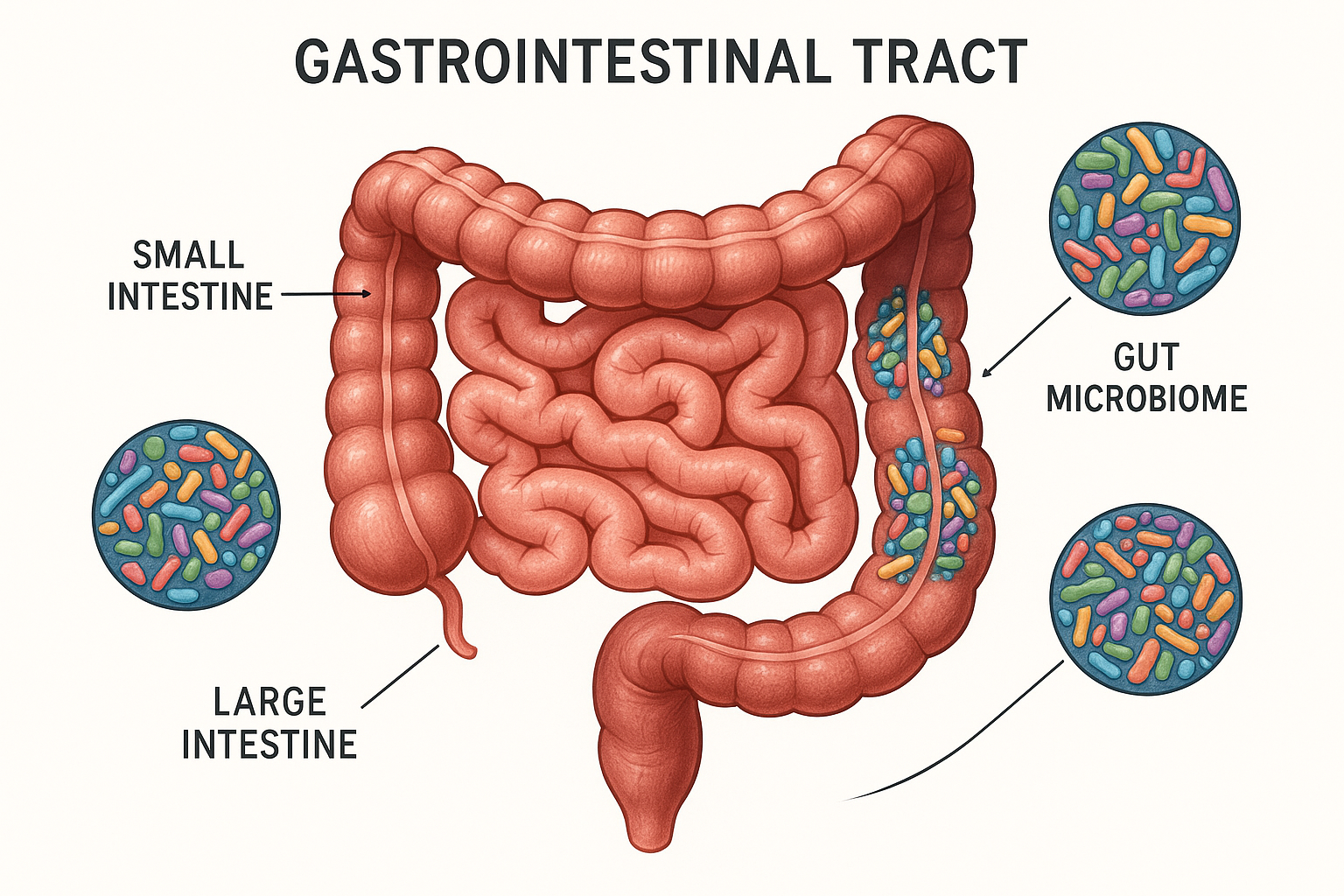
The gut microbiome is a central but not yet fully characterised component of gut health. Advances in sequencing technology have dramatically increased our understanding of the trillions of microorganisms residing in the human gastrointestinal tract, yet the ISAPP panel acknowledges that a definitive "healthy microbiome" profile has not been established. Microbial diversity is often cited as a marker of health, but diversity alone is an incomplete metric.
The gut microbiome contributes to gut health through multiple pathways:
- Metabolic functions: producing short-chain fatty acids, vitamins, and neuroactive compounds
- Immune education: training mucosal immune responses and maintaining tolerance
- Barrier support: influencing intestinal epithelial integrity
- Gut–brain communication: via the vagus nerve, enteric nervous system, and circulating metabolites
The panel's framework deliberately incorporates microbiome research while being honest about its current limitations. Risk factors and determinants of future gut health — including microbiome composition — are acknowledged as incompletely understood, and therefore not yet incorporated into the formal definition itself. This is a scientifically honest position that leaves room for the field to evolve.
Bottom Line
- Gut health now has a formal consensus definition: normal GI function, no active disease, and no quality-of-life-impairing symptoms.
- Disease and gut health are not mutually exclusive: remission from a GI condition can represent genuine gut health.
- Three domains matter: functional, subjective, and extrinsic — no single test or symptom tells the whole story.
- Poor gut health can be silent: absence of symptoms does not guarantee everything is functioning well.
- Transient symptoms are not the same as poor gut health: persistence and quality-of-life impact are the key differentiators.