Gut Health Industry: A $71bn Market Evolving Fast
The gut health industry has surpassed $71bn globally and is heading for $105bn by 2030. Here's what's driving the shift — and what it means for manufacturers.

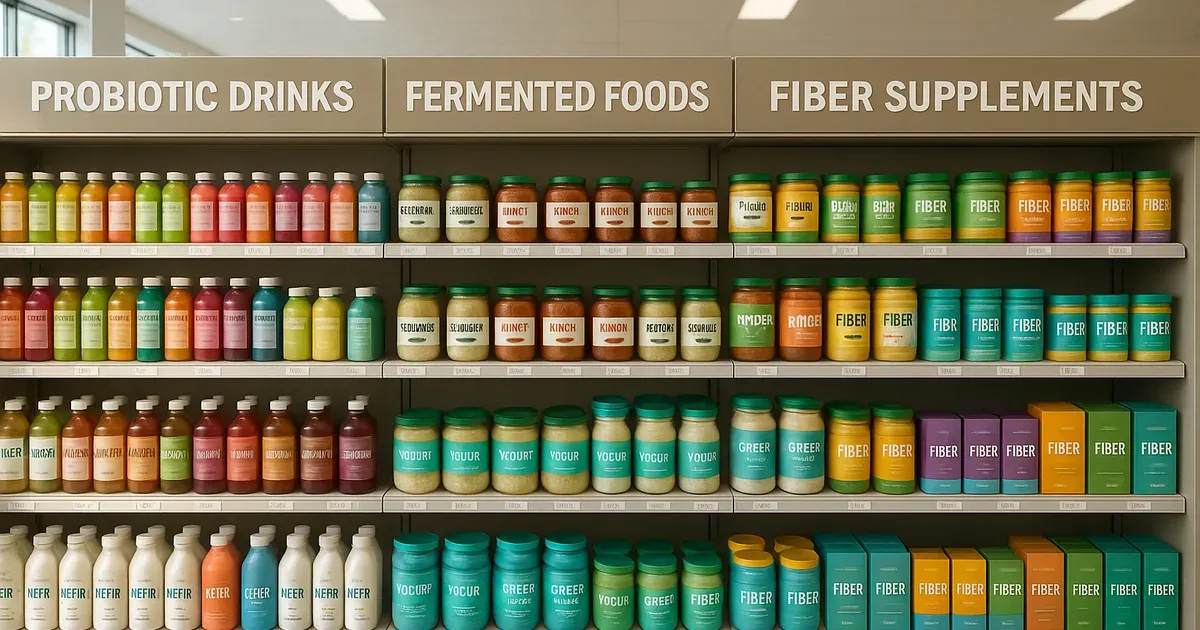
The gut health industry has quietly become one of the most consequential sectors in global food and wellness — and it shows no sign of slowing down. With the market already exceeding $71bn worldwide and a clear trajectory toward $105bn by 2030, this is no longer a niche concern. It is mainstream consumer behaviour reshaping how products are made, marketed, and sold.
But growth alone doesn't tell the full story. The more interesting development is how the category is changing — who is driving it, what language is winning on-shelf, and what opportunities that creates for manufacturers. Here is what the data actually says.
The gut health industry by the numbers
The scale of this market is difficult to overstate. Global sales have surpassed $71bn (approximately €61bn), according to Markets and Markets, and the category is forecast to exceed $105bn before the decade is out. That represents sustained, compounding growth across food, drink, supplements, and increasingly, therapeutics.
Product launch activity reflects the same momentum. Global food and drink launches carrying a gut-health claim jumped 61% between 2024 and 2025 alone, according to Innova Market Insights. That figure — a single-year leap — signals that manufacturers are not just keeping pace with consumer demand, they are actively trying to get ahead of it.
Perhaps most telling is the category's resilience to price pressure. In a period when consumers have pulled back on discretionary spending across many food categories, gut-friendly products have largely held their ground. As Shrutika Davari, senior research associate at Markets and Markets, puts it: "Consumers are often willing to pay a premium for products that contain health-promoting ingredients such as probiotics or added nutrients."
That premium tolerance is not accidental. It reflects genuine conviction — consumers who understand why they are buying something and believe it works.
From rapid growth to market maturity
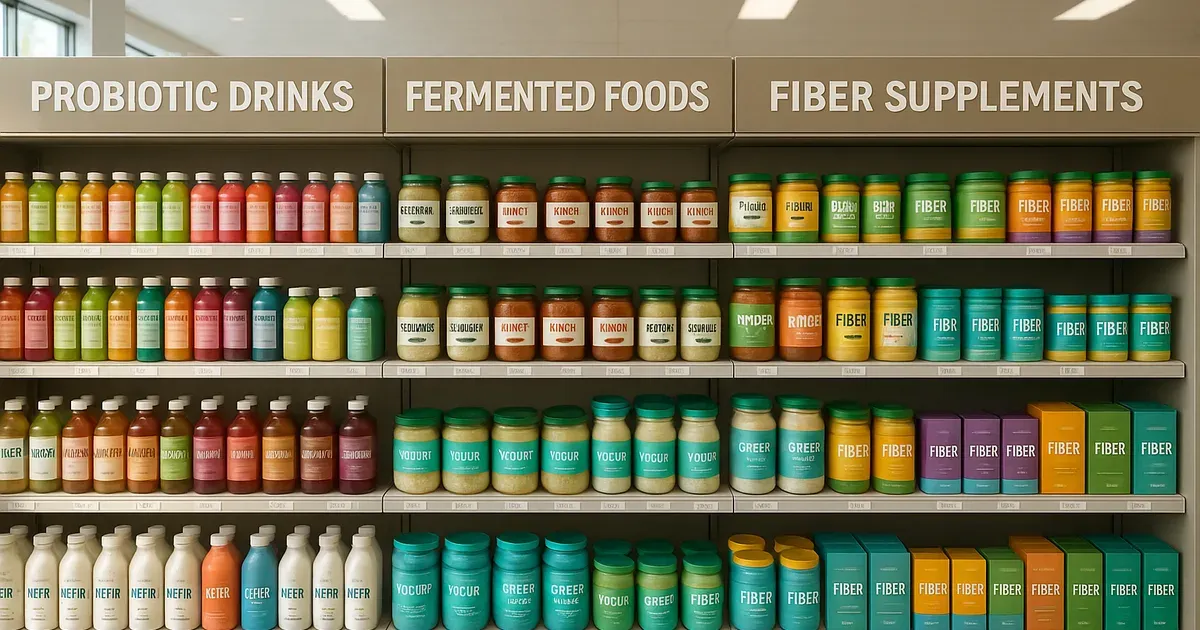
Not all growth looks the same. Davari describes the current state of the gut health industry as a transition "from a rapid growth phase to a more stable expansion stage." Established formats — probiotic yoghurt, fermented dairy, standard fibre supplements — have already achieved high consumer penetration in many markets. Their growth rates are moderating as a result.
This is not a red flag. It is the natural arc of any maturing category. The more important signal is where within the gut health space growth is accelerating. Functional beverages, fibre-enriched foods, and plant-based probiotic products are all growing faster than legacy formats, pointing clearly toward where product development energy should be directed.
For brands that entered the gut health space early on the back of probiotic yoghurt or kombucha, the message is clear: the category has expanded well beyond its founding formats, and the consumers driving growth are increasingly looking for something new.
The language of gut health is changing
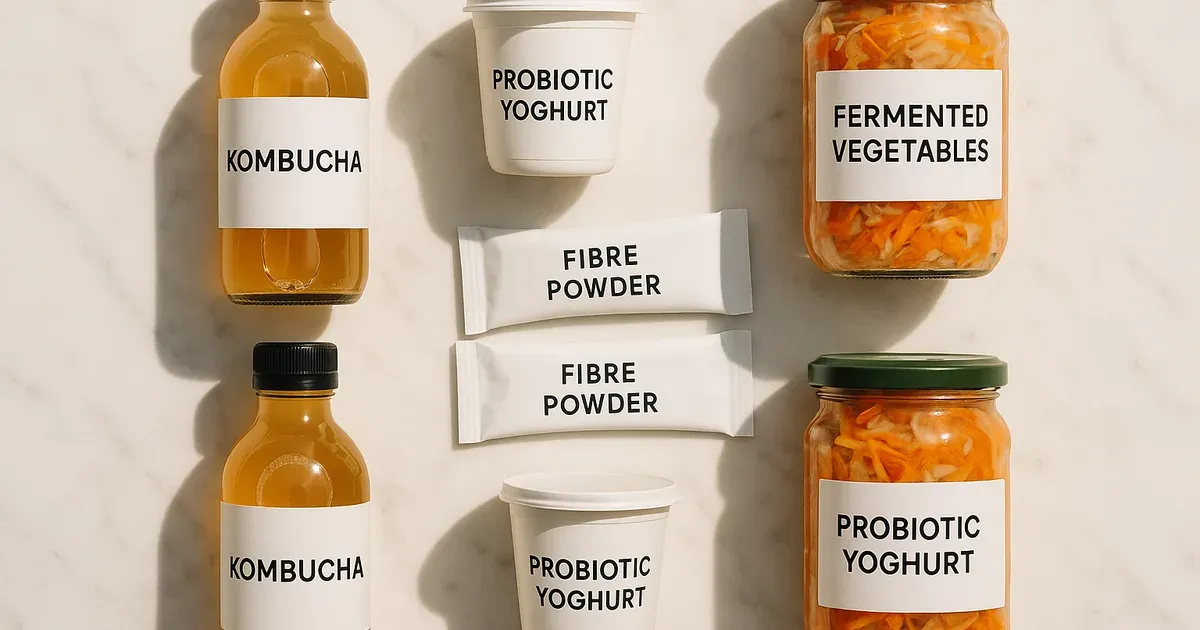
One of the most strategically significant shifts in the gut health industry is linguistic. The broad umbrella term "gut health" — once the dominant frame on pack and in marketing — is being phased out in favour of specific functional ingredient naming: fibre, prebiotics, probiotics, postbiotics.
The reason is consumer sophistication. Early-stage categories require simple, accessible language to build awareness. As that awareness matures, vague terms start to feel hollow. Today's gut health consumer is comfortable with technical specificity — and increasingly, they expect it.
This mirrors a wider trend in health and wellness. Outcome-led language — immunity, energy, focus, mood — is resonating strongly on-pack, with Innova Market Insights flagging immune-support claims as one of the most influential adjacent benefits shaping gut-friendly product development. The direction of travel is toward precision: tell the consumer exactly what an ingredient does, not just that it supports something as broad as "gut health."
For brand teams, this creates a creative and strategic opportunity. The companies that invest in clear, credible, ingredient-specific communication are positioned to build stronger consumer trust — and stronger pricing power — than those still relying on category-level shorthand.
Who is actually buying gut health products
Demographic patterns within the gut health industry are clear and worth understanding precisely. Younger consumers — millennials and adults under 45 — are the primary demand drivers. They are more likely to proactively adjust their diets, take probiotic or fibre supplements, and actively seek solutions for digestive health before problems arise.
This shift from reactive digestive care to proactive wellness care has significant product development implications. It means consumers are not waiting to feel unwell before buying — they are integrating gut-friendly products into everyday routines as a form of preventative self-care. That behaviour supports subscription models, daily-use formats, and habitual consumption in a way that reactive healthcare products simply cannot.
Gender also plays a role. Davari notes that women are "generally" more engaged with health and wellness purchasing, making them a disproportionately significant segment within gut health. Education level correlates with purchase behaviour too: highly educated consumers are more likely to buy probiotic foods or functional dairy, driven by greater awareness of the evidence base behind these ingredients.

The combined picture — younger, educated, wellness-oriented, premium-tolerant — defines the core gut health consumer cohort that manufacturers should be building for right now.
What this means for gut health manufacturers
The maturation of the gut health industry is an opportunity, not a threat. As consumer understanding deepens, the ability to communicate specific functional benefits becomes a genuine competitive differentiator. Brands that can clearly explain what fibre does differently from a postbiotic, or why a particular probiotic strain is clinically relevant, will command attention and loyalty in a way that generic "gut health" positioning no longer can.
Product development follows the same logic. Younger shoppers seeking targeted wellness solutions are actively willing to pay more for credible formulations — which gives manufacturers the licence to move beyond simple fortification into more sophisticated territory: hybrid formats, personalised nutrition approaches, plant-based probiotic carriers, and fibre-fortified everyday staples.
Functional beverages deserve particular attention. This sub-category is growing faster than most legacy gut health formats and aligns naturally with the daily-use, on-the-go habits of the under-45 consumer demographic. Any manufacturer not currently exploring functional drink innovation within the gut health space is missing one of the sector's clearest near-term growth vectors.
R&D investment is also being de-risked by improving science. The evidence base around the microbiome is expanding rapidly — more clinical trials, more strain-specific data, more mechanistic understanding. That creates a more stable foundation for substantiated claims, which matters enormously in a regulatory environment that is tightening around functional food marketing in multiple regions.

The gut-brain connection: the next frontier
Increasingly, the gut health industry is looking beyond digestion entirely. The gut-brain axis — the bidirectional communication network linking gut microbiota to brain function, mood, and cognition — is emerging as one of the most compelling frontiers in microbiome science.
Consumer interest in mental wellness has never been higher. The convergence of gut science and brain health creates a product narrative that speaks to two of the most commercially powerful wellness concerns simultaneously. Brands that can credibly bridge these two areas, backed by emerging clinical evidence, are potentially looking at one of the most differentiated positioning opportunities in the entire health food sector.
For now, this space remains relatively early-stage from a product development perspective. But the science is advancing quickly, and the consumer appetite — particularly among the younger, proactive wellness cohort already driving gut health purchases — is clearly there.
The bottom line
The gut health industry is not slowing — it is evolving into something more sophisticated, more targeted, and ultimately more durable. The headline numbers ($71bn today, $105bn by 2030) reflect real demand. But the deeper story is about a market growing up: consumers who know more, ask more, and expect more from the products they buy.
For manufacturers and brands, that evolution is good news. The shift toward ingredient-specific communication, science-backed claims, and proactive wellness positioning creates clear paths to differentiation that did not exist when the category was in its early, awareness-building phase. The gut health opportunity has not passed — it has simply become more demanding, and more rewarding, to pursue well.