How to Improve Digestion with Water at Meals
Drinking water during meals supports digestion, softens stool, and helps manage appetite — learn four evidence-backed steps to optimise hydration at mealtimes w

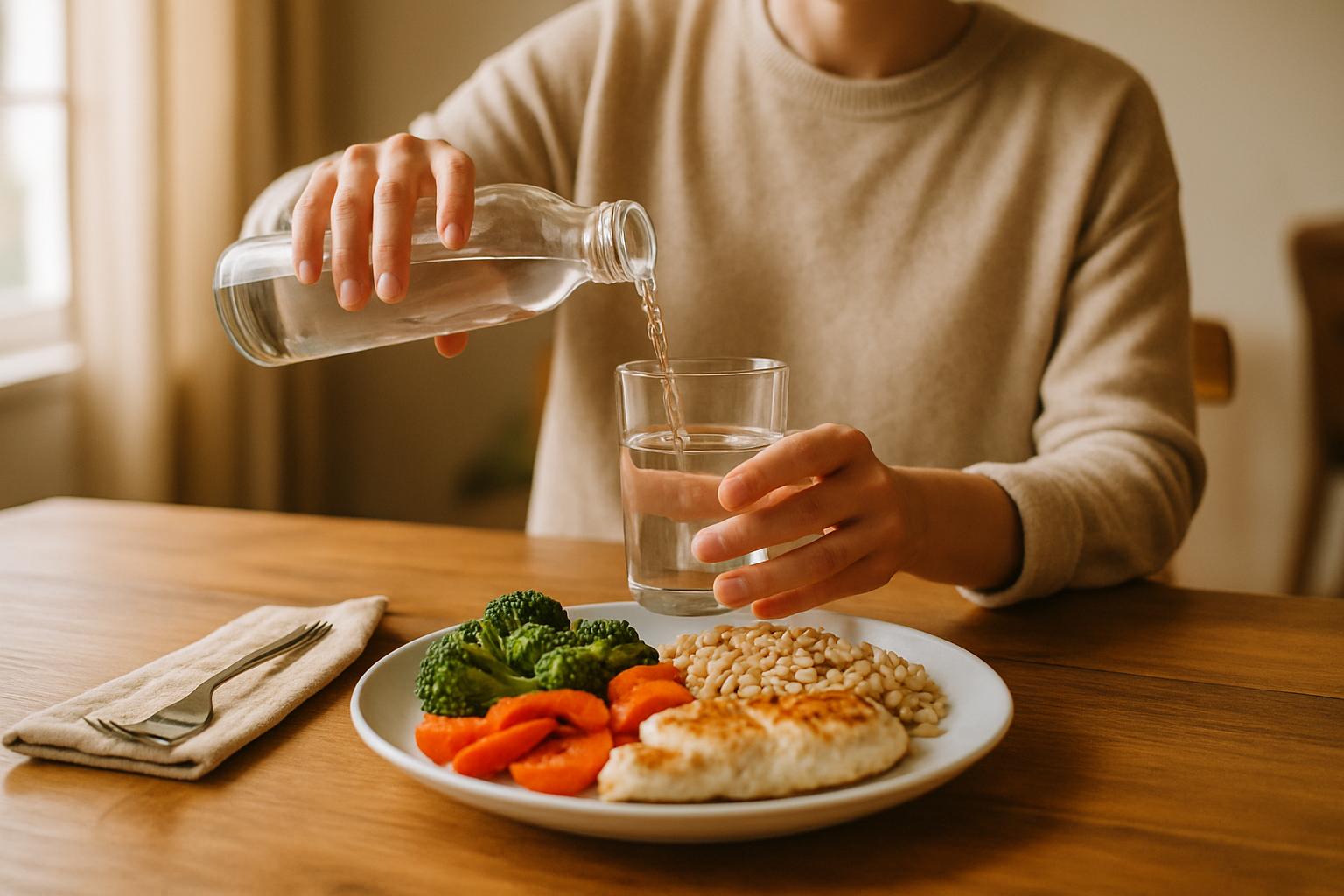
You've probably heard conflicting advice. Drink water before meals to feel full. Don't drink during meals — it'll ruin digestion. Add lemon. Avoid ice. The noise is exhausting, and most people quietly give up and just sip whatever feels right.
If you've tried guzzling water an hour before eating, only to feel bloated and still hungry at the table, you're not alone. And if someone has told you that water "dilutes your stomach acid," you may have quietly worried every time you reached for a glass at dinner.
Here's the truth, backed by Mayo Clinic research and registered dietitian guidance: drinking water during meals is not only safe — it actively supports digestion when done correctly. This guide gives you four practical steps to use hydration strategically at mealtimes, whether your goal is better gut health, weight management, or just feeling more comfortable after you eat.
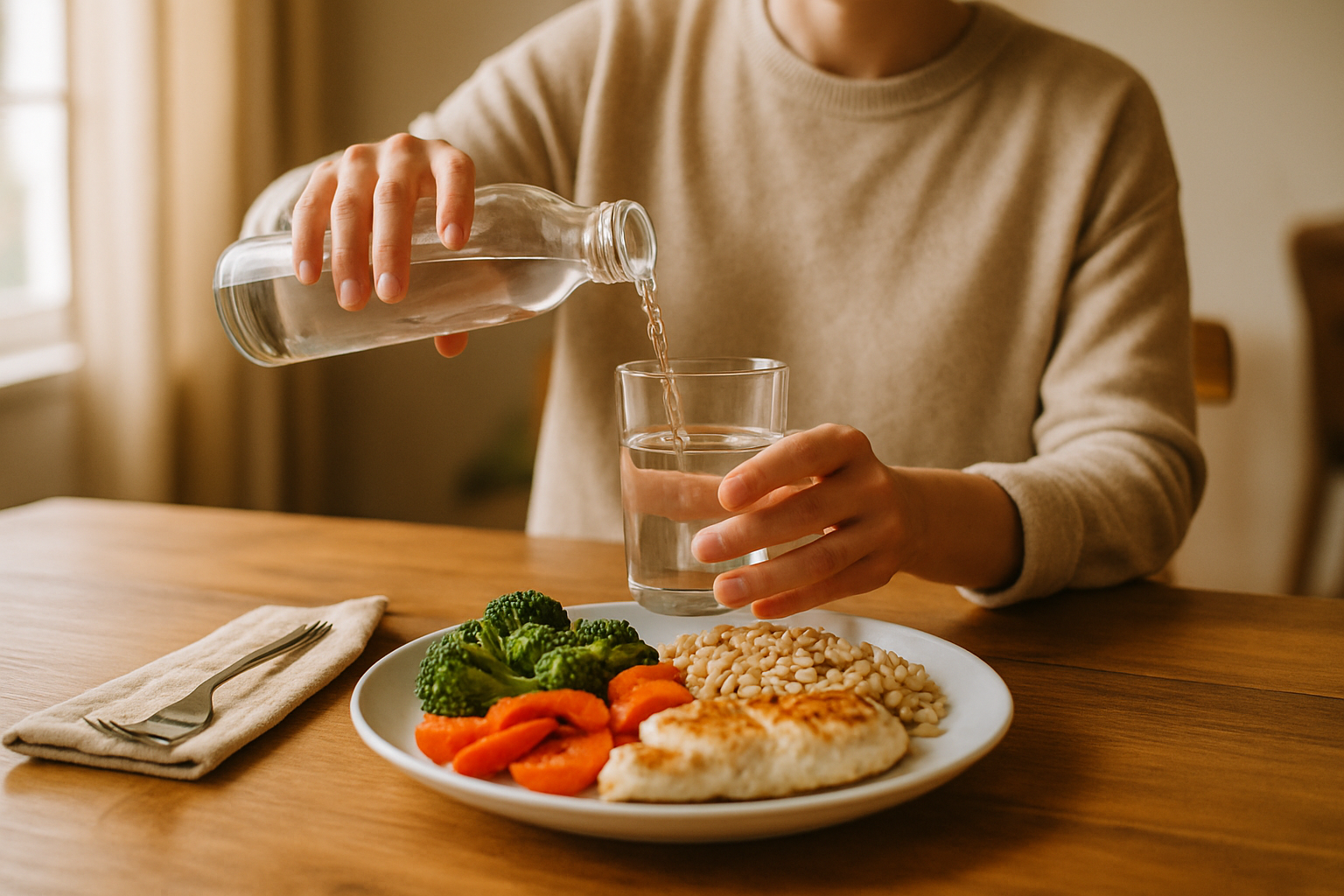
Why Digestion Problems Happen in the First Place
Most digestive discomfort is not caused by drinking water — it's caused by habits that work against your gut's natural rhythm. Understanding the real root causes helps you stop chasing the wrong fixes.
- Eating too fast overwhelms your digestive system before it has time to produce the enzymes and acid it needs.
- Chronic dehydration thickens saliva and slows the movement of food through your intestines, leading to sluggishness and constipation.
- Low fiber intake paired with low fluid intake creates hard, difficult-to-pass stools and gut discomfort.
- Stress at mealtimes triggers your nervous system into a fight-or-flight state, which actively suppresses digestion — your body can't sprint away from danger and break down a burrito at the same time.
- Irregular meal timing prevents your digestive system from building a reliable rhythm of activity and rest.
Water is not the villain here. Scientific evidence confirms it does not dilute digestive fluids in any harmful way. Your body regulates those concentrations tightly. The problem is usually everything else happening around the meal.
Step 1: Start Each Meal with 4–6 Ounces of Water
What and why: Beginning a meal with a modest amount of water — roughly half a standard glass — prepares your digestive system for what's coming. Water helps your body produce saliva, and saliva is where digestion actually begins. Amylase, an enzyme in saliva, starts breaking down carbohydrates before food even reaches your stomach.
How to do it: Pour yourself a glass of water before you plate your food. Take two or three slow sips as you sit down. This isn't about chugging — it's about signalling to your gut that a meal is on the way.
Keep the glass on the table throughout the meal. Sip between bites rather than swallowing large amounts at once. Think of it the way a pit crew hydrates a driver during a race — small, timed inputs for sustained performance, not one overwhelming flood.
Pro tip: Room temperature or slightly warm water is gentler on your stomach lining than ice-cold water, which can temporarily slow gastric motility in sensitive individuals.
- Aim for 4–6 oz before your first bite
- Sip, don't gulp, throughout the meal
- Keep total mealtime water to 8–12 oz to avoid unnecessary fullness
Step 2: Use Hydration to Slow Your Eating Pace
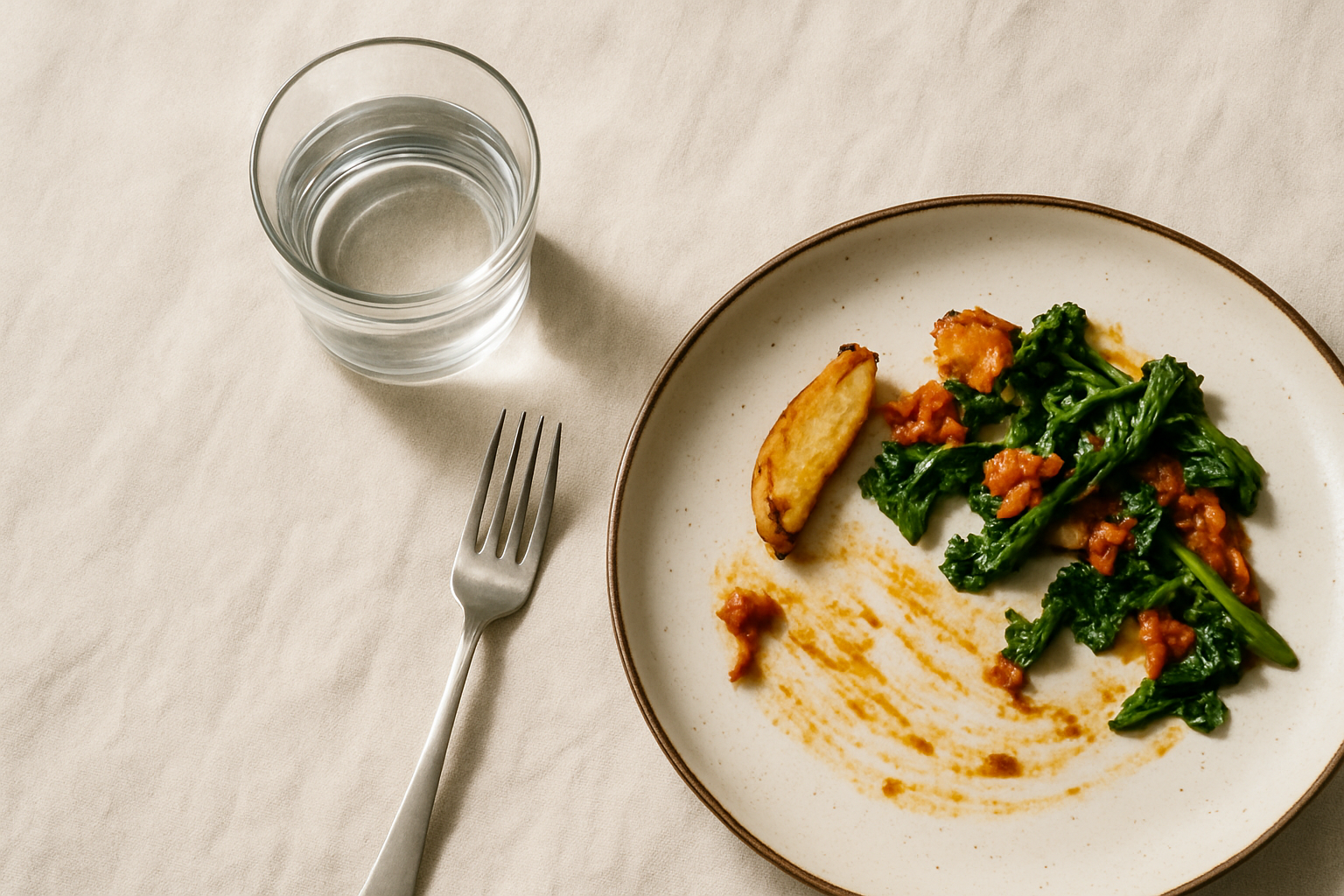
What and why: Eating slowly is one of the most evidence-supported habits for better digestion, but most people struggle to do it consistently. Water gives you a built-in pause button. When you take a sip between bites, you naturally slow down and give your stomach time to signal fullness to your brain — a process that takes about 20 minutes.
How to do it: Set a simple rule: take one sip of water after every three to four bites of food. You don't need a timer or an app. The glass in your hand becomes the cue. Put your fork down while you sip. Chew thoroughly before reaching for the next bite.
This approach is especially useful during busy weekday lunches, where the temptation to eat fast is highest. Even if you can't control the pace of your day — think of the relentless, high-energy chaos of world of outlaws sprint cars tearing around a dirt track — you can control the pace of your fork.
The science: Your stomach sends stretch signals to your brain as it fills. Slowing down lets those signals catch up with your intake, which means you're less likely to overeat and more likely to feel comfortably satisfied rather than stuffed.
- One sip every 3–4 bites
- Put your fork down between bites
- Aim for a minimum of 15–20 minutes per meal
Step 3: Match Your Water Intake to Your Fiber Goals
What and why: Dietary fiber is essential for healthy digestion, but it only works properly when paired with adequate water. Soluble fiber absorbs water to form a gel-like substance that slows digestion and feeds beneficial gut bacteria. Insoluble fiber adds bulk to stool and keeps things moving. Without enough water, a high-fiber diet can actually make constipation worse.
How to do it: The 2020–2025 Dietary Guidelines for Americans recommend 25–38 grams of fiber per day depending on age and sex. For every significant increase in your fiber intake, increase your water intake proportionally. A practical rule: for every additional 5 grams of fiber you add to your daily diet, drink an extra 8 oz of water.
At GutBrain News, we consistently find that readers who struggle with bloating after switching to a high-fiber diet are almost always under-hydrated. The fix is rarely less fiber — it's more water, distributed across the day and especially at mealtimes.
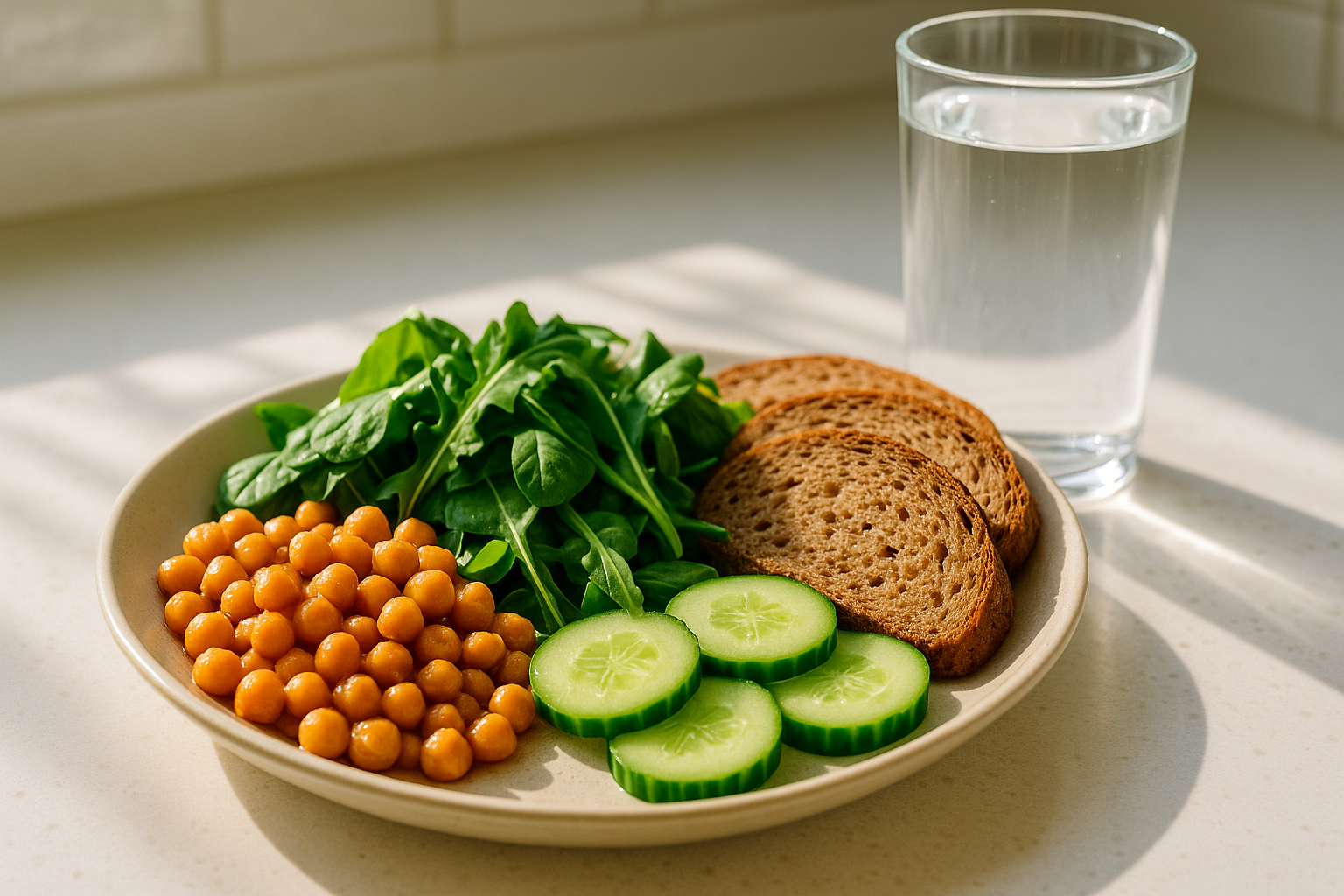
Pro tip: Foods like cucumber, celery, and watermelon contribute to your hydration and fiber simultaneously. They're an efficient way to meet both targets during a meal.
- 25–38g fiber per day is the target for most adults
- Add 8 oz water per additional 5g of fiber
- Spread water intake across the full day, not just at meals
Step 4: Adjust Your Mealtime Water Strategy to Your Weight Goals
What and why: Drinking water during meals digestion benefits vary depending on whether you're trying to maintain, lose, or gain weight. Water has zero calories but creates a sense of fullness. That's a powerful tool for some people — and a potential obstacle for others.
How to do it — for weight maintenance or loss: Drink a full 8 oz glass of water at the start of each meal. Research supports that pre-meal water consumption reduces overall calorie intake during that meal, without sacrificing nutrition. Water fills stomach space and activates stretch receptors, making you feel satisfied sooner. It's one of the most cost-free, side-effect-free appetite management tools available.
How to do it — for weight gain: Limit water during meals to small sips rather than full glasses. When you're trying to increase calorie intake, feeling full from water works against you. Focus on nutrient-dense foods first — healthy fats, proteins, and complex carbohydrates — and save larger water intake for between meals rather than during them.
For people with specific health conditions: If you're managing heart disease, kidney disease, or liver disease, your fluid intake may need to be monitored carefully. Always consult your healthcare team before making significant changes to how much water you consume daily. This step is not one-size-fits-all for those with medical fluid restrictions.
- Weight loss goal: 8 oz water before and during meals
- Weight gain goal: small sips only, prioritise calorie-dense foods
- Medical conditions: consult your care team first
What to Expect: A Week-by-Week Timeline
Week 1 — Adjustment phase: You may notice you feel full more quickly than usual, especially if you're adding pre-meal water for the first time. Some people experience mild bloating as their gut adjusts to increased hydration paired with higher fiber. This typically passes within a few days.
Week 2 — Early benefits: Constipation often improves noticeably by the end of week two. Stool becomes easier to pass as hydration softens it. You may find you reach for post-meal snacks less frequently because you feel more satisfied after eating.
Week 3–4 — Rhythm building: Your digestive system begins to recognise mealtime patterns. Eating on a consistent schedule paired with consistent hydration helps your gut prepare acid and enzymes ahead of each meal. Energy after meals often improves because digestion becomes more efficient.
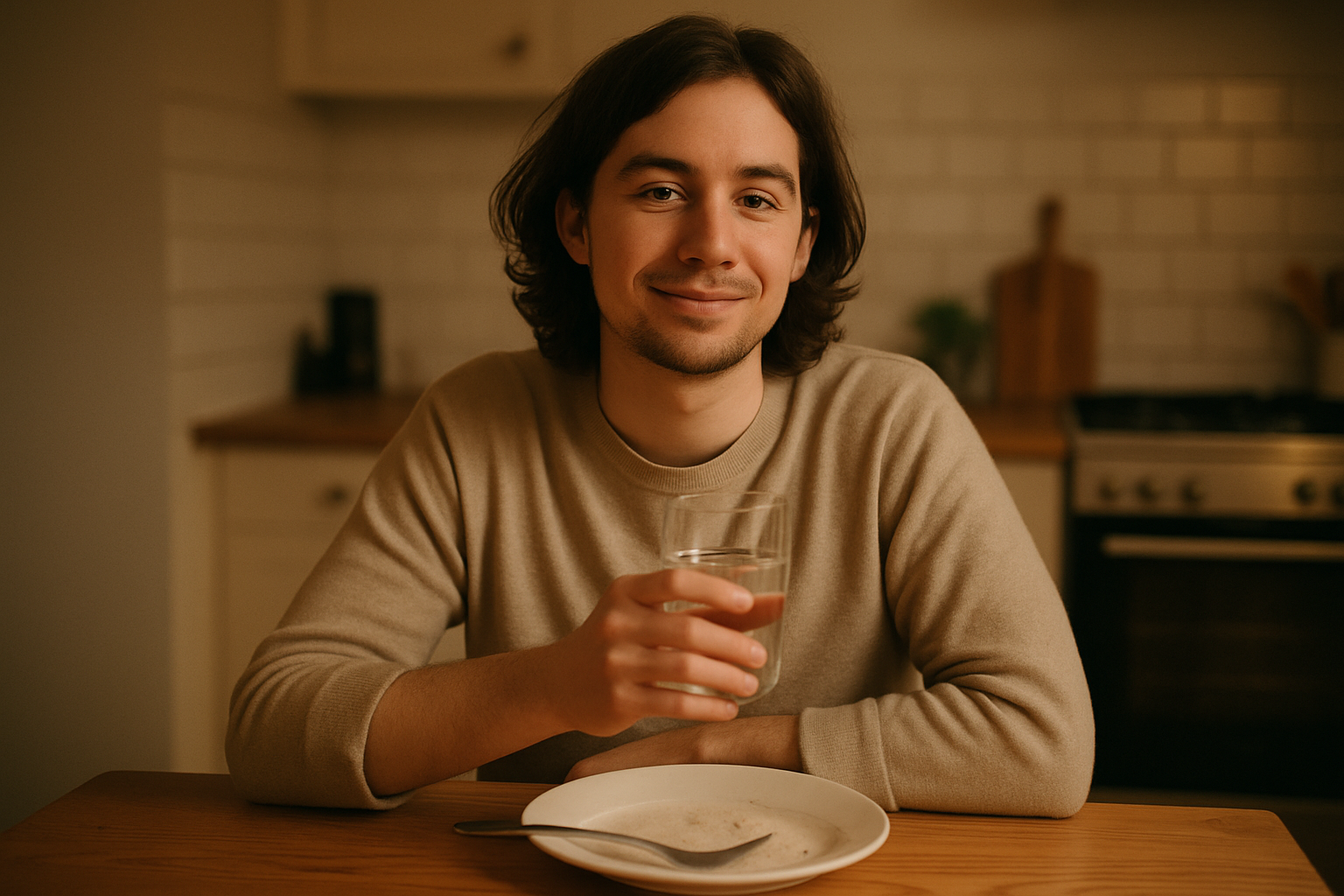
Beyond week 4: Consistent habits compound. Better hydration supports better stool transit, reduced bloating, and improved nutrient absorption over time. These aren't dramatic overnight changes — they're the kind of steady, cumulative improvements that quietly transform how you feel day to day.
Mistakes That Slow Your Progress
- Drinking large amounts of water all at once during a meal. Sipping is the strategy. Flooding your stomach with 16+ oz in a few minutes can cause temporary discomfort and a feeling of false fullness that passes quickly — leaving you hungry again soon after.
- Counting only glasses of plain water. Hydration also comes from broth-based soups, fruits, and vegetables. If you eat a salad with cucumber and tomatoes, that counts toward your fluid intake.
- Stopping water intake immediately after eating. Digestion continues for hours post-meal. Staying hydrated after eating supports the full digestive process, not just the portion that happens at the table.
- Ignoring stress at mealtimes. Even perfect hydration habits won't fully offset a nervous system locked in stress mode. Eating while anxious, distracted, or rushing impairs digestive enzyme production regardless of water intake.
- Assuming more water always means better digestion. For people with heart, kidney, or liver conditions, excess fluid can be harmful. More is not always better — appropriate is better.
What Can Help You Get There Faster
Tracking tools: A simple marked water bottle with hourly measurements removes the guesswork from daily hydration. You don't need a smart device — a $10 bottle with oz markers is enough to build awareness of your intake patterns across meals and the rest of the day.
Dietary resources: The Mayo Clinic on Digestive Health book provides detailed, condition-specific guidance on nutrition and fluid intake for gut health. The Academy of Nutrition and Dietetics Complete Food and Nutrition Guide (5th ed.) by Roberta Duyff is a comprehensive reference for matching fiber and hydration targets to your specific health goals.
Professional support: If you're managing a chronic condition, working with a registered dietitian offers personalised guidance that no article can replace. A dietitian can calculate your exact fluid and fiber needs based on your medications, activity level, and health status — and help you avoid the trial-and-error frustration of going it alone.
Summary: Your Mealtime Hydration Checklist
✅ Drink 4–6 oz of water at the start of each meal to prime digestion ✅ Sip water between bites to slow your eating pace to 15–20 minutes ✅ Match water intake to your fiber intake — add 8 oz per extra 5g of fiber ✅ Adjust mealtime water volume based on whether your goal is weight loss or weight gain ✅ Avoid large gulps; sip steadily throughout the meal ✅ Stay hydrated after meals to support continued digestion ✅ Eat on a consistent schedule to help your gut build a reliable rhythm ✅ Manage mealtime stress — your nervous system directly affects your gut ✅ Consult your healthcare team if you have heart, kidney, or liver conditions
Sources: Mayo Clinic Expert Opinion (Feb. 14, 2025); Duyff RL, Academy of Nutrition and Dietetics Complete Food and Nutrition Guide, 5th ed.; 2020–2025 Dietary Guidelines for Americans; LeBrasseur NK et al., Mayo Clinic on Healthy Aging (2024).