How to Lose Menopause Belly Fat for Good
Menopause belly fat is driven by hormonal imbalance, not just calories. Learn the 6 diet steps and lifestyle changes that actually work.


If you've been cutting calories and pushing through cardio sessions only to watch your midsection stay stubbornly round, you are not imagining things. Menopause belly fat plays by completely different rules — and until you understand those rules, no amount of dieting will move the needle. The real driver is hormonal, and the real solution starts there.

Why Menopause Belly Fat Is Different From Regular Weight Gain
During perimenopause, the body's hormonal landscape shifts dramatically. Estrogen doesn't simply decline in a straight line — it fluctuates, spiking and dipping in ways that disrupt nearly every system that governs metabolism and fat storage.
One of estrogen's key jobs is directing fat toward the hips and thighs as subcutaneous fat. As estrogen signals become erratic, that directional cue weakens and fat deposition migrates inward — settling deep inside the abdominal cavity as visceral fat.
Visceral fat is not passive. It is hormonally active tissue that amplifies existing hormonal imbalances, making the perimenopausal transition harder and the belly fat problem a self-reinforcing cycle. Noticing a thickening waistline is, in this sense, a metabolic warning sign worth taking seriously.
The Three Hormonal Drivers Behind Meno Belly
1. Estrogen Fluctuations
Estrogen imbalance is the starting point for the fat-distribution shift described above. Restoring a healthier hormonal ratio — rather than simply suppressing or boosting a single hormone — is what allows the body to release accumulated visceral fat. Adaptogenic herbs and plant compounds have a long track record of supporting this kind of dynamic, personalised hormonal rebalancing.
2. Cortisol and Chronic Stress
Visceral fat cells are loaded with cortisol receptors. Every time stress triggers an adrenal cortisol release, those receptors respond by generating more belly fat. This creates a vicious loop: stress produces cortisol, cortisol feeds visceral fat, and visceral fat itself acts as an inflammatory tissue that keeps stress hormones elevated.
Chronic inflammation compounds the problem by inhibiting the enzymes that normally break fats down. Stress management — whether through meditation, delegation, gentle movement, or simply unplugging — is therefore a legitimate fat-loss strategy, not a soft lifestyle suggestion.
3. Insulin Resistance
When cells stop responding efficiently to insulin, glucose cannot be used for energy and is converted to fat instead — even in a calorie deficit. Both chronic stress and existing abdominal fat encourage insulin resistance, which is why women in perimenopause can eat very little and still struggle to lose weight.
Strength training directly addresses this mechanism. Building lean muscle mass increases the sensitivity of insulin receptors and raises resting metabolic rate. This is also why men, who carry more lean muscle by default, tend to shed weight more easily.

How Poor Sleep Makes Menopause Belly Fat Worse
Night sweats, racing thoughts, and disrupted sleep cycles are classic perimenopause complaints — and they feed directly into weight gain through hormonal pathways most people don't consider.
Sleep deprivation suppresses leptin, the hormone that signals fullness, while elevating ghrelin, the hormone that triggers cravings for calorie-dense junk food. The result is not a willpower problem — it is a biochemistry problem.
Getting consistent, restorative sleep is a non-negotiable pillar of meno belly fat loss. Addressing the root causes of perimenopausal sleep disruption — hormonal fluctuations, elevated cortisol, blood sugar instability — is far more effective than white-knuckling through fatigue and hunger.
The Menopause Belly Diet: 6 Evidence-Backed Steps
Crash diets fail for meno belly because they treat the symptom, not the cause. A diet designed to shift visceral fat during perimenopause must do two things simultaneously: reduce overall inflammatory load and actively support hormonal balance. Here is how to structure that approach.
Step 1 — Cut Sugar Aggressively
Sugar is a direct trigger for hormonal imbalance. Eliminating sugary processed foods removes a major source of added sugar and the unhealthy fats that often accompany it. When a sweet craving hits, reach for whole fruit instead — apples, pomegranates, and cherries contain plant compounds that support hormonal balance while satisfying the sweet tooth.
Step 2 — Eat Anti-Inflammatory Foods Daily
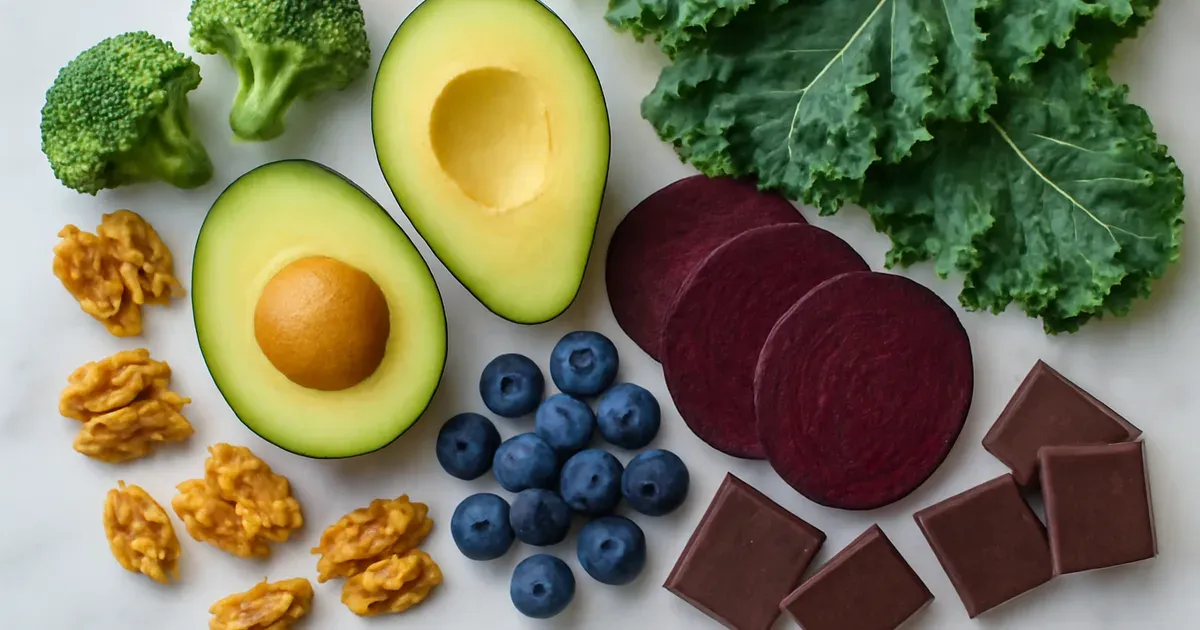
Chronic inflammation locks weight in place by interfering with the enzymes responsible for fat breakdown. Loading meals with antioxidant-rich vegetables counteracts this. Broccoli, spinach, kale, avocados, beetroot, sweet potatoes, carrots, and even dark chocolate all belong on the meno belly plate.
Step 3 — Prioritise Fibre at Every Meal
High-fibre diets support healthy estrogen metabolism by binding excess estrogen in the gut and promoting its excretion — a critical step for women dealing with estrogen dominance. Dark leafy greens, oats, brown rice, millet, root vegetables, and seeds are all excellent sources. Aim to build fibre into every meal rather than treating it as an afterthought.
Step 4 — Eat Enough Protein
Protein supplies the amino acid building blocks for estrogen, insulin, and thyroid hormones. It also stabilises blood sugar between meals, reducing cortisol spikes and making it easier to stick to the overall diet. Target 20–25 grams of protein at each main meal and 10–15 grams with snacks.
Step 5 — Eat for Symptom Relief
Fewer menopause symptoms means better sleep, less stress, and a more manageable weight-loss journey. Foods rich in iron and calcium — meat, fish, eggs, beans, and lentils — support mood stability and can ease hot flashes. Alcohol and caffeine, on the other hand, are well-documented hot flash triggers and should be limited or eliminated.
Step 6 — Consider Medicinal Herbs
Plant medicines have been used for centuries to support women's hormonal health during the menopause transition. Certain herbs act as adaptogens — meaning they respond to the body's specific hormonal needs rather than pushing hormones in a fixed direction. This makes them particularly suited to perimenopause, where the issue is instability rather than simple deficiency.

Putting It All Together: A Practical Daily Framework
Losing menopause belly fat is not about eating less — it is about eating differently and living in a way that keeps hormones, cortisol, insulin, and sleep hormones in balance. The steps above are mutually reinforcing: better sleep lowers ghrelin, which makes it easier to eat less sugar; less sugar reduces insulin resistance; lower insulin resistance reduces visceral fat; less visceral fat lowers inflammatory cortisol output.
Start with the changes that feel most accessible. Cutting sugary processed foods and adding a palm-sized serving of protein to every meal are high-leverage starting points that produce noticeable hormonal effects within weeks.
Strength training twice a week is the single most impactful exercise choice for insulin sensitivity and metabolic rate. Long, exhausting cardio sessions may actually elevate cortisol — the opposite of what meno belly requires.
The Bottom Line
Menopause belly fat accumulates because of hormonal shifts, not personal failure. Addressing the underlying hormonal drivers — fluctuating estrogen, elevated cortisol, insulin resistance, and sleep-disrupting hormone changes — is what finally allows the body to release this type of weight. Diet, movement, stress management, sleep, and targeted herbal support all work together toward that goal. No single lever does it alone, but when they are all pointing in the same direction, results follow.
Frequently Asked Questions
Why doesn't calorie restriction work for menopause belly fat?
Visceral fat accumulated during perimenopause is hormonally driven, which means the usual energy-balance equation is only part of the picture. Without addressing the underlying hormonal imbalances — particularly estrogen fluctuations, cortisol elevation, and insulin resistance — the body resists releasing this specific type of fat regardless of calorie intake.
Does strength training really help with menopause belly fat?
Yes — and it is one of the most effective interventions available. Building lean muscle mass improves insulin receptor sensitivity, which reduces the tendency for glucose to be stored as fat. It also raises resting metabolic rate. Even two sessions per week can produce measurable improvements in insulin sensitivity within a few weeks.
Can stress alone cause belly fat in perimenopause?
Chronic stress is a direct physiological driver of visceral fat accumulation. Visceral fat cells carry cortisol receptors that respond to every stress-triggered cortisol release by generating more abdominal fat. Managing stress is therefore not optional in a meno belly fat-loss plan — it is one of the core mechanisms.
Which foods most directly support hormonal balance during perimenopause?
High-fibre foods, quality protein sources, and antioxidant-rich vegetables form the foundation. Fibre assists estrogen metabolism and excretion; protein provides hormonal building blocks and stabilises blood sugar; antioxidants reduce the oxidative stress that drives chronic inflammation. Specific superfoods for hormonal health include apples, pomegranates, cherries, broccoli, kale, and avocados.
How long does it take to see results from a meno belly diet?
Results vary depending on the individual's hormonal profile, stress levels, and consistency, but many women notice improvements in energy, sleep quality, and bloating within two to four weeks of reducing sugar, increasing protein and fibre, and managing stress. Visible changes in waist circumference typically take longer — often eight to twelve weeks of consistent effort across all the lifestyle pillars.