How to Lose Weight in Your 40s Without Deprivation
A doctor-backed guide to losing weight in your 40s by nourishing your body, building key habits, and addressing the hormonal shifts that change everything.


Stubborn weight that won't budge no matter what you try — if you're in your 40s, this probably sounds painfully familiar. You're not overweight by clinical definition, but your clothes fit differently, your energy isn't what it was, and every approach that worked in your 30s now seems useless.
This guide shares a doctor-developed, experience-tested approach to losing weight in your 40s — one built on nourishing your body rather than punishing it. No crash diets. No obsessive calorie counting. Instead, a framework grounded in mindset, lifestyle, metabolic health, and yes, an honest look at how hormones shift everything in midlife.

Why Losing Weight in Your 40s Feels So Different
Your metabolism is not broken — but it has changed. The hormonal landscape of your 40s looks nothing like your 20s or 30s. Estrogen, progesterone, cortisol, and insulin all behave differently, and that directly affects how your body stores fat, especially around the belly.
Excessive belly fat isn't just a cosmetic concern. It often signals deep visceral fat — the kind that wraps around internal organs — and carries serious long-term health risks, including metabolic dysfunction and increased disease risk.
The standard advice fails midlife women because it ignores these biological realities. Cutting calories harder or adding more cardio can actually backfire, raising cortisol and making fat loss even harder. What works instead is a smarter, more layered approach.
One important truth before we go further: you are not broken, and no number on a scale defines your worth. The goal here is health, resilience, and feeling strong in your own body — not chasing an airbrushed standard that doesn't reflect real life.
Start Here: Mindset Is the #1 Weight-Loss Tool
Most weight-loss plans skip mindset entirely — and that's why they fail. Research is clear that forming one small healthy habit builds self-confidence, which cascades into the ability to take on more. Starting with achievable, specific goals is more likely to produce lasting results than overhauling everything at once.
Studies suggest new habits become automatic after roughly 66 days. That's not forever — but it does require consistency and self-compassion. If you slip, the goal isn't guilt; it's what one coach calls "correct and continue."
A hidden mindset block many women carry is the belief that they should look and feel great without really trying — a kind of "low-maintenance" identity baked in from childhood. If you were the "easy child" or the "cool girl," you may have unconsciously absorbed the idea that having needs is a burden. Recognizing that belief is the first step to releasing it.

This is not an invitation to obsess or restrict. If you already struggle with disordered eating or negative body image, the inner-work piece looks different — it begins with healing your relationship with food and your body, not adding more pressure.
Find Your "Why" Before You Change Anything Else
Your "why" is the engine that keeps habits running when motivation fades. Whether it's keeping up with your kids, recovering from an injury, reducing disease risk, or simply feeling confident again — you need to name it clearly and write it down.
Take 15–20 minutes with these reflection prompts:
- Picture yourself at your goal: How does your body feel? What are you doing every day that you can't do right now?
- Look at your relationships: How does your energy and confidence affect the people around you?
- Identify what disappears: What stresses or physical limitations are no longer part of your life?
Be specific and personal. Vague goals like "I want to feel better" won't carry you through hard weeks. A concrete why — like returning to strength training after a spinal diagnosis, or hiking with your family without pain — is something you can return to when willpower runs low.

The Lifestyle Cornerstones of Midlife Weight Loss
Nourishing your body is not the same as restricting it. The foundation of sustainable weight loss in your 40s comes down to a few key lifestyle practices that work with your changing biology — not against it.
1. Prioritize Strength Training
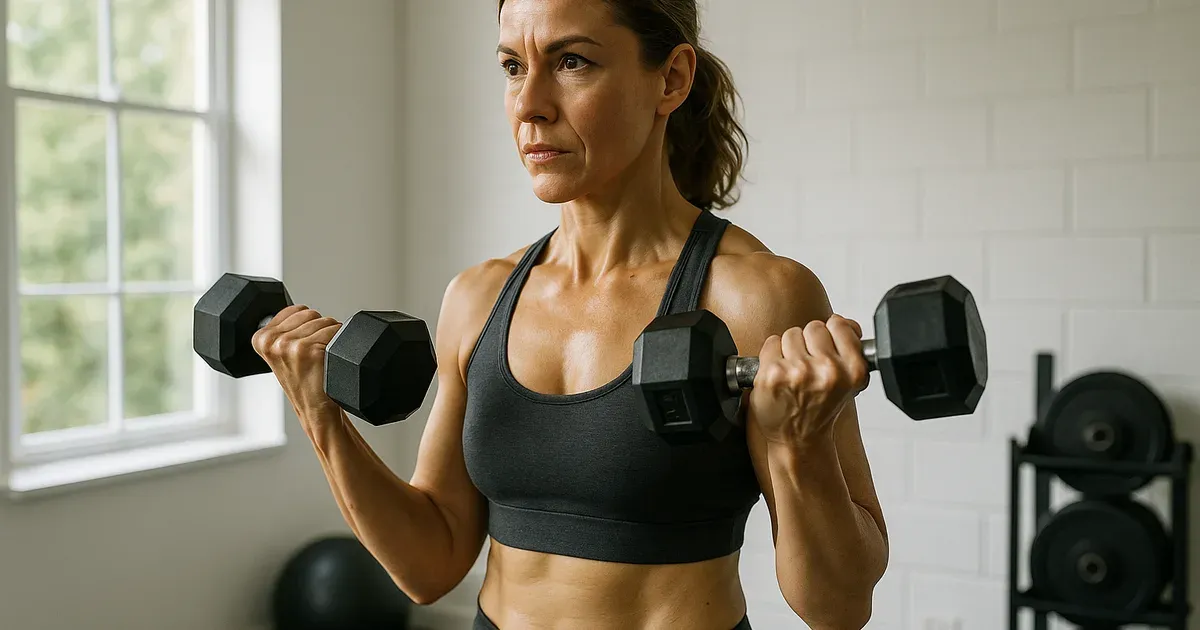
Muscle is your metabolic engine. As we age, we naturally lose muscle mass — a process called sarcopenia — which slows metabolism and makes fat gain easier. Resistance training two to four times per week directly counters this. It also supports bone density, insulin sensitivity, and hormonal balance.
Strength training is not optional for midlife women who want lasting weight management. It is the single most impactful physical intervention available to you.
2. Eat to Nourish, Not to Punish
Protein is your best friend in your 40s. Adequate protein supports muscle retention during fat loss, reduces hunger hormones, and stabilizes blood sugar. Aim to build meals around whole protein sources — eggs, fish, legumes, quality meat — rather than leading with restriction.
Anti-inflammatory foods — leafy greens, berries, olive oil, fatty fish — also matter. Chronic inflammation is a major driver of metabolic dysfunction, and often, when inflammation is addressed, weight comes off as a natural side effect.
3. Sleep Like Your Weight Loss Depends on It (Because It Does)
Poor sleep dysregulates the hormones that control hunger and fat storage. Ghrelin rises, leptin drops, cortisol spikes — and suddenly you're craving sugar at 10 p.m. and storing everything you eat. Seven to nine hours of quality sleep is not a luxury; it's a clinical requirement for metabolic health.
4. Manage Stress as a Weight-Loss Strategy
Chronic stress keeps cortisol elevated, which signals the body to hold onto belly fat. Stress management — whether through breathwork, therapy, time in nature, or reducing your obligations — is as important as your workout routine. Many women find that when they address their stress load, stubborn weight finally starts to shift.
5. Address Underlying Health and Hormonal Factors
Hormones are not a minor detail in midlife weight management — they are central to it. Perimenopause and menopause bring significant shifts in estrogen and progesterone that directly influence body composition, fat distribution, and metabolism. For some women, lifestyle changes alone are not enough.
Hormone replacement therapy (HRT) and newer medications like GLP-1 receptor agonists are options worth discussing with a qualified clinician. These are not shortcuts — they are medical tools that, when appropriate, support the lifestyle work you're already doing. Neither replaces the foundations above, but for some women they make those foundations achievable for the first time.
What to Stop Doing Right Now
Stop obsessing over macros as your primary strategy. Tracking every gram of carbohydrate or fat while running on poor sleep and sky-high cortisol will not produce the results you want. The numbers matter less than the overall quality of your lifestyle.
Stop comparing your body to photoshopped images. The standards set by media and social platforms are not real, and they are not achievable — nor should they be the goal. Your target is your own healthiest, strongest self.
Stop restarting the same failed diet every January. If something hasn't worked repeatedly, the answer is not to try harder at the same thing. The answer is a different approach — one that treats your 40s body as the complex, capable system it actually is.
The Bottom Line
Losing weight in your 40s is absolutely possible — but the approach has to match the biology. The women who succeed long-term are not the ones who restrict the most. They're the ones who build the strongest habits, sleep well, manage stress, lift weights, eat to nourish, and address the hormonal and metabolic factors that make midlife weight loss uniquely challenging.
Start with one small habit. Write down your why. Give yourself 66 days before you judge the outcome. And treat your body — at every step — as something worth taking care of, not punishing into submission.