How to Lose Weight for Women's Health (Without Crash Diets)
Science-backed steps for sustainable weight loss for women's health — covering hormones, sleep, nutrition, and mindful eating without crash diets.


You've tried cutting carbs, skipping meals, and powering through exhausting workout plans — only to end up right back where you started, maybe even heavier, and definitely more frustrated. For women, weight loss isn't just about calories in versus calories out. Hormones, sleep, stress, and the way your body responds to food all play interconnected roles that most generic diet advice completely ignores. You deserve an approach built around how a woman's body actually works. This guide walks you through science-backed steps designed specifically to support weight loss for women's health — sustainably, without punishing yourself or giving up foods you love.

Why Weight Struggles Happen in the First Place for Women
Women's bodies are uniquely complex, and that complexity is exactly why one-size-fits-all diet plans so often fail. Several factors specific to women consistently work against sustainable weight management.
- Hormonal fluctuations — Oestrogen, progesterone, cortisol, and insulin all influence how your body stores fat, particularly around the abdomen. These hormones shift across your menstrual cycle, perimenopause, and menopause, changing your hunger signals and metabolism every single week.
- Sleep deprivation — Research shows that sleeping fewer than 7 hours per night raises the likelihood of a higher BMI and obesity. For women managing caregiving, work, and mental load, poor sleep is a near-universal issue that directly undermines fat loss.
- Emotional eating patterns — Women are statistically more likely to eat in response to stress and emotion. Without addressing the psychological dimension of eating, no meal plan will deliver lasting results.
- Undereating backfires — Severe calorie restriction triggers the body's stress response, raising cortisol and causing muscle loss. This slows metabolism, making future weight loss even harder.
- Gut-brain miscommunication — When you eat quickly or while distracted, your brain doesn't receive the fullness signal in time. This is especially relevant for busy women who routinely eat on the go.
Step 1: Build a Hormone-Friendly Plate at Every Meal
What you eat directly shapes your hormonal environment, and for women, that relationship is more pronounced than most people realise. A plate that balances protein, healthy fats, fibre-rich vegetables, and complex carbohydrates keeps blood sugar stable, reduces cortisol spikes, and prevents the energy crashes that trigger cravings later in the day.
Protein is non-negotiable. It preserves lean muscle mass as you lose weight, which keeps your resting metabolism from dropping. It also signals satiety hormones like peptide YY and GLP-1, meaning you feel full longer and crave less between meals. Aim for a palm-sized portion of protein at every meal — eggs, fish, legumes, or Greek yoghurt all work well.
Healthy fats support oestrogen metabolism and fat-soluble vitamin absorption, both critical for women's health. Include sources like olive oil, avocado, and oily fish. Although fats provide 9 calories per gram compared to protein's 4, they are deeply satisfying and hormonally essential — don't eliminate them.
Fill half your plate with vegetables. Leafy greens, bell peppers, tomatoes, green beans, and courgette are nutrient-dense and low in calories. Aim for around 2.5 cups of non-starchy vegetables daily. Be mindful that starchy vegetables like sweet potatoes and corn count more like a carbohydrate serving, so adjust portions accordingly.
Pro tip: Meal prep two or three protein sources on Sunday so that building a balanced plate during the week takes less than five minutes.

Step 2: Prioritise Sleep as a Core Weight-Loss Strategy
Sleep is not a luxury — it is a metabolic necessity, particularly for women's health. When you sleep fewer than 7 hours per night, your body elevates ghrelin (the hunger hormone) and suppresses leptin (the fullness hormone). The result: you wake up hungrier, crave high-calorie foods, and have less willpower to resist them.
Cortisol, the stress hormone, surges with poor sleep. Elevated cortisol encourages your body to store fat around the abdomen — the very pattern most women are trying to reverse. Prioritising 7–9 hours of quality sleep each night actively lowers cortisol and helps regulate the hormonal signals that govern appetite.
Consistent sleep timing matters as much as duration. Going to bed and waking at the same time daily aligns your circadian rhythm, which governs insulin sensitivity and fat-burning cycles. Small improvements here — even an extra 45 minutes — can meaningfully shift how your body responds to diet and exercise.
- Wind down screens 60 minutes before bed to reduce blue light interference with melatonin.
- Keep your bedroom cool and dark — both conditions improve sleep depth.
- Avoid large meals or alcohol within 2–3 hours of bedtime, as both disrupt sleep architecture.
Pro tip: Track your sleep for one week using a free app. Many women are surprised to find they're averaging 5–6 hours, not the 7 they thought.
Step 3: Add Fibre and Water to Reshape Your Appetite
Two of the most underrated tools in weight loss for women's health cost almost nothing and require no special equipment: fibre and water. Yet most women are chronically under-consuming both, and it is quietly sabotaging their progress.
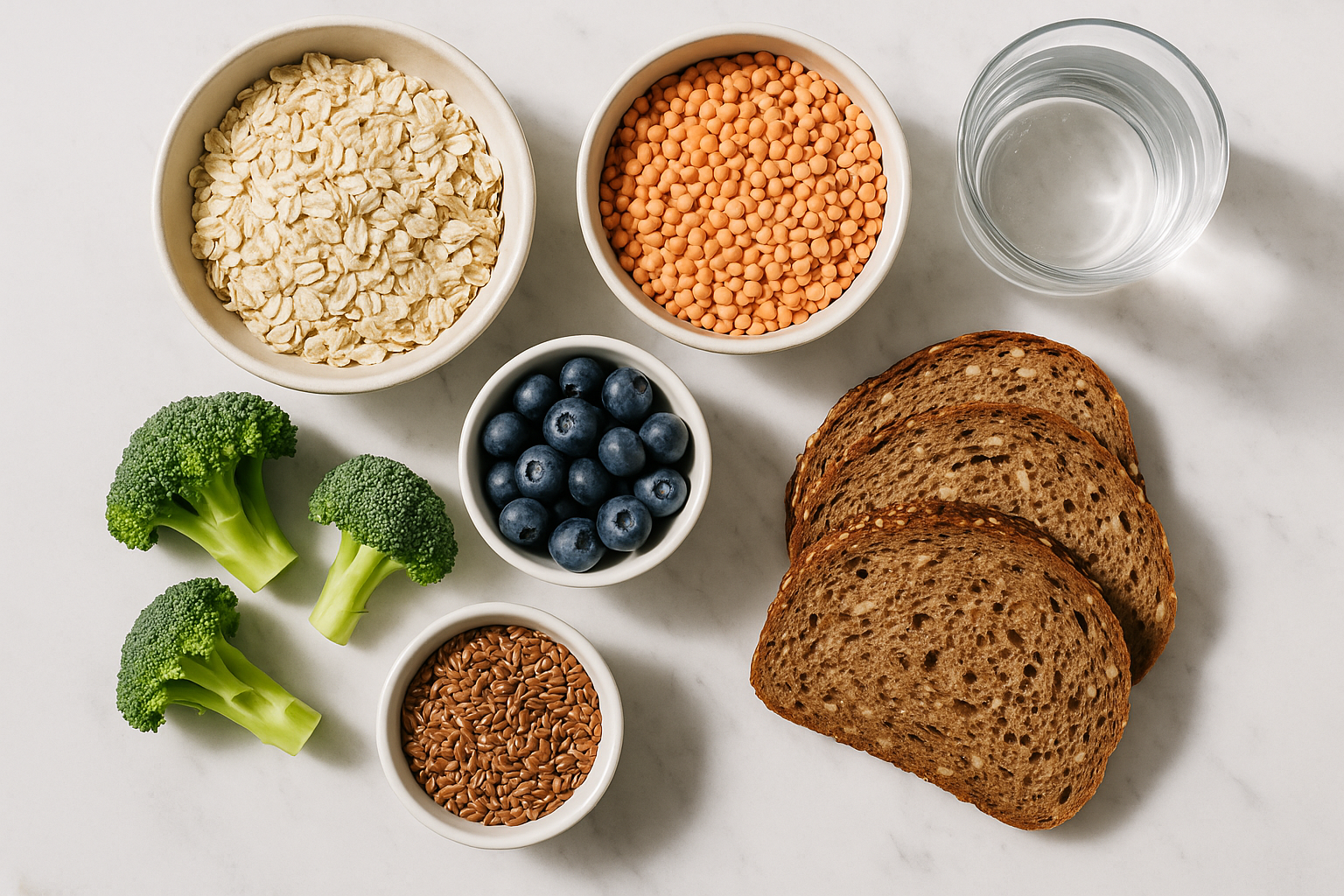
Dietary fibre slows digestion, keeping you fuller for longer and preventing the blood sugar spikes and crashes that drive afternoon snacking. Women should aim for 25 grams of fibre daily. Practical sources include oats, lentils, berries, broccoli, whole grain bread, and flaxseed. Aim for 2 cups of fruit and around 6 oz of grains daily to make reaching that target far more achievable.
Water works as an appetite suppressant when consumed before meals, reducing the amount you eat at that sitting. It also supports the kidneys in clearing metabolic waste, improves physical performance during exercise, and keeps energy levels steady — all of which matter when you're working to build sustainable habits. Swap sugary drinks, sodas, and sweetened coffees for water or herbal teas. These swapped calories add up faster than most people expect.
The gut-brain connection matters here deeply. Your gut microbiome — the bacterial ecosystem in your digestive tract — thrives on diverse fibre sources and adequate hydration. A healthy microbiome produces short-chain fatty acids that improve insulin sensitivity and reduce inflammation, both key factors in healthy weight management for women.
Pro tip: Start each morning with a large glass of water before coffee. It rehydrates you after sleep and sets an appetite-regulating tone for the day.
Step 4: Move Your Body in Ways That Work With Your Hormones
Exercise for women's health is not about punishment or burning off last night's dinner. It is about supporting your hormonal health, preserving muscle, managing stress, and improving how your body uses fuel. The right kind of movement changes depending on where you are in your cycle, your stress levels, and your fitness base.
Strength training is particularly valuable for women because it builds lean muscle, which raises your resting metabolic rate. More muscle means you burn more calories even at rest. Many women shy away from weights due to fear of bulking up — this is a myth. Women's lower testosterone levels make significant muscle bulk extremely difficult without deliberate effort. Two to three sessions of resistance training per week is enough to shift body composition meaningfully.
Moderate cardio supports heart health and cortisol regulation. Walking, cycling, swimming, and dancing all count. Avoid the trap of excessive high-intensity cardio, which can spike cortisol in women who are already under chronic stress, paradoxically making fat loss harder. Aiming for 150 minutes of moderate activity per week is a realistic, research-supported target.
Always consult a doctor before beginning a new exercise programme, especially if you have any underlying health conditions, are in perimenopause, or are postpartum. Your needs are individual, and a personalised approach will always outperform a generic plan.
- Walk after dinner — even 10 minutes improves blood sugar regulation.
- Try yoga or Pilates during the luteal phase of your cycle when energy dips.
- Prioritise recovery as much as training — muscles are built during rest.
Step 5: Eat Mindfully to Break the Emotional Eating Cycle
Women are significantly more likely than men to use food as emotional regulation, and this is not a character flaw — it is a learned neurological pattern shaped by culture, hormones, and stress. Mindful eating interrupts that pattern by restoring conscious awareness to the act of eating.
Eating slowly is one of the most evidence-supported changes you can make. It takes approximately 20 minutes for your gut to signal your brain that you're full. When you eat quickly — at a desk, standing over the counter, scrolling your phone — you consistently overshoot that threshold before the signal arrives. Slowing down lets the system work as designed.
Mindful eating also means learning to distinguish physical hunger from emotional hunger. Physical hunger builds gradually and can be satisfied with any food. Emotional hunger arrives suddenly, craves specific comfort foods, and often leads to guilt. Developing this awareness — without judgement — is a transformative skill that no calorie tracker can replace.
- Put your fork down between bites.
- Remove screens during at least one meal per day.
- Rate your hunger on a scale of 1–10 before eating.
- Cook colourful meals with varied textures — this slows eating naturally and increases satisfaction.
Pro tip: Keep a two-week food and mood journal. Patterns between emotional states and eating behaviours often become visible within days, giving you powerful self-knowledge.

What to Expect: A Realistic Week-by-Week Timeline
Weight loss is not linear, and for women it can feel particularly unpredictable due to hormonal water retention across the menstrual cycle. Here is what a realistic progression looks like:
Week 1–2: You may lose 1–3 lbs, a combination of water weight and early fat loss. Energy may fluctuate as your body adjusts to dietary changes. Sleep improvements often feel noticeable quickly.
Week 3–4: Fat loss becomes the primary driver. Expect 0.5–1 lb per week. Cravings may reduce noticeably as blood sugar stabilises. Clothes may feel looser before the scale reflects changes significantly.
Month 2–3: Metabolic adaptation settles in. This is where sustainable habits pay off — women who maintain their protein, fibre, sleep, and movement strategies continue losing steadily. Those who relied on restriction often plateau here.
Long term (3–6 months): A loss of 0.5–2 lbs per week compounds to 6–24 lbs over six months — without crash diets or unsustainable restrictions. This is the range most health professionals consider safe and maintainable.
Mistakes That Slow Your Progress
- Skipping meals to cut calories quickly — This raises cortisol, triggers muscle loss, and typically leads to overeating later in the day. Structured, balanced meals serve women's metabolism far better.
- Ignoring sleep and stress — No diet can fully compensate for chronically elevated cortisol and disrupted hunger hormones. These are not soft lifestyle tips — they are physiological drivers of weight retention.
- Doing too much cardio and too little strength training — High-volume cardio without resistance work leads to muscle loss alongside fat loss, reducing metabolism over time.
- Relying on the scale as the only metric — Hormonal water retention can cause fluctuations of 2–5 lbs across a menstrual cycle with no actual fat change. Use measurements, how clothes fit, and energy levels as additional markers.
- Setting unrealistic timelines — Losing 10–15 lbs in one or two weeks is not physiologically possible through safe means. Chasing that goal leads to dangerous restriction and rebound weight gain.
What Can Help You Get There Faster
Tracking tools — A simple food and mood journal or a free app like Cronometer can help you identify patterns in your eating without obsessing over every calorie. Use these to observe, not to restrict.
Kitchen equipment — A food scale, a blender for protein-rich smoothies, and a batch-cooking container set make it significantly easier to prepare hormone-friendly meals consistently. Environment design reduces reliance on willpower.
Educational resources — Platforms focused on the gut-brain connection, like Gut Brain News, offer evidence-based content on how your digestive system, hormones, and mental health interact to influence weight and overall women's health. Understanding the why behind your habits makes them far easier to sustain.
Your Action Plan at a Glance
- ✅ Build every meal around protein, healthy fat, vegetables, and complex carbs
- ✅ Prioritise 7–9 hours of quality sleep every night
- ✅ Eat 25g of fibre daily and drink water before every meal
- ✅ Include 2–3 strength training sessions and 150 minutes of moderate movement per week
- ✅ Eat slowly, without screens, and learn to distinguish physical from emotional hunger
- ✅ Expect 0.5–2 lbs of loss per week — and trust the long-term process
- ✅ Measure progress beyond the scale: energy, mood, sleep quality, clothing fit