How to Lower Cortisol in Perimenopause (Without Burnout)
Learn how to lower cortisol in perimenopause in 4 evidence-backed steps that also heal the gut-brain axis — without extreme diets or burnout.


You used to handle pressure without blinking. Now the same workload, the same family demands, the same life — leaves you completely flattened. You've tried cutting back on caffeine, going to bed earlier, even meditating. Nothing sticks. And your body keeps changing in ways that feel outside your control.
What most advice misses is that this isn't a willpower problem or a scheduling problem. After 40, the hormonal landscape shifts in ways that fundamentally rewire how your body responds to stress — and your gut is caught in the middle of it. Understanding that connection is the first step toward actually feeling better. This guide walks you through exactly what's happening and four practical steps to lower cortisol in perimenopause without white-knuckling your way through another exhausting protocol.

Why Cortisol Dysregulation Happens in the First Place
Perimenopause changes the rules. Progesterone — your body's natural calming agent — is the first reproductive hormone to decline. It acts on GABA receptors in the brain, promoting calm and sleep. When it drops, the same stressors that used to feel manageable suddenly feel unmanageable. You haven't become weaker. You've lost hormonal cushioning.
Estrogen fluctuations destabilise your stress-response system. Your hypothalamic-pituitary-adrenal (HPA) axis — the feedback loop governing cortisol output — is directly regulated by oestrogen and progesterone. As both hormones swing unpredictably, that feedback loop loses its calibration. Data from the Seattle Midlife Women's Health Study confirmed cortisol rises measurably as women move through the late menopausal transition.
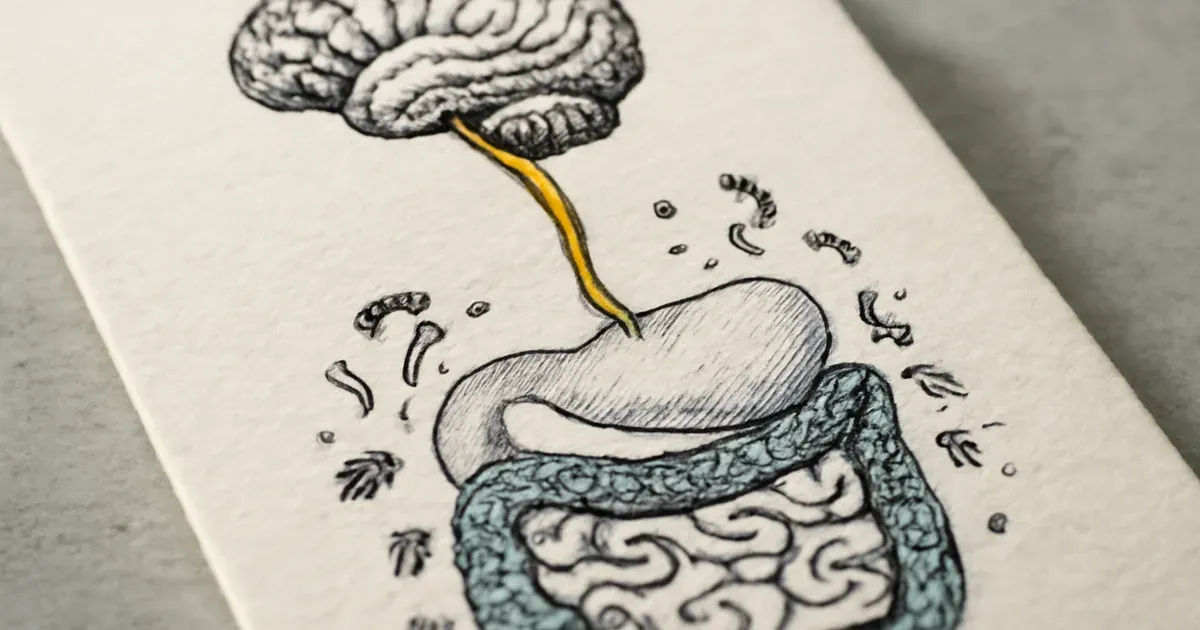
The gut-brain axis amplifies everything. Chronic cortisol alters your gut microbiome, depleting beneficial bacteria like Lactobacillus and Bifidobacterium while increasing intestinal permeability. Your gut produces roughly 90% of your body's serotonin and communicates constantly with your HPA axis via the vagus nerve. When that gut-brain communication breaks down under chronic stress, cortisol regulation becomes even harder — creating a loop that feeds itself.
- Progesterone decline removes your nervous system's natural buffer
- HPA axis loses calibration as oestrogen fluctuates
- Elevated cortisol disrupts gut microbiome diversity
- Depleted microbiome further dysregulates the HPA axis via the gut-brain axis
- Insulin resistance, belly fat, and poor sleep compound the cycle
Step 1: Stabilise Your Blood Sugar to Interrupt the Cortisol Loop
Blood sugar instability and cortisol are locked in a two-way relationship that most stress-management advice completely ignores. When blood sugar drops — from skipping meals, eating refined carbs, or going too long without food — cortisol rises to signal your liver to release glucose. In perimenopause, when cortisol is already elevated, this creates constant small spikes throughout the day that keep your nervous system in a low-grade state of alarm.
The fix isn't a strict diet. It's strategic eating. Prioritise protein and healthy fats at every meal, especially breakfast. Aim for 25–35g of protein within 60 minutes of waking to blunt the cortisol awakening response from spiking too high. Eat every 3–4 hours rather than relying on willpower to push through hunger.
Your gut microbiome benefits directly from this approach. High-fibre, low-glycaemic foods — legumes, oats, leafy greens, berries — feed Bifidobacterium species that produce short-chain fatty acids (SCFAs). SCFAs signal the vagus nerve to calm the HPA axis, creating a measurable downstream reduction in cortisol output.
Pro tip: Add fermented foods — plain yoghurt, kefir, sauerkraut — to at least one meal daily. A 2021 Stanford study found that a high-fermented-food diet increased microbiome diversity and reduced markers of immune activation within 10 weeks.

Step 2: Reclaim Your Sleep Architecture
Sleep and cortisol exist in direct opposition. When cortisol stays elevated in the evening — the wired-but-tired feeling so many perimenopausal women know intimately — it suppresses melatonin production. You lie awake exhausted. Or you fall asleep but wake at 2 or 3 AM with a racing mind, because cortisol has spiked again ahead of its morning peak.
Address the evening cortisol spike first. Dim lights by 9 PM. Stop eating two hours before bed — late-night eating triggers insulin, which disrupts the cortisol-melatonin handoff. Keep your bedroom cool, since body temperature drop is one of the key signals for melatonin release. These aren't optional extras; they are the mechanism.
Your gut-brain axis plays a direct role in sleep quality. Lactobacillus rhamnosus and Lactobacillus reuteri produce GABA precursors that support sleep onset and reduce nighttime cortisol. A consistently fibre-rich diet supports these strains. Conversely, poor sleep for even two nights measurably reduces microbiome diversity — reinforcing why sleep recovery and gut health must be addressed together, not in isolation.
- Wind-down routine: dim lights, no screens, cool room — start 60 minutes before bed
- Avoid alcohol: it suppresses REM sleep and raises cortisol in the second half of the night
- Consider magnesium glycinate (200–400mg) — supports GABA activity and reduces sleep-onset cortisol
- Track your sleep to identify patterns rather than guessing
Step 3: Use Movement as Medicine — Not More Stress
The instinct to push harder when your body is struggling is understandable — but counterproductive. High-intensity exercise is itself a cortisol stressor. For women with already-elevated cortisol in perimenopause, five intense workouts a week can worsen HPA axis dysregulation rather than improve it. This is why some women find they gain weight or feel worse when they increase exercise intensity.
The evidence-backed sweet spot combines two types of movement. First, low-intensity, longer-duration activity — 30–45 minute walks, yoga, swimming, cycling at a conversational pace — activates the parasympathetic nervous system and measurably lowers cortisol. Second, two sessions of resistance training per week improve insulin sensitivity, support lean muscle mass (which declines with oestrogen), and have been shown to reduce HPA axis reactivity over time.
Your gut responds to movement too. Moderate aerobic exercise consistently increases microbiome diversity and supports populations of Akkermansia muciniphila — a keystone species linked to better metabolic health, reduced intestinal permeability, and lower systemic inflammation. Research published in Gut found that exercise-induced microbiome changes were independent of diet, though the two effects compound each other.
For personalised guidance on building a movement routine that supports both cortisol balance and gut-brain health, resources at gutbrain.news explore this intersection in depth.

Step 4: Directly Support the Gut-Brain Axis
The gut-brain axis isn't a metaphor — it's a physical, bidirectional communication highway. The vagus nerve carries signals between your gut and your brain continuously, and the composition of your microbiome directly influences what those signals say. In chronic stress states, that communication degrades: the gut becomes more permeable, inflammatory compounds enter the bloodstream, and the HPA axis loses its ability to self-regulate.
Three targeted strategies restore that axis. First, increase prebiotic fibre — the food your beneficial bacteria eat. Garlic, onions, leeks, chicory root, asparagus, and slightly underripe bananas are rich in inulin and fructooligosaccharides that selectively feed Lactobacillus and Bifidobacterium. Second, consider a targeted probiotic containing Lactobacillus helveticus R0052 and Bifidobacterium longum R0175 — this specific combination has been studied for its ability to reduce cortisol and psychological distress via the gut-brain axis in clinical trials. Third, support vagal tone directly through diaphragmatic breathing: five minutes of slow, deep exhale-focused breathing (inhale 4 counts, exhale 6–8 counts) has been shown to activate the parasympathetic nervous system and lower salivary cortisol acutely.
Reducing inflammatory triggers matters equally. Ultra-processed foods, excess alcohol, and chronic sleep deprivation each independently increase intestinal permeability. Removing even one of these consistently relieves pressure on the gut-brain axis and creates space for cortisol regulation to improve.
- Prebiotic-rich foods daily: garlic, onions, oats, chicory, asparagus
- Probiotic strains with clinical evidence for HPA axis support
- 5 minutes diaphragmatic breathing, morning and evening
- Eliminate or significantly reduce ultra-processed food and alcohol
- Consider omega-3 fatty acids (EPA/DHA): reduce neuroinflammation and support HPA axis regulation
What to Expect: A Realistic Timeline
Week 1–2: Blood sugar stabilisation and sleep improvements are often the earliest wins. Waking at 3 AM may reduce in frequency. Energy in the morning begins to feel more consistent.
Week 3–4: Gut symptoms — bloating, irregularity, digestive sensitivity — typically begin to settle as microbiome changes take hold. Mood feels more even. The sense of overwhelm softens.
Week 6–8: Measurable shifts in belly fat distribution, anxiety levels, and cognitive clarity become noticeable. These changes reflect deeper HPA axis recalibration and microbiome restructuring, which operate on a longer timeline than symptom relief.
Month 3 and beyond: Women who maintain these four steps consistently report that stress feels proportionate again — not absent, but manageable. Cortisol testing at this stage (salivary 4-point cortisol panel) can confirm HPA axis rhythm has restabilised if you want objective data.

Mistakes That Slow Your Progress
- Treating this as a supplement problem first. Adaptogens and magnesium help — but they cannot overcome chronically disrupted sleep, blood sugar swings, or a depleted microbiome. Foundation first.
- Going too hard on exercise. More intensity is not better when cortisol is already elevated. Two strength sessions and daily low-intensity movement outperforms five hard workouts every time in this context.
- Restricting calories aggressively. Caloric restriction is a physiological stressor that raises cortisol. Under-eating worsens the cycle even when the intention is to address weight gain.
- Ignoring the gut. Most cortisol protocols skip the microbiome entirely. Given that gut-brain axis dysfunction is both a consequence and a driver of HPA dysregulation, this is a significant oversight.
- Expecting linear progress. Hormonal fluctuations in perimenopause are inherently non-linear. A difficult week is not a sign the approach isn't working.
What Can Help You Get There Faster
Nutritional foundations matter more than any single supplement. A diet consistently high in prebiotic fibre, fermented foods, omega-3-rich fish, and quality protein creates the metabolic and microbiome conditions for cortisol regulation to improve. No supplement substitutes for this base.
Targeted probiotics and adaptogens can accelerate progress once foundations are in place. Look for probiotics with published clinical data on HPA axis outcomes. Adaptogens with the strongest evidence for cortisol modulation include ashwagandha (KSM-66 extract, 300–600mg daily) and rhodiola rosea, both of which also show benefits for gut permeability in emerging research.
Tracking tools and lab testing remove guesswork. A salivary cortisol panel (4-point, across the day) reveals whether your HPA axis is overactive, blunted, or dysrhythmic — information that shapes which interventions to prioritise. Continuous glucose monitors, even used short-term, make blood sugar patterns visible and actionable.
Your Action Plan at a Glance
- ✅ Stabilise blood sugar: protein-first meals, eat every 3–4 hours, add prebiotic fibre
- ✅ Protect sleep: dim lights by 9 PM, cool room, no alcohol, consider magnesium glycinate
- ✅ Move strategically: daily low-intensity activity + 2x resistance training per week
- ✅ Support the gut-brain axis: fermented foods, targeted probiotics, diaphragmatic breathing
- ✅ Remove inflammatory triggers: ultra-processed foods, excess alcohol, chronic sleep debt
- ✅ Be patient with the timeline: real HPA axis recalibration takes 6–12 weeks minimum
Frequently Asked Questions
Does cortisol always rise during perimenopause?
Not universally — but the trend is well-documented. Research from the Seattle Midlife Women's Health Study showed cortisol levels increasing as women progressed through the late menopausal transition. The mechanism involves declining progesterone (which normally buffers the stress response) and erratic oestrogen fluctuations that destabilise HPA axis feedback. Women under higher chronic stress or with disrupted sleep tend to experience the most significant cortisol elevation.
Can improving gut health actually lower cortisol?
Yes — and the evidence is growing stronger. The gut-brain axis communicates bidirectionally via the vagus nerve, enteric nervous system, and immune signalling. Beneficial gut bacteria produce GABA precursors, short-chain fatty acids, and neurotransmitter precursors that directly influence HPA axis activity. Clinical trials using specific probiotic strains (Lactobacillus helveticus R0052 and Bifidobacterium longum R0175) have demonstrated measurable reductions in urinary cortisol and psychological distress scores.
Is "adrenal fatigue" a real diagnosis?
The term is not medically recognised, but the experience is real. What's actually happening is HPA axis dysregulation — the feedback loop between brain and adrenal glands has lost its rhythm. It can become overactive (excess cortisol at the wrong times) or underresponsive (blunted output after prolonged overstimulation). Neither state is "adrenal fatigue" in the literal sense, but both require the same foundational approach: restoring sleep, blood sugar stability, and gut-brain axis function.
How long does it take to rebalance cortisol naturally?
Expect 6–12 weeks for meaningful HPA axis recalibration. Symptom improvements — better sleep, reduced anxiety, steadier energy — often appear within 2–4 weeks of consistent changes. But the underlying hormonal and microbiome restructuring that produces lasting results operates on a longer biological timeline. Consistency across all four steps matters more than perfection on any single one.
Should I test my cortisol levels?
Testing is optional but valuable if symptoms are significant. A salivary 4-point cortisol panel (taken at waking, midday, afternoon, and bedtime) maps your full diurnal cortisol curve and reveals whether your HPA axis is dysrhythmic, elevated, or blunted — information a single blood test cannot provide. This context helps you prioritise which interventions to focus on first and gives you a measurable baseline to track progress against.