Losing Weight After 40: What Actually Works
Losing weight after 40 is harder due to hormones, muscle loss, and a slower metabolism — but these 8 science-backed strategies can get results.


You haven't changed much — but your body has. The same habits that kept you lean in your 30s now seem to do nothing, and the scale creeps upward no matter what you try. Losing weight after 40 is genuinely harder, and there are real biological reasons why. The good news: once you understand what's changed, you can work with your body instead of against it.

Why Your Body Fights Back After 40
The frustration is not in your head. Starting in your late 30s and accelerating through your 40s, your body undergoes a cascade of physiological shifts that directly undermine fat loss. These changes affect metabolism, hormones, muscle, sleep, and stress response — all at once.
Understanding each driver is the first step toward an effective strategy.
Hormonal Shifts Hit Hard
In women, perimenopause and menopause trigger declining estrogen and progesterone — often beginning as early as the late 30s. The downstream effects include increased abdominal fat storage, insulin resistance, reduced muscle mass, and mood disruptions that make sticking to healthy habits much harder.
In men, testosterone declines roughly 1% per year after age 30. Lower testosterone correlates with rising visceral fat, reduced muscle tone, and flagging energy levels. Both sexes are affected; the hormonal landscape simply looks different.
Muscle Mass Quietly Disappears
Sarcopenia — age-related muscle loss — begins around age 30 and accelerates over time, stripping away 3% to 8% of muscle per decade. Because muscle is metabolically active tissue, less of it means a lower resting metabolic rate (RMR). Your body burns fewer calories around the clock, even when you exercise regularly.
Metabolism Slows on Multiple Fronts
It isn't just muscle loss driving a slower metabolism. Reduced physical activity, declining mitochondrial efficiency, and subtle shifts in thyroid function all chip away at your basal metabolic rate. The net result: you may be burning 100–200 fewer calories per day than you did a decade ago — without any obvious change in your routine.

Cortisol, Sleep, and Insulin Resistance Compound the Problem
Chronic stress is nearly universal for adults in their 40s juggling careers, families, and aging parents. Elevated cortisol promotes fat storage — particularly around the midsection — while disrupting sleep, blood sugar, and the hunger hormones ghrelin and leptin.
Poor sleep makes everything worse. Inadequate rest increases appetite, reduces energy for exercise, and impairs the metabolic processes that support fat burning. Adults over 40 commonly report worsening sleep quality, and the consequences show up on the scale.
Insulin resistance becomes increasingly common with age, making it harder for cells to respond to insulin properly. The result is more abdominal fat accumulation, impaired fat burning, and a heightened risk of prediabetes and metabolic syndrome.
8 Strategies That Actually Work for Weight Loss After 40
Fad diets and generic calorie calculators don't account for any of the changes described above. What works instead is a personalized, science-backed approach that directly addresses the biological reality of an aging metabolism.
1. Test and Balance Your Hormones
If you're eating well and exercising but weight won't budge, hormones deserve serious attention. Common culprits include low estrogen, progesterone, or testosterone; thyroid dysfunction such as hypothyroidism or Hashimoto's; elevated cortisol; and insulin resistance.
Blood testing combined with a thorough symptom evaluation can identify imbalances. When appropriate, therapies such as bioidentical hormone replacement therapy (BHRT) or testosterone replacement therapy (TRT) can restore balance — often improving energy, sleep, metabolism, and body composition simultaneously.
2. Make Resistance Training Your Priority
Cardio alone is no longer enough. After 40, strength training is the single most important form of exercise for sustainable fat loss. Building or maintaining muscle mass boosts your resting metabolic rate, improves insulin sensitivity, supports bone and joint health, and changes body composition in ways that cardio simply cannot.
Aim for 2–4 resistance training sessions per week. Focus on compound, full-body movements — squats, deadlifts, rows, presses — that recruit multiple muscle groups and deliver the greatest metabolic return.

3. Use Metabolic Testing to Set the Right Calorie Target
Generic online calculators produce generic results. Because RMR varies significantly between individuals — and is further altered by hormonal and age-related changes — using an estimate often leads to eating too little (which slows metabolism further) or too much (which stalls fat loss).
Metabolic testing measures your actual resting metabolic rate and allows a nutrition plan to be built around real data. The result is a calorie deficit that promotes fat loss without sacrificing muscle mass or suppressing metabolism.
4. Optimize Sleep and Manage Stress Deliberately
Sleep and stress management are not soft extras — they are physiological levers that directly control hunger hormones, cortisol levels, and metabolic rate. Poor sleep raises ghrelin (hunger) and lowers leptin (fullness), creating an internal environment that drives overeating regardless of willpower.
Practical steps that make a measurable difference include:
- Setting a consistent sleep and wake time — even on weekends
- Removing screens at least 30 minutes before bed
- Practicing breathwork, meditation, or yoga to lower cortisol
- Limiting caffeine after midday and alcohol in the evenings
- Considering magnesium or L-theanine under medical guidance
Cortisol imbalances and adrenal dysregulation can also be evaluated through lab testing, with adaptogenic or pharmaceutical support available when indicated.
5. Consider Evidence-Based Weight Loss Medications
Medication is not a shortcut, but for many adults over 40 it can be a clinically appropriate and effective part of a structured program. GLP-1 receptor agonists such as semaglutide (Ozempic, Wegovy) and tirzepatide (Mounjaro, Zepbound) work by improving insulin sensitivity, suppressing appetite, and reducing overall food intake.
These medications should only be prescribed following a full medical evaluation to confirm safety and appropriateness. When combined with lifestyle changes, the clinical evidence behind them is substantial.
6. Prioritize Protein and Anti-Inflammatory Eating
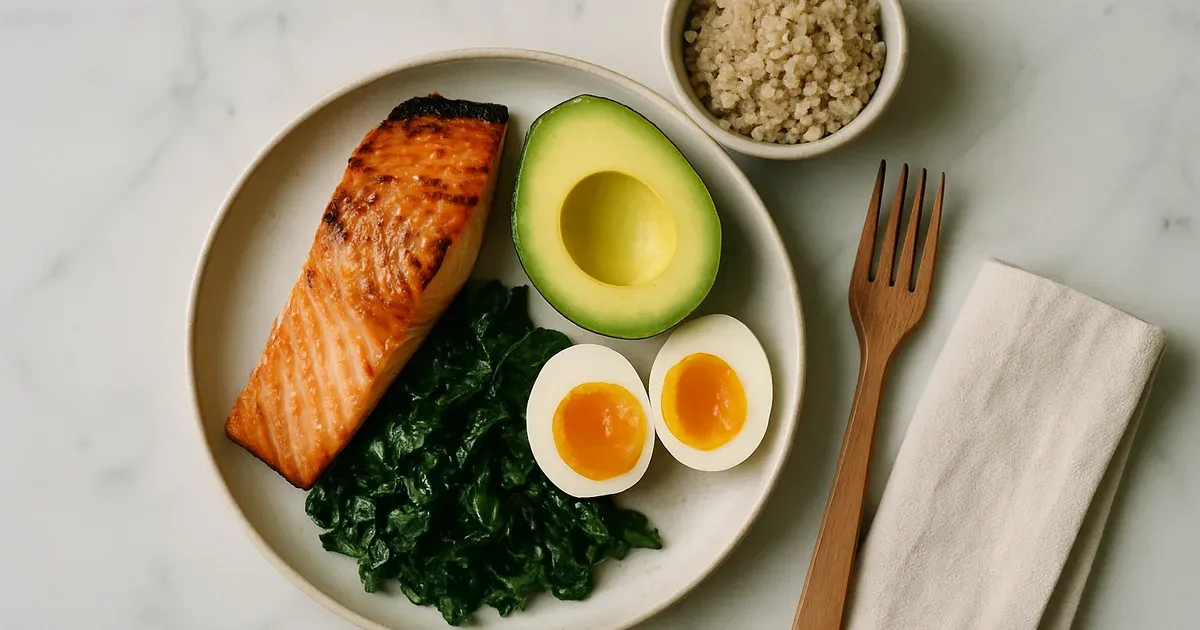
Protein is the most important macronutrient for anyone over 40 trying to lose fat while preserving muscle. A practical daily target is 0.8 to 1.2 grams per pound of lean body mass, spread across meals.
Beyond protein, an anti-inflammatory, whole-food diet improves insulin sensitivity, supports hormone balance, and promotes a healthier gut microbiome. Key principles:
- Lean proteins — chicken, fish, eggs, tofu, Greek yogurt
- Non-starchy vegetables at every meal
- Fiber-rich complex carbohydrates — quinoa, beans, oats, sweet potato
- Healthy fats — avocado, nuts, olive oil, fatty fish
- Minimise added sugars and ultra-processed foods
7. Track Body Composition, Not Just Scale Weight
The number on the scale is the least informative metric available to you — especially after 40. Hormonal and metabolic changes mean your body may be gaining lean muscle and losing fat simultaneously, producing little or no movement on the scale while your health improves significantly.
Body composition testing measures fat mass versus lean mass, visceral fat levels, and water retention. Tracking these numbers over time reveals whether your plan is working at the metabolic level and keeps motivation grounded in real progress rather than a single number.
8. Support Your Gut Health
Emerging research consistently links the gut microbiome to metabolism, systemic inflammation, and appetite regulation. After 40, shifts in diet, stress, medications, and hormone levels can disrupt microbial balance in ways that make fat loss harder.
Strategies to improve gut health include adding probiotic-rich or fermented foods, increasing dietary fiber to feed beneficial bacteria, reducing ultra-processed food intake, and managing stress — which directly affects gut motility and microbial diversity.

The Bottom Line
Losing weight after 40 requires a different playbook — not more willpower or harder workouts. The biological changes driving weight gain after 40 are real: hormonal shifts, muscle loss, a slower metabolism, chronic stress, poor sleep, and insulin resistance all work against you simultaneously.
But each of these factors is addressable. Resistance training rebuilds metabolic capacity. Hormone evaluation and treatment remove invisible barriers. Protein-forward, anti-inflammatory nutrition supports muscle and satiety. Metabolic testing replaces guesswork with precision. Sleep and stress management restore hormonal balance from the inside out.
The path forward is not about restriction — it's about working with the biology of your body at this stage of life, not the one you had at 25. With the right knowledge and, where needed, appropriate medical support, sustainable fat loss after 40 is entirely within reach.