Metabolism Myths Explained: Your Biggest Questions Answered
Debunking 6 common metabolism myths with science-backed facts on exercise, muscle, food, sleep, and aging. 150 chars.

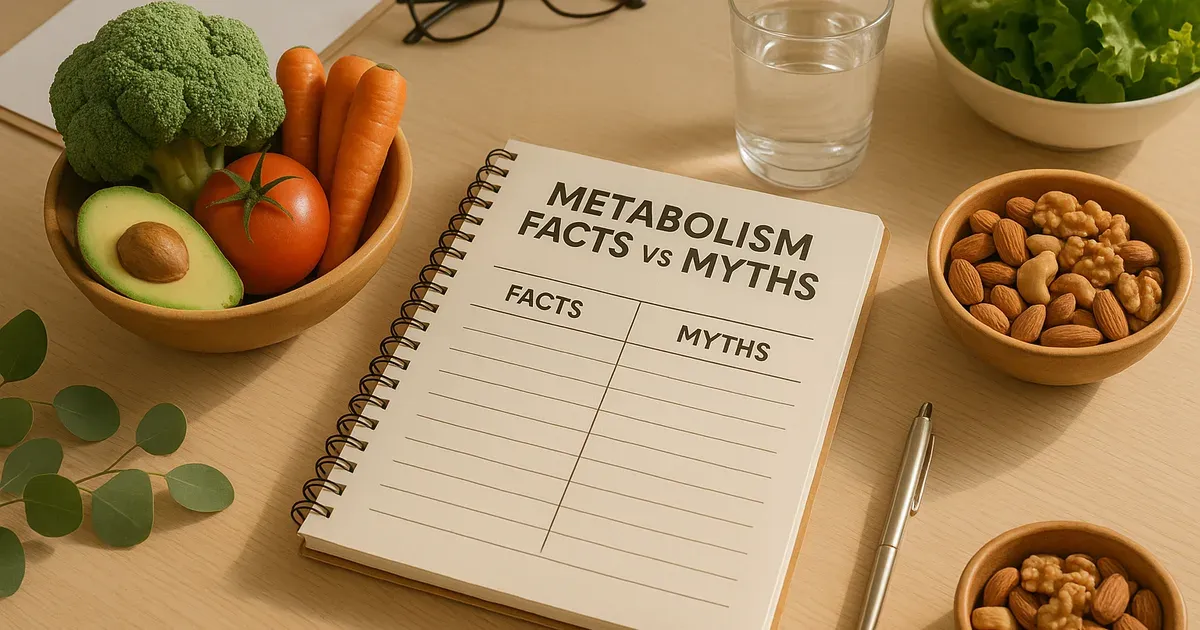
If you have ever wondered why your weight-loss plan is not delivering the results you expected, you might be working from inaccurate beliefs about how metabolism actually works. Metabolism myths are surprisingly common — and some can actively work against your goals. This article breaks down the six most widespread misconceptions, replaces them with evidence-based facts, and gives you practical steps you can actually use.
Jump to Your Question
- Does exercise keep boosting your metabolism after you stop?
- Does building muscle significantly speed up your metabolism?
- Can certain foods like green tea or chili boost your metabolism?
- Does eating small frequent meals increase your metabolism?
- Does getting enough sleep boost your metabolism?
- Does your metabolism inevitably slow down as you age?
- What is metabolism and why does it matter for weight?
- What actually works to support a healthy metabolism?
Does exercise keep boosting your metabolism after you stop?
Exercise does increase calorie burn, but the effect ends much sooner than most people believe. When you engage in cardio activities like biking or swimming, your calorie burn rises while your heart rate is elevated. That increased burn may continue for roughly an hour after your workout ends — but not much longer.
Once you stop moving, your metabolism returns to its resting rate. This means relying on post-exercise calorie burn to justify a large meal is a strategy that tends to backfire. Many people overestimate how many calories they have burned and underestimate how many they eat afterward.
The practical takeaway is straightforward: exercise for the genuine health benefits it provides — cardiovascular fitness, mood improvement, and strength — and refuel with modest, nutritious foods. Avoid using a gym session as a licence to overindulge in high-calorie meals or drinks, because the numbers rarely balance out the way people hope.
Does building muscle significantly speed up your metabolism?
Muscle tissue does burn more calories than fat tissue, but the metabolic boost from gaining muscle is smaller than most people expect. The average person who follows a regular resistance-training programme typically gains only a few pounds of muscle. That modest gain does not translate into a dramatic increase in daily calorie expenditure.
When muscles are not actively being used, they burn very few calories. The organs that drive the majority of your resting metabolism are your brain, heart, kidneys, liver, and lungs — not your biceps. So while strength training is genuinely valuable, expecting it alone to transform your calorie-burning rate sets unrealistic expectations.
Here is what strength training is reliably good for:
- Building stronger bones and reducing osteoporosis risk
- Improving functional movement and balance
- Supporting long-term joint health
- Complementing cardiovascular exercise for overall fitness
Pair weight training with heart-pumping aerobic activity, a nutrient-dense diet, and appropriate portion sizes to support healthy weight management over time.

Can certain foods like green tea or chili boost your metabolism?
No single food or ingredient — including green tea, caffeine, or hot chili peppers — will meaningfully accelerate fat loss through a metabolic boost. Some of these foods may produce a very small, temporary uptick in metabolic rate, but the effect is too minor to move the needle on body weight.
The idea that specific "fat-burning" foods can reshape your body is one of the most persistent metabolism myths in popular nutrition culture. It is also one of the most commercially exploited, fuelling a multi-billion-dollar supplement industry built on overstated claims.
Cravings for quick fixes are understandable, especially when progress feels slow. But choosing foods based on nutritional quality and personal enjoyment is a far more reliable long-term strategy. A varied diet rich in vegetables, lean proteins, whole grains, and healthy fats provides the nutrients your body needs without false promises.
Does eating small frequent meals increase your metabolism?
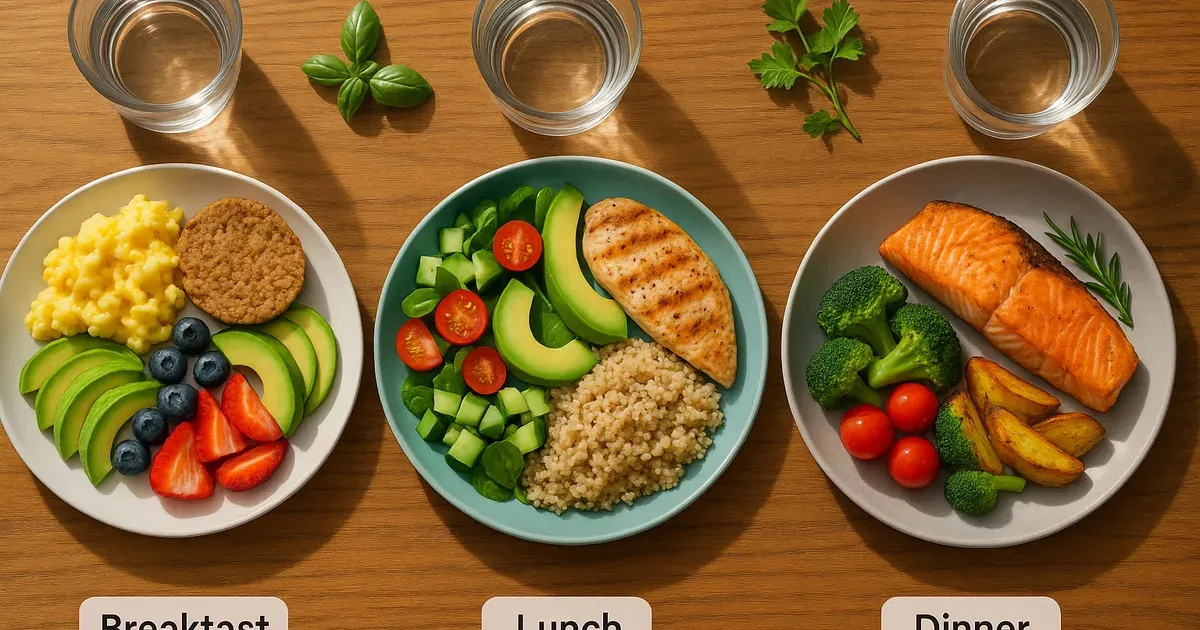
There is little scientific evidence that spreading meals across the day in small, frequent portions actually boosts metabolism. The total number of calories consumed and their nutritional quality matter far more than the timing or frequency of meals.
That said, eating more frequently works well for certain people — particularly athletes and those who find that long gaps between meals lead to excessive hunger and overeating. For others, three structured meals per day makes it easier to manage portions and resist the urge to snack on high-sugar, high-fat foods.
The right meal frequency is the one that helps you eat mindfully and consistently. Pay attention to genuine hunger signals rather than eating by the clock. Keeping a simple food diary can help you spot patterns — including cravings — that undermine your intake goals without you realising it.
| Eating Pattern | Best For | Potential Drawback |
|---|---|---|
| 3 meals/day | People prone to overeating at snack time | Long gaps may increase hunger |
| 5–6 small meals | Athletes, very active individuals | Can lead to grazing and excess calories |
| Intuitive eating | Mindful eaters with good hunger awareness | Requires practice and self-awareness |
| Intermittent fasting | Those who prefer structured eating windows | Not suitable for everyone |
Does getting enough sleep boost your metabolism?
A full night of quality sleep does not directly accelerate metabolism, but regularly skipping sleep can contribute significantly to weight gain. This is a subtle but important distinction — sleep is not a metabolic booster, but sleep deprivation is a metabolic disruptor.
People who are sleep-deprived tend to consume more calories than they need. Fatigue appears to drive increased food intake, likely as a coping mechanism for low energy. Hormones that regulate hunger and fullness are also disrupted by poor sleep, making it harder to stop eating even when the body has had enough.
Practical steps to protect your sleep include:
- Setting a consistent bedtime and wake time, even on weekends
- Reducing screen exposure in the hour before bed
- Keeping your bedroom cool, dark, and quiet
- Limiting caffeine intake after early afternoon
If self-care sleep strategies are not enough, speaking with a healthcare provider is the right next step. Underlying conditions such as sleep apnoea can significantly affect both sleep quality and metabolic health.
Does your metabolism inevitably slow down as you age?
Metabolism does become somewhat slower with age compared to childhood, but the weight gain many people experience in midlife is driven more by reduced physical activity than by metabolic slowdown alone. This is one of the most misunderstood metabolism myths because the two processes — aging and inactivity — tend to happen simultaneously.
As people get older, jobs, family responsibilities, and lifestyle changes often push regular movement aside. Less activity means less muscle mass and more fat accumulation over time. Older adults also tend to lose the natural appetite regulation that younger people benefit from — after a large meal, younger bodies typically reduce hunger automatically until those calories are used. That mechanism becomes less reliable with age.
Staying active and eating with awareness are the two most effective tools for managing weight as you get older. Prioritising exercise as a daily non-negotiable — rather than something squeezed in when convenient — makes a substantial difference. Smaller portions of high-quality foods help offset the gradual decline in appetite control.

What is metabolism and why does it matter for weight?
Metabolism is the complete set of chemical processes your body uses to convert food into energy for every function it performs. This includes breathing, circulating blood, regulating temperature, digesting food, and even thinking. Every cell in your body depends on metabolic activity to survive.
Your metabolic rate determines how many calories your body burns at rest and during activity. Factors that influence it include age, body composition, genetics, hormonal health, and overall activity level. Because so many variables are involved, there is no single switch you can flip to dramatically raise your metabolic rate.
Understanding what metabolism actually is — and what it is not — helps you filter out the noise of fad diets, miracle supplements, and oversimplified advice. Sound, consistent habits consistently outperform any shortcut claimed to hack your metabolism.
What actually works to support a healthy metabolism?
Supporting a healthy metabolism comes down to habits that are unglamorous but genuinely effective over the long term. There is no magic food, supplement, or workout trick that replaces the fundamentals. The metabolism myths covered above persist precisely because people are looking for easier answers.
Evidence-based strategies that make a real difference include:
- Regular physical activity — a combination of cardiovascular exercise and strength training
- Adequate sleep — consistently getting enough rest to prevent calorie-driven fatigue eating
- Mindful eating — paying attention to hunger and fullness cues to avoid excess intake
- Nutritious food choices — eating a variety of whole foods that satisfy without excess calories
- Managing cravings — identifying triggers and having healthy alternatives available
- Staying active as you age — treating daily movement as essential, not optional
These strategies work because they address the real drivers of metabolic health rather than chasing marginal effects from supplements or timing tricks. Consistency over months and years is what creates measurable, lasting change.
Bottom Line
Key takeaways from the science on metabolism myths:Exercise burns calories during activity — not for hours afterward. Do not use a workout as an excuse to overeat.Building muscle helps, but modestly. Your vital organs, not your muscles, drive most of your resting metabolism.No food or supplement meaningfully accelerates fat loss through metabolism. Green tea and chili peppers will not reshape your body.Meal frequency is personal. Neither 3 meals nor 6 meals is universally superior — choose what helps you eat consistently and appropriately.Sleep protects your metabolism. Poor sleep drives excess calorie intake and disrupts hunger hormones.Age-related weight gain is largely about inactivity. Staying consistently active is the most powerful tool for managing weight as you get older.