Skin Purging vs Breaking Out: How to Tell the Difference
Started a new retinol or acid and your skin has gone haywire? Here's how to know whether you're purging — and should stick with it — or reacting, and should stop.

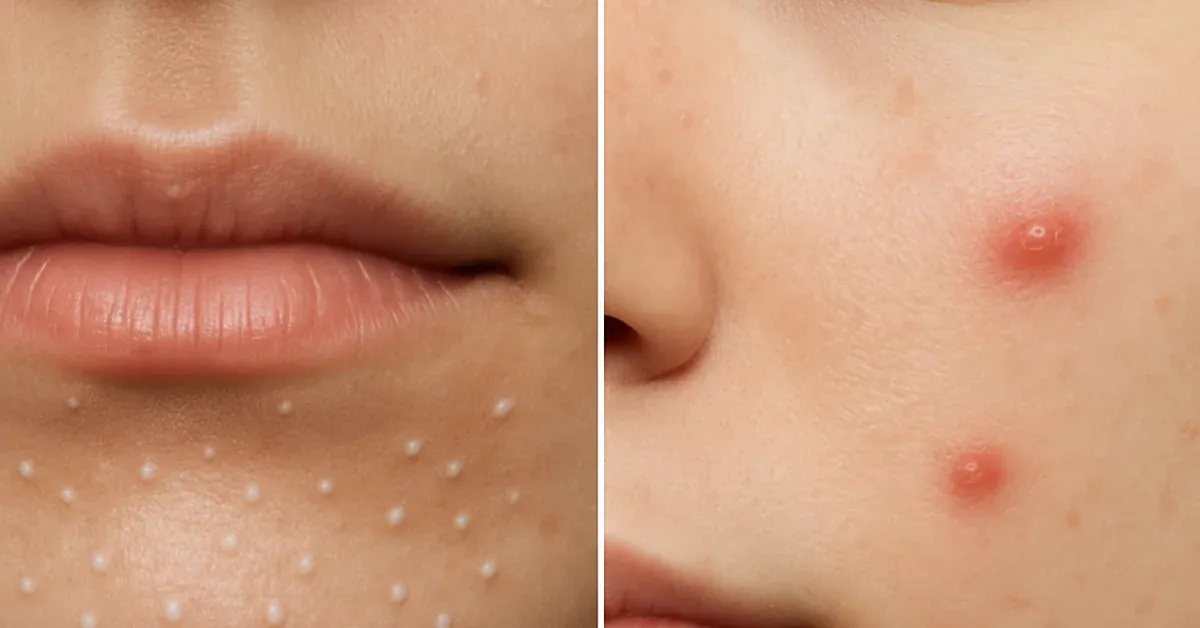
You finally committed to a retinol. Three weeks in, your skin looks considerably worse than when you started. Is this purging — a normal, temporary phase you should push through — or is it a reaction that's telling you to stop?
Getting this wrong in either direction is costly. Give up during a legitimate purge and you abandon a product that was about to transform your skin. Push through a genuine breakout reaction and you spend weeks making things worse.
Here is how to tell them apart.
What Is Skin Purging?
Skin purging is an increase in breakouts triggered by a product that accelerates skin cell turnover. As dead skin cells shed faster than normal, sebum, bacteria, and debris that were already trapped deep in the pores get pushed to the surface more quickly than they would have on their own timeline.
Purging is not the product creating new acne — it is the product speeding up acne that was already forming beneath the skin. Think of it as a fast-forward through spots that were going to appear anyway.
Products that commonly cause purging:
- Retinoids (retinol, retinal, tretinoin, adapalene)
- AHAs (glycolic acid, lactic acid, mandelic acid)
- BHAs (salicylic acid)
- Vitamin C (in some forms, due to exfoliating action)
- Chemical peels
Products that do not cause purging include moisturisers, SPF, oils, and cleansers — if your skin breaks out after starting one of these, it is not a purge.
What Is a Breakout Reaction?
A breakout reaction is your skin responding negatively to a new product — typically due to an ingredient that clogs pores (comedogenicity), causes irritation, or simply does not suit your skin type.
Unlike purging, a reaction is not time-limited and does not follow a pattern that resolves. It means the product is not right for you.
5 Ways to Tell Them Apart
1. Timeline
Purging typically begins within the first one to two weeks of starting a new active and peaks around weeks two to four. Critically, it resolves within four to six weeks of starting the product as skin adjusts.
Breakout reaction may begin at any time after starting a new product and does not improve with continued use. If your skin has been getting worse for more than six weeks, you are not purging.
2. Location
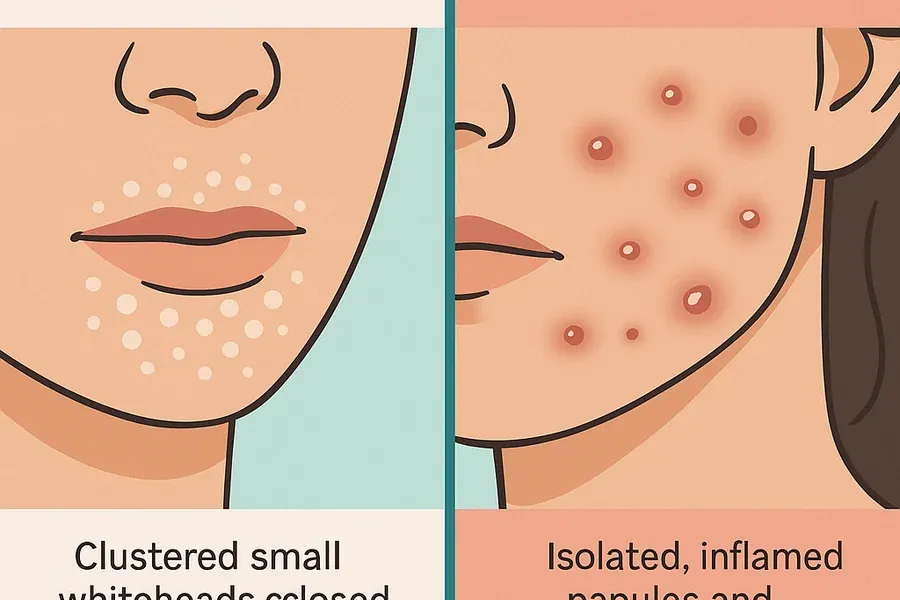
Purging occurs where you already get spots. If your breakouts are normally on your chin and jawline, purging will happen there too. Purging does not create acne in new areas.
Breakout reaction often introduces spots in new locations — parts of your face you do not normally break out on. New spots on your cheeks, temples, or hairline from a product that normally causes issues on your chin are a red flag.
3. Type of Spot
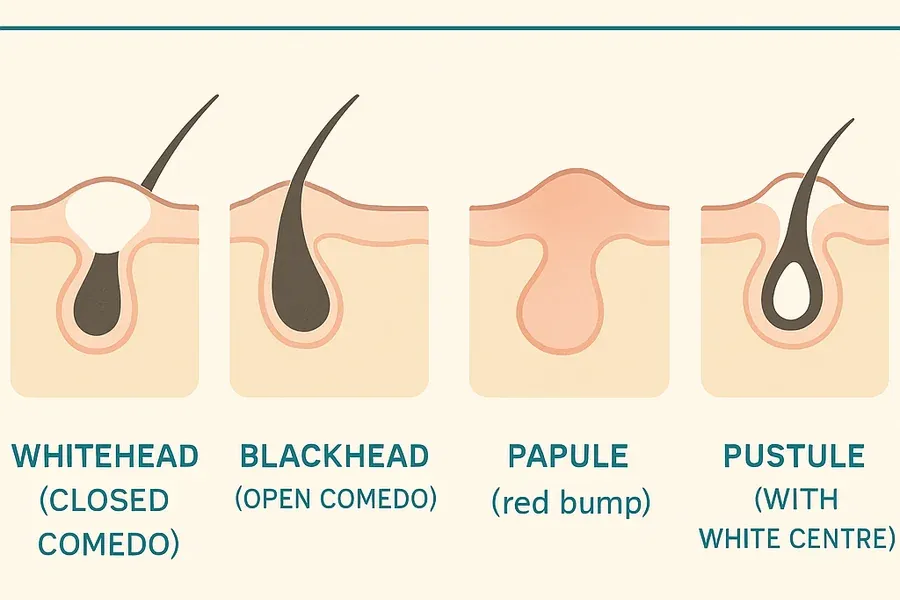
Purging tends to produce whiteheads, small pustules, or the same types of spots you normally get — just more of them, and cycling through faster. Each spot typically comes to a head and resolves more quickly than your usual breakouts.
Breakout reaction can produce new types of spots: large, deep cysts that take weeks to resolve, small closed comedones (whiteheads) in clusters, or a rash-like texture you have not seen before.
4. Speed of Resolution
Purging spots tend to resolve faster than your usual breakouts. You may notice the cycle (spot appears, comes to a head, heals) moving more quickly than normal — this is the elevated cell turnover at work.
Breakout reaction spots sit and linger. They do not follow a faster-than-normal cycle.
5. Skin Irritation
Purging from retinoids and acids is often accompanied by some dryness, tightness, or mild flaking — side effects of the active itself rather than an allergic or comedogenic reaction.
Breakout reaction may be accompanied by redness, itching, stinging, or a bumpy texture across the whole area where the product was applied, rather than isolated spots.
What to Do During Purging
If you are confident you are purging, the advice is to persist — but intelligently.
Slow down your introduction. If you started using a retinoid every night, scale back to two to three times per week while your skin adjusts. Introduce it every other night first, then gradually increase frequency over four to six weeks.
Keep your routine simple. Now is not the time to add more actives. Strip back to cleanser, moisturiser, SPF, and the new product. Minimise variables.
Support your skin barrier. Use a gentle, fragrance-free moisturiser with ceramides or hyaluronic acid to counteract dryness. A compromised barrier worsens purging.
Do not pick. Purging spots cycle faster when left alone. Picking introduces bacteria, causes inflammation, and significantly increases the risk of post-inflammatory hyperpigmentation.
Give it the full timeline. Retinoids, in particular, typically show meaningful results around the 12-week mark. Purging should fully resolve before then. If it has not resolved by week six or eight, reconsider.
When to Stop a Product
Stop and reconsider if:
- Breakouts are appearing in entirely new areas
- Your skin is producing types of spots you do not normally get
- The reaction has been getting worse beyond the six-week mark
- You are experiencing significant irritation, itching, or stinging (beyond mild dryness)
- You are developing contact dermatitis (redness, swelling, rash)
A product that causes a genuine reaction is not the right product for your skin at this time. That does not mean you can never use it — sensitivities can change, and starting at a lower concentration or frequency later may produce a different result.
The Purging Timeline at a Glance
| Week | What to Expect |
|---|---|
| 1–2 | New product introduced; possible early spots appearing |
| 2–4 | Peak purging — spots cycle faster, may look worse |
| 4–6 | Purging resolves; skin begins to stabilise |
| 8–12 | Visible improvement in texture, tone, and breakout frequency |
| 12+ | Full results of the active ingredient becoming visible |
Is Your Skin Purging or Is Something Else Going On?
Sometimes the real issue is not the topical product at all. If you are experiencing persistent adult acne regardless of what you put on your skin, hormonal and gut-related factors are often the primary driver.
→ What's Really Causing Your Adult Acne (Hint: It Starts in Your Gut)
→ How to Clear Hormonal Acne from the Inside Out
→ The Complete Guide to Hormonal Acne and the Gut-Skin Axis