Weight Loss After an Eating Disorder: FAQ
Weight loss after eating disorder recovery can dysregulate the nervous system. Learn why it happens and how to approach it safely.


Trying to lose weight after recovering from an eating disorder can feel confusing and frightening. You are doing everything "right" by today's wellness standards, yet your body is sounding alarm bells — pit in your stomach, disrupted sleep, tight shoulders, dread. You are not imagining it, and you are not failing. The gut-brain axis has a long memory, and weight loss after an eating disorder deserves a very different approach than generic diet advice.

Jump to Your Question
Can dieting trigger eating disorder memories in the body?
Why does my nervous system feel dysregulated when I try to lose weight?
What is the gut-brain connection and why does it matter here?
Is it safe to pursue weight loss after eating disorder recovery?
How can I lose weight without triggering my nervous system?
When should I seek professional support?
What does recovery-informed weight management actually look like?
Are there warning signs that a diet is becoming disordered again?
Can dieting trigger eating disorder memories in the body?
Yes — the body can re-activate old emotional and physiological patterns when it detects cues associated with past restrictive eating. This is not a sign that recovery has failed. It is a sign that the nervous system learned powerful survival lessons during the eating disorder years and is attempting to apply them now.
Trauma researchers describe this as "somatic memory" — the body stores stress responses independently of conscious thought. A calorie deficit, a skipped meal, or simply the mental intention to eat less can act as a conditioned trigger.
Common physical signs that old patterns are being activated include:
- A persistent pit or tightening sensation in the stomach
- Disrupted sleep, particularly difficulty staying asleep
- Chronic tension across the back, shoulders, and jaw
- Heightened vigilance or a sense of low-level dread
These symptoms are neurobiological, not personal weakness. Recognising them as data — rather than obstacles — is the first step toward navigating weight loss after an eating disorder safely.
Why does my nervous system feel dysregulated when I try to lose weight?
Nervous system dysregulation during weight-loss attempts after an eating disorder occurs because the brain has linked caloric restriction with danger. During the years of the eating disorder, the hypothalamic-pituitary-adrenal (HPA) axis — the body's stress-response system — was chronically activated. Those neural pathways do not simply disappear with recovery.
When the body senses a return to restriction, even a mild one, it can flood the system with cortisol and adrenaline. This produces the exact symptoms described above: sleep disruption, muscle tension, and gastrointestinal distress.
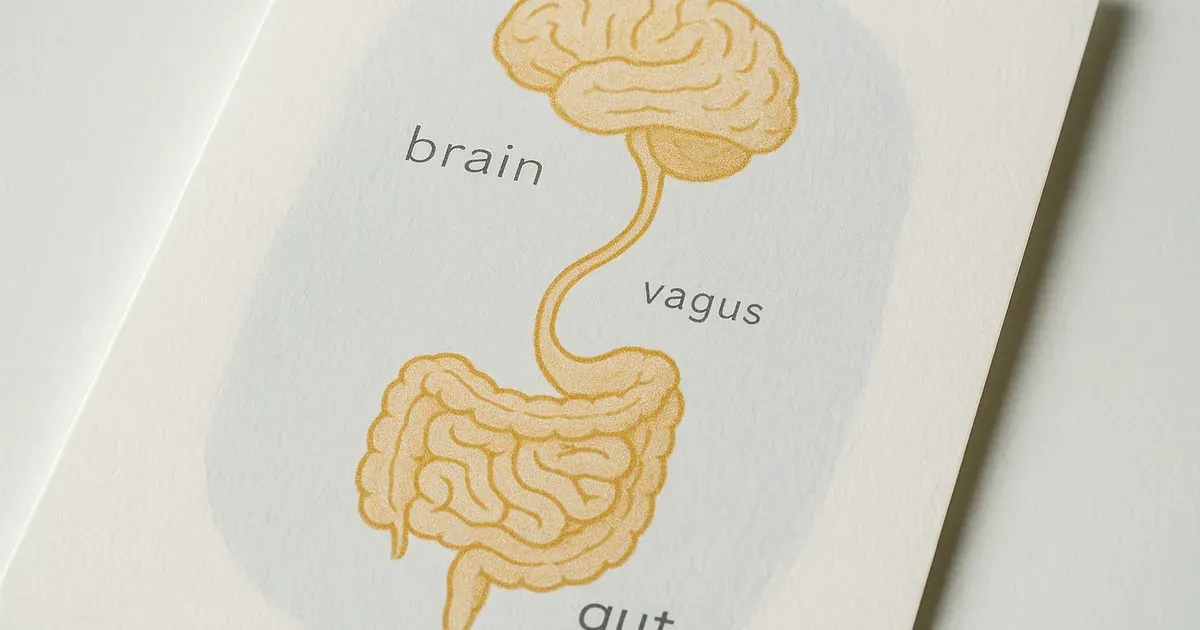
Polyvagal theory offers a useful frame here. The vagus nerve connects the brain to virtually every major organ, including the gut. When the nervous system perceives threat, vagal tone drops and the body shifts from "rest and digest" into a defensive state. This is why the gut and the shoulders can both flare simultaneously — they are part of the same stress cascade.
What is the gut-brain connection and why does it matter here?
The gut-brain axis is the bidirectional communication network linking the enteric nervous system of the gut with the central nervous system of the brain. It is the biological reason that emotional stress causes stomach symptoms, and vice versa.
During an eating disorder, this axis is profoundly disrupted. Restriction, purging, and chronic stress alter the gut microbiome, damage the gut lining, and rewire the vagal signalling that regulates mood and digestion. Even years into recovery, the gut-brain axis can remain sensitised.
This means that "eating less" is not a neutral act for someone with an eating disorder history. The gut registers the change, signals the brain, and the brain responds as if threat is present. Key mechanisms include:
- Reduced serotonin production in the gut (roughly 90% of serotonin is made there)
- Elevated inflammatory markers in response to restriction
- Altered hunger and fullness hormones, including ghrelin and leptin
Supporting the gut-brain axis — through fibre diversity, stress management, and sleep — is therefore central to any recovery-informed approach to weight management.
Is it safe to pursue weight loss after eating disorder recovery?
Weight loss after eating disorder recovery is possible for some people, but it requires careful, individualised assessment rather than a standard approach. The most important question is not "can I lose weight?" but "what is my body actually asking for right now?"
Several factors increase risk:
- Recovery is recent (less than two to three years of stable, disordered-thought-free eating)
- The desire to lose weight is driven by distress rather than health
- Symptoms of nervous system dysregulation appear quickly, as described in the source experience above
A strong case can also be made for a pause. Sometimes the healthiest response to wanting to lose weight is to first spend several weeks reinforcing the nervous system — through consistent sleep, nourishing meals, and body-based practices — before any intentional deficit is introduced.
Working with a dietitian who specialises in eating disorder recovery is strongly recommended before beginning any weight-loss plan.

How can I lose weight without triggering my nervous system?
People pursuing weight loss after an eating disorder can reduce nervous system dysregulation by prioritising regulation over restriction. The goal is to create conditions in which the body feels safe enough that small, gradual changes do not register as threat.
Practical strategies include:
1. Lead with addition, not subtraction. Before reducing anything, spend two to four weeks adding: more vegetables, more protein, more water, more sleep. The nervous system responds very differently to abundance than to deprivation.
2. Keep eating windows consistent. Irregular meal timing is a known stressor for the gut-brain axis. Eating at roughly the same times each day stabilises cortisol patterns and supports circadian rhythm.
3. Use somatic anchoring before and after meals. Two to three slow, diaphragmatic breaths before eating activates the parasympathetic nervous system and shifts the body toward "rest and digest." This is not a wellness cliché — it has measurable effects on vagal tone.
4. Set a pace of change that feels almost boring. A deficit of 100–150 calories per day is far less likely to trigger a stress response than a deficit of 500 calories. Progress will be slower, but sustainability and safety are the priority.
5. Monitor symptoms weekly, not daily. Daily tracking amplifies anxiety. Weekly check-ins — sleep quality, stomach comfort, mood, muscle tension — give useful data without feeding obsessive patterns.
When should I seek professional support?
Anyone with an eating disorder history who experiences significant nervous system symptoms within the first two weeks of a weight-management attempt should consult a professional before continuing. The symptom cluster of sleep disruption, gastrointestinal distress, and chronic muscle tension is a meaningful signal, not background noise.
The right professional team typically includes:
- An eating disorder-informed dietitian or registered nutritionist
- A therapist trained in somatic approaches, EMDR, or trauma-informed CBT
- A GP or physician who can rule out physiological factors
This is not a sign of weakness or relapse. Seeking support proactively is precisely the kind of self-awareness that protects long-term recovery.

What does recovery-informed weight management actually look like?
Recovery-informed weight management centres nervous system safety, flexible eating, and body respect above any specific number on a scale. It looks meaningfully different from conventional dieting.
| Feature | Conventional Diet | Recovery-Informed Approach |
|---|---|---|
| Primary metric | Scale weight | Physical and emotional wellbeing |
| Calorie approach | Defined deficit (often 500 kcal/day) | Gentle quality improvements, no hard deficit |
| Response to hunger | Suppress or ignore | Respond and investigate |
| Timeline | Fixed (e.g. 12 weeks) | Open-ended, paused if symptoms arise |
| Support team | Optional | Strongly recommended |
The table above illustrates why standard diet plans are poorly matched to eating disorder recovery. A plan that ignores hunger cues or imposes a rigid timeline re-creates the psychological conditions of restriction, regardless of the calorie number involved.
Are there warning signs that a diet is becoming disordered again?
Certain cognitive and behavioural patterns indicate that a weight-loss attempt is sliding back toward disordered eating, even when the person believes they are acting reasonably. Awareness of these early signals is protective.
Warning signs to watch for:
- Rules multiply. What began as "eat more vegetables" becomes an expanding list of forbidden foods or times.
- The goal shifts. The original, moderate goal is quietly replaced by a more extreme one.
- Food thoughts become intrusive. Planning meals, calculating food, or thinking about eating occupies more than a comfortable amount of mental space.
- Body checking increases. Mirror checking, pinching, or measuring increases in frequency.
- Isolation appears. Social situations involving food begin to feel threatening rather than neutral.
Any two of these signs appearing together warrants an honest conversation with a trusted person or professional. Catching a slide early is far easier than recovering from a full relapse.
Frequently Asked Questions
Can years of eating disorder recovery be undone by one diet attempt?
A single diet attempt does not erase years of recovery, but it can temporarily destabilise the nervous system and emotional patterns built during that time. This is why the symptoms described — pit in the stomach, poor sleep, muscle tension — should be taken seriously and not pushed through. Recovery is not a binary state; it exists on a continuum, and the nervous system can move along that continuum in either direction depending on context.
Why does my stomach feel awful when I try to restrict food even slightly?
Gastrointestinal distress during mild food restriction in eating disorder recovery is a direct expression of the gut-brain axis responding to a perceived threat. The enteric nervous system — sometimes called the "second brain" — remembers the stress of restriction and responds with nausea, cramping, or a pit-like sensation even before any significant caloric change has occurred.
Does the gut microbiome recover fully after an eating disorder?
Research suggests the gut microbiome can substantially recover after eating disorder remission, but full restoration is variable and may take several years. Diversity of plant foods, consistent meal timing, adequate sleep, and reduced chronic stress all support microbiome recovery. This is one reason that the recovery-informed approach to weight management — which prioritises these factors — also supports long-term gut health.
How do I know if I genuinely want to lose weight for health reasons or if it is the eating disorder talking?
Distinguishing health-motivated weight goals from eating disorder cognition is genuinely difficult and is best explored with a therapist who specialises in eating disorders. A useful internal question is: "Would I still want this if the number on the scale never changed, but I felt energetic, slept well, and moved comfortably?" If the answer is no, the goal may be more appearance-driven than health-driven — which is not shameful, but is worth knowing.
The Bottom Line
- Weight loss after an eating disorder is not simply a matter of calories in, calories out — the nervous system and gut-brain axis are active participants.
- Nervous system dysregulation symptoms (stomach pit, sleep disruption, muscle tension) appearing early in a diet attempt are meaningful signals, not inconveniences to push through.
- A recovery-informed approach prioritises nervous system safety, consistent eating patterns, and gradual change over speed of weight loss.
- Professional support from an eating disorder-informed dietitian and a somatic or trauma-aware therapist significantly improves both safety and outcomes.
- Early warning signs of disordered patterns — multiplying food rules, intrusive food thoughts, increased body checking — should be acted on promptly, not rationalised away.