Why You Should Be Making Kimchi at Home — Your Gut Will Thank You
Kimchi's lacto-fermentation process creates beneficial *Lactobacillus* bacteria that support gut health, immunity, and more. It's nutritious, low-calorie, and easy to make at home in under an hour.

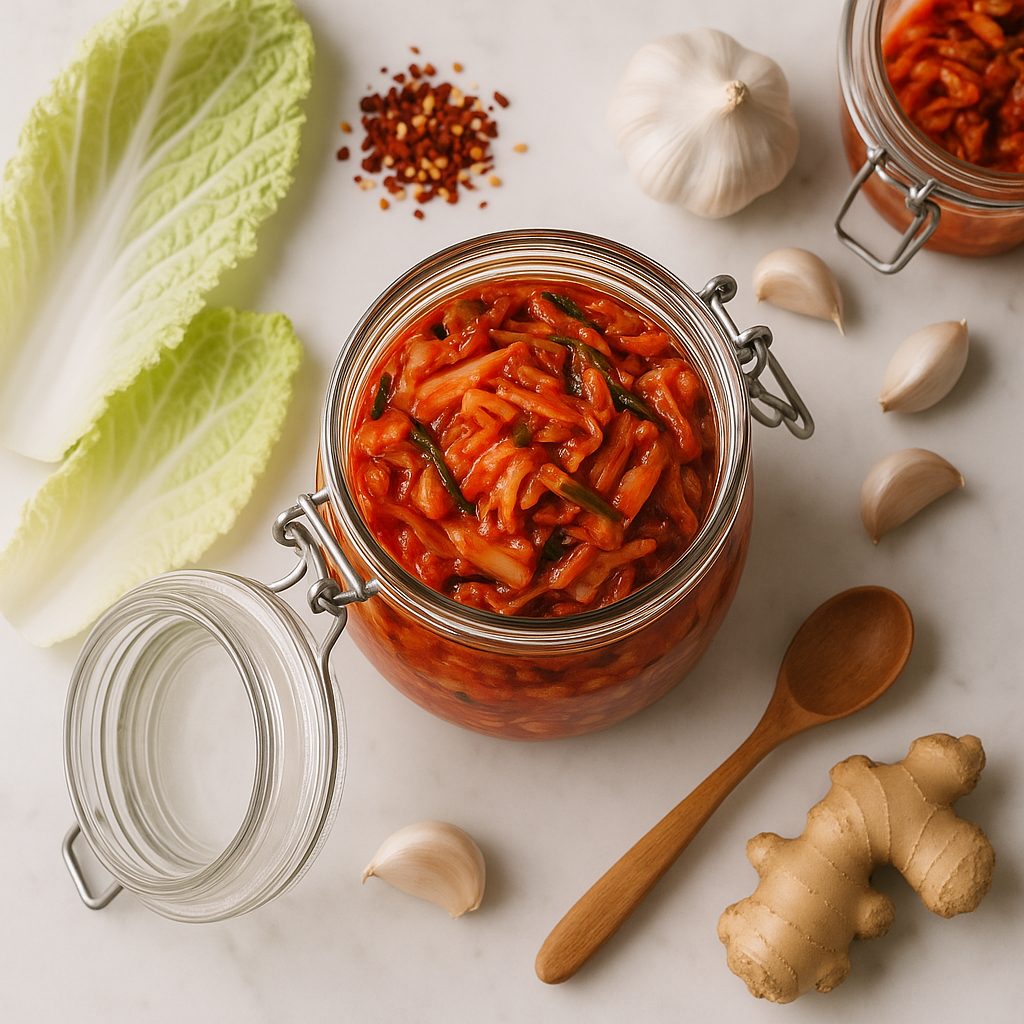
Why You Should Be Making Kimchi at Home — Your Gut Will Thank You
If you've been sleeping on kimchi, it's time to wake up. This ancient Korean fermented cabbage dish has been quietly doing extraordinary things for human health for centuries — and modern science is finally catching up to what Korean grandmothers have known all along. Beyond the fiery, tangy flavor that makes it addictive, kimchi is one of the most accessible and affordable ways to flood your diet with beneficial bacteria. The best part? You can make a whole jar from scratch in under an hour.
---
What Actually Happens When Kimchi Ferments
Kimchi isn't just pickled cabbage — it's alive. The process behind it, called lacto-fermentation, is a two-stage biological transformation that's genuinely fascinating.
First, napa cabbage is submerged in a salt brine. That salt does a specific job: it creates a hostile environment for harmful bacteria, essentially clearing the field. Then, in the second stage, naturally occurring Lactobacillus bacteria — the same beneficial microbes found in yogurt and traditional pickles — get to work. They consume sugars in the cabbage and convert them into lactic acid, which both preserves the vegetables and creates that signature sour, complex flavor.
The result is a food that's rich in live cultures, vitamins C and K, and fiber — all for roughly 30 calories per serving. Not bad for something that practically makes itself.
---
The Gut Health Case for Eating Fermented Foods
Your digestive system is home to trillions of microorganisms collectively known as your gut microbiome, and research increasingly shows that this community of bacteria influences everything from immune function to mood. Fermented foods like kimchi deliver probiotics — live beneficial bacteria — that help populate and diversify this microbial ecosystem.
A diverse gut microbiome is associated with:
- Stronger immune response — roughly 70% of your immune system lives in your gut
- Reduced inflammation — chronic inflammation is linked to heart disease, diabetes, and depression
- Better digestion — beneficial bacteria help break down food and absorb nutrients more efficiently
- Improved mental health — via the gut-brain axis, your microbiome literally communicates with your brain
A 2021 Stanford study published in Cell found that a diet high in fermented foods significantly increased microbiome diversity and decreased markers of inflammation compared to a high-fiber diet alone. Kimchi, with its dense population of live cultures, is a frontrunner in this category.
---
What Goes Into a Jar of Kimchi
The ingredient list might look exotic at first glance, but most of these items are increasingly easy to find at grocery stores or Asian markets — and once you have them, you're set for multiple batches.
The essentials:
- Napa cabbage — the mild, crunchy base
- Kosher or sea salt (iodine-free — iodine can inhibit fermentation)
- Gochugaru — Korean red pepper flakes that give kimchi its color and heat
- Garlic and ginger — both antimicrobial powerhouses in their own right
- Scallions and daikon radish — for texture and depth
- Fish sauce or shrimp paste — for umami richness (vegetarians can substitute kelp powder or simply use water)
One note on customization: kimchi is wonderfully flexible. Prefer it mild? Use just a tablespoon of gochugaru. Want it fiery? Go up to five. Going plant-based? Skip the fish sauce. The fermentation science works regardless of your specific lineup.
---
How to Ferment It Without Overthinking It
The hands-on time is surprisingly short — most of the work is just waiting. After massaging the cabbage with salt and letting it brine for one to two hours, you rinse it, mix in your spice paste and vegetables, pack it tightly into a jar, and let time do its thing.
Here's what the fermentation window looks like:
- Days 1–2: Mild, fresh, lightly tangy — great if you like a crisp crunch
- Days 3–5: Deeper sourness, more complex flavor, classic kimchi taste
- After refrigerating: Fermentation slows dramatically; kimchi continues to develop flavor for weeks
You'll know it's working when you see small bubbles forming inside the jar. Press the vegetables down daily to keep them submerged under the brine — this both releases carbon dioxide and prevents any surface exposure that could invite unwanted mold.
---
Practical Takeaways for Your First Batch
- Use non-iodized salt. Iodine is added to table salt to prevent thyroid disease — but it can also suppress the Lactobacillus bacteria you want thriving in your kimchi.
- Wear gloves when mixing the spice paste. Gochugaru stains skin and fingernails for days.
- Leave headspace in the jar. Fermentation produces gas, and an overfilled jar can overflow or build pressure. Leave at least an inch at the top.
- Don't stress about perfection. The process is forgiving. Taste as you go and trust your senses.
- Start eating it young. Even on day one, fresh kimchi is delicious. You'll develop a preference over time.
---
Making kimchi at home is one of those rare kitchen projects that rewards you on multiple levels — it's practical, economical, endlessly customizable, and genuinely good for your body. In a world of expensive probiotic supplements and elaborate wellness routines, a jar of bubbling kimchi on your counter is a refreshingly simple answer to one of health's most fundamental questions: Am I taking care of my gut? With a little salt, some cabbage, and a few days of patience, the answer can absolutely be yes.