Workout Plan by Body Composition in Your 30s
Learn how to build a workout plan in your 30s based on body composition data from DEXA scans — targeting fat loss, muscle gain, and long-term health.


Your 30s are not the beginning of the end — they are the point where training without data starts to cost you. Muscle quietly erodes, fat redistributes toward your abdomen, and hormones shift in ways that make old routines less effective. The good news: a workout plan built around your actual body composition changes everything.
This guide breaks down exactly how to decode your body's data and train smarter through every phase of your 30s.

Why Your 30s Change the Rules of Fitness
Starting around age 30, the body enters a phase of gradual but measurable change. Sarcopenia — the age-related loss of muscle mass — begins if you are not actively strength training. At the same time, fat storage shifts inward, accumulating as visceral fat around the organs rather than just under the skin.
Hormones play a supporting role here. Declining levels of testosterone and growth hormone affect both your ability to build lean muscle and your speed of recovery between sessions. Sleep disruption and chronic stress compound the problem by elevating cortisol, which accelerates fat storage and muscle breakdown.
The decade is not the enemy — imprecision is. Training harder without training smarter leads to plateaus, overuse injuries, and frustration. The solution is to stop guessing and start measuring.
What a DEXA Scan Actually Measures
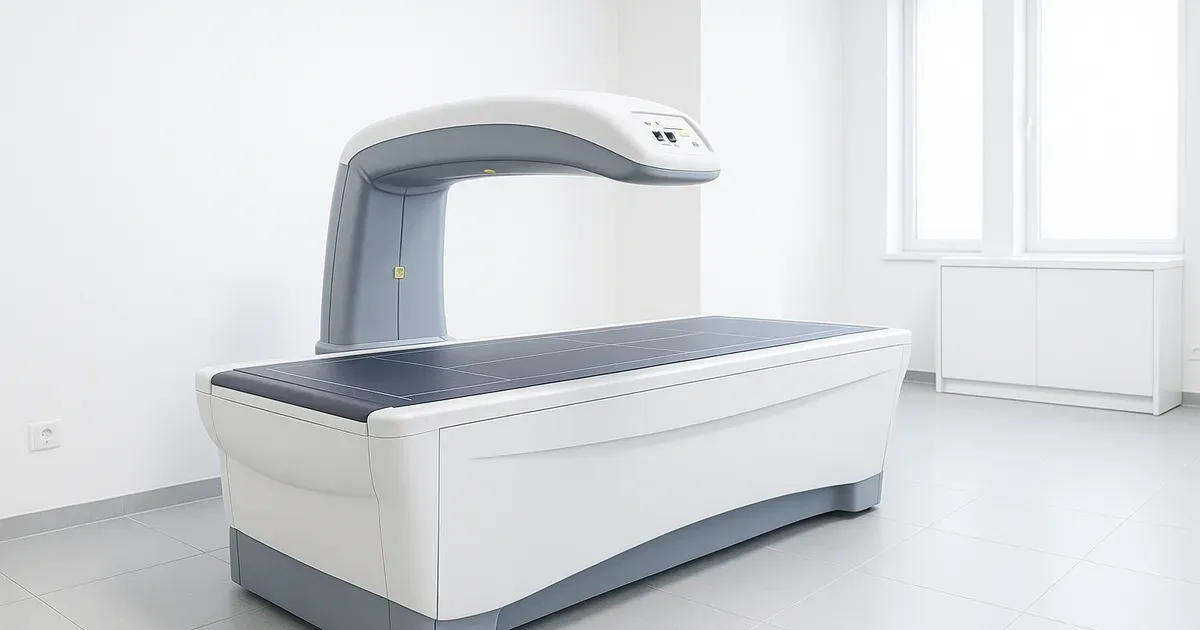
A DEXA scan gives you a map of your body that a scale or mirror simply cannot provide. It measures total body fat percentage, fat distribution across regions, visceral fat levels, lean muscle mass by limb and trunk, and bone mineral density.
Each of these numbers tells a different story. A high visceral fat reading is a stronger predictor of metabolic disease risk than total body weight. Low bone mineral density signals that your training and nutrition may need urgent adjustment. Regional muscle imbalances point to injury risk before pain ever appears.
Tracking these metrics every four to eight weeks transforms your training from reactive to proactive. You stop chasing scale fluctuations and start measuring what actually matters: lean mass preservation, fat reduction, and strength symmetry.
How to Train Based on Your Body Composition Profile
Your body composition falls into one of three broad profiles, each requiring a different training and nutrition strategy. Identifying yours is the first step toward building a workout plan that works with your physiology.
High Body Fat, Low Muscle Mass
This profile signals that the body has lost functional capacity and is storing excess energy as fat rather than building tissue. The priority is rebuilding the muscle base while creating a modest caloric deficit.
- Strength train three to four times per week using compound lifts: squats, deadlifts, rows, and presses
- Aim for six to twelve repetitions per set at challenging weights
- Eat at least one gram of protein per pound of bodyweight daily
- Reduce ultra-processed carbohydrates and prioritise sleep of seven to nine hours per night
- Add two moderate cardio sessions weekly for cardiovascular health without undermining recovery
Stress management matters here more than most people expect. Chronically elevated cortisol driven by poor sleep or work pressure directly opposes muscle-building and accelerates abdominal fat accumulation.
Moderate Fat, Moderate Muscle
This is the recomposition zone — the sweet spot where you can simultaneously build muscle and reduce fat with the right stimulus. It requires a disciplined approach rather than dramatic restriction.
- Lift heavy four times per week, cycling between lower and upper body emphasis
- Eat at or slightly above maintenance calories on training days, slightly below on rest days
- Prioritise post-workout protein within two hours of each session
- Add two weekly cardio sessions focused on heart health rather than calorie burning
- Track progress via body composition metrics, not body weight
Recomposition is slower than a pure cut or bulk but produces more durable results for people in their 30s. Lean mass gained during this phase compounds over time.

Low Fat, High Muscle Mass
If you have already built a strong foundation, the risk shifts from building to preserving and optimising. Overtraining, muscle imbalances, and declining bone density become the primary threats.
- Shift focus toward performance metrics: strength output, mobility, and power
- Introduce intensity cycling — alternating hard training blocks with deliberate deload weeks
- Monitor regional muscle symmetry through DEXA scans to catch imbalances early
- Invest in mobility work and soft tissue maintenance to protect joints under heavy load
- Keep bone mineral density in view; resistance training is one of the best tools for maintaining it
The temptation at this stage is to chase more volume. Resist it. Strategic recovery and precision programming outperform grinding more reps once you have built a high-performance base.
The Non-Negotiable Pillars of Training in Your 30s
Regardless of your current body composition profile, four pillars underpin every effective training plan for this decade.
1. Compound, Heavy Lifting Multi-joint movements — deadlifts, squats, bench press, overhead press, pull-ups — recruit the most muscle tissue and drive the strongest hormonal response. Training in the six to twelve rep range builds both strength and hypertrophy simultaneously.
2. Protein as a Non-Negotiable One gram of protein per pound of bodyweight is a practical daily target. Distribute intake across meals rather than loading it into one sitting. Leucine-rich sources — meat, fish, eggs, dairy, legumes — drive muscle protein synthesis most effectively.
3. Sleep and Recovery as Training Variables Seven to nine hours of quality sleep per night is not a luxury. It is the window during which muscle repair, hormonal regulation, and metabolic reset occur. Skipping recovery undermines every rep you complete.
4. Stress and Cortisol Control Chronic stress is a body composition disruptor. Elevated cortisol suppresses testosterone, promotes visceral fat deposition, and impairs muscle recovery. Stress management tools — whether breathwork, structured downtime, or reduced training volume during high-stress periods — are legitimate performance strategies.

How Often Should You Reassess Your Body Composition?
Reassessing every four to eight weeks gives your body enough time to show measurable adaptation while keeping you close enough to the data to course-correct early. Waiting six months between assessments is too long — you can lose significant lean mass or accumulate visceral fat in that window without noticing.
A DEXA scan at the start of a new training block establishes your baseline. A follow-up scan at the end of the block tells you whether your approach is working. If lean mass is rising and visceral fat is falling, continue. If not, adjust before investing more months in an ineffective plan.
This cycle — measure, train, reassess, adjust — is what separates data-driven fitness from guesswork. It is also how people in their 30s continue making progress while peers plateau.
Frequently Asked Questions
How is body composition different from body weight? Body weight is a single number that combines muscle, fat, bone, and water. Body composition breaks that number into its components, showing how much is lean mass and how much is fat — including dangerous visceral fat that standard scales cannot detect.
Can I build muscle and lose fat at the same time in my 30s? Yes, particularly if you are in the moderate fat, moderate muscle profile. Body recomposition is achievable with consistent strength training, adequate protein intake, and careful calorie management. Progress is slower than a dedicated bulk or cut but more sustainable.
How does a DEXA scan differ from a body fat scale? Bioelectrical impedance scales estimate body fat using electrical resistance and are highly sensitive to hydration levels, making them unreliable day to day. A DEXA scan uses low-dose X-ray to physically measure fat, lean tissue, and bone density with clinical accuracy.
How often should someone in their 30s get a DEXA scan? Every four to eight weeks during an active training and nutrition programme gives the most actionable data. Once you reach a maintenance phase, every three to four months is sufficient.
Does hormonal change in your 30s make fat loss impossible? No. Hormones shift, but they do not override the fundamentals of energy balance, protein intake, and progressive resistance training. What changes is that imprecision becomes more costly — which is exactly why body composition data becomes more valuable, not less.

The Bottom Line
Your 30s reward precision. The training strategies that worked by feel in your 20s produce diminishing returns without the guidance of real data. Body composition metrics — body fat percentage, lean muscle mass by region, and visceral fat levels — give you a blueprint that no mirror or scale can match.
Build your workout plan around your physiology, not a generic programme. Lift heavy. Eat enough protein. Protect your sleep. Manage stress. And measure your progress against numbers that actually reflect what is happening inside your body.
The fittest version of you in your 30s is not a product of training harder — it is a product of training smarter, guided by data that tells you exactly where to focus.