Anti-Aging & Gut Health: Your Biggest Questions Answered
Answers to the biggest questions about anti-aging, gut health, biomarkers, hormones, and longevity science — explained clearly and backed by evidence.


The word "anti-aging" gets thrown around so often it has almost lost meaning — and the science of gut health can feel just as overwhelming. Yet these two fields are deeply connected, and understanding both could be the most important investment you make in your long-term health. Whether you are wondering what biological aging actually means, how your microbiome fits into the picture, or which interventions are genuinely evidence-based, this guide answers your biggest questions clearly and honestly.
Jump to Your Question
What does "anti-aging" actually mean from a medical perspective?
What are biomarkers of biological aging and why do they matter?
How does gut health affect the speed at which you age?
What role do hormones play in age management?
How does sleep affect biological aging and gut health?
What is inflammation's role in aging, and can your gut microbiome help?
What are peptides, nutraceuticals, and probiotics — and do they actually work?
What cutting-edge longevity therapies show real promise?
What does "anti-aging" actually mean from a medical perspective?
Anti-aging medicine is not about wrinkle creams or chasing youth — it is about preserving biological function for as long as possible. In a clinical context, anti-aging means protecting muscle mass, cognitive sharpness, metabolic balance, and physical independence well into later decades.
The correct term is functional longevity: extending your healthspan — the years you live with vitality, clarity, and strength — rather than simply adding years to your life. Aesthetic improvements like clearer skin or a leaner body tend to follow as natural side effects of becoming genuinely healthier.
Your body is adaptive by design. Challenge it with exercise and it grows stronger. Neglect it and it loses capacity. Even stress mitigation — through recovery, mindfulness, or quality sleep — is a biological necessity, not a luxury, because it is during rest that your physiology resets and repairs.
The gut-brain connection adds another layer. Research increasingly shows that the gut microbiome influences mood, cognition, and systemic inflammation — all of which shape how quickly or slowly you age. Functional longevity, therefore, must account for what is happening inside your digestive tract, not just your bloodwork or hormone panels.
What are biomarkers of biological aging and why do they matter?
Biological age is data; chronological age is just a number. Biomarkers reveal how your organ systems are actually performing beneath the surface, giving clinicians a far more accurate picture of your aging trajectory than a birth certificate ever could.
Key biomarkers used in age management include:
- Glucose control — fasting glucose, HbA1c, and insulin sensitivity show how efficiently cells convert food into energy.
- Inflammation markers — high-sensitivity C-reactive protein (hsCRP) and homocysteine track systemic inflammation, which drives aging across nearly every organ.
- Lipid and triglyceride profiles — reveal not just cardiovascular risk but how the liver processes sugars and converts them to fat.
- Body composition and VO₂ Max — lean muscle mass and oxygen efficiency are two of the strongest predictors of healthspan and independence.
Gut-derived biomarkers are rapidly joining this list. Intestinal permeability markers, short-chain fatty acid levels, and microbiome diversity scores are now being studied as independent predictors of systemic inflammation and cognitive decline. A leaky gut, for instance, allows bacterial endotoxins into the bloodstream — directly elevating hsCRP, one of the very markers age-management clinicians already track.
How does gut health affect the speed at which you age?
Your gut microbiome — the trillions of bacteria, fungi, and viruses living in your digestive tract — directly influences how fast your body ages at a cellular level. A diverse, balanced microbiome produces anti-inflammatory compounds, synthesises key vitamins, and regulates the immune system. A disrupted microbiome does the opposite.
Chronological aging itself reduces microbial diversity. Older adults tend to have fewer beneficial species like Bifidobacterium and Lactobacillus and more pro-inflammatory strains. This shift — sometimes called "inflammaging" — contributes to the same systemic inflammation that drives arterial plaque, joint breakdown, and cognitive decline.
The gut-brain axis makes this even more consequential. The vagus nerve and a network of neurotransmitters connect the gut to the brain bidirectionally. A compromised microbiome has been linked to increased anxiety, impaired memory, and even early markers of neurodegenerative disease. Conversely, a healthy microbiome supports serotonin production — roughly 90% of the body's serotonin is made in the gut.
Practical steps to support microbial diversity include:
- Eating 30 or more different plant foods per week
- Including fermented foods such as kefir, kimchi, and sauerkraut
- Minimising ultra-processed foods and excess sugar
- Managing stress, which directly alters microbial composition via the gut-brain axis
What role do hormones play in age management?
All major hormones — testosterone, estrogen, thyroid, growth hormone — peak around age 25 and then begin a steady, measurable decline. These are not cosmetic concerns. Hormones govern metabolism, brain function, recovery from injury, and even mood regulation.
A helpful analogy: low hormones are like treading water with a concrete block in each hand. Hormone optimisation removes those blocks — but you still have to keep swimming. In other words, correcting deficiencies makes exercise and nutrition significantly more effective, but it does not replace them.
Clinically, the goal is to restore hormone levels to youthful, healthy ranges and monitor bloodwork quarterly. Balance is everything; over-correction carries its own risks.
The gut-hormone connection is equally important. The gut microbiome regulates the "estrobolome" — a collection of bacterial genes that metabolise oestrogen. Dysbiosis can impair oestrogen clearance, leading to imbalances that affect bone density, mood, and cardiovascular risk. Supporting gut health is therefore part of supporting hormonal health, not a separate concern.
Considering a deeper dive into your own biomarkers? Age-management programmes like Cenegenics combine hormone panels, gut-related inflammatory markers, and lifestyle protocols to build a personalised longevity plan.

How does sleep affect biological aging and gut health?
Sleep is not a passive state — it is the primary window during which your body heals, consolidates memory, and clears metabolic waste from the brain. All mammals sleep, even though it represents the most vulnerable period in nature. That evolutionary fact alone tells us how essential it is to survival.
Research consistently shows that adults sleeping fewer than seven hours per night have shorter lifespans and higher rates of chronic disease. Less sleep accelerates biological aging — it is that straightforward.
The gut-brain axis is deeply implicated in sleep quality. The microbiome helps produce melatonin precursors and regulates circadian rhythm signals. Disrupted sleep, in turn, alters microbial composition within just two nights — reducing beneficial species and increasing inflammatory strains. The relationship is bidirectional and self-reinforcing.
To protect both sleep quality and gut health simultaneously:
- Maintain a consistent sleep and wake schedule
- Avoid high-sugar, high-fat meals within two to three hours of bedtime
- Include prebiotic fibre (oats, garlic, leeks) to feed overnight microbial activity
- Limit blue light exposure in the evening, which suppresses melatonin
What is inflammation's role in aging, and can your gut microbiome help?
Chronic low-grade inflammation — sometimes called "inflammaging" — accelerates virtually every hallmark of biological aging, from arterial stiffness and joint degeneration to cognitive decline and metabolic dysfunction.
Reducing inflammation requires a multi-system approach:
- Diet: Eliminating high-glycaemic foods prevents insulin spikes and triglyceride buildup.
- Exercise: Improves circulation and increases mitochondrial density, both of which lower systemic inflammation.
- Stress modulation: Meditation, gratitude practices, and adequate rest lower cortisol and blood pressure.
- Micronutrient optimisation: Vitamin D and omega-3 fatty acids are among the most evidence-supported anti-inflammatory nutrients.
The microbiome is one of the most powerful levers for controlling inflammation. Beneficial gut bacteria produce short-chain fatty acids (SCFAs) like butyrate, which directly reduce intestinal permeability and dampen inflammatory signalling throughout the body. When the microbiome is disrupted, SCFA production drops, the gut barrier weakens, and endotoxins enter circulation — elevating hsCRP and accelerating the very processes that age you fastest.
Improving microbial diversity through dietary fibre, fermented foods, and stress management therefore directly targets the inflammatory root cause, not just the symptom.
What are peptides, nutraceuticals, and probiotics — and do they actually work?
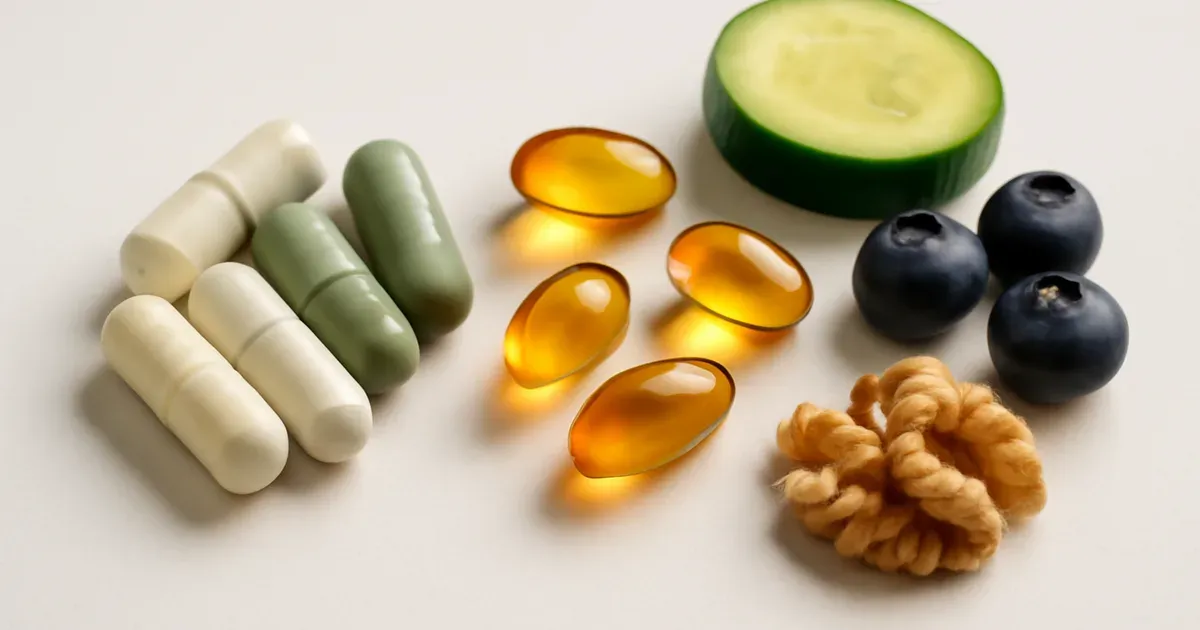
Peptides, nutraceuticals, and probiotics are precision tools — they enhance systems you have already optimised through lifestyle, not substitutes for foundational habits. Each operates through different mechanisms and carries a different evidence base.
| Intervention | Primary Mechanism | Evidence Level | Gut Relevance |
|---|---|---|---|
| Peptides | Reactivate cellular signalling pathways | Emerging; clinical use growing | Some target gut permeability directly |
| Omega-3 fatty acids | Reduce systemic inflammation | Strong; multiple RCTs | Support microbial diversity |
| Vitamin D | Immune and metabolic regulation | Strong | Modulates gut immune response |
| Probiotics | Introduce beneficial bacterial strains | Moderate; strain-specific | Direct microbiome support |
| NAD+ precursors | Support mitochondrial function | Emerging | Gut bacteria synthesise some NAD+ |
Probiotics deserve particular attention in this context. Not all strains are equal — Lactobacillus rhamnosus, for example, has documented effects on anxiety via the gut-brain axis, while Bifidobacterium longum has shown promise in reducing cortisol responses. Choosing evidence-backed strains for your specific goals matters far more than the colony count on the label.
What cutting-edge longevity therapies show real promise?
Several emerging therapies are pushing the boundary between health optimisation and genuine life extension, moving from animal studies into human clinical trials with encouraging early results.
- Metformin — Originally a diabetes medication, ongoing research suggests it may extend lifespan even in non-diabetics by improving mitochondrial efficiency and reducing oxidative stress.
- Rapamycin — A study published in Nature Aging found that mTOR inhibition with low weekly doses improved immune function in elderly populations, a key driver of healthy longevity.
- Hyperbaric Oxygen Therapy (HBOT) — Research published on PubMed demonstrated improvements in brain oxygenation and cognitive function in aging populations, including those with mild cognitive impairment.
- Therapeutic Plasma Exchange (TPE) — Removes pro-inflammatory compounds and environmental toxins including microplastics, potentially rejuvenating tissue systems.
- Faecal Microbiota Transplantation (FMT) — Among the most gut-specific longevity interventions, FMT from young donors has extended lifespan and improved cognitive function in animal models, with human trials underway.
The key principle across all of these is timing. Optimising your foundational health now — through nutrition, exercise, sleep, and gut support — ensures you are biologically positioned to benefit from the next wave of breakthroughs as they reach clinical availability.
Bottom Line
- Biological age is measurable and modifiable — biomarkers like hsCRP, VO₂ Max, glucose control, and microbiome diversity reveal your true aging trajectory.
- The gut microbiome is a central anti-aging organ, influencing inflammation, hormone metabolism, brain health, and sleep quality simultaneously.
- Hormones, peptides, and nutraceuticals are powerful adjuncts — but they amplify healthy lifestyle habits; they do not replace them.
- Sleep is non-negotiable: fewer than seven hours per night accelerates both biological aging and microbiome disruption.
- The most effective longevity strategy combines all levers — structured exercise, clean nutrition, gut support, hormone optimisation, stress management, and evidence-based supplementation.
The information in this article is for educational purposes only and does not constitute medical advice. Always consult a qualified healthcare provider before beginning any new health protocol.