April 23, 2026 Roundup: Gut Microbiome Shapes Your Health
Today's gut microbiome news spans Parkinson's detection, coffee and mood, microplastics, IBS treatment, and new probiotic science — April 23, 2026.

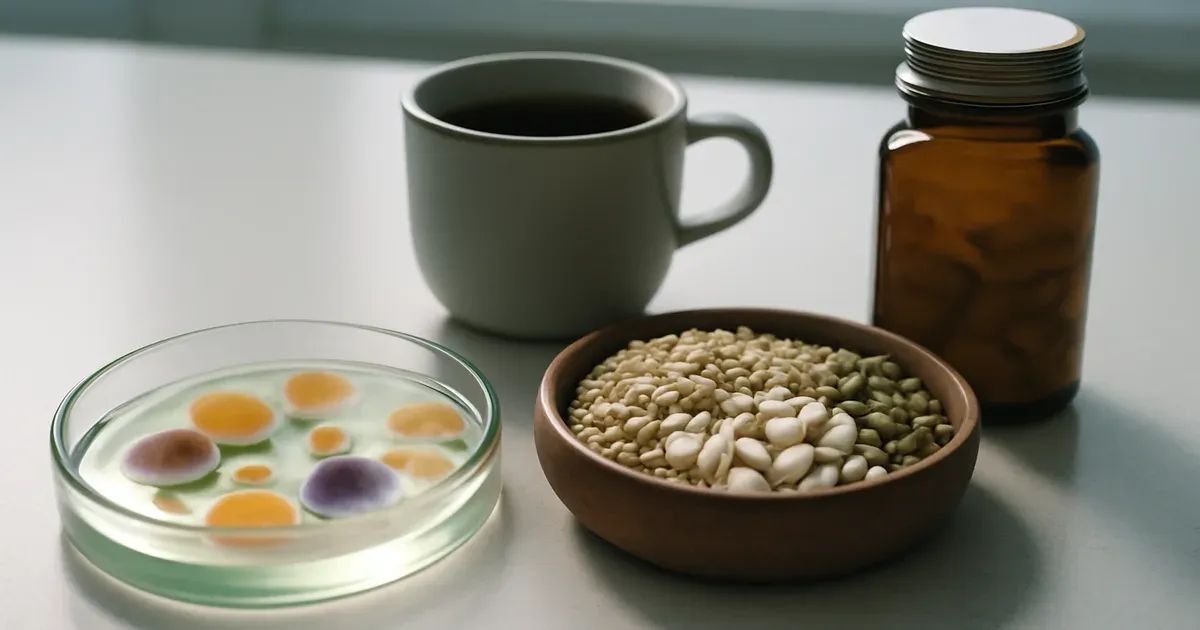
On Thursday, April 23, 2026, a striking cluster of research, product launches, and expert commentary converges on a single theme: the gut microbiome is not just about digestion. From Parkinson's early detection to coffee's effect on mood, from microplastics to late-night snacking, today's stories collectively reveal that the trillions of microbes living in our intestines are active participants in nearly every system of the body — brain, skin, heart, and immune function included. Here's what caught our attention.
OLLY Expands Gut Health Portfolio with Launch of Precise Probiotics
OLLY has announced the launch of Precise Probiotics, a new targeted probiotic line designed to support the gut microbiome and whole-body wellness beyond baseline digestive health. Each product in the range features clinically studied probiotic strains selected to communicate with the brain, skin, and metabolism, alongside SYNBIO and Bi-07 for digestive and immune support. One SKU features SynbÆctive® ProBeautyShield, targeting skin hydration and healthy pH balance. The launch reflects rising consumer demand for science-backed, multi-benefit probiotic solutions. "We created Precise Probiotics to help consumers take a more personalized approach to their gut health," said Shikha Snigdha, PhD, OLLY's VP of Scientific Affairs.
Source: prnewswire.com
Researchers Link Coffee to Brain Health by Changing the Gut Microbiome
A clinical trial from APC Microbiome Ireland at University College Cork has found that both caffeinated and decaffeinated coffee can positively influence the gut microbiome and, through it, mood and stress levels. A study published in Nature Communications found that habitual coffee intake shapes the microbiota–gut–brain axis, with caffeinated coffee specifically linked to reduced anxiety and improved focus. The finding matters because it reframes coffee not just as a stimulant but as a dietary factor that actively interacts with gut microbes. For everyday drinkers, the takeaway is that your morning cup may be doing more than waking you up.
Source: nutritioninsight.com
Association Between Changes in Gut Microbiome and Mental Health in PCOS
A new systematic review highlights a significant but still emerging connection between gut microbiome dysbiosis, mental health, and polycystic ovary syndrome (PCOS), the most common endocrine disorder in women. Researchers found that women with PCOS show similar patterns of reduced beneficial bacteria and increased pro-inflammatory species to those seen in mood disorders, suggesting a shared biological pathway. The authors note that targeting the gut microbiome may offer an integrative approach to managing both the metabolic and psychological dimensions of PCOS. However, they caution that current studies have small sample sizes and methodological differences, meaning stronger mechanistic research is urgently needed.
Source: medicaldialogues.in
Study Finds Gut Microbiome Clues May Help Detect Parkinson's Disease Early
A new study published in Nature Medicine reports that changes in the gut microbiome may signal early-stage Parkinson's disease years before motor symptoms appear. Researchers examined stool samples from 464 individuals — including diagnosed patients, healthy controls, and carriers of the high-risk GBA1 gene — finding that at-risk individuals showed an "intermediate" microbial pattern, with over 25% of their microbiome reflecting a state between healthy and diseased. People with higher risk scores also showed early non-motor signs such as constipation and anxiety. While the study cannot predict who will develop Parkinson's, it opens a credible path toward gut-based biomarker screening.
Source: medicaldialogues.in
Gut Microbiome Features Predict Personalised Probiotic Persistence Patterns
A landmark study published in Nature Communications analysed 51,244 gut microbiomes across 149 cohorts from 45 countries to understand why Bifidobacteria probiotics colonise some individuals and not others. Researchers introduced a concept called "Receptive Scores" — a personalised metric derived from a person's baseline microbiome composition that predicts whether a given Bifidobacterium strain is likely to persist after supplementation. A study in Nature Communications found that multiple Bifidobacteria showed consistent positive associations with butyrate-producing bacteria. The practical implication is significant: in the future, a simple microbiome test could inform which probiotic is actually worth taking.
Source: nature.com
Late-Night Snacking Is Bad for Your Gut Health
Analysing data from more than 11,000 participants in the US National Health and Nutrition Examination Survey, researchers found that eating late at night amplifies the gut-disrupting effects of chronic stress — a kind of "double hit" to the microbiome. Separately, data from over 4,000 participants in the American Gut Project found that individuals who combined high stress with late-night eating were 2.5 times more likely to report bowel problems and had significantly lower gut microbiome diversity. The finding underscores that meal timing is not merely a metabolic issue but a microbiome issue, particularly for people already under psychological pressure.
Source: prokerala.com
Gut Microbiome Characteristics Predict Treatment Response in IBS-D Patients
A randomised controlled trial published in Clinical Gastroenterology and Hepatology found that the low FODMAP diet and the antibiotic rifaximin provided comparable relief for patients with diarrhoea-predominant irritable bowel syndrome (IBS-D), but also revealed that each patient's gut microbiome predicted which treatment they were likely to respond to. Researchers at the University of Michigan additionally identified a distinct microbial signature among non-responders to both therapies — a potential future tool for identifying patients who need entirely different interventions. Lead author Dr Allen Lee described the findings as a meaningful step "toward a personalised approach to care" in IBS management.
Source: news-medical.net
Microplastics Interact with the Gut Microbiome — Here's What We Know
Growing evidence suggests that microplastics — now found throughout the human body — can disrupt the gut microbiome in ways that may contribute to inflammatory bowel disease and other health problems. A study in the Journal of Hazardous Materials found that polystyrene microplastics of various sizes made mouse guts vulnerable to IBD by reducing key microbiome members and suppressing the production of butyrate, a short-chain fatty acid critical for gut barrier integrity and immunity. A Nature Medicine review notes that MNPs can cross intestinal cell barriers and reach systemic circulation. For consumers, reducing single-use plastic exposure remains a prudent precaution.
Source: theconversation.com
Fermented Dairy Alternatives May Improve Cardiovascular Health
A new study suggests that fermenting oat- and soy-based dairy alternatives substantially enhances their antioxidant, antiplatelet, and anti-inflammatory properties, pointing to meaningful cardiovascular health benefits. Researchers found that fermentation amplifies bioactive molecules in plant-based milks to produce what they call "supra-additive synergistic activities" against thrombo-inflammatory and oxidative stress-related complications, according to research published via doi.org. While clinical trials are still needed to confirm these effects in humans, the findings add scientific weight to a category already seeing strong consumer growth, particularly in Germany and the UK where dairy alternative markets are expanding rapidly.
Source: nutraingredients.com
New Clues for Using Common Fungus to Promote Crop Growth and Health
Penn State researchers have found that different species of Trichoderma — a soil-dwelling fungus widely used in agriculture — vary considerably in their ability to promote tomato plant growth and to restore bacterial diversity in severely disturbed soils. The study, published in a peer-reviewed journal, found that certain soil bacteria also influence how well Trichoderma itself establishes and persists, which may help explain why the fungus performs inconsistently as a biocontrol agent at larger scales. Researchers suggest that machine learning applied to soil microbiome data could eventually predict the environments where Trichoderma is most likely to succeed, offering farmers a more targeted, lower-chemical approach to crop protection.
Source: psu.edu
General Gut Health: Foods, Guides, and Supplement Explainers
Multiple consumer health sources today emphasise that diet remains the single most powerful lever for shaping a healthy gut microbiome, with fibre-rich foods — beans, lentils, oats, and avocados — repeatedly highlighted as top choices. The gut houses approximately 80% of the body's immune cells and the microbiome within it influences digestion, immunity, the endocrine system, and cardiovascular function. Prebiotics and probiotics work best when paired with whole foods, and nutritionists with decades of practice note that consistency matters more than any single "superfood." For readers looking to start simply, adding one serving of legumes or fermented food daily is among the most evidence-supported first steps.
Sources: holisthub.substack.com, yourhealthmagazine.net, tastingtable.com, trionutrition.com, thedailynewsonline.com, vivevehealth.com, bodybynaturesupplements.com, homebusinessmag.com
Today's Takeaway
Today's stories share a unifying message: the gut microbiome is a system-wide regulator, not a niche digestive topic. Whether it's coffee shaping your mood, microplastics quietly disrupting your intestinal barrier, or a stool sample that could one day flag Parkinson's risk, the science is converging on the same insight. What you eat, when you eat, what you're exposed to, and even which probiotic you choose all depend — more than previously understood — on the unique microbial community living inside you. The most actionable thing you can do today is protect that community: eat more fibre, avoid late-night meals when stressed, and treat every probiotic choice as personal.