Biological Aging Explained: Your Biggest Questions Answered
Answers to the biggest questions about biological aging, gut health, the gut-brain axis, hormones, and longevity biomarkers — backed by clinical evidence.


Confusing jargon, conflicting advice, and a flood of supplements make the science of aging feel overwhelming. Whether you've heard about hormone optimization, the gut-brain axis, or peptide therapies and have no idea where to start, you're not alone. This guide cuts through the noise and answers the questions real people are asking — drawing on both functional longevity medicine and the latest microbiome research.

Jump to Your Question
What is biological aging and how is it different from chronological age?
What biomarkers actually measure how fast you are aging?
How does gut health affect the speed of biological aging?
Do hormones really control how well you age?
What is the gut-brain axis and why does it matter for longevity?
Can sleep and recovery actually slow biological aging?
What is the difference between healthspan and lifespan?
What emerging therapies show the most promise for slowing aging?
What is biological aging and how is it different from chronological age?
Biological aging refers to the functional decline of your cells, tissues, and organ systems — and it is entirely distinct from the number of birthdays you have celebrated. Two people who are both 50 years old can have biological ages that differ by a decade or more, depending on their lifestyle, genetics, and environment.
Chronological age is simply a count of years lived. Biological age is a measure of how well your systems are actually performing. Think of it as the difference between the mileage on a car and its actual engine condition.
Functional longevity medicine focuses on biological age because it is the number you can actually change. Modifiable factors — nutrition, exercise, sleep, stress management, and gut microbiome diversity — all influence how rapidly or slowly your cells age at the molecular level.
Key insight: Research using epigenetic "clocks" (such as the Horvath clock) can now estimate biological age from a blood sample, giving clinicians a concrete starting point for intervention.
What biomarkers actually measure how fast you are aging?
The most reliable window into biological aging comes from a panel of specific biomarkers that reflect how efficiently your metabolic, inflammatory, and cardiovascular systems are operating beneath the surface.
Clinically validated aging biomarkers include:
- Fasting glucose, A1C, and insulin sensitivity — reveal how efficiently cells convert fuel to energy
- High-sensitivity C-reactive protein (hsCRP) — tracks systemic inflammation, a primary driver of cellular aging
- Homocysteine — elevated levels are linked to cognitive decline and arterial damage
- Lipid and triglyceride profiles — indicate how the liver handles dietary sugars
- VO₂ Max and lean muscle mass — two of the strongest predictors of long-term independence and healthspan
- Gut microbiome diversity scores — emerging evidence links low microbial diversity to accelerated epigenetic aging
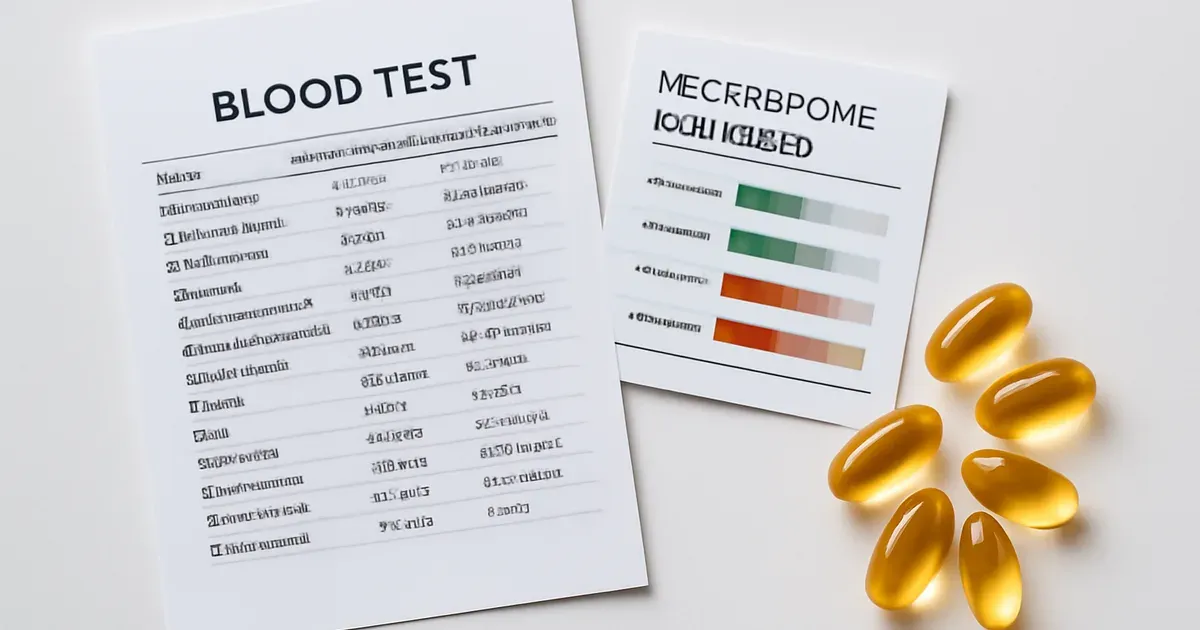
Tracking these metrics over time — not just measuring them once — is what allows clinicians to detect subtle shifts before they become disease. Quarterly blood panels, combined with microbiome testing, give a dynamic picture of how your body is aging right now.
How does gut health affect the speed of biological aging?
A diverse, balanced gut microbiome is now recognized as one of the most powerful modulators of how quickly the body ages. The trillions of microorganisms living in your digestive tract do far more than digest food — they regulate immune function, produce neurotransmitters, and govern systemic inflammation.
When the microbiome becomes dysbiotic (imbalanced), it triggers a state of chronic low-grade inflammation sometimes called "inflammaging." This is the same inflammatory process that drives arterial plaque, joint breakdown, cognitive decline, and metabolic dysfunction — all hallmarks of accelerated biological aging.
Conversely, a high-diversity microbiome is associated with lower hsCRP, better insulin sensitivity, and healthier lipid profiles — the exact same biomarkers used to assess biological age. Studies on centenarians consistently find unusually diverse gut microbiomes with high levels of butyrate-producing bacteria.
Practical steps to protect your microbiome include:
- Eating 30+ different plant foods per week
- Prioritising fermented foods (kefir, kimchi, sauerkraut)
- Avoiding unnecessary antibiotics and ultra-processed foods
- Supplementing with targeted probiotics where clinically indicated
The bottom line: gut health is not a separate topic from aging — it is one of its central mechanisms.
Do hormones really control how well you age?
Hormones are the signalling molecules that coordinate metabolism, brain function, recovery, and mood — and all major hormones peak around age 25, then decline steadily for the rest of life. This decline is not cosmetic; it is functional.
Low testosterone in men and women reduces muscle synthesis, impairs cognitive clarity, and slows recovery from injury. Declining estrogen accelerates bone loss and increases cardiovascular risk in women. Suboptimal thyroid function suppresses metabolism and energy production.
One useful clinical analogy: when hormone levels are low, trying to benefit from exercise and good nutrition is like treading water with a concrete block in each hand. Hormone optimisation removes those blocks — but you still have to swim. Hormones amplify the results of healthy habits; they do not replace them.
What evidence-based hormone management looks like:
- Correcting deficiencies to youthful physiological ranges (not supraphysiological)
- Monitoring bloodwork every 90 days
- Treating hormones as one component of a broader lifestyle protocol

What is the gut-brain axis and why does it matter for longevity?
The gut-brain axis is the two-way biochemical communication network linking the enteric nervous system in your gut to your central nervous system. It operates through the vagus nerve, immune signalling, and gut-derived neurotransmitters including roughly 90% of the body's serotonin.
For longevity, this matters enormously. Chronic gut inflammation travels up the gut-brain axis and drives neuroinflammation — a key mechanism in age-related cognitive decline and neurodegenerative diseases like Alzheimer's. Poor microbiome health has been directly associated with elevated cortisol, disrupted sleep architecture, and mood disorders, all of which accelerate biological aging.
The gut-brain connection also explains why stress management is a longevity tool, not a luxury. Mindfulness, gratitude practices, and even watching a sunset lower cortisol — and lower cortisol reduces intestinal permeability ("leaky gut"), which in turn reduces systemic inflammation.
| Gut Signal | Brain Effect | Aging Consequence |
|---|---|---|
| Butyrate (from fibre fermentation) | Reduces neuroinflammation | Slower cognitive decline |
| Dysbiosis-driven LPS | Activates microglial inflammation | Accelerated neurodegeneration |
| Serotonin precursors | Regulates mood and sleep cycles | Better sleep = slower aging |
| Elevated cortisol | Increases gut permeability | Higher hsCRP, inflammaging |
Can sleep and recovery actually slow biological aging?
Sleep is the single most powerful recovery tool available, and research now confirms it directly influences the rate of biological aging. People who consistently sleep fewer than seven hours per night show shorter telomeres, higher inflammatory markers, and elevated biological age on epigenetic clocks.
During deep sleep, the brain's glymphatic system clears metabolic waste — including amyloid-beta proteins linked to Alzheimer's disease. Simultaneously, growth hormone surges, muscle repair occurs, and memory consolidation takes place. Miss this window regularly and you accelerate every hallmark of aging simultaneously.
The gut microbiome also has a circadian rhythm of its own. Disrupted sleep alters microbial composition within days, increasing populations of pro-inflammatory bacteria and reducing butyrate producers. This creates a feedback loop: poor sleep degrades gut health, and a dysbiotic gut disrupts sleep quality further.
To protect sleep as a longevity asset:
- Aim for 7–9 hours of consistent, dark, cool sleep
- Avoid blue light and large meals within 90 minutes of bed
- Treat sleep as non-negotiable rather than optional recovery

What is the difference between healthspan and lifespan?
Lifespan is how many years you live; healthspan is how many of those years you live with vitality, cognitive clarity, physical strength, and independence. Modern medicine has extended lifespan dramatically, but healthspan has not kept pace — many people spend their final decade or more managing chronic disease.
Functional longevity medicine prioritises closing this gap. The goal is not simply to add years to life, but to add life to years — to be skiing at 70 rather than dependent on a wheelchair, to remain mentally sharp rather than cognitively diminished.
Healthspan vs Lifespan at a glance:
| Metric | Lifespan Focus | Healthspan Focus |
|---|---|---|
| Primary goal | Prevent death | Preserve function |
| Key interventions | Disease treatment | Proactive optimisation |
| Markers tracked | Mortality risk | VO₂ Max, muscle mass, cognition |
| Gut health role | Indirect | Central (microbiome = immune regulation) |
| Outcome | Longer life | Better life for longer |
The aesthetics of looking younger come as a natural side effect of functioning younger — not the other way around.
What emerging therapies show the most promise for slowing aging?
Several evidence-backed therapies are moving the needle on biological aging beyond lifestyle optimisation alone. These are not fringe treatments — many are being studied in rigorous clinical trials at institutions including Harvard and MIT.
Promising emerging therapies include:
- Metformin — Originally a diabetes drug; the TAME Trial (Targeting Aging with Metformin) is investigating its ability to extend healthspan in non-diabetics by improving mitochondrial efficiency and reducing oxidative stress
- Rapamycin (low-dose) — Regulates the mTOR pathway, shown to produce anti-aging effects in animal models and early human immune studies
- NAD+ precursors and TA-65 — Support DNA integrity, cellular energy production, and telomere preservation
- Hyperbaric Oxygen Therapy (HBOT) — Demonstrated improvements in brain oxygenation and reversal of some cognitive decline in aging populations
- Therapeutic Plasma Exchange (TPE) — Removes pro-inflammatory senescent cell signals and environmental toxins including microplastics
- Precision probiotic and postbiotic protocols — Targeting specific microbiome deficits to reduce inflammaging at its source
The principle that guides responsible use of these therapies is timing: optimise foundational health now — through lifestyle, gut health, hormone balance, and sleep — so your body is in a strong position to benefit from the next wave of breakthroughs when they arrive.
Bottom Line
- Biological age is changeable. Chronological age is not — but how fast your cells age is directly influenced by measurable, modifiable factors.
- Gut health is a central aging mechanism, not a peripheral wellness trend. Microbiome diversity reduces inflammaging and supports every other longevity system.
- The gut-brain axis connects mental and metabolic aging — stress management and sleep are physiological tools, not luxuries.
- Hormones, biomarkers, and emerging therapies are most effective when layered on top of a strong lifestyle foundation.
- Healthspan — not just lifespan — is the goal: more years of vitality, clarity, and independence.
Frequently Asked Questions
Can you reverse biological aging or only slow it down?
Emerging research suggests that measurable reversal of biological age markers is achievable, not just slowing. Studies using epigenetic clocks have documented 1–3 year reductions in biological age following structured lifestyle interventions combining exercise, nutrition, sleep optimisation, and stress reduction. Gut microbiome restoration has also been associated with improved epigenetic age scores in short-term trials.
How long does it take to see improvements in biological aging biomarkers?
Most clinicians observe meaningful changes in key biomarkers within 3–6 months of a comprehensive protocol. VO₂ Max improvements can begin within 8 weeks of structured aerobic training. Inflammatory markers like hsCRP typically respond within 90 days of dietary changes and microbiome support. Hormone optimisation tends to show measurable metabolic effects within 60–90 days.
Does the gut microbiome actually affect brain aging?
Yes — through the gut-brain axis, the state of your microbiome directly influences neuroinflammation and cognitive aging. Dysbiosis elevates lipopolysaccharides (LPS) that cross the gut barrier, activate immune cells in the brain, and accelerate neurodegeneration. Conversely, butyrate-producing gut bacteria have demonstrated neuroprotective effects in multiple human studies.
Are anti-aging supplements worth taking?
Evidence-backed nutraceuticals can meaningfully support a longevity protocol when targeted to actual deficiencies. Omega-3 fatty acids reduce systemic inflammation. Vitamin D is critical for immune regulation and is deficient in a majority of adults. B vitamins support homocysteine metabolism. However, supplements amplify a healthy foundation — they cannot compensate for poor sleep, a dysbiotic gut, or a sedentary lifestyle.
What is the single most important habit for slowing biological aging?
No single habit outperforms sleep combined with daily movement — but if forced to choose one entry point, most longevity clinicians point to gut health because of its upstream influence on inflammation, hormone signalling, brain health, immune function, and sleep quality simultaneously. A healthy microbiome creates a positive cascade across every other system involved in biological aging.