Fitness in Your 30s: Your Biggest Questions Answered
Answers to the biggest questions about fitness in your 30s, covering body composition, DEXA scanning, gut health, and the gut-brain axis. Max 150 chars.


Your 30s bring real physiological shifts — and a flood of conflicting advice about what to do about them. Should you train harder or smarter? Does gut health really affect your body composition? What does a DEXA scan actually tell you? This guide answers the most common questions about training, body composition, and the gut-brain connection in your 30s — clearly, directly, and without the noise.

Jump to Your Question
Why does fitness feel harder in your 30s?
What does body fat percentage actually mean for your training?
How does gut health affect fitness and body composition in your 30s?
What is a DEXA scan and why does it matter more than the scale?
How does the gut-brain axis affect your workout recovery and stress?
What training approach is best based on your body composition?
How does visceral fat connect to gut microbiome health?
What should you eat to support both muscle gain and gut health in your 30s?
Why does fitness feel harder in your 30s?
Fitness feels harder in your 30s because your body is undergoing real, measurable physiological changes — not because your willpower has dropped. Starting around age 30, muscle mass begins to decline at roughly 3–8% per decade if strength training is neglected, a process called sarcopenia. Hormonal shifts — including reduced testosterone and growth hormone — make building and retaining lean mass more demanding.
Fat accumulation, especially visceral fat around the abdomen, becomes easier. Recovery slows. Sleep quality tends to decline, and cortisol (the stress hormone) rises more readily — all of which compound each other.
The good news: these changes are not inevitable. They are largely trainable. What changes is the need for precision — random workouts and vague nutrition no longer cut it the way they did at 22.
Key shifts to know:
- Sarcopenia begins silently, even in active people
- Visceral fat accumulates faster, raising chronic disease risk
- Recovery windows lengthen, requiring smarter programming
- Hormonal changes affect both strength and mood
What does body fat percentage actually mean for your training?
Body fat percentage is the proportion of your total body weight that comes from fat tissue, and it is one of the most actionable numbers you can have when designing a training program. Unlike scale weight, which lumps muscle, fat, water, and bone together, body fat percentage tells you what your body is actually made of.
For people in their 30s, this matters more than ever. Two people can weigh exactly the same and have completely different health profiles and training needs.
Understanding your composition categories guides your priorities:
| Profile | Body Fat | Muscle Mass | Primary Focus |
|---|---|---|---|
| High fat, low muscle | >30% (F) / >25% (M) | Below average | Strength training + high-protein diet |
| Moderate fat, moderate muscle | Average range | Average | Body recomposition + cardio 2x/week |
| Low fat, high muscle | Athletic range | Above average | Performance, mobility, injury prevention |
| Low fat, low muscle | Lean but "skinny fat" | Below average | Prioritise muscle building immediately |
Knowing your category removes guesswork. It tells you whether to prioritise caloric surplus, deficit, or maintenance — and whether cardio or weights should dominate your weekly plan.
How does gut health affect fitness and body composition in your 30s?
Gut health directly influences body composition by regulating how efficiently your body absorbs nutrients, manages inflammation, and produces hormones that control fat storage and muscle repair. A well-functioning gut microbiome — the trillions of bacteria living in your digestive tract — is now understood to play a central role in metabolic health.
Research shows that individuals with diverse, balanced gut microbiomes tend to have lower visceral fat levels and better insulin sensitivity. In your 30s, when metabolic efficiency already begins to slow, gut health becomes a significant variable.
Specific gut-fitness connections include:
- Protein absorption: A compromised gut lining reduces how much dietary protein actually reaches your muscles
- Inflammation: Dysbiosis (imbalanced gut bacteria) drives systemic inflammation, which slows recovery and promotes fat storage
- Short-chain fatty acids (SCFAs): Produced by healthy gut bacteria, SCFAs support fat metabolism and reduce visceral fat accumulation
- Appetite hormones: Gut bacteria influence ghrelin and leptin — the hormones controlling hunger and satiety
If your training is consistent but body composition isn't improving, gut health is one of the first places worth investigating.
What is a DEXA scan and why does it matter more than the scale?
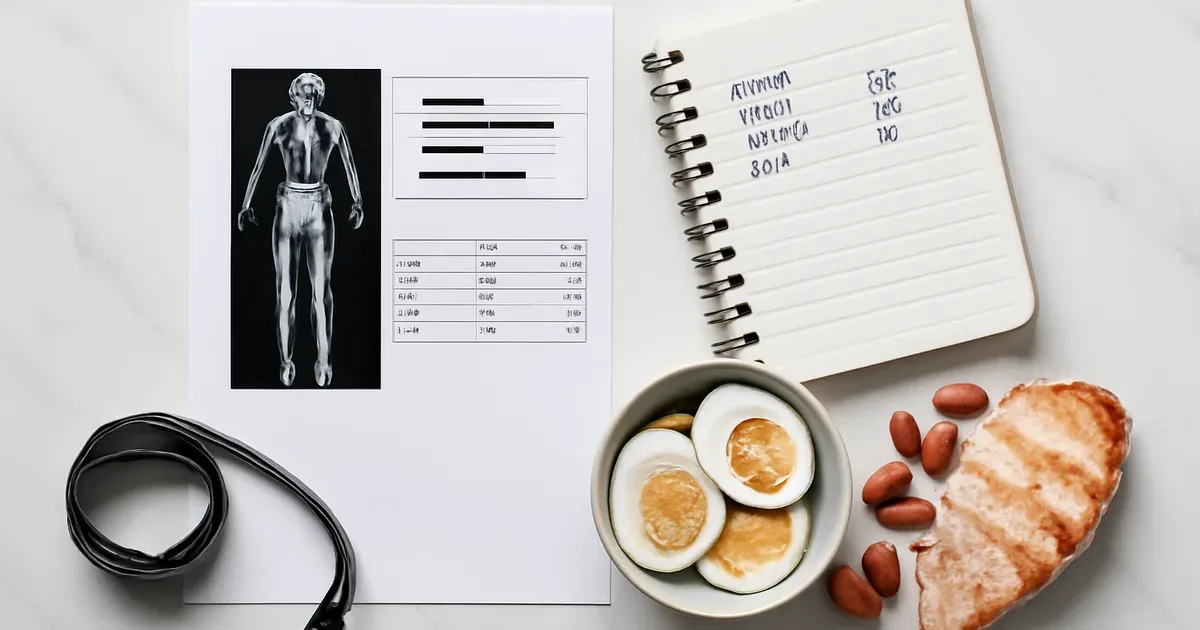
A DEXA (Dual-Energy X-ray Absorptiometry) scan is a medical imaging tool that measures body composition with precision, breaking down your body into lean muscle mass, fat mass, and bone mineral density by region. Unlike a bathroom scale or even a standard BMI calculation, a DEXA scan tells you where fat is stored and how much muscle you carry in each limb.
This matters profoundly in your 30s. The scale can stay identical while you lose muscle and gain fat — a change that has significant health consequences but zero visibility on a standard weigh-in.
A DEXA scan reveals:
- Total and regional body fat percentage
- Visceral fat levels (the most metabolically dangerous fat type)
- Lean muscle mass per limb (identifies imbalances)
- Bone mineral density (which also declines with age)
Rescanning every 4–8 weeks allows you to track whether your training is actually building muscle or simply burning overall weight. It shifts your goal from "losing weight" to "changing composition" — a far more useful target in your 30s.
KALOS in San Francisco offers expert DEXA scans to help you train and eat based on your actual physiology, not assumptions.

How does the gut-brain axis affect your workout recovery and stress?
The gut-brain axis is a bidirectional communication network linking your digestive system and your brain via the vagus nerve, immune signals, and shared neurotransmitters — and it has a direct impact on how well you recover from exercise. When this axis is disrupted, cortisol rises, sleep quality drops, and inflammation increases — all of which sabotage training adaptations.
Approximately 90% of the body's serotonin is produced in the gut. Serotonin doesn't just regulate mood — it also influences sleep cycles, which are the primary window for muscle repair and growth hormone release. A dysbiotic gut can suppress serotonin production, triggering a cascade that raises night-time cortisol and fragments sleep.
What this looks like in practice:
- Poor gut health → disrupted serotonin → poor sleep → elevated cortisol → slower recovery
- High cortisol → increased visceral fat storage → worsening body composition
- Chronic low-grade gut inflammation → joint soreness, fatigue, and reduced training output
Supporting the gut-brain axis — through fibre-rich foods, fermented foods, stress management, and consistent sleep schedules — is therefore as important as your training split itself.
What training approach is best based on your body composition?
The best training approach in your 30s is determined by your current body fat percentage and lean muscle mass, not by a generic programme found online. Body composition data allows you to match training stimulus to physiological need.
High body fat + low muscle mass: Prioritise strength training 3–4 times per week using compound movements (squats, deadlifts, rows, presses) in the 6–12 rep range. Cardio is secondary. Protein intake should reach at least 1g per pound of body weight.
Moderate fat + moderate muscle: You are in an ideal position for body recomposition. Lift heavy, eat slightly above maintenance on training days, and add two cardio sessions per week to support heart health and fat loss simultaneously.
Low fat + high muscle: Focus shifts to performance optimisation. Dial in recovery protocols, mobility work, and intensity cycling. Monitor muscle symmetry via DEXA to prevent overuse injuries.
Universal principles for your 30s:
- Prioritise 7–9 hours of sleep — this is not optional
- Manage stress actively; cortisol is the enemy of both muscle retention and gut health
- Track progress with body composition data, not scale weight

How does visceral fat connect to gut microbiome health?
Visceral fat — the deep abdominal fat that surrounds your organs — has a documented two-way relationship with gut microbiome composition. High visceral fat promotes an inflammatory gut environment, and a dysbiotic gut in turn accelerates visceral fat accumulation. Breaking this cycle is one of the most important interventions available in your 30s.
Specific bacterial strains, including Akkermansia muciniphila and Lactobacillus species, are associated with lower visceral fat and improved metabolic markers. Conversely, an overgrowth of pro-inflammatory bacteria correlates with increased abdominal adiposity and insulin resistance.
Practical steps to interrupt the visceral fat–dysbiosis cycle:
- Eat 25–35g of dietary fibre daily to feed beneficial bacteria
- Include fermented foods (yoghurt, kefir, kimchi, sauerkraut) regularly
- Reduce ultra-processed foods, which feed pro-inflammatory bacterial strains
- Exercise — even moderate aerobic activity increases microbiome diversity within weeks
- Track visceral fat specifically via DEXA, not just total body weight
Visceral fat is not visible in the mirror, which is precisely why measurement tools like DEXA scanning matter so much in your 30s.
What should you eat to support both muscle gain and gut health in your 30s?
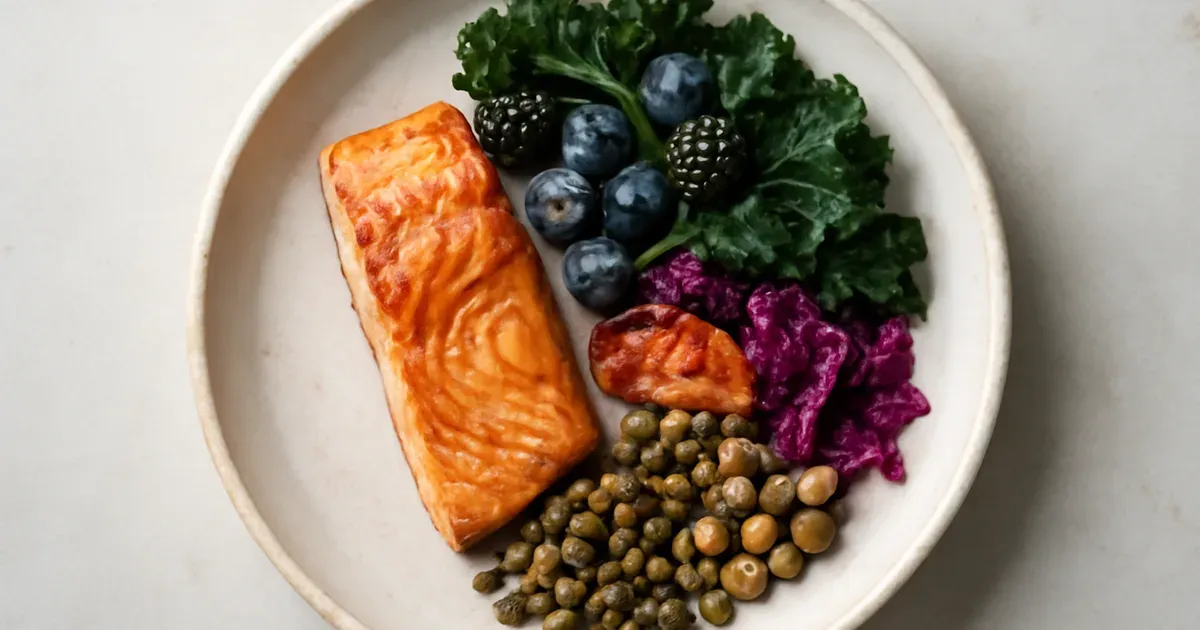
The ideal diet for fitness in your 30s supports muscle protein synthesis and a diverse gut microbiome simultaneously — and these two goals are far more aligned than most people realise. High-protein diets, when built around whole food sources, also deliver the fibre, polyphenols, and micronutrients that beneficial gut bacteria depend on.
Core dietary principles:
- Protein: Aim for 1g per pound of body weight. Prioritise lean meats, fish, eggs, legumes, and Greek yoghurt. Legumes double as prebiotic fibre sources.
- Fibre: Target 30g+ daily from vegetables, fruits, oats, and pulses. Fibre feeds the bacteria that produce anti-inflammatory SCFAs.
- Fermented foods: Kefir, kimchi, and live-culture yoghurt directly seed the gut with beneficial bacteria and have been shown to reduce inflammatory markers.
- Polyphenols: Berries, dark chocolate, green tea, and olive oil act as prebiotics and support both gut lining integrity and post-workout recovery.
- Reduce: Ultra-processed foods, excessive alcohol, and artificial sweeteners — all of which measurably reduce microbiome diversity.
Sleep and stress management are nutritional adjacents that directly affect both muscle protein synthesis and gut permeability. No diet outperforms chronic cortisol.
Bottom Line
- Fitness in your 30s requires precision, not just effort — body composition data (especially from DEXA) is your most powerful training tool.
- The gut microbiome directly affects body composition through nutrient absorption, inflammation, visceral fat accumulation, and recovery quality.
- Visceral fat and gut dysbiosis reinforce each other — targeting one through diet and exercise also improves the other.
- The gut-brain axis links your digestive health to sleep, cortisol, and workout recovery — gut health is training infrastructure, not a bonus.
- Your diet can simultaneously build muscle and support a healthy microbiome — these goals are complementary when built on whole foods, adequate protein, and fibre.
Frequently Asked Questions
How often should I get a DEXA scan in my 30s?
Getting a DEXA scan every 4–8 weeks is recommended for people actively trying to change their body composition in their 30s. This frequency allows you to detect meaningful shifts in muscle mass and fat distribution before spending months on an ineffective programme. For maintenance phases, scanning every 3–4 months provides sufficient data.
Can improving gut health actually help you lose fat?
Yes — improving gut microbiome diversity is associated with lower visceral fat and better metabolic function, including improved insulin sensitivity and reduced systemic inflammation. Studies have found that individuals with higher Akkermansia muciniphila levels tend to carry less abdominal fat. Diet, exercise, and stress reduction are the primary levers for improving gut health.
Is strength training or cardio better in your 30s?
Strength training is the higher priority in your 30s because it directly counters sarcopenia, supports bone density, and raises resting metabolic rate. Cardio is valuable for cardiovascular health and can support fat loss, but two sessions per week is sufficient for most people. The ratio should reflect your body composition data — more cardio for high visceral fat profiles, more lifting for low muscle mass profiles.
Does cortisol really affect body composition?
Chronically elevated cortisol promotes visceral fat storage, breaks down muscle tissue, and disrupts the gut microbiome — making stress management a direct body composition intervention. High cortisol also impairs sleep quality, which is the primary window for muscle repair and growth hormone secretion. Managing stress is therefore as important as your training split.
What are the signs that gut health is affecting my fitness progress?
Signs that gut health may be limiting your fitness results include slow recovery, persistent bloating after meals, unexplained fatigue, poor sleep, and body composition plateaus despite consistent training. These symptoms suggest either gut dysbiosis, increased intestinal permeability ("leaky gut"), or both. A nutrition professional or gastroenterologist can help identify the root cause.