Gut-Brain Axis & Psychedelics: Your Questions Answered
How does the gut-brain axis connect to psychedelic therapy? Explore the science of the psilocybiome, microbiome health, and mental health treatment.

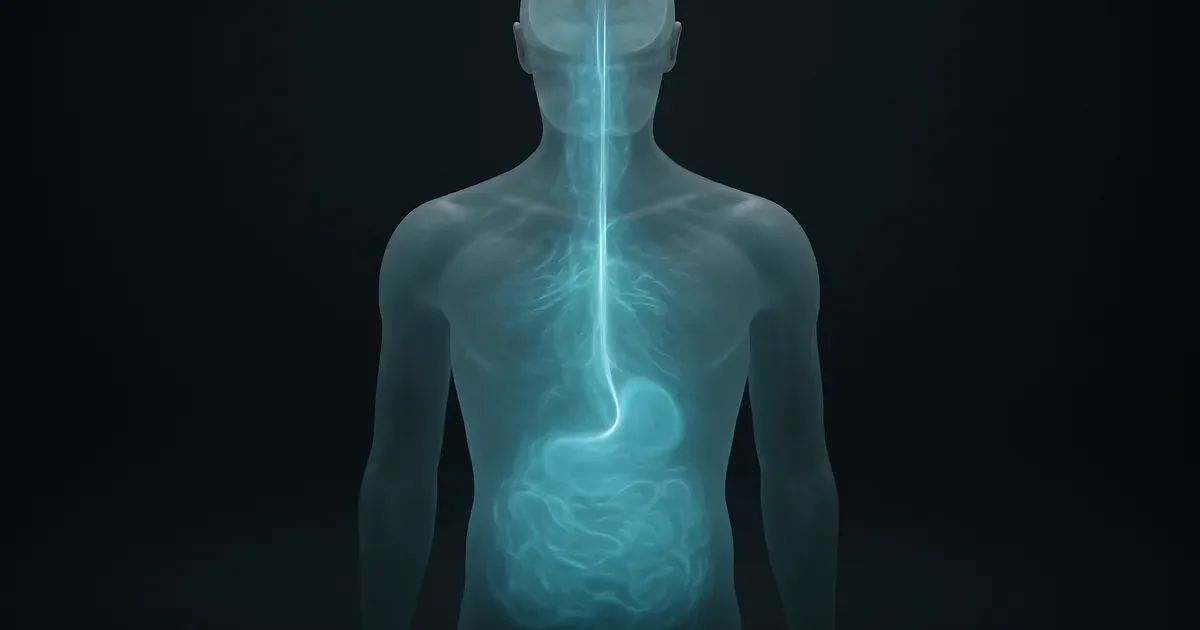
The idea that your gut microbiome could influence how psychedelic therapy works sounds strange at first — but emerging science says the connection is real and potentially important. If you've heard terms like "gut-brain axis," "psilocybiome," or "microbiota-gut-brain axis" and wondered what any of it actually means for mental health treatment, you're not alone. This guide breaks down the key questions in plain language.
Jump to Your Question
How do psychedelics work on the brain?
Can gut microbiome health affect psychedelic therapy outcomes?
What gut bacteria changes are linked to psychiatric disorders?
Could improving gut health before psychedelic therapy help?
What is precision medicine in psychedelic therapy?
Do psychedelics directly affect the gut microbiome?
What is the gut-brain axis?
The gut-brain axis is the two-way communication network linking the gastrointestinal tract and the brain through neural, hormonal, and immune signalling pathways. It is not a single channel but a convergence hub of multiple biological feedback systems operating simultaneously.
The microbiota-gut-brain (MGB) axis specifically refers to the role your gut's microbial community — trillions of bacteria, fungi, and other microorganisms — plays in this conversation. These microbes produce neurotransmitters, regulate immune responses, and release metabolites that travel through the bloodstream and vagus nerve to influence brain function.
Signalling along this axis is especially critical during early development, shaping:
- Stress response systems
- Cognitive function
- Social behaviour
- Emotional regulation
Perturbations in the gut microbiota across the lifespan are increasingly associated with a range of psychiatric conditions, making gut health a legitimate target in mental health research.
What is the "psilocybiome"?
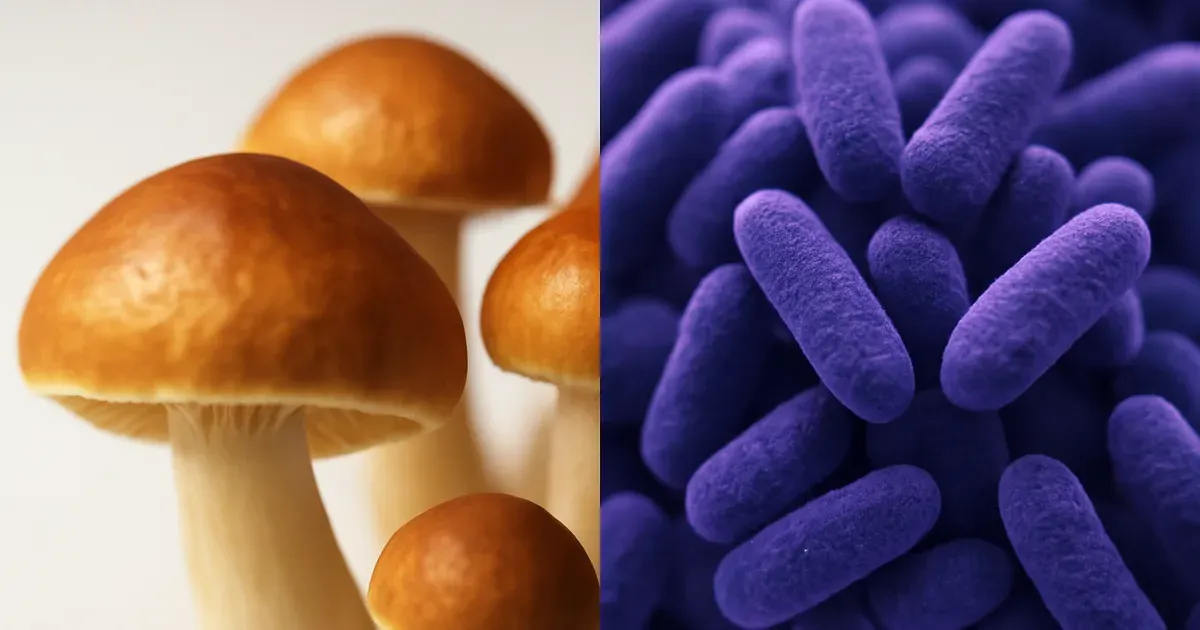
The "psilocybiome" is a conceptual framework describing the reciprocal interactions between a host organism, its microbiota, and serotonergic psychedelics like psilocybin. The term was coined to capture the idea that these relationships are bidirectional — psychedelics may influence the microbiome, and the microbiome may influence how psychedelics work.
Rather than treating the drug, the gut, and the brain as separate systems, the psilocybiome concept treats them as an integrated whole. Research published in Frontiers in Neuroscience exploring this framework positions the MGB axis as a convergence hub between multiple biofeedback systems that may modulate both the acute and sustained effects of psychedelic therapy.
This systems-level thinking mirrors a broader shift in psychiatry — away from single-target drug models and toward approaches that account for the complexity of mind, body, and environment.
How do psychedelics work on the brain?
Serotonergic psychedelics like psilocybin and LSD primarily work by activating 5-HT2A receptors concentrated in the cortex of the brain. This receptor activation initiates a cascade of altered information processing that researchers believe is central to the therapeutic effects of these substances.
However, the mechanism is far more complex than a single receptor interaction. Psychedelic therapy effects traverse multiple levels:
- Molecular — receptor binding and downstream signalling
- Cellular — neuroplasticity changes and gene expression
- Network — large-scale shifts in how brain regions communicate
Biofeedback signals from peripheral systems — including the gut — and the external environment also play key roles in modulating both the acute experience and the longer-term therapeutic trajectory. This is precisely why researchers are now asking how the gut-brain axis might fit into the picture.
Clinical evidence shows psychedelic therapy has shown promise in improving outcomes for depression, treatment-resistant depression, and addiction disorders.
Can gut microbiome health affect psychedelic therapy outcomes?
The gut microbiome may influence psychedelic therapy outcomes by modulating how the brain and body respond before, during, and after treatment. Researchers have proposed that the MGB axis operates across all three phases of psychedelic therapy: preparation, administration, and integration.
Here is how each phase may be relevant:
| Phase | Potential MGB Axis Role |
|---|---|
| Preparation | Baseline microbiome composition as a biomarker of likely response |
| Administration | Gut microbes influencing drug metabolism and inter-individual variability |
| Integration | Peripheral MGB signalling reinforcing behavioural changes over time |
Baseline MGB axis activity, together with psychological measures, could potentially serve as composite biomarkers to help identify which individuals are most likely to benefit from psychedelic therapy. This would represent a significant step toward personalised psychiatric treatment.
The plasticity of the MGB axis — its capacity to change rapidly through diet and lifestyle interventions — makes it a realistic modifiable target in clinical settings.

What gut bacteria changes are linked to psychiatric disorders?
Across multiple psychiatric disorders, researchers have identified broadly similar patterns of gut microbiome disruption, suggesting shared mechanisms of dysregulation. These patterns include a depletion of certain beneficial bacteria and an overgrowth of pro-inflammatory strains.
Commonly observed changes include:
- Reduced butyrate-producing bacteria — these produce short-chain fatty acids that support gut lining integrity, reduce inflammation, and may influence brain function
- Enrichment of pro-inflammatory bacteria — associated with systemic inflammation that affects the brain
- Reduced microbial diversity — a general marker of suboptimal gut health
Deciphering cause and effect remains a major challenge. Does a disrupted microbiome contribute to psychiatric symptoms, or do the lifestyle and physiological changes accompanying mental illness alter the microbiome? The honest answer is: likely both, operating in a feedback loop.
What is clear is that gut health cannot be dismissed as peripheral to mental health — the two are deeply intertwined through the gut-brain axis.
Could improving gut health before psychedelic therapy help?
Optimising gut microbiome health during the preparatory phase of psychedelic therapy is a scientifically plausible strategy that may improve therapeutic outcomes. Because MGB axis signalling can be rapidly altered through dietary changes, probiotics, and lifestyle modifications, the gut presents a potentially modifiable variable in treatment design.
The rationale is straightforward: if a person's MGB axis baseline partially predicts their response to psychedelic therapy, then shifting that baseline into a more favourable state before treatment could improve the odds of a positive outcome.
Approaches that may support gut health include:
- Diverse, fibre-rich diet — feeds beneficial bacteria
- Fermented foods — introduce live microbial cultures
- Reducing ultra-processed food intake — reduces pro-inflammatory bacterial fuel
- Stress reduction practices — the brain also signals back to the gut
- Adequate sleep — disrupted sleep negatively affects microbiome composition
This does not mean gut health is a magic lever. But in a systems-based approach to psychiatric treatment, it represents a legitimate, low-risk preparatory intervention worth investigating in clinical trials.

What is precision medicine in psychedelic therapy?
Precision medicine in psychedelic therapy means tailoring treatment decisions to the individual's unique biological, psychological, and environmental profile rather than applying a one-size-fits-all approach. The gut-brain axis is one potential layer of that individual profile.
In practice, this could involve:
- Measuring baseline gut microbiome composition as part of pre-treatment assessment
- Using MGB axis markers alongside psychological scales to predict likely responders
- Adjusting the preparatory phase — including dietary protocols — to optimise microbiome status
- Monitoring post-treatment microbiome shifts as part of integration phase evaluation
The broader systems psychiatry paradigm recognises that mental health disorders arise from dysfunction across multiple levels simultaneously — molecular, cellular, network, interpersonal, and environmental. The gut-brain axis sits at the interface between the internal biological environment and the external world, making it a uniquely positioned mediator in this framework.
While the field is still early, incorporating gut health metrics into psychedelic therapy trials is a logical and actionable next step.
Do psychedelics directly affect the gut microbiome?
There is emerging preclinical evidence suggesting that psychedelic compounds may directly influence gut microbiome composition, though this area of research is in its early stages. The relationship between psychedelics and the microbiome is likely bidirectional — each system capable of modifying the other.
Several plausible mechanisms exist:
- Serotonin receptors in the gut — approximately 90% of the body's serotonin is produced in the gut, and 5-HT receptors are present throughout the gastrointestinal tract, meaning serotonergic drugs could directly affect gut physiology
- Immune modulation — psychedelics have shown potential anti-inflammatory effects, which could alter the gut environment and favour different microbial communities
- Behavioural changes post-therapy — improved mood and reduced anxiety following psychedelic therapy may lead to lifestyle changes (better diet, sleep, social connection) that secondarily benefit the microbiome
It has been proposed that some of the sustained therapeutic effects of psychedelics — particularly those related to sleep, diet, and lifestyle — may be partially mediated through the MGB axis. This remains a hypothesis requiring well-designed clinical investigation, but it opens an important door for future research.
Bottom Line
- The gut-brain axis is a genuine two-way communication system that influences brain function through neural, immune, and hormonal pathways.
- The "psilocybiome" concept frames psychedelic therapy and gut microbiome health as deeply interconnected systems — not separate domains.
- Gut microbiome composition may predict, modulate, and be altered by psychedelic therapy across all three phases: preparation, administration, and integration.
- Common gut microbiome disruptions in psychiatric disorders — including loss of butyrate-producing bacteria — may be relevant to understanding why psychedelic therapy works for some people more than others.
- A precision medicine approach to psychedelic therapy that incorporates gut health metrics represents a scientifically grounded and clinically promising direction for future research.