How to Boost GLP-1 Naturally for Weight Loss
Learn 5 evidence-based steps to boost GLP-1 naturally, improve gut health, and manage appetite — without expensive prescriptions. UK-focused advice.


You've tried cutting back on calories. You've followed the meal plans. You've even looked into those weight-loss injections everyone's talking about — only to baulk at the cost or the waiting list. And yet the scales refuse to budge in any meaningful way.
The frustrating truth is that hunger isn't just a matter of willpower. It's hormonal. One key player — a gut hormone called GLP-1 — sits at the heart of why some people feel satisfied after a meal while others are reaching for snacks an hour later. The good news? You don't need a prescription to start nudging this system in the right direction. Your gut microbiome, your food choices, and your daily habits all influence GLP-1 production — and science is beginning to map exactly how.
This guide walks you through five evidence-informed steps to support your body's natural GLP-1 response, improve gut health naturally, and feel more in control of your appetite — starting today.
Why Appetite Feels So Hard to Control in the First Place
GLP-1, or glucagon-like peptide-1, is produced in the gut after you eat. It signals the brain to reduce hunger, slows digestion so you feel full longer, and helps regulate blood sugar. Think of it as your body's built-in "I've had enough" message.
The problem is that modern life is remarkably good at blunting that signal:
- Ultra-processed foods — which make up nearly 57% of calorie intake in UK adults according to research from the University of São Paulo and UCL — actively reduce GLP-1 activity over time.
- Chronic stress and poor sleep raise cortisol, which suppresses satiety hormones and amplifies hunger cues.
- A depleted gut microbiome — the community of trillions of bacteria living in your digestive tract — produces fewer of the short-chain fatty acids that stimulate GLP-1 release from gut cells.
- Eating too quickly means GLP-1 and other fullness hormones simply don't have time to reach the brain before you've already overeaten.
- Low fibre intakes starve the beneficial gut bacteria that support healthy hormone signalling. In the UK, average fibre intake sits at around 19g per day — well below the recommended 30g.
The gut-brain connection is central to all of this. Research from King's College London and Imperial College London has shown that the gut microbiome communicates directly with the brain via the vagus nerve, influencing everything from mood to appetite regulation. When your microbiome is diverse and well-fed, it actively supports the hormonal machinery that keeps hunger in check.

Step 1: Rebuild Your Gut Microbiome With Fibre and Fermented Foods
Your gut microbiome is the engine room of GLP-1 production. The beneficial bacteria living in your large intestine ferment dietary fibre and produce short-chain fatty acids — compounds that directly stimulate the L-cells in your gut wall to release GLP-1. A richer, more diverse microbiome means more robust hormone signalling.
Research from the British Gut Project, a citizen science initiative led by King's College London, found that people who eat 30 or more different plant foods per week have significantly more diverse gut microbiomes than those eating fewer than 10. Diversity, it turns out, is the goal — not just quantity.
How to apply this in practice:
- Aim for at least 30g of fibre daily, per UK dietary guidelines — increase gradually to avoid bloating
- Include prebiotic foods that feed beneficial bacteria: oats, leeks, garlic, onions, asparagus, bananas, and Jerusalem artichokes
- Add fermented foods such as live yoghurt, kefir, sauerkraut, kimchi, and miso — these introduce beneficial bacteria and support the gut-brain connection
- Count variety: rotate your vegetables, grains, legumes, nuts, and seeds across the week
- If you choose a probiotic supplement, look for products with third-party testing and established strains such as Lactobacillus and Bifidobacterium
Pro tip: A daily bowl of porridge topped with a tablespoon of ground flaxseed and a handful of mixed berries delivers a meaningful fibre and prebiotic hit — and aligns neatly with the UK Eatwell Guide's recommendations on wholegrains.
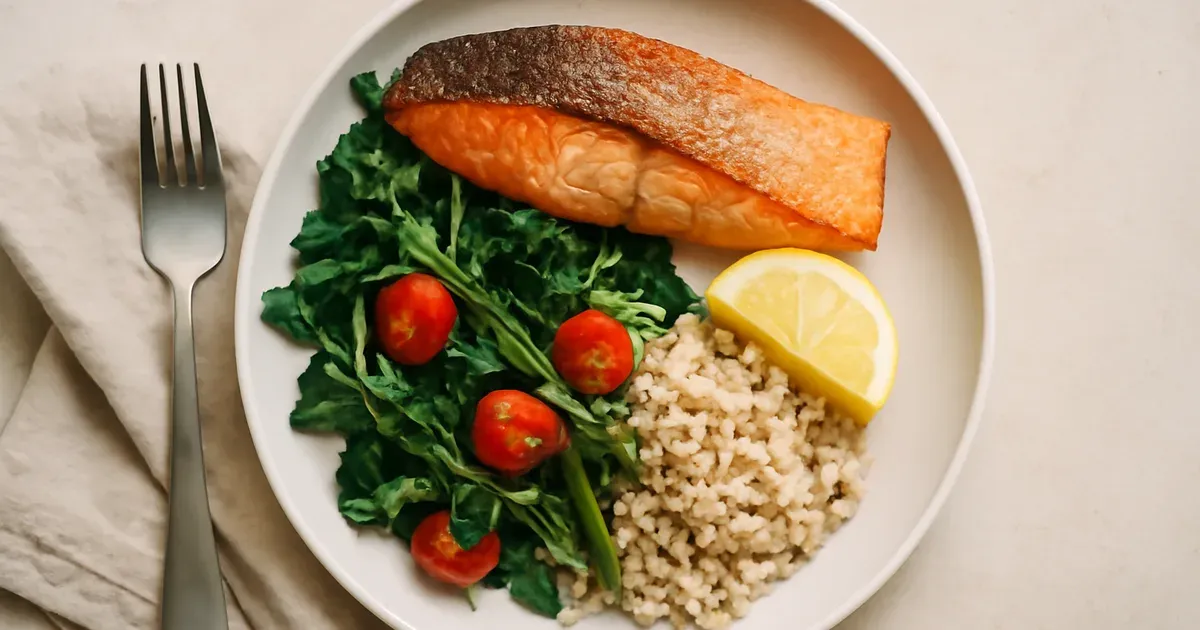
Step 2: Restructure Your Plate Around Protein, Fibre, and Healthy Fats
What you eat matters — but so does the order in which you eat it. Research suggests that consuming protein and fibre before carbohydrates at a meal produces a significantly stronger GLP-1 response compared with starting with bread or other refined carbs. The structure of your plate is, in effect, a lever you can pull multiple times a day.
Protein triggers satiety hormones independently, meaning a meal built around eggs, fish, legumes, or lean poultry will keep you fuller for longer than one skewed towards carbohydrates. Healthy fats — from olive oil, avocado, nuts, and oily fish — further slow gastric emptying, giving GLP-1 time to do its job.
Practical steps to restructure your meals:
- Start lunch or dinner with a salad, vegetable soup, or a protein-rich starter before the carbohydrate portion
- Build each meal around a palm-sized serving of protein, half a plate of vegetables, and a smaller portion of wholegrains
- Swap ultra-processed snacks for nuts, Greek yoghurt, or hummus with raw vegetables
- Include oily fish (salmon, mackerel, sardines) at least twice a week — the omega-3 fatty acids also support the gut microbiome and the gut-brain connection
- Reduce refined carbohydrates and added sugars, which blunt GLP-1 activity over time
The British diet has room to improve here. NHS data consistently shows UK adults eat too few vegetables, too little fish, and too many discretionary foods. Small, sustained changes at the plate level compound quickly.
Step 3: Slow Down and Eat Mindfully
Speed-eating is one of the most underrated obstacles to appetite regulation. GLP-1 and other satiety hormones take approximately 15–20 minutes to travel from the gut to the brain and register fullness. If your meal is finished in eight minutes, your brain simply hasn't received the signal yet — and you'll likely have eaten far more than your body needed.
Mindful eating is not a wellness cliché. The evidence supporting it is robust enough that the British Dietetic Association includes it in guidance on weight management and disordered eating. Slowing down eating pace has been shown to increase GLP-1 secretion and improve post-meal satiety in multiple controlled studies.
How to practise mindful eating:
- Set a minimum of 20 minutes for each main meal — use a timer if it helps
- Put your fork or spoon down between bites and chew thoroughly before swallowing
- Remove distractions: no scrolling, no TV, no working lunches at your desk
- Focus on texture, temperature, and flavour — engagement with sensory experience naturally slows eating pace
- Start meals with a large glass of water, which signals early fullness and primes the digestive system
Pro tip: If you eat lunch at a desk in the UK, you're far from alone — but even stepping away for ten minutes and eating without your phone can meaningfully shift your relationship with fullness cues over time.

Step 4: Move Your Body Regularly — Especially With Intensity
Exercise is one of the most powerful natural GLP-1 boosters available — and it costs nothing. Both moderate and high-intensity physical activity stimulate GLP-1 production, improve insulin sensitivity, and support the diversity of your gut microbiome. Research from the University of Nottingham and elsewhere has demonstrated that regular aerobic exercise increases gut microbial diversity independently of diet.
The gut-brain connection benefits from exercise too. Physical activity reduces cortisol, improves sleep quality, and enhances the vagal tone that governs how well your gut and brain communicate. In short, movement supports nearly every mechanism involved in natural appetite regulation.
Building an exercise habit in the UK context:
- Aim for at least 150 minutes of moderate activity per week, in line with NHS physical activity guidelines
- Include 2 or more sessions of strength or resistance training per week — muscle mass improves glucose metabolism and long-term weight management
- Choose activities you genuinely enjoy: swimming, cycling, brisk walking, dancing, or team sports all count
- Use NHS Active 10, the free NHS walking app, or Couch to 5K if you're starting from scratch
- Even breaking up long periods of sitting with 5-minute walks every hour has measurable metabolic benefits
Consistency matters more than intensity for long-term gut and metabolic health. A sustainable 30-minute walk most days will outperform an exhausting programme you abandon after three weeks.
Step 5: Prioritise Sleep and Manage Stress
Poor sleep and chronic stress are appetite's worst enemies — and they operate primarily through the gut-brain axis. When cortisol is chronically elevated, it suppresses GLP-1 and other satiety hormones while amplifying hunger signals. UK Biobank data has linked short sleep duration with higher BMI and greater abdominal adiposity across the British population.
The gut microbiome is also profoundly affected by stress. Research published by MRC-funded teams has shown that psychological stress alters microbial composition within days, reducing populations of beneficial Lactobacillus species and disrupting the short-chain fatty acid production that drives GLP-1 release. Addressing stress is therefore not a soft add-on to gut health — it is foundational to it.
Practical strategies for sleep and stress in the UK:
- Target 7–9 hours of sleep per night; the NHS recommends consistent sleep and wake times to anchor your circadian rhythm
- Reduce evening screen exposure, which suppresses melatonin and delays sleep onset
- Practise diaphragmatic breathing, progressive muscle relaxation, or a short yoga sequence before bed — all shown to reduce cortisol
- Consider evidence-based mindfulness programmes such as those delivered through the NHS Talking Therapies service
- Spend time outdoors daily — even 20 minutes of natural light exposure in the morning regulates circadian rhythms and supports gut microbial diversity

What About GLP-1 Supplements? An Honest Assessment
The supplement market has moved fast to capitalise on interest in GLP-1 medications such as Wegovy, which is now available in the UK via NHS and private pathways. From berberine capsules to prebiotic powders and probiotic gummies, products claiming to "naturally supercharge" GLP-1 are widely available.
The reality is more nuanced. Unlike prescription GLP-1 receptor agonists — which are clinically proven to produce up to 21% reductions in body weight — natural GLP-1 supplements have limited clinical evidence supporting significant weight loss. There is no supplement that contains synthetic GLP-1; they claim only to stimulate your body's own production.
Of available ingredients, berberine — a plant-derived compound — shows the most promising early research, with some studies suggesting modest improvements in blood glucose and insulin sensitivity. But effect sizes are small, and long-term safety data in UK populations is limited.
Importantly, the UK's Medicines and Healthcare products Regulatory Agency (MHRA) does not evaluate dietary supplements for efficacy in the same way that medicines are assessed. If you choose to explore supplements, buy from brands that invest in third-party testing, check ingredients carefully, and speak to your GP — particularly if you take prescription medications or have a chronic condition.
The most evidence-based approach remains the combination of gut-supportive dietary habits, regular movement, quality sleep, and stress management outlined in the steps above.
What to Expect: A Realistic Timeline
Progress is gradual — and that's a feature, not a flaw. Here is a realistic phase breakdown:
Weeks 1–2: Foundation setting Your gut microbiome begins responding to dietary changes within 48–72 hours. You may notice reduced bloating once fibre is introduced gradually, and early improvements in energy and sleep quality as stress management habits bed in.
Weeks 3–6: Appetite shifts With consistent fibre intake, regular meals, and slower eating, most people begin noticing stronger satiety signals after meals. Cravings for ultra-processed foods typically begin to diminish as GLP-1 signalling improves and microbiome composition diversifies.
Months 2–3: Measurable changes Sustainable weight changes — roughly 0.5–1kg per week — become achievable when all five steps are applied consistently. Gut microbial diversity measurably improves over 8–12 weeks of dietary change, per research from the University of Reading.
Month 3 and beyond: Long-term resilience The gut-brain axis grows more robust. Appetite regulation becomes more intuitive. The habits themselves feel less effortful — the hallmark of genuine lifestyle change rather than a short-term diet.
Mistakes That Slow Your Progress
- Increasing fibre too quickly. Adding large amounts of fibre overnight causes gas and bloating that derails the habit. Increase by 3–5g per week.
- Skipping meals to compensate. Irregular eating patterns disrupt GLP-1 rhythm and destabilise blood sugar, driving stronger hunger signals later in the day.
- Relying on supplements as a shortcut. No supplement replaces the microbiome-supportive effects of whole foods, sleep, and movement — and some may interact with medications.
- Ignoring sleep. One night of poor sleep measurably increases next-day appetite hormones. Sleep is not optional in a weight management strategy.
- Expecting prescription-level results from lifestyle alone. For those with clinical obesity or Type 2 diabetes, lifestyle measures are important but may need to be combined with medical support via an NHS pathway.
What Can Help You Get There Faster
Dietary tracking tools: Apps such as MyFitnessPal or Cronometer (both available in the UK) can help you monitor fibre intake and meal composition as you build new habits. The NHS Weight Loss Plan app is free, evidence-based, and designed for UK users.
Gut microbiome testing: Services such as those offered by the British Gut Project (now part of ZOE) can provide personalised insight into your microbiome composition and dietary responses. These are research-grade tools, not diagnostic devices, but they can be motivating and informative.
Professional support: A registered dietitian — find one via the British Dietetic Association's Find a Dietitian tool — can create a personalised plan that aligns with UK dietary guidelines. For those with a BMI over 30 or weight-related health conditions, an NHS referral to a Tier 3 weight management service may be appropriate.
Your 5-Step Recap
✅ Step 1: Rebuild your gut microbiome — 30g fibre daily, 30 plant foods per week, fermented foods regularly ✅ Step 2: Restructure your plate — protein and fibre before carbs, reduce ultra-processed foods ✅ Step 3: Slow down and eat mindfully — 20 minutes per meal minimum, no distractions ✅ Step 4: Move regularly — 150 minutes moderate activity per week plus strength training ✅ Step 5: Prioritise sleep and manage stress — 7–9 hours nightly, evidence-based stress reduction
Closing Thoughts
Boosting GLP-1 naturally is not about hacking your hormones — it's about giving your gut, your brain, and your body the conditions they need to work as they were designed to. The five steps above are not new fads. They are, in large part, what the NHS Eatwell Guide and decades of UK nutritional science have been pointing towards all along.
Start with one step. Build from there. The gut-brain connection is remarkably responsive to consistent, compassionate change — and you don't need a prescription to begin.
You might also like
- UK Diet Gaps Linked to Poor Gut Health
- Morinaga Milk Gains GRAS Status for Postbiotic Ingredient
- Fasting-Mimicking Diet Cuts Gum Disease Inflammation
Frequently Asked Questions
Do GLP-1 supplements actually work for weight loss in the UK?
Current evidence does not support GLP-1 supplements as effective weight-loss tools in their own right. Most products have limited or no robust clinical trial data. The MHRA does not evaluate supplements for efficacy as medicines are assessed. Berberine shows the most early-stage promise, but effect sizes are modest. The most evidence-based approach remains dietary and lifestyle change — which has been shown to meaningfully increase the body's own GLP-1 production.
How quickly can I improve my gut microbiome?
Your microbiome begins to respond within 48–72 hours of dietary changes. However, meaningful, stable shifts in microbial diversity typically take 8–12 weeks of consistent higher-fibre, varied-plant eating. Research from the University of Reading supports this timeframe. Fermented foods can introduce beneficial bacteria more rapidly, but sustained change requires feeding them with prebiotic fibre.
What foods naturally increase GLP-1 in the UK diet?
High-fibre and protein-rich foods are the strongest natural GLP-1 stimulators. Oats, legumes (lentils, chickpeas, beans), vegetables, fruit, wholegrains, eggs, fish, and live yoghurt all support GLP-1 release. Fermented foods such as kefir and sauerkraut support the gut microbiome that underpins GLP-1 production. These foods are all widely available in UK supermarkets and align with the NHS Eatwell Guide.
Can I access GLP-1 medication through the NHS?
Yes, in specific circumstances. Semaglutide (Wegovy) is available in the UK through NHS specialist weight management services for adults with a BMI of 35 or above and at least one weight-related health condition, among other criteria. Eligibility and availability vary. Speak to your GP about whether an NHS referral to a Tier 3 weight management service is appropriate for you.
Is the gut-brain connection relevant to weight loss?
Yes — profoundly so. The vagus nerve creates a direct communication highway between your gut microbiome and your brain, influencing appetite, mood, and satiety hormone signalling including GLP-1. Research from King's College London and Imperial College London has demonstrated that a diverse, well-nourished microbiome supports better appetite regulation via this gut-brain axis. Stress and poor sleep disrupt this connection, making gut health UK researchers increasingly interested in holistic approaches to weight management.
96 Bacterial Strains. Two Shots a Day.
GOODIE is an award-winning fermented drink with 96 live bacterial strains — more than any yogurt or kombucha — never pasteurised, clinically tested, and 8 in 10 users felt less bloating within 14 days. Curious?