Weight Loss After 40: Gut Health Changes Everything
Weight loss after 40 demands a smarter strategy—one that accounts for shifting hormones, muscle loss, and the gut microbiome's growing role in metabolism and ap


You're eating the same foods, moving your body, and still the scale creeps upward. Weight loss after 40 feels like the rules changed overnight—and in a very real, physiological sense, they did. Hormones shift, muscle quietly disappears, and your gut microbiome undergoes changes that directly influence how your body stores fat, manages hunger, and recovers from exercise.
The good news: every one of these changes is predictable, and predictable means addressable. This guide maps the science—including the gut-brain connection that most weight-loss advice ignores—so you can build a strategy that actually works in your 40s and beyond.

Why Weight Loss After 40 Gets Harder (It's Not Just Willpower)
Several physiological shifts converge in mid-life, and understanding them is the first step to working around them rather than against them.
- Metabolic rate: Total Daily Energy Expenditure (TDEE) often drops in your 40s—not primarily because your resting metabolism slows, but because activity levels and lean muscle mass decline (Pontzer et al., 2021). Fewer calories burned means existing eating habits now create a surplus.
- Sarcopenia: Adults lose 3–5% of muscle per decade after age 30 (Cleveland Clinic). Less muscle means a lower metabolic rate and a faster path to fat gain.
- Hormonal shifts: Estrogen and progesterone decline during perimenopause; testosterone in men falls roughly 1% per year after 40 (Mayo Clinic). Both changes promote abdominal fat storage and blunt training adaptations.
- Lifestyle load: Career peaks and caregiving squeeze out sleep and exercise, elevating cortisol—a hormone strongly linked to visceral (belly) fat accumulation.
What most guides leave out is the gut microbiome. Research published in Cell (Sonnenburg & Bäckhed, 2016) shows that microbial diversity in the gut declines with age, and this shift alters how efficiently you extract energy from food, how aggressively you store fat, and how well your gut communicates with your brain to regulate appetite.
How Your Gut Microbiome Drives Metabolism After 40
The gut-brain axis is a two-way communication highway linking your intestinal microbiome to appetite-regulating centers in the brain via the vagus nerve, hormones like GLP-1 and ghrelin, and short-chain fatty acids (SCFAs) produced by bacterial fermentation.
When microbial diversity falls—as it often does after 40—several things happen simultaneously:
- SCFA production drops, reducing the signal that tells the brain you are full.
- Low-grade gut inflammation rises, which is independently associated with insulin resistance and abdominal fat gain (Cani et al., 2019).
- Ghrelin regulation weakens, making hunger harder to suppress even in a calorie surplus.
Fiber is the single most powerful lever for restoring microbial diversity. A 2022 randomized trial in Cell Host & Microbe found that a high-fiber diet increased microbial diversity and reduced inflammatory markers within four weeks—faster than probiotic supplementation alone. Aim for 25–30 g of fiber daily from vegetables, legumes, fruit, and whole grains.
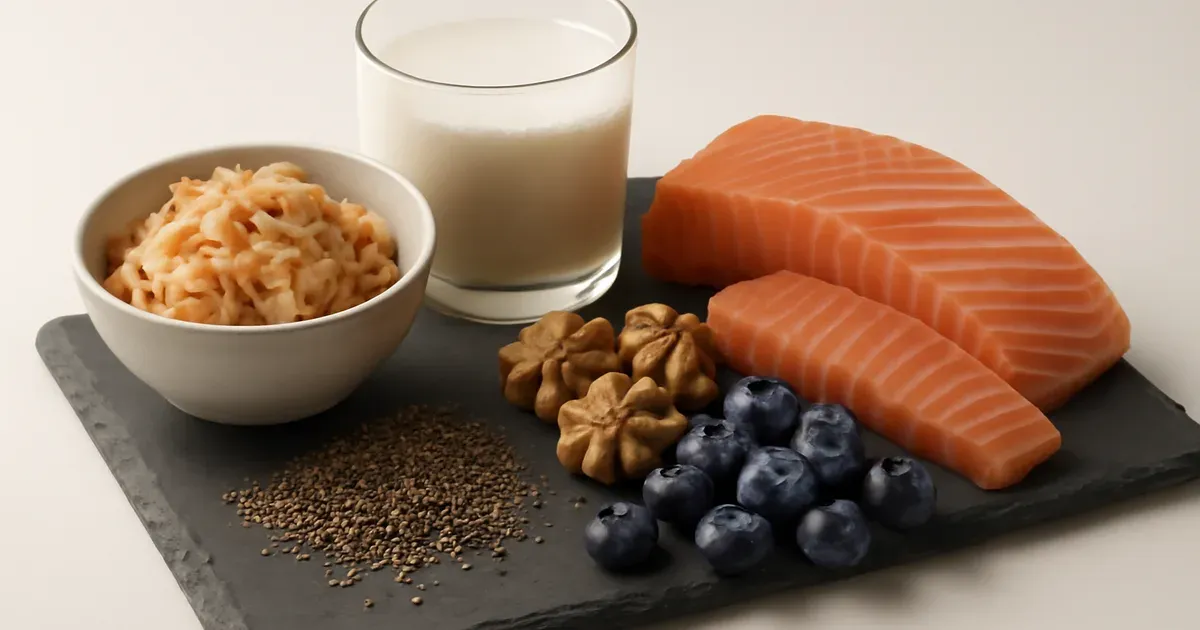
Omega-3 fatty acids found in salmon, chia seeds, and walnuts also support a diverse microbiome while lowering systemic inflammation—a double benefit for weight loss after 40.
Step 1: Re-Calibrate Your Metabolism With Real Numbers
You cannot manage what you do not measure. Start by establishing two numbers:
Resting Metabolic Rate (RMR): The gold standard is a clinical RMR test. A reliable alternative is an online BMR calculator that uses the Mifflin-St Jeor equation. Multiply your RMR by an activity factor—1.2 for sedentary, up to 1.7 for highly active—to estimate your Total Daily Energy Expenditure.
Create a moderate calorie deficit of 10–20% below TDEE. Aggressive cuts backfire: research shows they spike cortisol (Tomiyama et al., 2010) and accelerate muscle loss (JISSN Review, 2014), both of which make long-term weight loss after 40 harder. Re-check your numbers every 8–12 weeks as your body composition shifts.
Track body composition, not just weight. A DEXA scan every three months reveals whether you are losing fat or muscle—critical data that a bathroom scale cannot provide. Internal data from 10,000+ BodySpec clients show that people who scan at least three times per year achieve twice the reduction in visceral fat compared to those who scan less often.
Step 2: Eat for Lean Mass and a Thriving Microbiome
Protein and fiber are the two nutritional pillars for weight loss after 40—one preserves muscle, the other feeds your gut bacteria and regulates appetite via the gut-brain axis.
Protein: Your Metabolic Anchor
Adults over 40 retain more muscle and lose more fat when they consume 1.2–1.6 g of protein per kilogram of body weight daily (Morton et al., British Journal of Sports Medicine, 2018). Spread intake across 3–4 meals of 25–35 g each to maximize muscle-protein synthesis throughout the day.
| Body Weight | Daily Protein Target |
|---|---|
| 150 lb (68 kg) | 82–109 g |
| 180 lb (82 kg) | 98–131 g |
| 210 lb (95 kg) | 114–152 g |
Fiber: Your Microbiome's Best Friend
Target 25–30 g of fiber daily from a variety of sources—leafy greens, legumes, oats, berries, and whole grains. Variety matters as much as quantity: different bacterial strains ferment different fiber types, so dietary diversity directly translates to microbial diversity.
Pre-workout, eat 0.5 g/kg of complex carbohydrates for sustained energy. On rest days, shift toward fibrous vegetables and legumes, keeping starchy carbs modest to support blood sugar balance.
Micronutrients That Matter After 40
- Vitamin D & Calcium: Support bone density as sex hormones decline. Sources: fortified dairy, sardines, fatty fish, leafy greens.
- Magnesium: Aids sleep quality and muscle recovery. Sources: pumpkin seeds, dark chocolate.
- B-vitamins: Support energy metabolism and gut barrier integrity. Sources: lean meats, legumes, whole grains.

Step 3: Train Smarter—Strength, HIIT, and Daily Movement
Resistance training is the most direct intervention against sarcopenia and the metabolic slowdown that drives weight gain after 40. Aim for three full-body sessions per week covering squat, hinge, push, pull, and core patterns. Progressive overload—gradually adding weight or reps—is the non-negotiable variable.
Add one to two HIIT sessions per week (approximately 20 minutes each). Research published in the Journal of Obesity (2011) shows HIIT outperforms steady-state cardio for reducing visceral fat—the metabolically dangerous fat stored around your organs.
Non-Exercise Activity Thermogenesis (NEAT)—the calories burned through everyday movement—can account for a surprising share of your daily energy expenditure. Aim for 8,000–10,000 steps per day. A short walk after meals has been shown to improve glucose control and reduce post-meal insulin spikes (Diabetes Care, 2013), which also benefits gut microbiome composition by reducing fermentation of excess glucose in the colon.
Dynamic warm-ups before every session and weekly yoga or Pilates protect aging joints and maintain the range of motion needed to train consistently for years.
Step 4: Optimize Recovery—Sleep, Stress, and Your Gut
Recovery is where weight loss after 40 is often won or lost. Sleep restriction lowers RMR by approximately 2.6% and raises ghrelin—your primary hunger hormone—making overeating almost inevitable (Spaeth et al., 2015). Target 7–9 hours on a consistent schedule.
Chronic stress elevates cortisol, which drives abdominal fat storage and disrupts the gut-brain axis. High cortisol alters intestinal permeability ("leaky gut"), allowing bacterial endotoxins to enter the bloodstream and trigger systemic inflammation—creating a vicious cycle that stalls fat loss. A daily decompression ritual—even ten minutes of breathwork or meditation—measurably lowers cortisol.
Annual hormone labs (thyroid panel, fasting glucose, sex hormones) identify treatable causes of weight gain like hypothyroidism or low testosterone that no amount of dieting or exercise can overcome alone. Limit alcohol to seven or fewer drinks per week; excess intake disrupts sleep architecture and inhibits muscle-protein synthesis.
Fermented foods support the gut-brain axis during high-stress periods. A 2021 Cell study by Wastyk et al. found that a diet high in fermented foods—yogurt, kefir, kimchi, sauerkraut—increased microbial diversity and reduced 19 inflammatory proteins within ten weeks. Even one or two servings daily can move the needle.

Sample 7-Day Blueprint: Meals, Workouts, and Gut Health
This week-long plan integrates high-protein eating, structured training, and microbiome-supportive foods to address every driver of weight gain after 40.
Day 1 – Full-Body Strength (45 min)
- Breakfast: Greek-yogurt parfait with berries and oats (~25 g protein, rich in probiotics and fiber)
- Lunch: Grilled salmon with quinoa salad (~30 g protein, omega-3s for gut inflammation)
- Dinner: Turkey-veggie stir-fry with brown rice (~28 g protein)
Day 2 – 20-min HIIT + Mobility
- Breakfast: Chocolate protein smoothie with banana and kefir (~30 g protein, probiotic boost)
- Lunch: Spinach salad with grilled chicken and legumes (~30 g protein, 8 g fiber)
- Dinner: Spicy shrimp tacos with fermented slaw (~25 g protein)
Day 3 – Active Recovery (8,000+ steps)
- Breakfast: Three-egg omelet with spinach, feta, and turkey sausage (~28 g protein)
- Lunch: Chicken Buddha bowl with peanut sauce and edamame (~35 g protein)
- Dinner: Grilled chicken fajita bowl with black beans (~35 g protein, gut-supportive legumes)
Day 4 – Full-Body Strength (45 min)
- Breakfast: Greek-yogurt parfait with nuts and seeds (~25 g protein)
- Lunch: Lean beef with roasted sweet potato and steamed broccoli (~35 g protein)
- Dinner: Turkey chili with kidney beans (~30 g protein, high-fiber microbiome fuel)
Day 5 – Tempo Run or Cycle (30 min)
- Breakfast: Protein oats with walnuts and chia seeds (~28 g protein, omega-3s)
- Lunch: Albacore tuna wrap with avocado and mixed greens (~25 g protein)
- Dinner: Spicy tofu and edamame curry with brown rice (~28 g protein, plant-diversity win)
Day 6 – Full-Body Strength + Core
- Breakfast: Protein pancakes with berries and a side of kefir (~30 g protein)
- Lunch: Grilled chicken Caesar with romaine and chickpea croutons (~30 g protein)
- Dinner: Baked salmon with roasted asparagus and lentils (~35 g protein, fiber-dense)
Day 7 – Rest & Gut Reset
- Focus on whole foods, fermented options (kimchi, yogurt), minimal alcohol, and 8+ hours of sleep.
- Gentle yoga or a long walk to support NEAT without taxing recovery.
The Bottom Line
Weight loss after 40 requires a smarter strategy, not a harder one. The physiology has changed—muscle is harder to keep, hormones have shifted, and the gut microbiome has quietly become a key player in how your body stores fat and signals hunger.
Address all four levers—metabolism, nutrition (protein + fiber), training, and recovery—and you give yourself a compounding advantage. Support your gut-brain axis through fiber variety, fermented foods, omega-3s, and stress management, and you remove one of the most overlooked barriers to sustainable fat loss in mid-life.
Measure your progress with body composition data, not just the scale. Adjust every 8–12 weeks. The science is on your side.
Frequently Asked Questions
Does gut health really affect weight loss after 40?
Yes, and the evidence is growing rapidly. The gut microbiome influences appetite hormones like GLP-1 and ghrelin via the gut-brain axis, regulates systemic inflammation linked to fat storage, and affects how efficiently the body extracts calories from food. Microbial diversity tends to decline with age, making deliberate dietary support—fiber, fermented foods, omega-3s—especially important after 40.
How much protein do I actually need after 40?
The evidence-based target is 1.2–1.6 g per kilogram of body weight daily (Morton et al., 2018). For a 180 lb (82 kg) person, that means 98–131 g per day, split across 3–4 meals to optimize muscle-protein synthesis. Higher protein intake also supports a healthy gut lining and feeds certain beneficial bacterial strains.
Why is belly fat so much harder to lose after 40?
Abdominal fat accumulation after 40 is driven by multiple overlapping factors: declining estrogen and testosterone promote visceral fat storage; elevated cortisol from chronic stress directs fat specifically to the abdomen; and gut-derived inflammation—worsened by a less diverse microbiome—amplifies insulin resistance, making fat mobilization harder. Addressing all three with strength training, stress reduction, and gut-supportive nutrition is more effective than calorie restriction alone.
Is HIIT safe after 40?
Yes, when introduced progressively. One to two weekly HIIT sessions of around 20 minutes have been shown to outperform steady-state cardio for burning visceral fat (Journal of Obesity, 2011). Pair HIIT with adequate recovery, dynamic warm-ups, and mobility work to protect joints. People with cardiovascular conditions should consult a physician before starting.
What are the best foods for the gut microbiome and weight loss?
Diversity is the most important principle. Prioritize a wide range of fibrous plants (30+ different plant foods per week is a research-backed target), fermented foods like yogurt, kefir, kimchi, and sauerkraut for live cultures, and omega-3-rich foods like salmon, chia seeds, and walnuts for their anti-inflammatory effect on the gut lining. Minimize ultra-processed foods, which research consistently links to reduced microbial diversity and higher visceral fat.