Losing Weight After 40: Tips That Actually Work
Losing weight after 40 requires more than willpower. Learn how muscle loss, gut health, and the gut-brain axis shape your results — and what to do about it.


Losing weight after 40 can feel like your body has quietly changed the rules. The same habits that kept you lean in your 20s and 30s may no longer deliver results — and that's not a personal failure. It's biology. Muscle mass naturally declines, metabolism slows, and hormonal shifts reshape how your body stores and burns fat. Add a stressed gut and disrupted sleep into the mix, and the picture gets more complex.
The good news? Evidence-backed strategies exist that work with your 40s body rather than against it — including some that target your gut-brain axis in ways that directly influence hunger, fat storage, and energy balance.
Why Losing Weight After 40 Feels Different
Your metabolism doesn't slow down by accident. According to Keri Peterson, MD, an internal medicine physician, losing muscle mass in your 40s is one of the biggest drivers of a slower metabolism. "Having higher muscle mass raises your metabolism, so your body burns more calories," she explains. Fewer calories burned means weight loss becomes progressively harder without deliberate changes.
But metabolism isn't the only thing shifting. Your gut microbiome — the community of trillions of bacteria living in your digestive tract — also changes with age and stress. Research increasingly links microbiome diversity to metabolic rate, fat storage, and even appetite regulation. The gut-brain axis, a two-way communication highway between your digestive system and your brain, plays a central role in how hungry you feel, how efficiently you digest food, and how your body responds to stress hormones like cortisol.
Understanding both sides — metabolic changes and gut health — gives you the most complete picture of why your 40s body behaves the way it does, and how to address it intelligently.
Build Muscle to Rebuild Your Metabolism
Strength training is the single most impactful tool for losing weight after 40. "The most effective way that women over 40 can boost their metabolism is by building muscle through weightlifting and resistance training," says Dr. Peterson. Aim for one to two full-body strength sessions per week, even if that means starting with light weights, bicep curls, or resistance bands.
You don't need a gym membership or heavy barbells. Personal trainer De Bolton, CPT, suggests arm circles, lateral extensions, and bodyweight movements as accessible starting points. Walking for 30 minutes five days a week is also a clinically supported strategy, according to family medicine physician Laura Purdy, MD.
The gut-brain connection matters here too. Exercise has been shown to increase microbial diversity in the gut, which supports better metabolic signalling between the gut and brain. A more diverse microbiome produces more short-chain fatty acids — compounds that help regulate blood sugar and reduce fat storage. Starting slow and building consistency matters more than intensity.

Use Protein and Plants to Support Gut and Weight Goals
Protein is one of the most well-researched tools for weight loss in midlife. Nutrition expert Erin Palinski-Wade, RD, recommends increasing protein from 15% to 30% of total daily calories. A 2020 review in the Journal of Obesity & Metabolic Syndrome found that high-protein diets reduce body weight and fat mass while preserving lean muscle — critical for anyone over 40. Aim for 20 to 30 grams of protein per meal, says dietitian Sarah Mirkin, RDN.
Beyond weight loss, protein feeds beneficial gut bacteria and helps maintain the gut lining integrity. A well-nourished gut microbiome responds by producing neurotransmitters like serotonin — around 90% of which is manufactured in the gut — that influence mood, cravings, and appetite via the gut-brain axis.
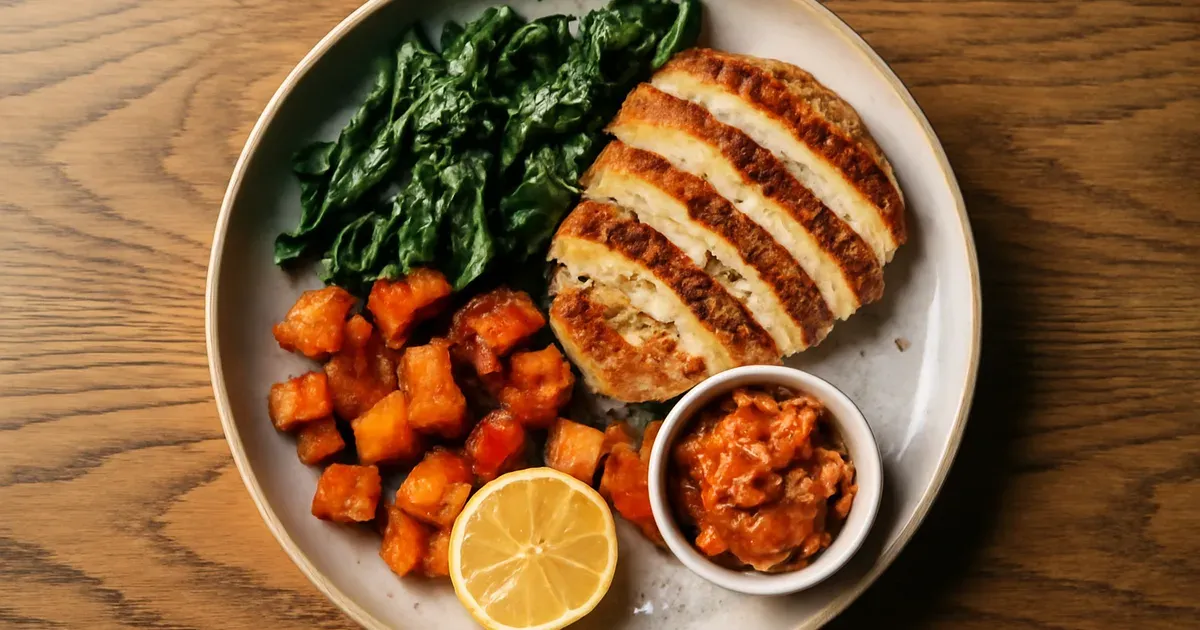
Vegetables and fruit deserve equal billing. A 2020 study in Nutrients found that increased fruit and vegetable intake is consistently linked to weight loss in women. Dr. Peterson notes that vegetables are "rich in fiber, which makes you feel full, and they're nutrient-dense." Filling half your plate with produce reduces overall calorie intake while simultaneously feeding the gut microbiome with the prebiotic fibre it needs to thrive.
Fermented vegetables — kimchi, sauerkraut, and kefir — carry an additional microbiome bonus. They introduce live cultures that support microbial diversity, improve gut barrier function, and may reduce low-grade inflammation that contributes to weight gain in midlife.
Eat Mindfully — Your Gut Is Listening
How you eat is as important as what you eat. Palinski-Wade recommends eating slowly, eliminating distractions at meals, and putting your fork down between bites to reconnect with your body's satiety signals. This is more than good advice — it has a physiological basis. Some researchers believe that keeping food in the mouth longer promotes the release of gut hormones that reduce appetite.
The gut-brain axis is central to this process. Gut hormones like GLP-1 and peptide YY travel from the digestive system to the brain to signal fullness. Eating too quickly bypasses these signals, causing you to consume more calories before your brain registers satisfaction. Slowing down gives your gut time to "talk" to your brain.
Mirkin recommends small, frequent meals high in protein and vegetables with a modest amount of healthy fat to fuel your body evenly and prevent the blood sugar swings that trigger cravings. Eating when genuinely hungry — not starving — and stopping when satisfied rather than stuffed is intuitive eating in practice, and it consistently supports both gut health and weight management.
Stress, Sleep, and the Cortisol-Gut Connection
Chronic stress is a silent driver of weight gain in your 40s. The stress hormone cortisol signals the body to store fat, particularly around the abdomen — and it does significant damage to your gut microbiome at the same time. Elevated cortisol can reduce microbial diversity, increase gut permeability ("leaky gut"), and trigger inflammation that makes losing weight after 40 considerably harder.
Palinski-Wade suggests prioritising foods rich in vitamin C and omega-3 fatty acids, both of which have been shown to reduce circulating stress hormone levels. Omega-3 fatty acids also support the production of anti-inflammatory compounds that protect gut lining integrity and improve the gut-brain signalling that governs appetite.
Sleep is non-negotiable — and often underestimated. "When you get less than seven hours of restful sleep, metabolic changes occur that can make it significantly harder to lose weight," says Palinski-Wade. The appetite hormone ghrelin rises while leptin — which signals fullness — drops, increasing cravings for high-fat, high-sugar foods. Sleep deprivation also disrupts the gut microbiome's circadian rhythm, reducing the diversity and function of beneficial bacteria overnight.
Difficulty sleeping is common during perimenopause. Breathing exercises before bed, consistent sleep schedules, and reducing late-night screen exposure are all practical first steps.

Hydration: Simple, Science-Backed, and Gut-Friendly
Drinking more water remains one of the most underutilised weight loss strategies. Research suggests that increased hydration suppresses appetite and ramps up fat breakdown through a process called lipolysis. The U.S. National Academies of Sciences recommends 11.5 cups (2.7 litres) of water daily for women — more if you're active.
Hydration also directly benefits the gut. Water is essential for healthy digestion, bowel regularity, and the mucosal lining of the intestines that protects beneficial bacteria. A well-hydrated gut processes food more efficiently, reduces bloating, and supports the consistent absorption of the nutrients your body needs to sustain energy and metabolism.
A practical tip: start each meal with a glass of water. It fills part of your stomach before you eat, supports gut motility, and is a free, zero-calorie habit that compounds over time.
The Bottom Line
Losing weight after 40 requires a strategy that addresses both the metabolic and gut-health dimensions of midlife change. Building muscle through strength training preserves metabolism. Prioritising protein and produce nourishes both body composition and the gut microbiome. Eating slowly respects the gut-brain axis. Managing stress and sleep reduces cortisol's fat-storing influence. Staying hydrated keeps every system running efficiently.
None of these steps require extreme measures. Start with one or two changes, listen to your body, and build from there. Your 40s can genuinely be your strongest decade — your gut and your metabolism just need the right conditions to prove it.
Frequently Asked Questions
Why is it harder to lose weight after 40?
Muscle mass naturally declines from your 40s onward, which slows metabolism and reduces calorie burn. Hormonal shifts, changes in the gut microbiome, increased cortisol sensitivity, and disrupted sleep all compound the challenge. The good news is that targeted lifestyle changes can effectively counteract each of these factors.
How does gut health affect weight loss after 40?
The gut microbiome influences metabolism, appetite hormones, and inflammation — all of which affect your ability to lose weight. A diverse, well-fed microbiome produces short-chain fatty acids that regulate blood sugar, reduces gut inflammation, and communicates with the brain via the gut-brain axis to signal satiety more accurately.
What is the best diet for losing weight after 40?
There is no single best diet, but consistent evidence supports a pattern rich in lean protein (20–30g per meal), fibre-dense vegetables and fruit, healthy fats, and fermented foods. Reducing ultra-processed foods lowers inflammation and feeds the microbiome more effectively. Timing meals around a protein-rich breakfast also helps curb cravings throughout the day.
Does stress really cause weight gain in your 40s?
Yes — chronically elevated cortisol promotes abdominal fat storage and simultaneously disrupts the gut microbiome. Stress reduces microbial diversity, increases gut permeability, and interferes with the gut-brain signals that regulate hunger. Addressing stress through sleep, nutrition, and breathing practices is a legitimate weight management strategy, not an optional extra.
How much sleep do I need to support weight loss after 40?
Aim for at least seven hours of restful sleep per night. Below this threshold, ghrelin (the hunger hormone) rises and leptin (the fullness hormone) drops, triggering increased appetite for calorie-dense foods. Sleep deprivation also disrupts the gut microbiome's circadian rhythm, reducing beneficial bacterial activity that supports healthy metabolism.