7 Reasons Protein & Fiber Are Your Gut's Best Allies
Discover why protein and fiber gut health go hand in hand — and how both nutrients fuel your microbiome, gut-brain axis, and long-term wellbeing.

You're tracking your protein like a hawk — but your gut is quietly paying the price. Most people chasing muscle or weight-loss goals load up on protein while barely touching their fiber targets, leaving their digestive system sluggish and their microbiome starved. The result: bloating, blood sugar crashes, and a gut-brain axis that never quite fires right. Here's why these two nutrients need each other more than you think — and why your gut depends on both.
Registered dietitians agree: most Americans are already meeting their protein goals, but fewer than 5% hit the recommended 25–38 grams of daily fiber — a deficit that directly undermines gut microbiome diversity and long-term metabolic health.
1. Protein Builds the Tissue Your Gut Lining Needs
Protein isn't just for muscles — your intestinal wall depends on it. The cells lining your gut, called enterocytes, turn over rapidly and need a constant supply of amino acids to repair and regenerate. Without adequate protein, gut barrier integrity can weaken, raising the risk of a leaky gut and systemic inflammation. Aim for 1–1.2 grams of protein per kilogram of body weight daily, and prioritise complete protein sources like eggs, fish, and legumes to supply all essential amino acids.
2. Soluble Fiber Feeds Your Microbiome's Good Bacteria
The beneficial bacteria in your gut microbiome literally eat fiber — and they reward you for it. Soluble fiber, found in oats, lentils, and apples, ferments in the colon to produce short-chain fatty acids (SCFAs) like butyrate, which nourish the gut lining and reduce inflammation. This is a direct link between what you eat and how your gut-brain axis functions, since SCFAs also communicate with the vagus nerve. Add one soluble-fiber-rich food to every meal — a handful of berries, a spoonful of chia seeds, or a scoop of lentils will do it.
3. Fiber Slows Digestion So Protein Is Absorbed More Efficiently
Eating fiber alongside protein isn't just healthy — it makes your protein work harder. Soluble fiber forms a gel in the digestive tract that slows gastric emptying, giving your body more time to break down and absorb amino acids from protein. This means fewer blood sugar spikes after meals and a steadier supply of energy to your brain and muscles. Build each meal around a protein anchor, then layer in fiber-rich vegetables, whole grains, or legumes to maximise absorption.
4. Both Nutrients Together Crush Hunger Better Than Either Alone
Satiety is where protein and fiber for gut health truly become a power duo. Protein triggers the release of satiety hormones like peptide YY and GLP-1, while fiber slows digestion and expands in the stomach, sending fullness signals to the brain via the gut-brain axis. Together, they reduce cravings for hours longer than either nutrient achieves on its own. Practical proof: swap your afternoon snack for Greek yogurt with pumpkin seeds and berries — a single swap that delivers both nutrients simultaneously.

Pull Quote: "The real power is protein and fiber together. When combined, they slow the system down, support better blood sugar control, and improve satiety." — Grace Derocha, RD, Academy of Nutrition and Dietetics
5. Insoluble Fiber Keeps Protein Moving Through Your Digestive Tract
High-protein diets without fiber are a recipe for digestive sluggishness. Protein-rich foods — meat, eggs, dairy — contain no fiber, meaning a high-protein diet can stall transit time in the gut, feeding harmful bacteria and increasing exposure to metabolic waste. Insoluble fiber, found in whole grains, leafy greens, and nuts, acts like a broom, pushing food through the intestinal tract efficiently. Frances Largeman-Roth, RD, puts it plainly: "Loading up on protein means you'll need to eat even more fiber to move the protein-rich foods through your digestive tract."
6. Fiber Protects the Gut Microbiome That Regulates Your Mood and Brain
Your microbiome is the command centre of the gut-brain axis — and fiber is its fuel. A fiber-depleted diet reduces microbial diversity within days, shrinking populations of Lactobacillus and Bifidobacterium strains that produce neurotransmitter precursors like serotonin and GABA. Up to 90% of the body's serotonin is manufactured in the gut, making microbiome health inseparable from mental well-being. To protect this system, eat at least 30 different plant foods per week — variety of fiber types matters as much as total quantity.
7. A Protein-and-Fiber Plate Is the Sustainable Long-Term Health Strategy
No single nutrient is a magic bullet — but the combination of protein and fiber gut health comes closest. Protein supports lean muscle mass, metabolic rate, and recovery from illness or surgery, while fiber reduces the risk of colon cancer, stroke, Type 2 diabetes, and gut dysbiosis. Together, they create the conditions for a gut microbiome that communicates clearly with the brain, regulates appetite hormones, and keeps inflammation in check. As dietitian Erin Palinski-Wade advises: "A balanced plate with protein, high-fiber plants and enough total calories is usually more sustainable and better for long-term health."
Simple high-protein, high-fiber meal ideas dietitians recommend:
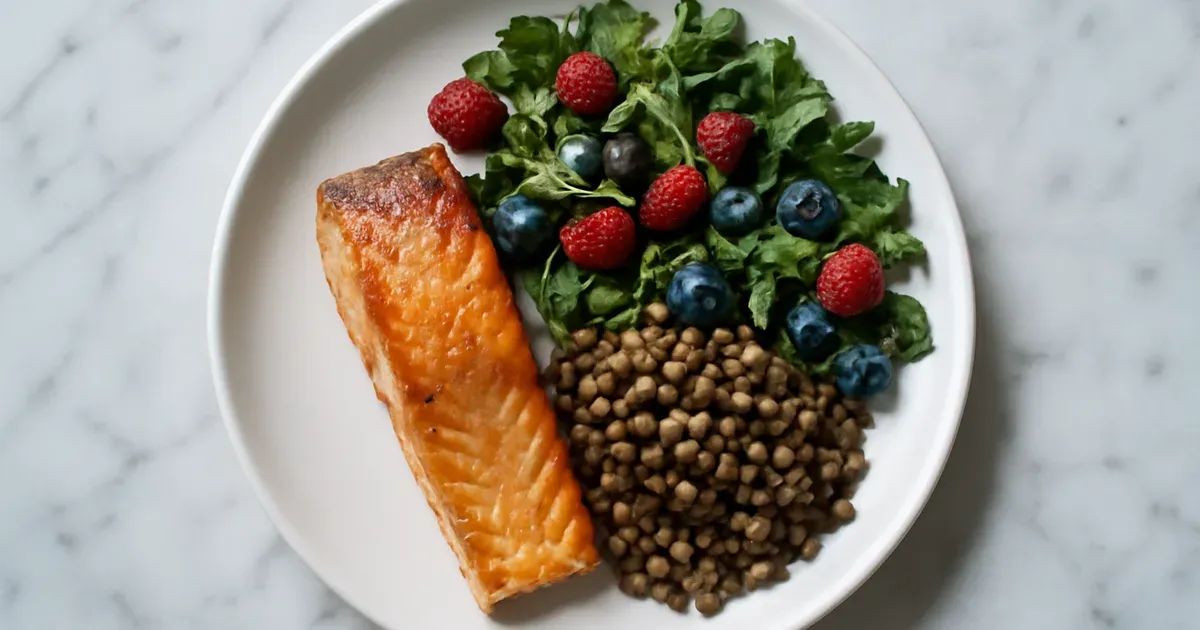
- Grilled salmon with a lentil and strawberry salad
- Quinoa bowl with roasted tofu and seasonal vegetables
- Cottage cheese or Greek yogurt topped with berries and pumpkin seeds
- Whole grain cereal with milk
- Apple slices with natural peanut butter
Getting protein and fiber gut health right doesn't require a complete diet overhaul. Start by anchoring each meal with a quality protein source, then consciously add one fiber-rich plant food alongside it. Your gut microbiome, your gut-brain axis, and your long-term metabolic health will all benefit — often within days of making the change.
Frequently Asked Questions
How much protein and fiber do I need each day for good gut health?
Most adults need 1–1.2 grams of protein per kilogram of body weight (roughly 81–109 grams for a 150-pound person) and 25–38 grams of fiber daily. Hitting both targets consistently supports gut lining integrity, microbiome diversity, and healthy gut-brain axis signalling.
Can eating too much protein damage my gut microbiome?
Excessively high protein intake without adequate fiber can reduce microbial diversity in the gut. Protein fermentation by gut bacteria produces ammonia and other metabolites that, in large amounts, may be harmful. Balancing protein with fiber-rich plant foods keeps the microbiome environment healthier.
What are the best foods that contain both protein and fiber?
Legumes — lentils, chickpeas, black beans — are the gold standard, offering both protein and fiber in a single food. Edamame, hemp seeds, and peas are also strong dual-nutrient options. Combining these with animal proteins like chicken or fish gives you a complete amino acid profile alongside meaningful fiber.
How quickly does fiber improve gut microbiome diversity?
Research suggests measurable changes in microbiome composition can occur within 3–5 days of increasing dietary fiber. However, longer-term diversity — the kind linked to reduced disease risk and better gut-brain communication — builds over weeks and months of consistent high-fiber eating.
Does protein affect the gut-brain axis?
Yes. Protein provides the amino acid tryptophan, a precursor to serotonin, much of which is produced in the gut. Adequate protein intake combined with a fiber-fed microbiome supports robust serotonin production, which influences mood, sleep, and appetite regulation via the gut-brain axis.