Gut-Brain Connection & Psychedelics: Your Questions Answered
Explore how the gut-brain connection and microbiome UK research may shape psychedelic therapy — and what it means for your mental health today.

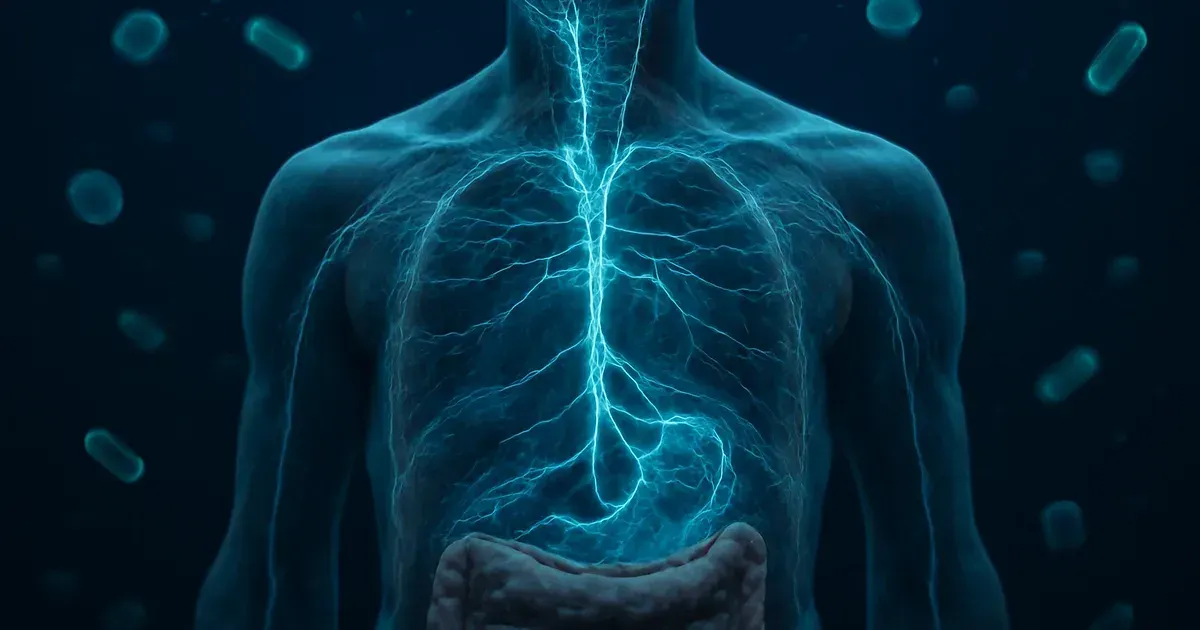
The idea that your gut microbiome could influence how you respond to psychedelic therapy sounds extraordinary — yet the science behind it is rapidly evolving. Researchers are uncovering a fascinating web of interactions between the trillions of microorganisms living in your digestive tract and the way your brain processes mood, cognition, and even powerful psychoactive substances. If you're curious about what this means for gut health in the UK and beyond, you're in the right place.
Jump to Your Question
What is the gut-brain connection, and why does it matter?
How does the gut microbiome affect mental health?
What are psychedelics, and why are they being studied for mental health?
Can your gut microbiome change how psychedelics affect you?
What is the psychedelic renaissance, and what does UK research say?
Could microbiome-targeted interventions improve psychedelic therapy?
What are the risks of this emerging area of research?
How can you support your gut-brain connection naturally?
What is the gut-brain connection, and why does it matter?
The gut-brain connection — known scientifically as the gut–brain axis — is a bidirectional communication network linking your central nervous system (CNS) with your enteric nervous system (ENS), the latter being the complex web of neurons embedded in your gastrointestinal tract.
This system uses multiple channels to send signals in both directions: the vagus nerve, the immune system, hormones, and the metabolites produced by gut bacteria. It is not a one-way street — your brain influences your gut, and your gut influences your brain.
In the UK, awareness of the gut-brain connection has grown considerably, with institutions such as King's College London and the University of Reading conducting landmark research into how gut bacteria shape neurological and psychological outcomes. Poor gut health has been linked to anxiety, depression, cognitive impairment, and even sleep disorders.
How does the gut microbiome affect mental health?
Your gut microbiome — the vast community of bacteria, fungi, and other microorganisms living in your digestive tract — plays a direct role in regulating mood and cognition through several key mechanisms.
Gut bacteria produce neurotransmitters including serotonin, dopamine precursors, and gamma-aminobutyric acid (GABA). Remarkably, an estimated 90% of the body's serotonin is produced in the gut. The microbiome also regulates inflammation via immune signalling, and chronic low-grade gut inflammation has been implicated in depression and anxiety.
Key ways the microbiome influences mental health include:
- Neurotransmitter production: Gut bacteria synthesise or stimulate the production of mood-regulating chemicals.
- HPA axis regulation: The microbiome helps modulate the hypothalamic–pituitary–adrenal (HPA) axis, which governs the stress response.
- Vagal signalling: Bacteria communicate with the brain via the vagus nerve, sending real-time updates on gut status.
- Metabolite production: Short-chain fatty acids (SCFAs) produced by fibre-fermenting bacteria have neuroprotective properties.
The British Gut Project, run in collaboration with King's College London, has collected microbiome data from tens of thousands of UK participants, helping to map how dietary diversity — or lack of it — correlates with mental wellbeing.

What are psychedelics, and why are they being studied for mental health?
Psychedelic substances — including psilocybin (found in "magic mushrooms"), LSD, MDMA, and DMT (a component of ayahuasca) — are psychoactive compounds that alter perception, mood, and cognition by acting primarily on serotonin receptors in the brain.
After decades of stigma and legal restriction, clinical research has resumed with striking results. Trials at Imperial College London and University of Oxford have shown that psilocybin-assisted therapy can produce rapid and durable reductions in treatment-resistant depression, often after just one or two guided sessions.
The NHS has taken note: in 2023, NICE and NHS England began reviewing the evidence base for psychedelic-assisted therapies, and several UK clinical trials are ongoing. The therapeutic potential is compelling precisely because conventional antidepressants fail a significant proportion of patients — estimated at around one in three in the UK.
Why does the gut-brain connection matter here? Because serotonin receptors — the primary targets of psychedelics — are found throughout the gut as well as the brain, meaning the gut's microbial environment may be integral to how these substances behave in the body.
Can your gut microbiome change how psychedelics affect you?
Yes — emerging research suggests that the composition of your gut microbiome may significantly influence how psychedelic substances are metabolised and experienced. This is one of the most exciting frontiers in both microbiome UK research and psychopharmacology.
According to a review published in PMC exploring the microbiome and the psychedelic renaissance, specific gut bacteria appear capable of modulating the metabolism of DMT, the psychoactive compound in ayahuasca. Differences in gut flora may alter how much of a substance reaches the bloodstream and the brain — a concept known as bioavailability.
This has profound implications:
- Person A with a diverse, health-supporting microbiome may metabolise a psychedelic differently from Person B with a depleted gut ecosystem.
- Individual variability in psychedelic experiences — why one person has a profoundly therapeutic session and another does not — may be partly explained by microbiome differences.
- The gut's serotonin system, heavily influenced by microbiota, could interact with serotonergic psychedelics in ways not yet fully mapped.
This research is still in its early stages, but it points firmly towards personalised medicine as the future of psychedelic therapy.
Microbiome vs. Standard Pharmacology: Key Differences
| Factor | Standard Drug Model | Microbiome-Informed Model |
|---|---|---|
| Dosing approach | One-size-fits-all | Tailored to individual microbiome |
| Metabolism variation | Genetics-focused | Gut bacteria also considered |
| Therapeutic outcome | Variable, often unpredictable | Potentially more predictable |
| Intervention options | Drug alone | Drug + microbiome prep |
What is the psychedelic renaissance, and what does UK research say?
The psychedelic renaissance refers to the renewed scientific and clinical interest in psychedelic substances as legitimate therapeutic tools, following several decades during which research was largely halted due to legal and cultural pressures.
In the UK, this resurgence is well underway. Imperial College London's Centre for Psychedelic Research is one of the world's leading institutions in this field, publishing influential trials on psilocybin for depression. The MRC (Medical Research Council) and Wellcome Trust have both funded UK-based psychedelic research programmes.
Key milestones in UK psychedelic research include:
- 2016: Imperial College London publishes landmark psilocybin study for treatment-resistant depression.
- 2021: UK Biobank begins broader investigations into lifestyle and mental health correlations, including gut health.
- 2022–present: Multiple NHS-affiliated trials exploring MDMA-assisted therapy for PTSD and psilocybin for depression.
The British Dietetic Association (BDA) has also begun acknowledging the role of nutrition in mental health — a conversation increasingly intertwined with microbiome science and, by extension, emerging psychedelic research.
Could microbiome-targeted interventions improve psychedelic therapy?
Microbiome-targeted interventions — such as dietary changes, prebiotics, probiotics, or even faecal microbiota transplants (FMT) — could one day be used to prime the gut before psychedelic therapy, potentially improving outcomes. This is a genuinely novel idea, and it sits at the intersection of improve gut health naturally strategies and cutting-edge psychopharmacology.
The concept of psychobiotics — probiotics and dietary interventions that positively affect mental health via the gut-brain axis — is already gaining traction. Researchers at University College London (UCL) and the University of Oxford are investigating how specific bacterial strains influence neurological function.
If pre-therapy gut optimisation were shown to enhance psychedelic bioavailability or therapeutic response, it could represent a paradigm shift:
- Patients might receive dietary or probiotic protocols in the weeks before a psychedelic session.
- Clinicians could use microbiome profiling to predict and personalise dosing.
- The NHS gut health pathway could, in future, incorporate microbiome screening as part of mental health treatment planning.
This remains speculative — but the scientific rationale is sound, and UK researchers are well-positioned to lead this work.
What are the risks of this emerging area of research?
The intersection of microbiome science and psychedelic therapy is promising, but it carries real uncertainties that must be acknowledged honestly. Both fields individually carry open questions; combined, the complexity multiplies.
Key risks and unknowns include:
- Unpredictable interactions: We do not yet fully understand how specific microbiome profiles alter psychedelic metabolism — meaning some individuals may experience amplified or diminished effects in ways that are difficult to predict.
- Dysbiosis complications: A disrupted or unhealthy gut microbiome could theoretically alter drug metabolism in ways that increase adverse reactions.
- Over-commercialisation: The wellness industry risks jumping ahead of the evidence, selling "microbiome optimisation" products for psychedelic preparation without robust clinical backing.
- Regulatory gaps: In the UK, psychedelic substances remain Class A drugs. Any therapeutic use must occur within strictly regulated clinical trial frameworks overseen by the MHRA.
The British Nutrition Foundation urges caution with any supplementation claims that outpace the evidence — a principle equally applicable here.

How can you support your gut-brain connection naturally?
Supporting the gut-brain connection through everyday lifestyle choices is one of the most evidence-backed ways to improve gut health naturally — and it doesn't require waiting for cutting-edge psychedelic research to reach clinical practice.
The NHS Eatwell Guide already emphasises fibre-rich, plant-diverse diets — and this directly benefits your microbiome. Research from the British Gut Project consistently shows that people who eat 30 or more different plant foods per week have significantly greater microbiome diversity.
Practical steps to improve your gut-brain connection in the UK:
- Eat more fibre: The UK average is around 18g per day, well below the recommended 30g. Pulses, wholegrains, vegetables, and fruit all count.
- Add fermented foods: Yoghurt, kefir, kimchi, sauerkraut, and kombucha introduce beneficial live bacteria.
- Limit ultra-processed foods: Linked to reduced microbiome diversity in UK dietary studies.
- Manage stress: Chronic stress dysregulates the HPA axis and harms gut flora — mindfulness and regular physical activity both help.
- Sleep consistently: Poor sleep disrupts gut microbiota rhythms, compounding mental health challenges.
- Consider a quality probiotic: Look for evidence-based strains; the BDA recommends consulting a registered dietitian before starting supplements.
These steps support your gut health UK foundations — and may, as research evolves, prove relevant to optimising outcomes across a wider range of mental health treatments, including novel therapies on the horizon.
Bottom Line
- The gut-brain connection is real and bidirectional — your gut microbiome communicates with your brain through neural, hormonal, and immune pathways.
- UK research is at the forefront of both microbiome science and psychedelic therapy, with Imperial College London, King's College London, and the University of Oxford leading key studies.
- Your gut microbiome may influence how psychedelic substances are metabolised, potentially explaining why individuals respond so differently to these therapies.
- Microbiome-targeted interventions — from dietary changes to probiotics — could one day form part of personalised mental health treatment protocols.
- Right now, the most evidence-backed action is to improve gut health naturally through a fibre-rich, plant-diverse diet, stress management, and quality sleep — all of which support the gut-brain axis.
The science of the gut-brain connection is evolving fast, and the UK is well-positioned to lead it. Whether you're curious about psychedelic research or simply want to nurture your microbiome for everyday mental wellbeing, the same principles apply: feed your gut, support your brain.
You might also like
- 7 Gut-Brain Secrets That Could Transform Your Mood
- How to Improve Gut Health with Meditation
- How to Improve Gut Health Naturally in 5 Steps
96 Bacterial Strains. Two Shots a Day.
GOODIE is an award-winning fermented drink with 96 live bacterial strains — more than any yogurt or kombucha — never pasteurised, clinically tested, and 8 in 10 users felt less bloating within 14 days. Curious?