Gut Health & Lifestyle Medicine: Your Questions Answered
Discover how lifestyle medicine and the gut microbiome are connected, with evidence-based answers for UK adults on improving gut health naturally.

If you've ever wondered why your gut seems to affect everything — your mood, your immunity, your energy — you're not alone. The science connecting lifestyle choices to gut health is growing fast, and it can feel overwhelming. This article cuts through the confusion, answering the questions UK adults are asking most about the microbiome, the gut-brain connection, and how evidence-based lifestyle changes can genuinely make a difference to your long-term health.
Jump to Your Question
What is lifestyle medicine and how does it relate to gut health?
What is the gut microbiome and why does it matter?
How does the gut-brain connection actually work?
What everyday habits most damage your gut microbiome?
Lifestyle medicine vs conventional medicine: what's the difference for gut health?
How can I improve gut health naturally using lifestyle changes?
Does the NHS recognise gut health and lifestyle medicine?
How does the British diet affect the gut microbiome?
What is lifestyle medicine and how does it relate to gut health?
Lifestyle medicine (LM) is a clinical approach that uses evidence-based, healthy lifestyle changes as the primary means to prevent, treat, and sometimes reverse chronic conditions such as heart disease, type 2 diabetes, and obesity.
Unlike conventional medicine, which often centres on pharmaceutical intervention, LM addresses the root causes of disease through six core pillars:
- A whole-food, plant-predominant eating pattern
- Regular physical activity
- Restorative sleep
- Stress management
- Avoidance of risky substances
- Positive social connections
While the gut microbiome isn't listed as a standalone pillar, it is deeply influenced by every one of these six areas. Researchers now recognise that microbial dysbiosis — an imbalance in the microbial communities that live in and on us — is a key mechanism linking poor lifestyle choices to chronic disease. Addressing your lifestyle therefore indirectly, but powerfully, addresses your gut health.
What is the gut microbiome and why does it matter?
The gut microbiome refers to the trillions of microorganisms — bacteria, archaea, viruses, and fungi — that inhabit your gastrointestinal tract, particularly the large intestine.
Research suggests that between 150 and 400 microbial species reside in a typical person's gut, with most belonging to the phyla Bacteroidetes, Firmicutes, Actinobacteria, and Proteobacteria. The large intestine alone holds approximately 100 billion microbial cells per millilitre — far more than any other organ or surface in the human body.
Why does this matter for gut health in the UK? Because these microbes are not passive passengers. They:
- Help digest fibre and produce short-chain fatty acids that fuel gut cells
- Regulate immune function and inflammatory responses
- Produce neurotransmitters that directly influence brain chemistry
- Protect against harmful pathogens
- Influence metabolism, weight, and insulin sensitivity
The British Gut Project, a citizen science initiative run in partnership with King's College London, has helped map the diversity of microbiomes across the UK population — and found that diet is one of the strongest predictors of microbial diversity. A richer, more diverse microbiome is generally associated with better health outcomes.
How does the gut-brain connection actually work?
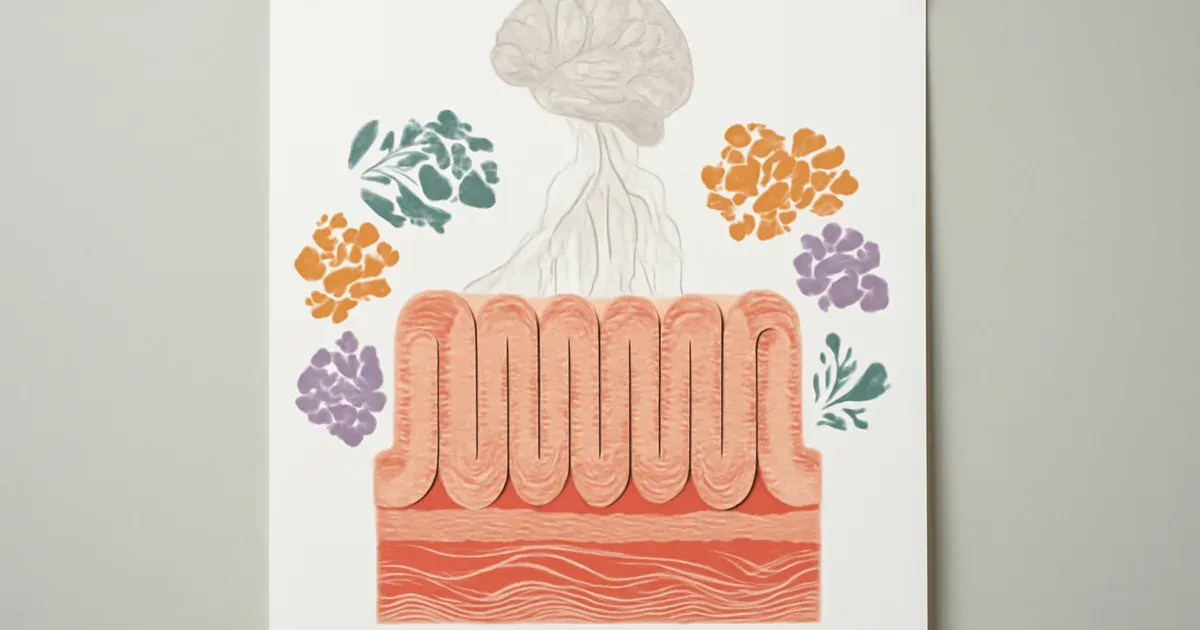
The gut-brain connection describes the bidirectional communication network between your gastrointestinal system and your central nervous system, mediated by the vagus nerve, the immune system, and microbially produced chemicals.
Your gut is sometimes called the "second brain" because it contains around 500 million neurons — more than your spinal cord. Gut microbes produce or stimulate the production of neurotransmitters including serotonin, dopamine, and gamma-aminobutyric acid (GABA). Remarkably, an estimated 90% of the body's serotonin is produced in the gut.
Researchers at University College London (UCL) and King's College London have been exploring how disruptions to the microbiome may contribute to mental health conditions including depression and anxiety. This connects directly to the lifestyle medicine framework: chronic stress, poor sleep, an ultra-processed diet, and social isolation all impair the gut-brain axis.
Practical implications of this research include:
- Reducing ultra-processed food intake may ease anxiety symptoms
- Improving sleep quality can restore microbial balance overnight
- Social connection — a core LM pillar — reduces stress hormones that harm gut lining integrity
The gut-brain connection is not a fringe idea — it is an active area of MRC-funded and Wellcome Trust-supported research in the UK.
What everyday habits most damage your gut microbiome?
Several common lifestyle habits are known to drive microbial dysbiosis — the imbalance of gut bacteria linked to inflammation, obesity, and chronic disease.
In Westernised countries including the UK, three major drivers of disease — inflammation, obesity, and insulin resistance — are closely tied to lifestyle-induced gut disruption. The following habits are the biggest culprits:
- Ultra-processed food consumption: Linked to reduced microbial diversity and overgrowth of harmful bacteria
- Sedentary behaviour: Physical inactivity reduces beneficial short-chain fatty acid production
- Chronic psychological stress: Elevates cortisol, which alters gut motility and permeability
- Overuse of antibiotics: Disrupts colonisation of beneficial species, sometimes for months
- Poor sleep: Even one or two nights of disrupted sleep can measurably alter microbial composition
- Excessive alcohol intake: Damages the gut lining and promotes dysbiosis
- Smoking: Associated with significantly reduced microbial diversity in UK Biobank data
Each of these habits maps directly onto the lifestyle medicine pillars — which is why LM represents a coherent, holistic strategy for restoring gut health, not just managing symptoms.

Lifestyle medicine vs conventional medicine: what's the difference for gut health?
Conventional medicine typically addresses gut symptoms reactively — using antacids, laxatives, antibiotics, or immunosuppressants — whereas lifestyle medicine works upstream to remove the causes of gut dysfunction in the first place.
Both approaches have their place, and they are not mutually exclusive. But for people in the UK managing conditions like irritable bowel syndrome (IBS), type 2 diabetes, or low-grade chronic inflammation, a lifestyle-first approach may produce broader, more lasting benefits.
| Feature | Conventional Medicine | Lifestyle Medicine |
|---|---|---|
| Primary tool | Pharmaceuticals | Behavioural & dietary change |
| Focus | Symptom management | Root cause prevention |
| Gut microbiome | Rarely addressed directly | Central to the approach |
| Evidence base | Randomised controlled trials | RCTs + epidemiological cohorts |
| NHS availability | Widely available | Growing via social prescribing |
A landmark 1993 JAMA study estimated that approximately 80% of premature deaths in the USA (and comparable Westernised nations) were attributable to poor lifestyle choices — underscoring the enormous preventive potential of LM. Landmark publications including the Diabetes Prevention Programme and the PREDIMED Study have since reinforced LM as a credible clinical paradigm.
How can I improve gut health naturally using lifestyle changes?
Improving gut health naturally means adopting consistent daily habits that support microbial diversity, reduce gut inflammation, and strengthen the gut-brain axis — no supplements required as a starting point.
Here is what the evidence most strongly supports for UK adults looking to improve gut health naturally:
- Eat 30 or more different plant foods per week. The British Gut Project found this to be one of the strongest predictors of microbiome diversity. Think vegetables, fruits, wholegrains, legumes, nuts, seeds, and herbs.
- Prioritise dietary fibre. The UK Eatwell Guide recommends 30g of fibre per day — most UK adults consume only around 18g. Fibre feeds beneficial bacteria.
- Include fermented foods. Natural yoghurt, kefir, sauerkraut, kimchi, and live-culture cheeses introduce beneficial microbes.
- Move regularly. Even 20–30 minutes of brisk walking daily has measurable effects on gut microbial composition.
- Protect your sleep. Aim for 7–9 hours; poor sleep directly alters the gut microbiome within days.
- Manage stress actively. Mindfulness, breathing exercises, and strong social relationships all reduce cortisol's damaging effect on gut permeability.
- Limit ultra-processed foods. These are high in additives and emulsifiers shown to disrupt the gut lining.
A comprehensive review on lifestyle medicine and the microbiome highlights that these pillars work synergistically — improving one tends to improve others, creating a positive feedback loop for gut health.

Does the NHS recognise gut health and lifestyle medicine?
The NHS increasingly recognises the role of lifestyle in preventing and managing chronic disease, and NHS gut health guidance is evolving to reflect the growing microbiome science.
NHS England's social prescribing programme allows GPs to refer patients to non-clinical support — including nutrition counselling, exercise referral schemes, and stress management — which align closely with lifestyle medicine principles. The NHS Long Term Plan explicitly prioritises prevention and personalised care.
In the UK, the British Dietetic Association (BDA) and the British Nutrition Foundation both publish evidence-based guidance on gut health, dietary fibre, and the microbiome. The BDA's One Blue Dot resource supports plant-forward eating for both health and environmental reasons.
While a formal "lifestyle medicine" NHS pathway is still developing, momentum is building. Medical schools including those at the University of Oxford, University of Cambridge, and Imperial College London are integrating nutrition science, behavioural medicine, and microbiome research into curricula. NHS gut health is not a niche concern — it sits at the heart of the UK's prevention agenda.
How does the British diet affect the gut microbiome?
The typical British diet — often high in ultra-processed foods, refined carbohydrates, and low in fibre — is associated with reduced gut microbial diversity, which in turn raises the risk of chronic disease.
UK adults on average consume nearly twice as much saturated fat and far less fibre than recommended by the UK Eatwell Guide. This dietary pattern promotes the overgrowth of bacteria associated with inflammation while starving the beneficial fibre-fermenting species.
Research from the University of Reading and King's College London has consistently shown that increasing dietary fibre — particularly from diverse plant sources — rapidly shifts the gut microbiome towards a healthier profile. In microbiome UK research, even short-term dietary interventions of two to four weeks have produced measurable improvements.
The encouraging news about the British diet and gut health:
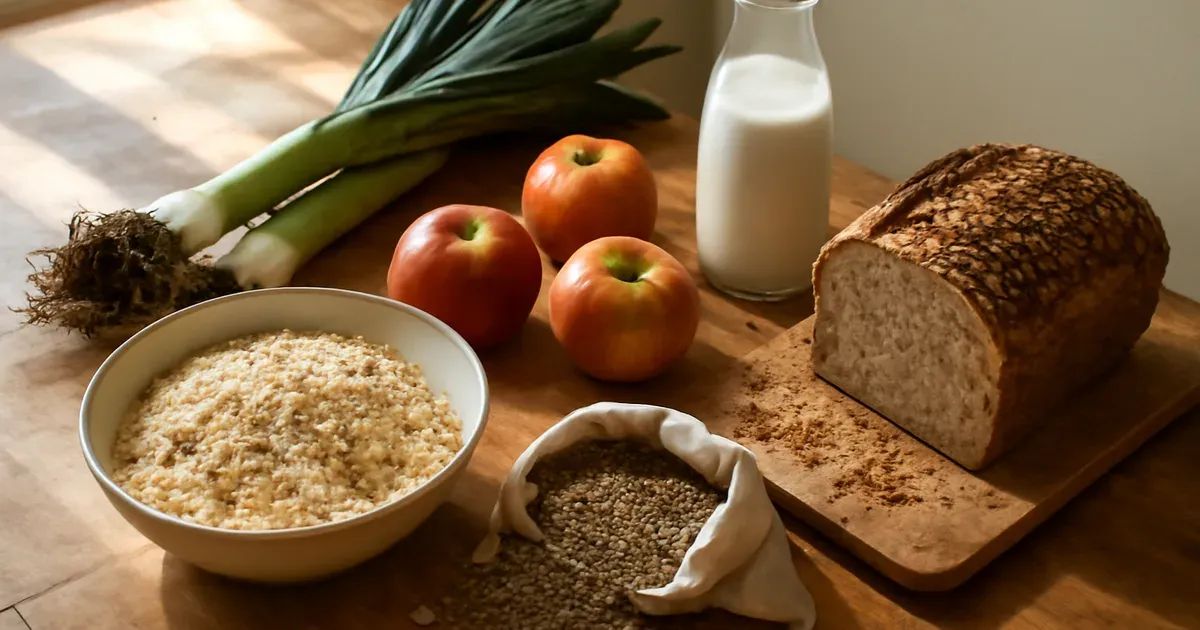
- Traditional elements of the UK diet — oats, barley, leeks, onions, apples, and legumes — are excellent sources of prebiotic fibre
- The rising popularity of plant-forward eating in the UK creates genuine opportunity for widespread microbiome improvement
- Small, consistent changes matter more than short-term cleanses or elimination diets
The gut microbiome is remarkably responsive to dietary change — studies suggest significant microbial shifts can occur within 48–72 hours of changing eating patterns.

The Bottom Line
- Gut health in the UK is shaped primarily by lifestyle — diet, sleep, stress, movement, and social connection all directly influence the microbiome.
- The gut-brain connection is real and bidirectional — what you eat affects how you think and feel, and chronic stress damages your gut lining.
- Lifestyle medicine offers a holistic, evidence-based framework for improving gut health naturally without relying solely on medication.
- The NHS and leading UK research institutions are increasingly recognising the microbiome as central to chronic disease prevention.
- Eating 30+ plant foods per week and hitting 30g of daily fibre are among the most impactful, evidence-backed steps a UK adult can take for gut health right now.
Ready to Take Action?
Your gut microbiome is one of the most modifiable aspects of your health — and it can begin changing within days of making better choices. Whether you start with an extra portion of vegetables, a short evening walk, or an earlier bedtime, every step counts. The science is clear: invest in your lifestyle, and your gut — and your brain — will thank you.
You might also like
- 7 Gut Health Mistakes Silently Harming Your Microbiome
- How to Control Mouth Bacteria Naturally
- Your Oral Microbiome Questions Answered
96 Bacterial Strains. Two Shots a Day.
GOODIE is an award-winning fermented drink with 96 live bacterial strains — more than any yogurt or kombucha — never pasteurised, clinically tested, and 8 in 10 users felt less bloating within 14 days. Curious?