Gut Health UK: Your Biggest Questions Answered
Science-backed answers to the biggest gut health questions for UK adults — covering the microbiome, gut-brain axis, NHS advice, and diet.

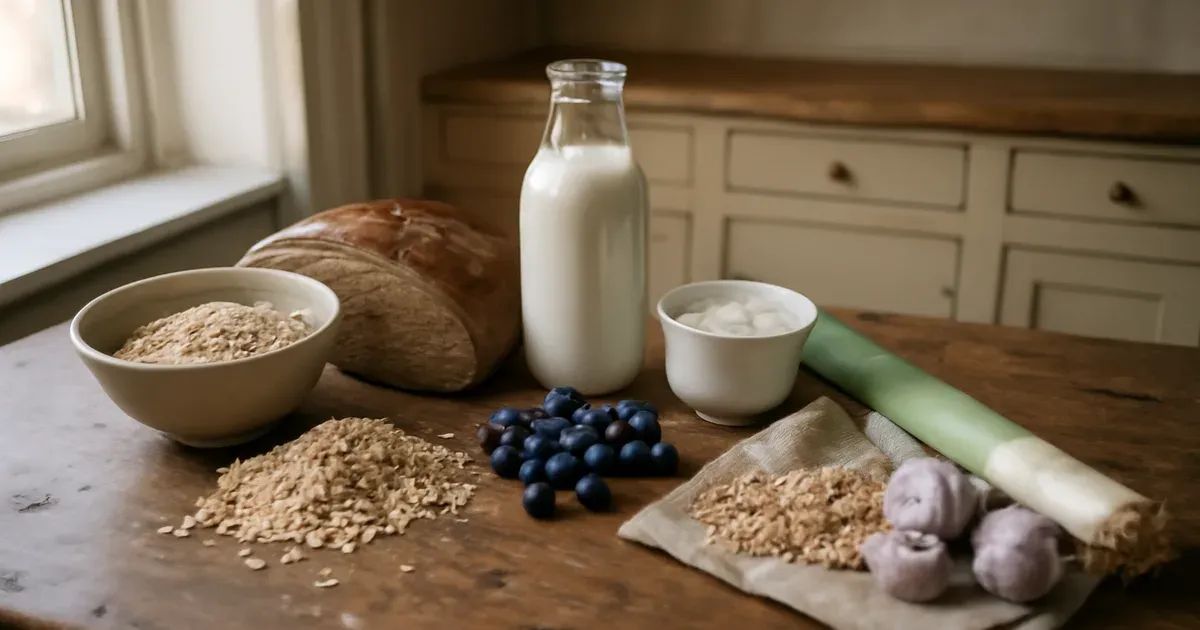
Gut health has become one of the most talked-about topics in British wellness — yet the science can feel overwhelming. From conflicting advice about probiotics to confusing claims about the gut-brain connection, it is hard to know what is actually backed by evidence. Whether you have been Googling symptoms, browsing NHS pages, or simply wondering why your digestion feels off, this guide cuts through the noise with clear, science-based answers tailored for a UK audience.
Jump to Your Question
What exactly is the gut microbiome and why does it matter?
How does the gut-brain connection actually work?
What does UK microbiome research tell us about disease?
What foods improve gut health naturally on a British diet?
Is the oral microbiome connected to gut health?
Probiotics vs prebiotics: which do you actually need?
Can poor gut health affect your mental health?
What does the NHS say about gut health?
What exactly is the gut microbiome and why does it matter?
The gut microbiome is the vast community of trillions of microorganisms — bacteria, viruses, fungi, and archaea — that live throughout your gastrointestinal tract. Far from being passive passengers, these microbes actively regulate digestion, immune function, metabolism, and even mood.
Research published in Nature Medicine by Gilbert et al. (2018) established that the human microbiome is deeply intertwined with nearly every aspect of health. The large intestine alone hosts the densest microbial populations in the entire body, with different species thriving at different points along the gut.
In the UK, interest in microbiome science has surged thanks to initiatives like the British Gut Project (now part of the ZOE Health Study) and ongoing research at institutions including King's College London and the University of Reading. These programmes have helped map what a "healthy" British gut microbiome might look like — and how far many of us fall from it.
Key facts about the gut microbiome:
- Comprises an estimated 38 trillion microbial cells
- Encodes over 150 times more genes than the human genome
- Is shaped by diet, antibiotic use, birth method, and environment
- Changes meaningfully within days of dietary shifts
How does the gut-brain connection actually work?
The gut-brain connection refers to the bidirectional communication network linking your gastrointestinal system and your central nervous system, mediated through nerves, hormones, and microbial metabolites. This axis — often called the gut-brain axis — means your gut can influence your mood, cognition, and stress response, and vice versa.
The vagus nerve is the primary physical highway of this connection, transmitting signals in both directions between the gut and the brain. But the microbiome plays an equally critical role: gut bacteria produce neurotransmitters including serotonin, GABA, and dopamine precursors that directly affect brain chemistry.
Approximately 90% of the body's serotonin is produced in the gut, not the brain. This single fact reframes how we think about mood disorders and opens new avenues for treatment. Researchers at UCL and Imperial College London are actively investigating how disruptions to the gut microbiome — a state called dysbiosis — may contribute to anxiety, depression, and even neurodegenerative conditions.

What does UK microbiome research tell us about disease?
UK microbiome research has linked imbalances in gut microbial communities to a wide range of conditions, from inflammatory bowel disease and obesity to type 1 diabetes and rheumatoid arthritis. The scale and sophistication of this research has accelerated significantly over the past decade.
The UK Biobank — one of the world's largest biomedical databases — has enabled researchers to study microbiome patterns across hundreds of thousands of British participants. Meanwhile, the Wellcome Trust and MRC (Medical Research Council) have funded landmark studies into how microbial imbalances drive chronic disease.
A meta-analysis by Duvallet et al. (2017) in Nature Communications identified both disease-specific and shared microbiome signatures across conditions including IBD, obesity, and type 2 diabetes. Crucially, research into the oral–gut microbiome axis has shown that oral bacteria can travel to and colonise the gut, potentially triggering or worsening systemic inflammation — a finding with profound implications for NHS treatment pathways.
Conditions linked to gut dysbiosis in current research:
- Inflammatory bowel disease (IBD), including Crohn's disease and ulcerative colitis
- Obesity and metabolic syndrome
- Type 1 and type 2 diabetes
- Rheumatoid arthritis
- Colorectal cancer
- Anxiety and depression (via the gut-brain axis)
What foods improve gut health naturally on a British diet?
To improve gut health naturally, UK dietary guidelines recommend increasing fibre intake, eating a diverse range of plant foods, and incorporating fermented foods — all of which can be achieved within a typical British diet. The UK Eatwell Guide specifically emphasises wholegrains, fruits, vegetables, and legumes as foundations of digestive wellbeing.
The average UK adult consumes only around 18g of fibre per day, well below the NHS-recommended 30g. Fibre is the primary fuel source for beneficial gut bacteria, and a low-fibre British diet is one of the biggest drivers of poor microbiome diversity.
Practical, UK-friendly foods for gut health:
- Wholegrains: oats, wholemeal bread, brown rice, barley
- Legumes: lentils, chickpeas, baked beans (a British staple with real gut benefits)
- Fermented foods: live yoghurt, kefir (widely available in UK supermarkets), sauerkraut
- Prebiotic-rich vegetables: leeks, onions, garlic, asparagus, Jerusalem artichokes
- Polyphenol-rich foods: berries, apples, dark chocolate, green tea
Researchers at the University of Reading have published extensively on how dietary fibre and polyphenols modulate the British gut microbiome, reinforcing the message that food — not supplements — should be the first port of call.

Is the oral microbiome connected to gut health?
Yes — the oral microbiome and the gut microbiome are directly connected, and disruptions in the mouth can have measurable consequences for digestive and systemic health. The mouth is the gateway to the gastrointestinal tract, and bacteria from the oral cavity are swallowed continuously throughout the day.
Under normal, healthy conditions, the acidic environment of the stomach limits how many oral bacteria survive the journey to the gut. However, research published in Nature Reviews Microbiology confirms that in states of gut dysbiosis, oral microorganisms can successfully colonise the large intestine — a process with implications for conditions including IBD, colorectal cancer, and liver disease.
Conditions linked to oral-gut microbiome disruption:
- Periodontitis (gum disease) has been associated with increased intestinal inflammation
- Certain oral bacteria, including Fusobacterium nucleatum, have been found enriched in colorectal tumours
- Poor oral hygiene has been linked to higher rates of systemic inflammatory disease
This is an emerging area where the British Dietetic Association (BDA) and NHS oral health initiatives may increasingly converge with gut health guidance in future years.
Probiotics vs prebiotics: which do you actually need?
Probiotics are live beneficial bacteria added to the gut, while prebiotics are the dietary fibres and compounds that feed the bacteria already living there — and most UK adults need more of both, but especially prebiotics. The distinction matters because no amount of probiotic supplementation compensates for a fibre-poor diet.
| Feature | Probiotics | Prebiotics |
|---|---|---|
| What they are | Live microorganisms | Non-digestible food compounds |
| How they work | Add beneficial bacteria to the gut | Feed and grow existing beneficial bacteria |
| Main sources | Yoghurt, kefir, kimchi, supplements | Onions, garlic, leeks, oats, bananas |
| NHS guidance | Useful in specific contexts (e.g. after antibiotics) | Recommended via high-fibre diet for everyone |
| Evidence strength | Variable — strain-specific | Strong for overall microbiome diversity |
The British Nutrition Foundation advises that a high-fibre, plant-diverse diet is the most evidence-based approach to supporting the gut microbiome. Probiotic supplements may offer specific benefits — particularly Lactobacillus and Bifidobacterium strains following antibiotic use — but they are not a substitute for dietary fundamentals.
If you are looking for a targeted way to support your gut-brain axis alongside a fibre-rich diet, evidence-based probiotic formulations may offer an additional layer of support.
Can poor gut health affect your mental health?
Poor gut health — specifically a low-diversity or dysbiotic microbiome — has been increasingly linked to anxiety, depression, and cognitive difficulties, through multiple pathways collectively described as the gut-brain connection. This is one of the fastest-growing areas of neuroscience research in the UK and globally.
Gut bacteria produce and regulate key neuroactive compounds including short-chain fatty acids (SCFAs), which cross the blood-brain barrier and modulate neuroinflammation. When the microbiome is disrupted — by ultra-processed foods, chronic stress, or antibiotics — this production falters.

Research led by teams at King's College London has explored how gut microbial composition correlates with depression scores in large population cohorts. Separately, the ZOE PREDICT study found that individuals with greater gut microbiome diversity reported better mood stability and lower fatigue.
This does not mean gut health is the only driver of mental health — but it does mean that looking after your gut is also a form of looking after your mind. For anyone managing stress, anxiety, or low mood in the UK, the gut-brain axis represents a legitimate, evidence-backed lever worth pulling.
What does the NHS say about gut health?
The NHS recommends a high-fibre diet, regular physical activity, adequate hydration, and limiting ultra-processed foods as the cornerstone of NHS gut health advice for UK adults. While NHS guidance does not yet formally incorporate microbiome-specific recommendations, the underlying dietary advice strongly aligns with what microbiome science supports.
The NHS Eatwell Guide recommends at least 30g of fibre per day and encourages at least five portions of fruit and vegetables daily — both of which directly benefit microbial diversity. The NHS also acknowledges the role of the gut in immune function and is increasingly recognising the gut-brain connection in patient pathways for IBS and mental health.
NHS-aligned gut health recommendations:
- Eat at least 30g of fibre daily from varied sources
- Stay hydrated — aim for 6–8 glasses of water per day
- Limit ultra-processed foods, excess alcohol, and unnecessary antibiotic use
- Exercise regularly — physical activity independently increases microbiome diversity
- Manage stress through sleep, mindfulness, and social connection
If you experience persistent digestive symptoms — bloating, altered bowel habits, abdominal pain — the NHS recommends speaking to your GP, as these may indicate conditions such as IBS, IBD, or coeliac disease that require clinical assessment.
Bottom Line
- The gut microbiome is central to immunity, metabolism, and mental health — not just digestion.
- The gut-brain connection is bidirectional and biochemically real, mediated by nerves, hormones, and microbial metabolites including serotonin.
- UK microbiome research — from the British Gut Project to the UK Biobank — is reshaping our understanding of chronic disease.
- To improve gut health naturally, prioritise dietary fibre (aim for the NHS-recommended 30g/day), plant diversity, and fermented foods within a British diet.
- The oral microbiome matters too: gum disease and poor oral hygiene can disrupt the gut, reinforcing the need for whole-body approaches to gut health in the UK.
Always consult your GP or a registered dietitian (find one via the British Dietetic Association at bda.uk.com) before making significant dietary changes, especially if you have an existing health condition.
You might also like
- How to Boost Natural GLP-1 for Gut Health (No Drugs)
- Your Mouth Microbiome & Gut Health: The Link
- 7 Oral Microbiome Mistakes Harming Your Gut Health
96 Bacterial Strains. Two Shots a Day.
GOODIE is an award-winning fermented drink with 96 live bacterial strains — more than any yogurt or kombucha — never pasteurised, clinically tested, and 8 in 10 users felt less bloating within 14 days. Curious?