How to Boost Natural GLP-1 for Gut Health (No Drugs)
Learn how to raise your body's own GLP-1 hormone naturally through gut microbiome support, fibre-rich diet, and exercise — no prescription needed.


You've tried cutting calories, skipping snacks, and eating "clean" — yet the hunger still wins. You feel full for an hour, then ravenous again by mid-morning. Sound familiar? Millions of people in the UK are living in that exhausting cycle, and many are now looking at GLP-1 medications as the only way out.
But here's something most health headlines miss: GLP-1 is a hormone your body already produces. And the health of your gut microbiome — the trillions of bacteria living in your intestines — plays a direct role in how much of it you make. That means improving your gut health naturally isn't just good for digestion. It could be one of the most powerful levers you have for appetite, blood sugar, and long-term metabolic health.
This guide shows you exactly how to work with your body's own systems, step by step.
Why Appetite and Blood Sugar Feel So Hard to Control
The real problem isn't willpower — it's hormonal signalling. GLP-1 (glucagon-like peptide-1) is released by specialised L-cells lining your small intestine and colon. When it works well, it tells your pancreas to release insulin, signals your brain that you're full, and slows stomach emptying so you stay satisfied after meals. When it doesn't, hunger feels relentless.
Several interconnected factors suppress natural GLP-1 production:
- A low-fibre diet leaves gut bacteria with little to ferment, reducing the short-chain fatty acids (SCFAs) that directly stimulate L-cells
- A disrupted gut microbiome — increasingly common in the UK thanks to ultra-processed foods — produces fewer of the microbial signals that prime GLP-1 release
- Chronic stress elevates cortisol, which actively impairs GLP-1 secretion and drives cravings for calorie-dense foods
- Poor sleep and irregular mealtimes throw off the circadian rhythm that GLP-1 naturally follows, with levels peaking during daylight hours
- Eating quickly and distractedly blunts the gut-brain connection, reducing the hormonal feedback your brain needs to register fullness
The good news is that all of these factors are modifiable. Research from King's College London's PREDICT programme and the British Gut Project has shown that dietary changes can shift microbiome composition — and therefore metabolic hormone responses — within days. Here's how to start.
Step 1: Feed Your Gut Bacteria the Fibre They Need to Signal Fullness
Soluble fibre is the single most evidence-backed way to improve gut health naturally and raise GLP-1 levels. When fibre reaches your colon, gut bacteria ferment it into SCFAs — particularly butyrate, propionate, and acetate. These compounds directly activate L-cells to release GLP-1 into your bloodstream. The more diverse and abundant your fibre intake, the stronger this signal becomes.
The UK Eatwell Guide recommends 30g of fibre per day for adults, yet the NHS reports that most people in the UK consume only around 18g. Bridging that gap is one of the most impactful changes you can make for your gut-brain connection and appetite control.
Prioritise these high-fibre foods daily:
- Oats — a morning bowl of porridge delivers 4–5g of soluble beta-glucan fibre, one of the most studied GLP-1 stimulants
- Beans and lentils — a tin of chickpeas or a lentil soup adds 8–12g of fibre per serving
- Chia seeds and flaxseeds — two tablespoons stirred into yoghurt or a smoothie contributes 5–8g
- Broccoli and Brussels sprouts — cruciferous vegetables rich in both soluble and insoluble fibre
- Sweet potatoes — baked with the skin on for a fibre-dense, satisfying carbohydrate source
Pro tip: Increase fibre gradually over two to three weeks to give your gut bacteria time to adapt and reduce bloating. Drink plenty of water alongside — fibre needs fluid to do its job.

Step 2: Support Your Microbiome with Fermented Foods and Probiotics
Your gut microbiome UK researchers describe as a "metabolic organ" in its own right — and it has a direct line to your GLP-1-producing cells. Studies published by teams at the University of Reading and University of Nottingham have shown that specific bacterial strains, including Lactobacillus and Bifidobacterium species, can upregulate GLP-1 secretion. A depleted or imbalanced microbiome does the opposite.
Fermented foods introduce live beneficial bacteria while also providing prebiotics that feed your existing gut flora. The gut-brain connection means that improving your microbiome doesn't just affect digestion — it influences mood, energy, and how satisfied you feel after eating.
Add these fermented foods to your weekly routine:
- Live yoghurt — look for labels that state "live cultures" or "contains Lactobacillus"; plain, full-fat options avoid added sugars
- Kefir — a fermented milk drink widely available in UK supermarkets, with a broader range of bacterial strains than yoghurt
- Sauerkraut and kimchi — fermented cabbage dishes that are rich in Lactobacillus plantarum; buy refrigerated, unpasteurised versions for live cultures
- Miso — a fermented soybean paste that works well as a soup base or seasoning
If you want to go further, a high-quality probiotic supplement may help — particularly after a course of antibiotics, which are prescribed frequently in the UK and can significantly disrupt microbiome diversity. Look for multi-strain products with at least 10 billion CFU, and check the British Dietetic Association's guidance on probiotic supplements before purchasing.
Pro tip: Pair fermented foods with prebiotic-rich foods (garlic, leeks, onions, asparagus) in the same meal. You're feeding the bacteria you're introducing — a strategy researchers call "synbiotics."
Step 3: Build Meals Around Protein and Healthy Fats to Sustain GLP-1 Release
What you eat alongside fibre matters just as much as the fibre itself. Both protein and healthy fats are potent stimulants of GLP-1 secretion, and they work through different mechanisms than fibre — meaning combining all three in a single meal produces a stronger, more sustained hormonal response than any one macronutrient alone.
Protein triggers GLP-1 release from L-cells within minutes of eating and also stimulates another satiety hormone called PYY (peptide YY). For anyone working on healthy weight management in the UK, adequate protein is doubly important because it helps preserve muscle mass — muscle being the metabolically active tissue that keeps your resting metabolism healthy long-term.
Lean protein sources to include daily:
- Chicken breast, turkey, or white fish
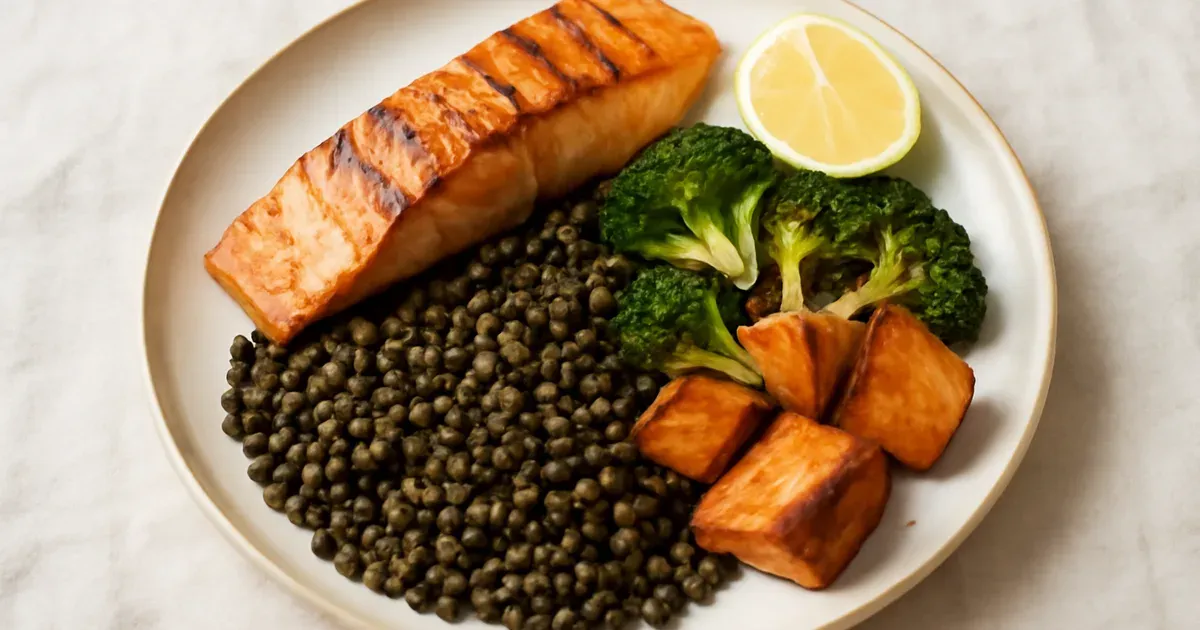
- Oily fish such as mackerel, salmon, or sardines (which also supply omega-3 fatty acids)
- Eggs — a convenient, affordable protein source widely accessible across the UK
- Legumes (lentils, chickpeas, black beans) — plant-based protein that doubles up as a fibre source
Healthy fats to prioritise:
- Extra-virgin olive oil (linked to improved gut microbiome diversity in Mediterranean diet studies)
- Avocado — rich in monounsaturated fats and potassium
- A small handful of walnuts or almonds — omega-3-rich snacks that slow gastric emptying
- Oily fish, which supplies both protein and long-chain omega-3s (EPA and DHA)
A practical template: build lunch and dinner around a palm-sized protein source, a generous portion of fibre-rich vegetables, a serving of legumes or wholegrains, and a drizzle of olive oil or a quarter of an avocado. This combination reliably stimulates the gut-brain axis to signal sustained fullness.
Step 4: Move Your Body — Exercise Directly Raises GLP-1
Exercise is one of the most underappreciated ways to improve gut health naturally and increase GLP-1 levels simultaneously. Physical activity stimulates GLP-1 release through multiple pathways: it increases gut motility (which activates L-cells mechanically), improves insulin sensitivity, and — crucially for UK microbiome research — positively shifts the composition and diversity of the gut microbiome independently of diet.
A landmark study from the University of Illinois, replicated in part by researchers at Loughborough University, found that aerobic exercise increased microbial diversity and the abundance of butyrate-producing bacteria — precisely the strains most linked to GLP-1 stimulation. You don't need to train like an athlete to benefit.
A practical weekly exercise framework:
- 150 minutes of moderate cardio spread across the week — brisk walking along the canal, cycling to work, swimming at your local leisure centre, or following a Couch to 5K programme (free via the NHS app) all count
- 2 sessions of resistance training — bodyweight exercises at home, resistance bands, or weights at the gym. Preserving and building muscle supports metabolic health and amplifies the GLP-1 response over time
- Break up sitting time — research from the University of Leicester found that short walks after meals significantly improved post-meal blood sugar regulation. A 10-minute walk after lunch is a simple, evidence-backed habit
Pro tip: If time is limited, high-intensity interval training (HIIT) sessions of just 20 minutes can produce GLP-1 responses comparable to longer moderate sessions. The NHS approved Couch to 5K and Active 10 apps are free tools to help you build consistent movement habits.
Step 5: Regulate Stress, Sleep, and Meal Timing to Protect Your GLP-1 Rhythm
GLP-1 follows a circadian rhythm — levels are naturally higher during daylight hours and drop overnight. Chronic stress, poor sleep, and erratic mealtimes all disrupt this rhythm, suppressing the hormone at exactly the moments when you need it most. This is where the gut-brain connection becomes most visible: stress doesn't just affect your mood. Via the vagus nerve and the HPA axis, it directly impairs the intestinal signalling that drives GLP-1 release.
Research from the MRC Epidemiology Unit at the University of Cambridge has linked short sleep duration with disrupted appetite hormones, increased hunger, and poorer dietary choices the following day. The Wellcome Trust's UK population studies similarly point to chronic psychosocial stress as a major driver of metabolic dysregulation in the UK.
Daily habits that protect your GLP-1 rhythm:
- Prioritise 7–9 hours of sleep — consistent sleep and wake times are as important as duration for hormonal regulation
- Eat during daylight hours where possible — front-loading calories earlier in the day aligns with GLP-1's natural peak and supports better blood sugar control
- Eat slowly and without screens — chewing thoroughly and taking smaller bites measurably increases GLP-1 release and fullness signals. A calm, distraction-free eating environment helps tune the gut-brain axis
- Practise a daily stress-management technique — even 10 minutes of mindfulness, breathwork, or a walk in a local green space can reduce cortisol enough to support healthier hormone secretion. NHS mental health apps including Headspace (available via NHS discounts) offer accessible starting points
- Maintain consistent mealtimes — irregular eating patterns confuse your gut bacteria and suppress the hormonal rhythms that regulate appetite

What to Expect: A Realistic Timeline
Changes to your gut microbiome and GLP-1 response don't happen overnight — but they do happen faster than most people expect.
Week 1–2: Gut bacteria begin responding to increased fibre and fermented food intake. You may notice changes in digestion (some initial bloating is normal as bacteria adapt). Energy levels and post-meal satiety may begin to improve.
Week 3–4: Microbiome diversity starts to measurably shift — a finding consistently demonstrated in British Gut Project data. Appetite regulation becomes more consistent. Blood sugar spikes after meals begin to flatten as GLP-1 and insulin responses improve.
Month 2–3: The compounding effects of regular exercise, improved sleep, stress reduction, and dietary changes become apparent. Cravings for ultra-processed foods typically reduce as gut-brain signalling stabilises. Many people report 1–3 kg of gradual weight loss during this phase.
Beyond 3 months: Sustainable changes to microbiome composition, metabolic hormone rhythms, and eating behaviour are well-established. Research from the PREDICT study at King's College London suggests that personalised dietary patterns aligned with your gut microbiome can produce lasting improvements in glycaemic response and satiety.
It's important to be honest: lifestyle changes alone cannot replicate the weight-loss magnitude of GLP-1 medications like semaglutide. Clinical trials show medications can achieve 15%+ body weight reduction; lifestyle interventions typically achieve 5–10%. But for metabolic health, gut health, and long-term sustainability, natural approaches are not second-best — they are foundational, whether or not you also use medication.
Mistakes That Slow Your Progress
Avoid these common pitfalls when working to improve gut health naturally:
- Adding fibre too fast. Jumping from 15g to 40g of daily fibre in a week overwhelms gut bacteria and causes bloating, wind, and discomfort. Increase by 3–5g per week.
- Relying on supplements alone. Probiotic capsules without dietary change provide bacteria with nothing to eat. Prebiotics (fibre-rich foods) must come first.
- Treating stress management as optional. High cortisol actively suppresses GLP-1 release — it is a physiological mechanism, not a lifestyle preference. Stress reduction is as important as diet for this pathway.
- Eating fermented foods that are pasteurised. Shelf-stable sauerkraut and kimchi in UK supermarkets are often heat-treated, killing the live cultures. Always choose refrigerated, unpasteurised versions.
- Skipping resistance training. Many people in the UK focus only on cardio for weight management and overlook the muscle-preserving, microbiome-diversifying benefits of strength work. At least two sessions per week makes a measurable difference.
- Ignoring meal timing. Eating a large meal late at night — a common pattern in UK households — works against GLP-1's natural circadian rhythm and impairs overnight metabolic recovery.
What Can Help You Get There Faster
Tracking and personalisation tools make the difference between a generalised plan and one that works for your biology. The British Gut Project (now part of ZOE) offers at-home microbiome testing that maps your personal gut bacteria and provides dietary recommendations aligned with your specific microbial profile — directly actionable for UK residents.
Professional support from a registered dietitian (find one via the British Dietetic Association's directory) can help you interpret microbiome data, troubleshoot digestive symptoms, and build a structured meal plan that hits your fibre targets without trial and error. Your GP can also refer you to NHS dietetic services if you meet clinical criteria.
Evidence-based apps and NHS resources including the NHS Food Scanner app, the NHS 12-week weight-loss plan, and the Active 10 walking tracker are free, UK-specific tools that support the dietary and exercise changes described in this guide.

Your Quick-Reference Summary
Follow this checklist to put every step into practice:
✅ Eat at least 30g of fibre daily — prioritise oats, beans, chia seeds, broccoli, and sweet potatoes ✅ Include fermented foods (live yoghurt, kefir, sauerkraut, miso) at least once daily ✅ Build meals around lean protein + healthy fats + fibre at every sitting ✅ Aim for 150 minutes of moderate cardio plus 2 strength sessions per week ✅ Eat slowly, without screens, in a calm environment ✅ Sleep 7–9 hours; maintain consistent mealtimes aligned with daylight hours ✅ Practise a daily stress-reduction technique — even 10 minutes counts ✅ Increase fibre gradually to avoid digestive discomfort ✅ Choose refrigerated, live-culture fermented foods ✅ Consider working with a BDA-registered dietitian for personalised guidance
Your gut is already equipped with the biological machinery to support appetite control, steady blood sugar, and lasting metabolic health. The five steps above work with that machinery rather than around it. In the UK, where NHS resources, evidence-based apps, and world-class microbiome research are all within reach, you have more support than ever to make these changes stick. Start with one step this week — increase your fibre, add a kefir to your breakfast, take a walk after dinner — and build from there.
You might also like
- 7 Gut-Brain Secrets That Could Change Your Mental Health
- How to Improve Gut Health Naturally in 6 Steps
- Gut Health UK: How Your Microbiome Protects Your Heart
Frequently Asked Questions
Can improving my gut health really affect my appetite and weight?
Yes — and the evidence in the UK and globally is increasingly strong. Your gut microbiome communicates directly with the brain via the vagus nerve (the gut-brain connection) and influences the release of appetite-regulating hormones including GLP-1. Research from King's College London's PREDICT programme found that individuals with more diverse gut microbiomes had significantly better blood sugar and appetite hormone responses after meals, independent of other factors.
How long does it take for gut bacteria to change after improving your diet?
Microbiome shifts can begin within 24–72 hours of dietary change, though meaningful, lasting changes in microbial diversity typically take three to eight weeks of consistent eating. British Gut Project data shows that adding just two to three new plant-based foods per week accelerates diversity improvements. Consistency matters far more than short-term perfection.
Is it worth taking a probiotic supplement to boost GLP-1 in the UK?
Probiotic supplements can be a useful addition, but they work best alongside dietary change. Without prebiotic fibre to feed the introduced bacteria, most probiotic strains pass through the gut without colonising it. The British Dietetic Association recommends looking for multi-strain products with clear CFU counts and strain names. Discuss with your GP or a registered dietitian if you have specific digestive conditions.
Do GLP-1 medications and natural gut health approaches work together?
They do — and combining them may produce better outcomes than either alone. GLP-1 medications like semaglutide work by mimicking the hormone your gut produces naturally, while a healthy diet, active microbiome, and regular exercise support and amplify the body's own hormonal signalling. For people using GLP-1 medications in the UK, maintaining a high-fibre, protein-rich diet and regular exercise is strongly recommended by NHS guidance to preserve muscle mass and support long-term results.
What are the best NHS resources for gut health and weight management in the UK?
Several free NHS tools are directly relevant. The NHS 12-week weight-loss plan provides structured dietary guidance aligned with the UK Eatwell Guide. The Couch to 5K and Active 10 apps support exercise habit formation. For gut-specific concerns, your GP can refer you to NHS dietetic services, and the British Dietetic Association's "Find a Dietitian" directory lists accredited private practitioners if NHS waiting times are a barrier.
96 Bacterial Strains. Two Shots a Day.
GOODIE is an award-winning fermented drink with 96 live bacterial strains — more than any yogurt or kombucha — never pasteurised, clinically tested, and 8 in 10 users felt less bloating within 14 days. Curious?