Muscle & Gut Health: Your Biggest Questions Answered
Muscle and gut health are more connected than most people realise. Get clear answers on sarcopenia, protein, the microbiome, and strength training at any age.


Building muscle after 30 feels harder than it should. Your gut plays a bigger role than most people realise. Whether you're confused about protein intake, worried about losing strength with age, or wondering what your microbiome has to do with any of it — you're not alone. This guide answers the questions people actually type into search engines, using the latest peer-reviewed evidence on muscle health, sarcopenia, and the gut-brain-muscle axis.

Jump to Your Question
Does muscle mass really decline after 30?
How does gut health affect muscle growth and recovery?
How much protein do you actually need to build muscle after 40?
Can strength training improve your gut microbiome?
Will lifting weights make women bulky?
What is the minimum effective dose of strength training?
How does the gut-brain axis affect workout motivation and recovery?
Is it too late to start strength training after 50?
Does muscle mass really decline after 30?
Muscle loss begins around age 30 — earlier than most people expect. The process, known as sarcopenia, starts slowly but accelerates significantly by the time you reach your 60s.
Research estimates adults lose roughly 3–8% of muscle mass per decade after 30, with the rate increasing after 60. This decline affects not just strength but also metabolism, bone density, joint stability, and even cognitive function. Sarcopenia is one of the most consequential — and least discussed — health challenges of ageing.
The encouraging news is that strength training is one of the few interventions clinically proven to slow, halt, or even reverse sarcopenia at any age. Your body retains the capacity to respond to resistance training throughout life.
Key impacts of age-related muscle loss:
- Reduced resting metabolic rate
- Increased risk of falls and fractures
- Poorer blood sugar regulation
- Accelerated cognitive decline
- Reduced functional independence
How does gut health affect muscle growth and recovery?
A healthy gut microbiome directly influences your body's ability to build and repair muscle. The trillions of bacteria in your digestive tract affect protein digestion, nutrient absorption, systemic inflammation, and even the hormonal signals that govern muscle protein synthesis.
When your microbiome is imbalanced — a state called dysbiosis — gut permeability can increase, allowing inflammatory compounds into the bloodstream. Chronic low-grade inflammation is one of the key drivers of muscle breakdown and poor recovery after exercise. Conversely, a diverse, well-fed microbiome produces short-chain fatty acids (SCFAs) like butyrate, which have anti-inflammatory effects that support tissue repair.
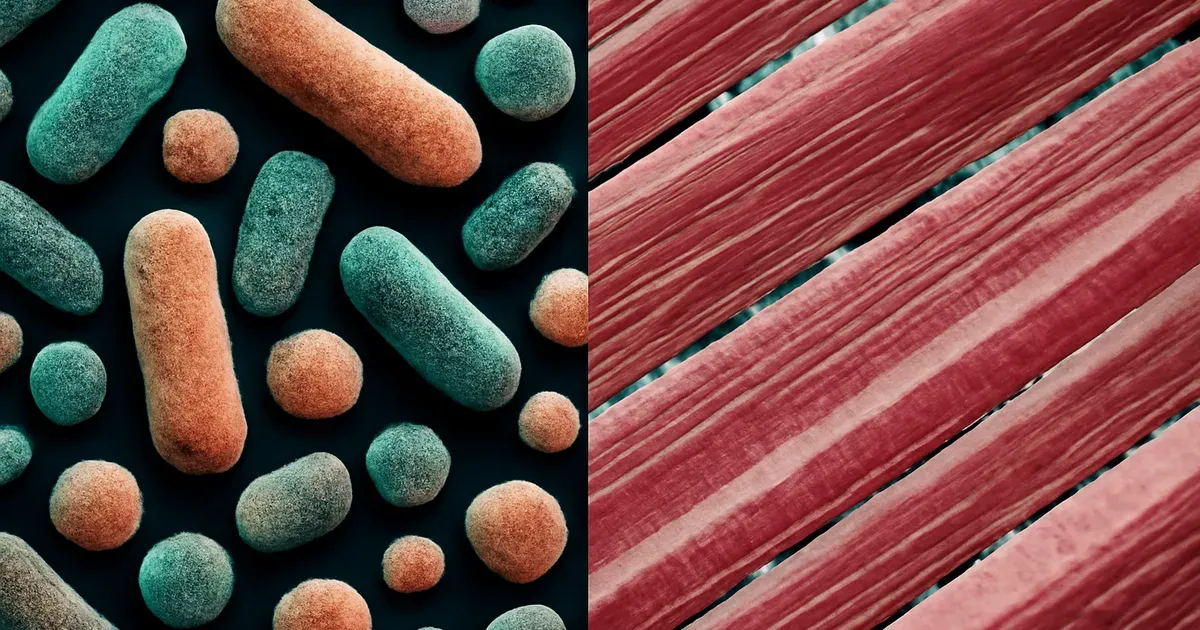
Recent studies have also shown that specific gut bacteria influence the bioavailability of amino acids — meaning two people eating the same protein-rich meal may absorb very different amounts depending on their gut microbiome composition. This makes gut health a hidden variable in muscle and gut health outcomes that most training plans completely ignore.
Ways gut health shapes muscle recovery:
- Regulates systemic inflammation post-exercise
- Affects amino acid absorption efficiency
- Influences anabolic hormone levels (including IGF-1)
- Modulates immune responses triggered by intense training
How much protein do you actually need to build muscle after 40?
The optimal protein intake for muscle maintenance and growth sits between 1.6–2.2 grams per kilogram of bodyweight per day. After 40, the body becomes less efficient at using dietary protein for muscle synthesis — a phenomenon called "anabolic resistance" — so requirements actually increase with age, not decrease.
Many adults chronically under-eat protein, especially at breakfast and lunch. Spreading intake across three to four meals appears to be more effective than consuming it all in one sitting, as muscle protein synthesis has a ceiling effect per meal.
Protein needs shift with age because:
- Anabolic sensitivity to amino acids decreases
- Digestive enzyme output can decline
- Gut microbiome changes affect amino acid bioavailability
- Sedentary periods cause faster muscle breakdown
Choosing high-quality, complete protein sources — those containing all nine essential amino acids — matters more as you age. The gut microbiome also plays a role here: a healthy microbial community helps extract maximum nutritional value from the protein you consume, reinforcing the connection between muscle and gut health.
Can strength training improve your gut microbiome?
Regular resistance and aerobic exercise increases the diversity of the gut microbiome, which is one of the strongest markers of overall gut health. A more diverse microbiome is associated with reduced inflammation, better immune function, and more resilient metabolic health.
A 2019 study published in Medicine & Science in Sports & Exercise found that exercise-induced changes to the microbiome were partially independent of diet, suggesting that movement itself is a meaningful intervention for gut health. Specific bacterial strains associated with anti-inflammatory short-chain fatty acid production — including Faecalibacterium prausnitzii — are consistently more abundant in physically active individuals.
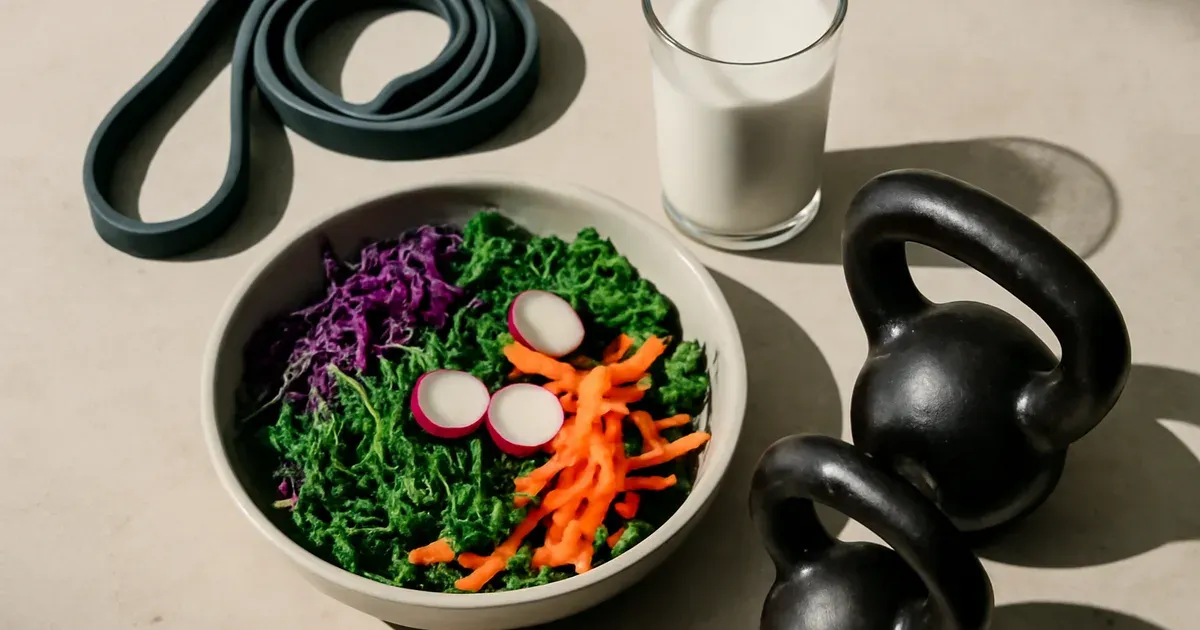
The relationship is genuinely bidirectional. Exercise improves the gut; a healthy gut improves exercise capacity and recovery. This feedback loop means that prioritising both simultaneously produces compounding benefits that neither approach achieves alone.
Exercise habits that support microbiome diversity:
- Consistent moderate-intensity training (3–4 days per week)
- Inclusion of both resistance and cardiovascular exercise
- Avoiding chronic overtraining, which can increase gut permeability
- Pairing exercise with a fibre-rich, varied diet
Will lifting weights make women bulky?
Strength training does not make most women bulky — building substantial visible muscle mass is genuinely difficult, even when it's the explicit goal. Women have roughly 15–20 times less testosterone than men, which is the primary hormonal driver of large-scale muscle hypertrophy.
What strength training reliably produces in women is a leaner, more toned physique, improved bone density, better posture, and significantly enhanced metabolic health. The "toned" look that most people actually want is the direct result of resistance training combined with appropriate nutrition.
Resistance training vs. cardio-only for body composition — a comparison:
| Outcome | Strength Training | Cardio Only |
|---|---|---|
| Muscle retention | High | Low |
| Resting metabolic rate | Increases | Minimal change |
| Bone density | Significantly improves | Moderate improvement |
| Body composition | Favourable | Depends on calorie deficit |
| Gut microbiome diversity | High positive impact | Moderate positive impact |
The research is consistent and unambiguous. Strength training is one of the most effective tools available for long-term health in women, with benefits extending to gut health, cognitive function, and hormonal balance.
What is the minimum effective dose of strength training?
Two to three strength sessions per week, each lasting 30–45 minutes, is sufficient to build meaningful muscle, strength, and metabolic resilience. More is not always better — consistency and progressive overload matter far more than volume.
Focusing on five fundamental movement patterns covers the full body efficiently and mirrors the demands of real-world physical life:
- Squat — lower body strength and knee health
- Hinge (deadlift or hip thrust) — posterior chain and spine stability
- Push — chest, shoulders, triceps
- Pull — back, biceps, postural muscles
- Carry — grip, core, functional endurance

These patterns, trained consistently over months and years, build the kind of durable strength that protects joints, supports metabolic health, and maintains functional independence into old age. The gut benefits here are also worth noting: regular structured exercise at this frequency is associated with measurable improvements in microbiome diversity without triggering the gut permeability sometimes seen in excessive endurance training.
How does the gut-brain axis affect workout motivation and recovery?
The gut-brain axis is a bidirectional communication highway linking gut bacteria directly to mood, motivation, stress response, and cognitive function — all of which influence your ability to train consistently and recover well.
Approximately 90–95% of the body's serotonin is produced in the gut, not the brain. Gut bacteria regulate serotonin production, which affects mood, sleep quality, and the motivation to exercise in the first place. Dysbiosis — an imbalanced microbiome — has been linked to increased cortisol levels, poorer sleep, and reduced drive, creating a cycle that undermines recovery and consistency.
Muscle tissue also contributes to this conversation. Research shows that skeletal muscle produces signalling molecules called myokines during exercise, several of which cross the blood-brain barrier and have direct neuroprotective and mood-enhancing effects. This means that training strengthens the gut-brain connection from both ends — the muscle side and the microbial side simultaneously.
Gut-brain signals that affect training:
- Serotonin regulation (mood, sleep, motivation)
- Cortisol modulation (stress and recovery balance)
- BDNF production (brain-derived neurotrophic factor, linked to focus and learning)
- Vagal nerve tone (parasympathetic recovery after exertion)
Is it too late to start strength training after 50?
It is never too late to begin strength training, and the benefits at 50, 60, and beyond are well-documented in peer-reviewed clinical trials. The body retains its capacity to respond to resistance training throughout the entire lifespan.
Studies have shown that adults over 65 who begin structured resistance training can increase muscle mass by 10–15% over 12 weeks. Bone mineral density improves. Balance and fall risk decline significantly. Metabolic markers — insulin sensitivity, blood lipids, blood pressure — all show meaningful improvements.
The gut microbiome is similarly responsive. Research in older adults shows that beginning an exercise programme rapidly increases microbial diversity, with protective bacterial strains becoming more prevalent within weeks. The combination of improved muscle health and a healthier microbiome produces synergistic effects on inflammation, cognitive function, and longevity that neither approach achieves in isolation.
Starting later still delivers:
- Meaningful muscle and strength gains within 8–12 weeks
- Rapid improvements in balance and fall prevention
- Measurable increases in gut microbiome diversity
- Better insulin sensitivity and metabolic markers
- Reduced risk of cognitive decline
Muscle is not a young person's game. It is a lifelong tool — and one of the most evidence-backed investments you can make in how well you age.

Bottom Line
- Muscle loss begins at 30 and accelerates with each decade — but strength training is proven to slow, stop, or reverse it at any age.
- Your gut microbiome directly affects muscle recovery, protein absorption, inflammation, and exercise motivation via the gut-brain axis.
- Protein needs increase with age — aim for 1.6–2.2g per kg of bodyweight daily, distributed across meals.
- Exercise improves gut health, and a healthier gut improves exercise outcomes — the relationship is bidirectional and compounding.
- Two to three sessions per week built around five movement patterns is all it takes to produce lasting strength, metabolic resilience, and a more diverse microbiome.
Frequently Asked Questions
What are myokines and how do they connect muscle health to the gut-brain axis?
Myokines are signalling proteins released by skeletal muscle during exercise that circulate through the body and influence the brain, immune system, and gut simultaneously. Several myokines — including irisin and IL-6 — cross the blood-brain barrier and stimulate neuroprotective pathways, while also modulating gut inflammation and supporting microbiome diversity. This makes muscle tissue a functional endocrine organ, not just a mechanical one.
How quickly does the gut microbiome respond to starting an exercise programme?
Measurable changes in gut microbiome composition can occur within two to four weeks of beginning a consistent exercise routine. Studies in previously sedentary adults show increases in beneficial bacterial strains — particularly those that produce anti-inflammatory short-chain fatty acids — within this window. Dietary fibre intake alongside exercise amplifies and sustains these changes.
Does poor gut health cause muscle loss?
Chronic gut dysbiosis contributes to systemic inflammation, which accelerates muscle protein breakdown and impairs the anabolic response to resistance training. Increased intestinal permeability allows inflammatory compounds into circulation, creating a low-grade inflammatory state that undermines both muscle synthesis and recovery. Addressing gut health is therefore a legitimate strategy for supporting muscle maintenance, not just a separate wellness concern.
What foods support both muscle growth and gut microbiome health?
High-fibre plant foods combined with complete protein sources offer the most synergistic benefit for both muscle and gut health. Legumes, fermented foods (yoghurt, kefir, sauerkraut), colourful vegetables, and lean or plant-based proteins feed both muscle protein synthesis and the beneficial bacteria that support recovery and reduce inflammation. Avoiding ultra-processed foods protects both systems simultaneously.
Can the gut-brain axis explain post-exercise mood improvements?
Post-exercise mood elevation involves both neurological and microbial pathways. Exercise triggers endorphin release and myokine production in muscle tissue, while also stimulating gut bacteria that regulate serotonin and dopamine precursors. The vagus nerve carries signals from the gut to the brain in real time during and after exercise, contributing to the calm, focused feeling many people report following a training session.