Gut Health & Your Heart: Your Biggest Questions Answered
Discover how your gut microbiome affects your heart and brain health, with science-backed answers tailored for UK adults seeking to improve gut health naturally


If you've heard the phrase "gut health" and wondered what it actually means for your heart, your mood, or your daily energy levels, you're not alone. The science of the gut microbiome is moving fast — and it can be genuinely confusing to know what matters and what's just hype. This guide cuts through the noise with clear, evidence-based answers to the questions UK adults are asking most, drawing on the latest research and NHS guidance.
Jump to Your Question
What is the gut microbiota and why does it matter?
How does poor gut health harm the heart?
What is TMAO and why should I care about it?
What is the gut-brain connection and how does it affect my health?
What foods improve gut health naturally?
What is the 30 plants a week rule?
Are fermented foods actually good for gut health?
Mediterranean diet vs standard British diet: which is better for the gut?
How does gut health research in the UK compare globally?
What is the gut microbiota and why does it matter?
The gut microbiota is the vast community of trillions of microorganisms — bacteria, viruses, fungi, and other microbes — that live throughout your entire digestive tract, from your mouth to your colon. Far from being passengers, these microbes are active participants in your health.
They help maintain the integrity of the gut lining, regulate immune responses, and break down the food you eat into chemicals your body needs to function. Those chemicals include short-chain fatty acids, hormones, vitamins, and small proteins that support everything from blood clotting to bone density, nerve signalling, and brain health.
In the UK, growing awareness of microbiome science has led to increased investment in research programmes at institutions such as King's College London and the University of Reading, where scientists are mapping how microbial diversity relates to long-term health outcomes across the British population.
How does poor gut health harm the heart?
Poor gut health — specifically, unfavourable changes to the gut microbiota — has been directly linked to a higher risk of developing and dying from heart and circulatory diseases, according to multiple laboratory studies published in recent years.
These changes can involve the number of microbes present, the species that dominate, and the overall composition of the microbial community. When the balance tips in the wrong direction, the chemicals the gut produces also shift — and some of those chemicals appear to damage the cardiovascular system.
Scientists are particularly interested in how gut-derived chemicals promote inflammation of blood vessel linings, contribute to arterial plaque build-up, and raise blood pressure. While much of this research has been laboratory-based, findings are increasingly being validated in human studies across Europe and in the UK.
Key ways poor gut health may harm the heart:
- Disrupted microbial balance alters production of protective fatty acids
- Harmful metabolites may inflame blood vessel walls
- Imbalanced gut bacteria are associated with higher LDL ("bad") cholesterol
- Changes in gut microbiota composition correlate with higher cardiovascular disease risk

What is TMAO and why should I care about it?
Trimethylamine N-oxide (TMAO) is a chemical compound produced when gut bacteria break down certain nutrients — particularly choline and carnitine, found in red meat, eggs, and dairy — and research suggests it may play a meaningful role in cardiovascular disease.
Lab-based studies have shown that TMAO is linked with worsening outcomes in people with heart failure. A review published in a peer-reviewed cardiovascular journal found that elevated TMAO levels in the blood are associated with hypertension, potentially by promoting inflammation in the lining of blood vessels.
Scientists are also exploring TMAO's role in high cholesterol and arterial stiffness. It's important to note that this research is still developing — the relationship between TMAO, diet, gut bacteria, and heart disease is complex, and individual responses vary considerably.
What this means practically: eating a diet rich in diverse plant foods may help shift the balance of gut bacteria away from those that produce high TMAO levels, supporting both gut health UK guidelines and heart health simultaneously.
What is the gut-brain connection and how does it affect my health?
The gut-brain connection refers to the bidirectional communication network linking the gastrointestinal tract and the brain, mediated through the vagus nerve, the immune system, hormones, and microbially produced chemicals. It is sometimes called the "gut-brain axis."
Your gut microbiota produces or influences the production of neurotransmitters including serotonin — with approximately 90% of the body's serotonin manufactured in the gut, not the brain. This means the state of your microbiome can directly influence mood, stress responses, cognitive function, and even sleep quality.
Research at institutions including University College London (UCL) and Imperial College London is examining how disruptions to the gut-brain axis may contribute to conditions such as anxiety, depression, and even neurodegenerative diseases. The MRC (Medical Research Council) has funded several UK-based studies in this area over the past decade.
The practical takeaway is significant: improving gut health naturally — through diet, sleep, stress management, and physical activity — may also support mental wellbeing, not just physical health.
The gut-brain connection in brief:
- The vagus nerve acts as a direct communication highway between gut and brain
- Gut microbes influence serotonin, dopamine, and GABA production
- Disrupted microbiome diversity is associated with increased anxiety and low mood
- Anti-inflammatory diets that feed gut microbes may also support cognitive health

What foods improve gut health naturally?
The most effective way to improve gut health naturally is to eat a wide variety of whole, plant-based foods that provide fibre, polyphenols, and diverse nutrients for your microbiome to thrive on. This is well-supported by NHS gut health guidance and endorsed by the British Dietetic Association (BDA).
Fibre is particularly important: gut microbes ferment fibre to produce short-chain fatty acids, which help maintain the gut lining and reduce inflammation throughout the body. Research published in the British Medical Journal has shown that higher dietary fibre intake is associated with a lower risk of coronary artery disease and other circulatory conditions — partly because fibre helps remove "bad" LDL cholesterol before it enters the bloodstream.
Polyphenols — antioxidants and bioactive compounds found in plants — are another key group. Human cells cannot digest around 90% of polyphenols directly; gut microbes must ferment them first. This means a diverse gut microbiome is essential for unlocking the heart-protective benefits of these compounds.
Top foods to improve gut health naturally:
- Fibre-rich foods: oats, wholegrains, lentils, chickpeas, kidney beans
- Polyphenol-rich foods: berries, extra virgin olive oil, dark chocolate, green tea, red onions
- Prebiotic foods: garlic, onions, leeks, asparagus, bananas
- Fermented foods: live yogurt, kefir, kimchi, sauerkraut, miso
- Healthy fats: nuts, seeds, oily fish (also central to NHS Eatwell Guide recommendations)
What is the 30 plants a week rule?
The "30 plants a week" rule is a practical dietary target encouraging people to eat 30 different plant foods every week to maximise gut microbiome diversity. It was popularised by microbiome research and is championed by gut health specialists including those connected to the British Gut Project.
Data from the American Gut Project (which has parallels with the British Gut Project led from King's College London) found that people eating more than 30 different plant varieties per week had significantly more diverse gut microbiomes than those eating fewer than 10. Greater microbial diversity is consistently associated with better health outcomes in UK microbiome research.
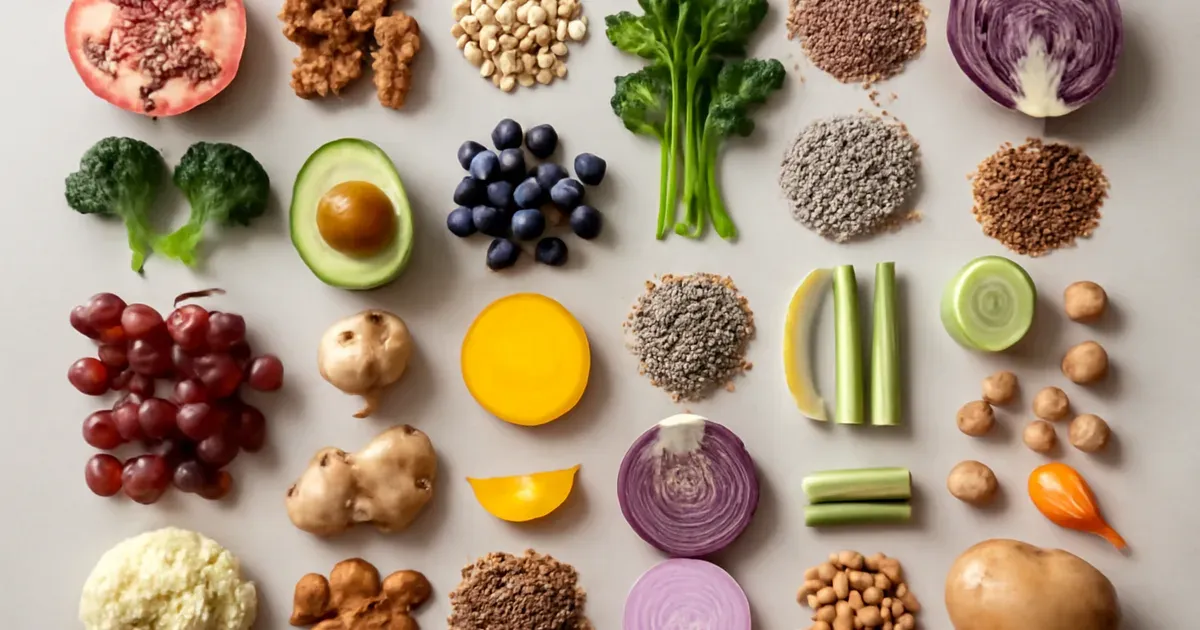
The 30 plants target includes:
- Fruits (fresh, frozen, and dried all count)
- Vegetables of all colours
- Wholegrains (oats, rye, barley, brown rice, quinoa)
- Legumes (lentils, chickpeas, black beans, butter beans)
- Nuts (almonds, walnuts, cashews)
- Seeds (flaxseed, chia, pumpkin, sunflower, mixed seeds)
- Herbs and spices (these count too — even small amounts contribute)
A simple UK-friendly tip: swap your standard bag of mixed salad leaves for one that includes rocket, spinach, watercress, and radicchio — that's already four plants in one bag.
Are fermented foods actually good for gut health?
Fermented foods contain live microorganisms that, when consumed regularly, are thought to help restore and maintain a healthy balance of bacteria in the gut. Options such as live yogurt, kefir, kimchi, sauerkraut, and miso are increasingly popular in the UK and are worth including in a varied diet.
Beyond their probiotic content, many fermented foods also contain prebiotics — compounds that act as fuel for beneficial gut bacteria. Think of prebiotics as a fertiliser for your microbiome: they help the "good" bacteria already present in your gut to grow and thrive.
A healthy, balanced microbial community is better equipped to ferment polyphenols from plant foods, produce protective short-chain fatty acids, and support the gut-brain connection through neurotransmitter pathways. Emerging research from Stanford University (replicated in European cohorts) suggests that a diet high in fermented foods increases microbial diversity more effectively than a high-fibre diet alone — though the two approaches work best in combination.
Practical ways to add fermented foods to a British diet:
- Swap standard yogurt for live or "bio" yogurt at breakfast
- Add a small serving of sauerkraut or kimchi to a lunchtime salad or grain bowl
- Try kefir as a base for smoothies
- Use miso paste to flavour soups and dressings instead of stock cubes
Mediterranean diet vs standard British diet: which is better for the gut?
The Mediterranean diet consistently outperforms the typical British diet for gut and cardiovascular health, primarily because it is rich in the fibre, polyphenols, and healthy fats that gut microbes depend on.
The standard British diet tends to be higher in ultra-processed foods, refined carbohydrates, and saturated fat — all of which are associated with reduced microbial diversity and higher levels of inflammatory gut-derived chemicals.
| Feature | Mediterranean Diet | Standard British Diet |
|---|---|---|
| Fibre intake | High (25–35g/day typical) | Low (average UK adult: ~18g/day) |
| Polyphenol sources | Olive oil, nuts, legumes, vegetables | Limited; often via tea and some fruit |
| Fermented foods | Regular (yogurt, cheese, olives) | Occasional |
| Ultra-processed food | Low | High (up to 57% of UK calorie intake) |
| Gut microbiome diversity | High | Comparatively low |
| Cardiovascular risk | Significantly lower | Higher average risk |
The good news for UK readers: you don't need to overhaul your entire diet overnight. The UK Eatwell Guide already encourages many Mediterranean-aligned choices — more fruit and vegetables, more wholegrains, more beans and pulses, less red and processed meat. Even small, consistent shifts in a British diet can meaningfully improve gut health.

How does gut health research in the UK compare globally?
The UK is one of the world leaders in microbiome and gut-brain research, with major ongoing studies and world-class institutions driving the field forward. In the UK, this research is particularly strong thanks to large population datasets such as UK Biobank, which links genetic, lifestyle, and health data from over 500,000 participants.
The British Gut Project, based at King's College London and supported by the Wellcome Trust, has gathered one of the largest citizen science microbiome datasets in the world, enabling researchers to identify patterns between diet, lifestyle, and microbial composition across diverse UK populations.
The MRC and BBSRC (Biotechnology and Biological Sciences Research Council) have both funded significant programmes examining how the gut microbiome interacts with the immune system, the brain, and the cardiovascular system. The University of Reading has particular expertise in prebiotics and dietary fibre, while Imperial College London leads research into metabolomics — including gut-derived chemicals like TMAO.
For UK adults, this means that NHS guidance on gut health is increasingly informed by homegrown evidence, making it directly relevant to British dietary patterns and health challenges.
The Bottom Line
- Your gut microbiome is a dynamic ecosystem that influences not just digestion, but your heart health, immune function, and gut-brain connection.
- TMAO, produced when gut bacteria process certain animal-derived foods, is a key chemical link between an imbalanced microbiome and cardiovascular risk.
- Fibre and polyphenols are the most evidence-backed nutrients for improving gut health naturally — and both also directly benefit the heart.
- Fermented foods and the "30 plants a week" approach are two practical, achievable strategies strongly endorsed by UK gut health research.
- The UK is a global leader in microbiome research — NHS and BDA guidance on gut health is grounded in rigorous, UK-relevant science.
Always consult your GP or a registered dietitian (you can find BDA-accredited dietitians through the NHS) before making significant changes to your diet, especially if you have an existing health condition.
You might also like
- How to Improve Gut Health for a Better Mind in 6 Steps
- 7 Warning Signs Your Oral Microbiome Is Wrecking Your Gut
- Oral–Gut Microbiome Axis: Your Questions Answered
96 Bacterial Strains. Two Shots a Day.
GOODIE is an award-winning fermented drink with 96 live bacterial strains — more than any yogurt or kombucha — never pasteurised, clinically tested, and 8 in 10 users felt less bloating within 14 days. Curious?