How to Calm Your Gut With Breathwork in 7 Days
Learn how to improve gut health naturally in 7 days using breathwork techniques that calm the gut-brain axis and support your microbiome.


You have tried the probiotics. You have cut out gluten, gone dairy-free for a month, and downloaded three different wellness apps. Yet your gut still feels like it is working against you — bloating after meals, unpredictable digestion, and a low hum of anxiety that never quite goes away.
Most advice about gut health focuses entirely on food. What we rarely hear is that how your nervous system is functioning moment to moment may matter just as much as what is on your plate. If your body is locked in a stress response, even the most carefully chosen meal struggles to be properly digested.
The good news? There is a tool you already own, costs nothing, and is available every second of the day: your breath. This guide shows you exactly how to use it — step by step — to improve gut health naturally, ease digestive discomfort, and support your microbiome from the inside out.
Why Gut Stress Happens in the First Place
Chronic stress is now one of the most underappreciated drivers of poor digestive health in the UK. Research supported by the Medical Research Council (MRC) and studies from King's College London have consistently linked psychological stress to measurable disruptions in gut microbiome diversity, gut motility, and intestinal permeability.
Here is what is actually happening inside your body when stress becomes a constant background noise:
- Fight-or-flight hijacks digestion. Your autonomic nervous system has two modes: sympathetic (fight-or-flight) and parasympathetic (rest-and-digest). Under stress, sympathetic activation diverts blood flow away from your gut, slowing motility and impairing nutrient absorption.
- Cortisol damages the gut lining. Prolonged elevation of the stress hormone cortisol can compromise the integrity of the gut lining, potentially contributing to what researchers describe as increased intestinal permeability — sometimes called "leaky gut."
- The gut microbiome shifts. Stress alters the composition of bacterial communities in your gut. Studies from the British Gut Project — one of the largest citizen science microbiome studies in the world — have found associations between self-reported stress levels and reduced microbial diversity in UK participants.
- Shallow breathing keeps the cycle going. When anxious or stressed, most people breathe rapidly and shallowly into the chest. This pattern maintains sympathetic nervous system dominance, perpetuating the very conditions that disrupt digestion.
- The gut-brain axis amplifies the problem. The gut and brain communicate bidirectionally via the vagus nerve, enteric nervous system, and gut-derived neurotransmitters (roughly 90% of the body's serotonin is produced in the gut). Stress signals travel both ways — a distressed brain unsettles the gut, and an inflamed gut signals distress back to the brain.
Understanding this cycle is the first step. Breaking it is what follows.

Step 1: Learn to Breathe With Your Diaphragm
Diaphragmatic breathing — sometimes called belly breathing or tummy breathing — is the foundation of everything that follows. Most adults in the UK breathe predominantly into their chest, particularly when sitting at a desk or looking at a screen. This shallow pattern keeps the sympathetic nervous system gently activated all day, which means your gut is never fully in rest-and-digest mode.
The diaphragm is a dome-shaped muscle that sits just below your lungs and directly above your digestive organs. When it contracts fully on the inhale, it creates a gentle massaging pressure on the stomach, intestines, and liver — physically stimulating digestive function. Activating it properly also signals the parasympathetic nervous system to engage, reducing cortisol and increasing gut motility.
How to practise diaphragmatic breathing:
- Sit upright or lie flat on your back.
- Place one hand on your chest and one on your tummy, just below your ribcage.
- Inhale slowly through your nose for a count of four. Your tummy should rise; your chest should stay relatively still.
- Exhale slowly through your mouth for a count of six. Feel your tummy fall.
- Repeat for 10 full breaths, twice daily — ideally once in the morning and once before your evening meal.
Pro tip: If your chest keeps rising instead of your tummy, try lying down first. Gravity makes it easier to feel the diaphragm engage correctly. Within two to three days, the pattern becomes more natural.
Practise this every day for the first three days of your seven-day plan.

Step 2: Use 4-7-8 Breathing Before Every Meal
The state your nervous system is in when you sit down to eat directly affects how well you digest. If you are rushing between meetings, scrolling your phone, or replaying an argument in your head, your gut receives the physiological message that now is not a safe time to focus on digestion. Digestive enzyme production drops. Stomach acid secretion can become dysregulated. Bloating and discomfort often follow.
The 4-7-8 breathing method, developed in its modern form by Dr Andrew Weil and grounded in ancient pranayama traditions, has been studied for its ability to rapidly shift the autonomic nervous system toward parasympathetic dominance. A small but growing body of UK-based research, including work cited by the British Dietetic Association (BDA), supports relaxation-based interventions before meals as a meaningful aid to digestive comfort.
How to practise 4-7-8 breathing:
- Sit comfortably with your back supported, ideally two to three minutes before eating.
- Close your mouth and inhale quietly through your nose for 4 seconds.
- Hold your breath for 7 seconds.
- Exhale completely through your mouth, making a whooshing sound, for 8 seconds.
- This is one cycle. Repeat three to four times.
The extended exhale is the key mechanism here. A long, controlled out-breath activates the vagus nerve — the primary nerve of the parasympathetic system — signalling your gut that it is safe to digest.
Pro tip: If holding for 7 seconds feels uncomfortable at first, try a shorter ratio such as 4-4-6 and build up gradually. The extended exhale relative to the inhale is what matters most.
Introduce this technique from Day 3 of your plan, pairing it with the diaphragmatic breathing you have already begun.
Step 3: Activate Your Vagus Nerve With Humming Breath
The vagus nerve is the superhighway of the gut-brain connection, carrying signals between the brain and virtually every organ in the digestive tract. Vagal tone — how well this nerve functions — is increasingly recognised by UK microbiome researchers and gastroenterologists as a key determinant of both digestive health and emotional resilience. Poor vagal tone is associated with irritable bowel syndrome (IBS), which affects an estimated 10–20% of the UK population.
Humming breath, known in yogic practice as Bhramari pranayama (bee breath), is one of the most direct non-invasive ways to stimulate vagal activity. The vibration produced by humming during exhalation stimulates mechanoreceptors in the throat and chest that feed directly into the vagal pathway. Research published in the Journal of Clinical Medicine found that slow vibratory breathing techniques produced measurable increases in heart rate variability (HRV) — a key marker of healthy vagal tone.
How to practise humming breath:
- Sit in a comfortable position. Close your eyes if that feels right.
- Inhale deeply through your nose for four to five seconds, filling your tummy first.
- On the exhale, keep your mouth gently closed and produce a soft, steady humming sound — like a bee.
- Feel the vibration in your lips, throat, and chest.
- Continue for 1–2 minutes, or 8–10 breaths.
This technique also directly supports your gut microbiome. The vagus nerve regulates intestinal immune function and helps control the inflammatory environment in which your gut bacteria live. A well-stimulated vagus nerve creates conditions where beneficial bacterial communities are more likely to thrive.
From Day 5 of your plan, pair humming breath with a gut-supportive evening routine. Combining it with a live cultures supplement — such as those found in a complete gut health powder containing diverse bacterial strains — may further enhance the microbiome-supporting environment you are creating through breathwork.

Step 4: Build a Consistent Daily Breathwork Routine
Consistency, not intensity, is what creates lasting change in the gut-brain axis. A single session of deep breathing can provide immediate relief. But the real transformation — improved microbiome diversity, reduced baseline cortisol, better gut motility — happens when the nervous system learns, through repetition, that parasympathetic states are its new default.
Researchers at UCL (University College London) studying the gut-brain connection have highlighted the importance of regularity in any nervous system-based intervention. The brain and gut are both highly adaptive organs; they respond to patterns, not one-off events.
Your 7-day daily routine:
- Morning (5–10 minutes): 10 rounds of diaphragmatic breathing immediately after waking. Set your nervous system to rest-and-digest before the day's demands kick in.
- Before each meal (2–3 minutes): Three to four rounds of 4-7-8 breathing. Do this even before your lunchtime sandwich at your desk — it takes less time than checking your phone.
- Evening (5 minutes): Humming breath to close the day. This activates the vagus nerve, supports overnight gut repair, and transitions the body toward sleep.
Pro tip: Anchor each practice to an existing habit — your morning coffee, the moment you sit down to eat, or brushing your teeth before bed. Habit-stacking significantly improves adherence, as behavioural research from the University of Oxford and University College London has consistently shown.
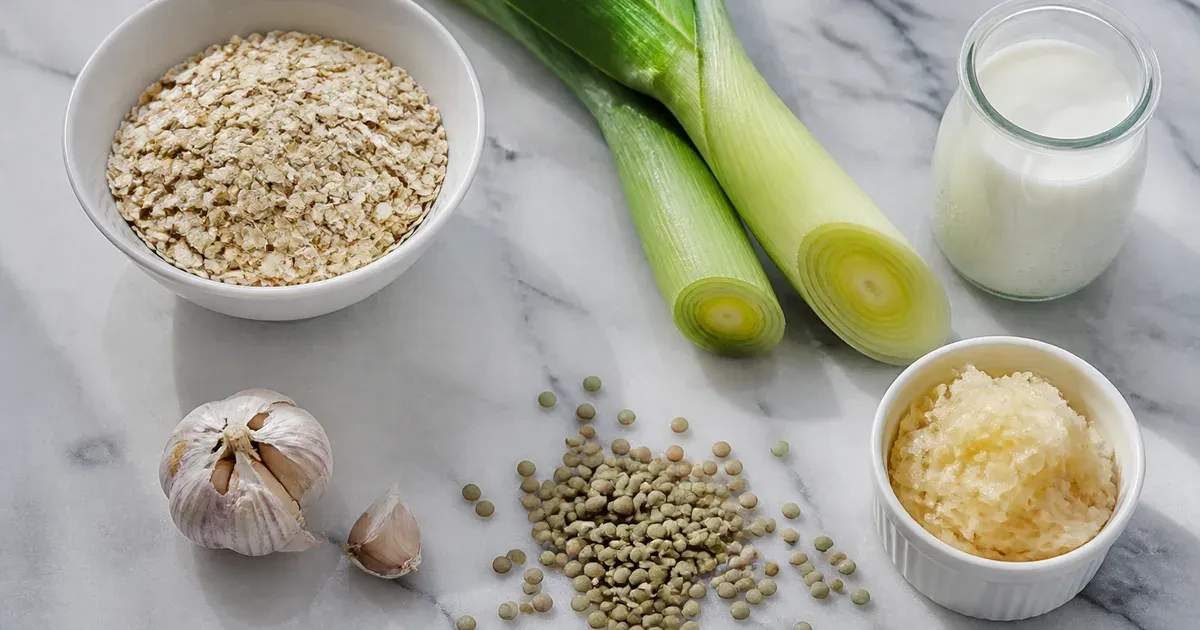
Support this routine with a diet rich in prebiotic fibre — think leeks, garlic, oats, and Jerusalem artichokes — and consider a high-quality live cultures supplement to nourish the microbiome you are working to rebalance.
Step 5: Pair Breathwork With Gut-Friendly Nutrition
Breathwork shifts the conditions for digestion; food provides the raw materials for gut repair and microbiome diversity. These two approaches are not alternatives — they are synergistic, and the evidence from UK microbiome research supports using them together.
The British Nutrition Foundation recommends that UK adults consume at least 30g of dietary fibre per day, yet surveys consistently show average intake sits closer to 18–20g. Fibre feeds the beneficial bacteria in your colon, producing short-chain fatty acids (SCFAs) like butyrate that reduce gut inflammation and strengthen the gut lining.
Key nutrition strategies to pair with your breathwork practice:
- Increase dietary fibre gradually. Sudden large increases can cause temporary bloating. Add one extra portion of vegetables, pulses, or wholegrains per day over two weeks.
- Eat fermented foods. Live yoghurt, kefir, sauerkraut, and kimchi introduce beneficial bacterial strains directly to the gut. The British Gut Project data suggests that UK adults who eat five or more different plant-based fermented foods weekly show greater microbiome diversity.
- Consider a live cultures supplement. A complete gut health powder containing diverse bacterial strains and prebiotic fibres can complement your dietary changes — particularly useful during the first weeks when breathwork is actively reducing cortisol and creating a more hospitable gut environment.
- Eat mindfully and slowly. This reinforces the parasympathetic state you have just activated through breathwork. Chewing thoroughly is one of the most underrated gut health habits recommended in NHS Eatwell guidance.
Step 6: Track Progress and Adjust
Awareness is your most powerful feedback tool. Unlike a blood test or stool sample, the signals your gut sends are immediate and personal. Learning to interpret them accelerates progress and helps you identify which breathwork and nutrition combinations work best for your unique gut.
Researchers at King's College London, through the ZOE personalised nutrition study — one of the largest nutritional science projects in the UK — have demonstrated that individual gut microbiome responses to the same food can vary dramatically. The same principle applies to breathwork: some people respond most strongly to diaphragmatic breathing, others to vagal stimulation through humming.
How to track your gut and stress response:
- Keep a brief daily log — three to five lines. Note your stress level (1–10), any digestive symptoms, and which breathwork technique you used.
- Rate your bloating and comfort after meals on a simple scale.
- After seven days, look for patterns: Do symptoms reduce on days when you practise before meals? Do mornings feel calmer when you begin with diaphragmatic breathing?
- Adjust your routine based on your observations — lean into what works.
Pro tip: The NHS recommends keeping a symptom diary as a first-line strategy for managing IBS and functional digestive disorders. This habit also gives you useful information to share with your GP or registered dietitian if you seek further support.
What to Expect: A Week-by-Week Breakdown
Days 1–2: You may feel slightly lightheaded during deep breathing — this is normal as CO₂ levels adjust. Stick with shorter sessions (5 minutes). Some people notice immediate relief from bloating after diaphragmatic breathing.
Days 3–4: The 4-7-8 technique before meals begins to feel more natural. You may notice you are eating more slowly and with greater awareness. Early improvements in post-meal comfort are common.
Days 5–6: Humming breath is introduced. You may notice your sleep quality beginning to improve — a sign that baseline cortisol is reducing and the vagus nerve is responding.
Day 7 and beyond: The full routine is in place. Most people report a meaningful reduction in stress-related digestive symptoms within 7–14 days of consistent practice. Microbiome changes — measurable through gut diversity — typically take four to eight weeks of sustained lifestyle shifts, as shown in studies supported by the Wellcome Trust.
Mistakes That Slow Your Progress
- Practising only when symptomatic. Breathwork works through cumulative nervous system retraining, not crisis management. Daily practice — even on good days — is what builds resilience.
- Breathing too forcefully. Deep does not mean effortful. Forced breathing activates tension rather than releasing it. The breath should feel expansive and soft, not strained.
- Skipping the pre-meal practice. This is the highest-leverage moment in the day for gut benefit. Even two minutes of 4-7-8 breathing before eating makes a measurable difference to digestive readiness.
- Ignoring fibre intake. Breathwork creates a better environment for your microbiome — but the bacteria still need to be fed. A low-fibre diet limits how far breathwork alone can take you.
- Expecting overnight microbiome transformation. Bacterial community shifts take weeks of consistent inputs — both dietary and nervous system-based. Manage expectations and trust the process.
What Can Help You Get There Faster
1. Guided breathwork apps and audio tools. Several NHS-recommended apps include structured breathing exercises — Headspace, Calm, and Insight Timer all offer diaphragmatic and vagal breathing guides. Using audio prompts removes the mental effort of timing, making it easier to stay consistent.
2. Prebiotic and fibre-rich foods. Foods that feed your gut bacteria — oats, chicory, leeks, garlic, bananas, and legumes — are widely available and affordable in UK supermarkets. These align with the NHS Eatwell Guide and directly support the microbiome rebalancing that your breathwork practice is enabling.
3. A high-quality live cultures supplement. A complete gut health powder providing diverse bacterial strains alongside prebiotic fibres can help replenish microbial diversity more rapidly, particularly if stress has disrupted your baseline microbiome. When combined with daily breathwork — which actively reduces the cortisol environment that suppresses beneficial bacteria — a live cultures supplement becomes a meaningful accelerant rather than a standalone fix.
Your 7-Day Plan at a Glance
✅ Step 1: Practise diaphragmatic breathing twice daily — 10 breaths each session (Days 1–7) ✅ Step 2: Use 4-7-8 breathing before every meal — three to four cycles (Days 3–7) ✅ Step 3: Add humming breath each evening — 1–2 minutes (Days 5–7) ✅ Step 4: Build a consistent daily routine anchored to existing habits (Days 1–7) ✅ Step 5: Pair breathwork with fibre-rich food and live cultures support (Days 1–7) ✅ Step 6: Track your symptoms and adjust — keep a brief daily log (Days 1–7)
Closing Thoughts
Your gut and your nervous system are in constant conversation. Every shallow, anxious breath tells your digestive system to stand down. Every slow, intentional exhale tells it the opposite — that it is safe, that it can get to work, that repair and balance are possible.
The science of the gut-brain connection — advancing rapidly through UK institutions including King's College London, UCL, and the British Gut Project — is confirming what many clinicians have long observed: that stress management is gut health management. You do not need expensive tests or complex protocols to start. You need seven days, a few minutes each morning and evening, and a willingness to breathe with intention.
Start tonight. Inhale slowly. Exhale completely. Your gut is already listening.
You might also like
- Microbiome Science Drives Viome's Disease Prevention Push
- Gut Health Tops 2026 Nutrition Trends: What the Evidence Shows
- Protein vs Fibre: Which Keeps You Fuller?
Frequently Asked Questions
Can breathwork really improve gut health, or is it just relaxation?
Breathwork does more than induce relaxation — it produces measurable physiological changes that directly support gut function. Controlled breathing activates the parasympathetic nervous system, increases vagal tone, reduces cortisol, and improves gut motility. Research from UK institutions including King's College London and UCL supports the bidirectional relationship between nervous system regulation and gut microbiome health. Relaxation is the mechanism, not just the outcome.
How quickly will I notice a difference in my digestion?
Many people notice immediate improvements in bloating and post-meal comfort within the first two to three days — particularly after introducing pre-meal 4-7-8 breathing. Deeper changes, such as improved microbiome diversity and reduced baseline inflammation, typically take four to eight weeks of consistent practice combined with dietary support. The seven-day plan is a starting point, not a finish line.
Is breathwork safe if I have IBS or a diagnosed gut condition?
For most people with IBS or functional digestive disorders, breathwork is not only safe but recommended. NICE guidelines for IBS in the UK explicitly include psychological and mind-body interventions as part of the management pathway. However, if you have a diagnosed gastrointestinal condition, always consult your GP or a gastroenterologist before making significant changes to your health routine. Breathwork complements — it does not replace — medical treatment.
Do I need to take a probiotic or gut supplement alongside breathwork?
Breathwork alone can meaningfully improve the gut environment, but combining it with gut-supportive nutrition — including live cultures — may accelerate results. Stress-related microbiome disruption often leaves specific bacterial populations depleted. A live cultures supplement can help replenish these while breathwork works to reduce the cortisol environment that suppressed them. Think of it as addressing the problem from two directions simultaneously.
How does the gut-brain connection relate to anxiety and mood in the UK context?
The gut-brain axis is a two-way communication system, and disruption in either direction affects the other. Approximately 90% of the body's serotonin — a key mood-regulating neurotransmitter — is produced in the gut. Poor microbiome health is increasingly associated with anxiety and low mood, a connection being actively researched through UK programmes including the BBSRC-funded microbiome initiatives and the UK Biobank mental health studies. Supporting your gut through breathwork and nutrition is, in this sense, also supporting your mental health.
96 Bacterial Strains. Two Shots a Day.
GOODIE is an award-winning fermented drink with 96 live bacterial strains — more than any yogurt or kombucha — never pasteurised, clinically tested, and 8 in 10 users felt less bloating within 14 days. Curious?