How to Improve Gut Health on a Budget in the UK
Realistic, evidence-based steps to improve gut health naturally in the UK — even on a tight budget, during flares, or with IBD. No expensive superfoods required

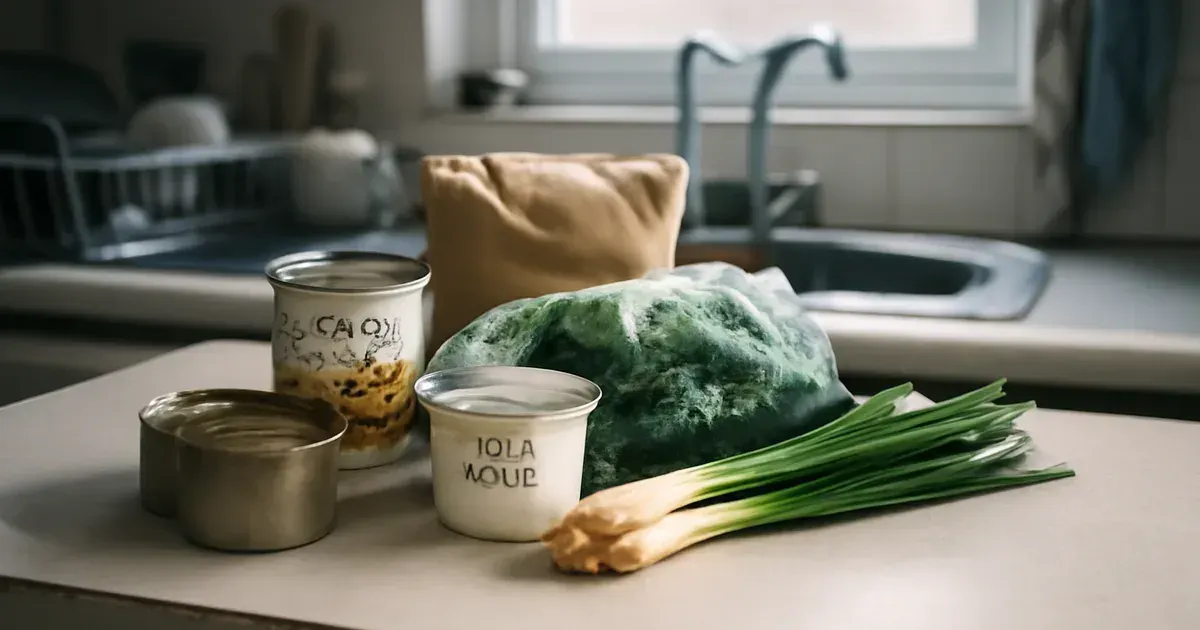
You've heard it before: eat more whole foods, cut out processed stuff, fill half your plate with vegetables. Solid advice in theory. But if you're exhausted from a flare, stretched to the end of your Universal Credit, or the nearest supermarket doesn't stock much fresh produce — that advice can feel like a slap in the face.
For people managing inflammatory bowel disease (IBD), irritable bowel syndrome, or any condition tied to the gut-brain connection, food is never just fuel. Every meal is a calculation: Will this trigger symptoms? Can I afford it? Do I have the energy to cook it?
This guide is for you. It won't tell you to buy spirulina or shop at Waitrose. Instead, it offers realistic, evidence-based steps to improve gut health naturally — using affordable foods available at Aldi, Lidl, or your local corner shop, without worsening your symptoms or your overdraft.
Why Gut Health Struggles When Money Is Tight
Food insecurity and gut health are deeply intertwined. When budgets are squeezed, people understandably reach for the cheapest, most filling options available — and in the UK, those are often ultra-processed foods. That's not a moral failing; it's a rational response to a difficult situation.
Research confirms this pattern. Studies show that people living with IBD who experience food insecurity are significantly more likely to rely on ultra-processed foods, which can make up more than half of their daily intake — while whole and minimally processed foods fall by the wayside.
The gut-brain connection adds another layer of complexity. Chronic stress from financial pressure directly influences gut motility, inflammation, and the composition of your microbiome. The vagus nerve — your body's main communication highway between brain and gut — becomes dysregulated under sustained stress, which can worsen bloating, pain, and bowel irregularity. In the UK, where food bank use has reached record levels, this is not a niche concern.
Malnutrition is an underappreciated risk for people with IBD and limited food access. Nutrient deficiencies — particularly in iron, vitamin D, folate, and B12 — are common in Crohn's disease and ulcerative colitis, and they worsen both gut symptoms and mental health. The gut-brain axis runs both ways: a depleted microbiome contributes to low mood and fatigue, which in turn makes healthy eating feel even harder.

Step 1: Reframe What "Healthy" Means for Your Gut
The first step is unlearning the idea that only fresh, organic, or expensive foods support gut health. This myth is harmful — particularly in the UK, where the British Dietetic Association (BDA) acknowledges that dietary advice must account for cost, access, and individual tolerance.
Frozen and canned foods are genuinely gut-friendly options. Frozen spinach retains most of its magnesium and folate. Canned chickpeas and lentils are excellent sources of prebiotic fibre — the kind that feeds beneficial bacteria in your microbiome. Fortified breakfast cereals provide iron and B vitamins that are critical for people with IBD who may absorb nutrients poorly.
The key distinction is not "processed versus unprocessed" — it's about choosing foods with short, recognisable ingredient lists that your gut can work with. A tin of kidney beans (beans, water, salt) is not the same as a multipack of crisps, even though both are "processed." Learning to read labels with that lens is far more useful than following rigid clean-eating rules.
Pro tip: The NHS Eatwell Guide recommends that starchy foods, fruit and vegetables, and protein sources form the bulk of your diet. All of these categories include affordable, gut-supportive options that don't require a premium supermarket.
Step 2: Build a Gut-Friendly Microbiome on a Modest Budget
Your gut microbiome — the trillions of bacteria living in your digestive tract — thrives on diversity and fibre. Research from the British Gut Project and King's College London has consistently shown that the single strongest predictor of a healthy microbiome is eating a wide variety of plant-based foods. The target often cited is 30 different plant foods per week, but even moving from 5 to 15 varieties makes a measurable difference.
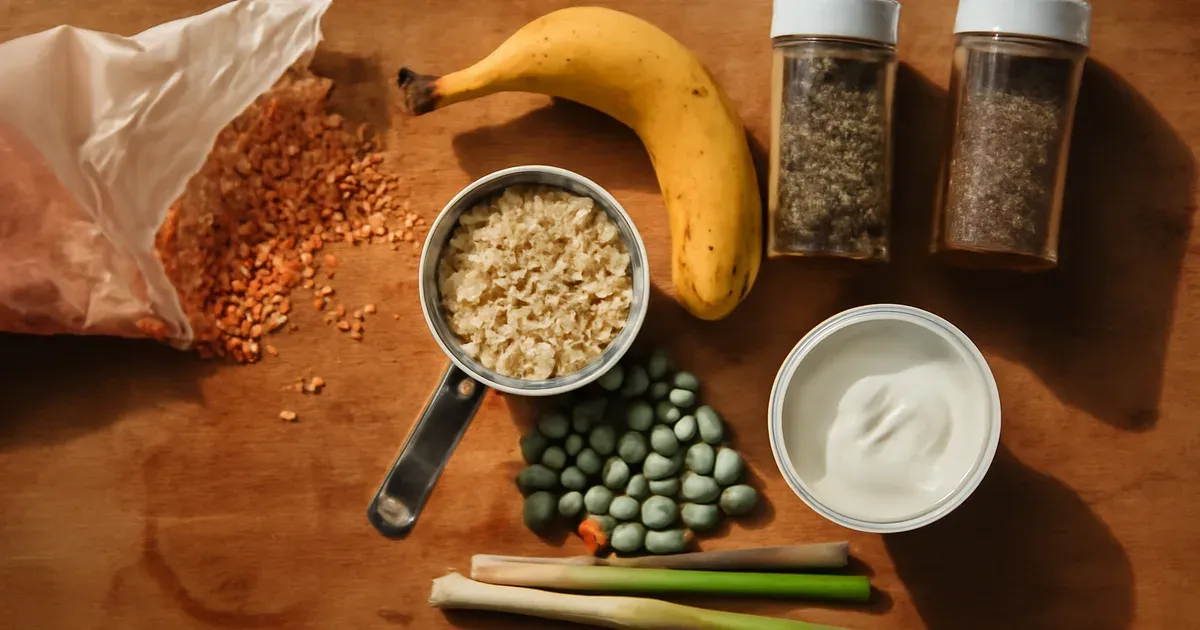
The good news: diversity doesn't require expense. Herbs count. Spices count. A tin of mixed beans counts as several plant varieties. Here is a practical starter list for building microbiome diversity in the UK on a tight budget:
- Oats (porridge oats from any supermarket own-brand — one of the cheapest whole grains available)
- Canned mixed beans or lentils (prebiotic fibre, protein, iron)
- Frozen peas (often under £1 a bag; contain resistant starch)
- Bananas (particularly slightly underripe ones, which are rich in resistant starch that feeds gut bacteria)
- Natural yoghurt (live cultures support microbiome diversity; own-brand full-fat yoghurt is affordable)
- Garlic and onion (potent prebiotics — if tolerated; low-FODMAP alternatives include the green tops of spring onions)
- Dried herbs and spices (cumin, turmeric, oregano — anti-inflammatory and microbiome-supportive)
During a flare, fibre tolerance changes. Cook vegetables thoroughly, blend soups, and favour soluble fibre sources (oats, cooked carrots, peeled courgette) over insoluble fibre (raw brassicas, whole nuts). The goal is to keep feeding your microbiome even when raw foods aren't well tolerated.
Step 3: Use the Gut-Brain Connection to Reduce Symptom Cycles
The gut-brain axis is not a metaphor — it is a physical, bidirectional communication network involving the vagus nerve, the enteric nervous system (sometimes called the "second brain"), and a complex exchange of hormones and neurotransmitters. Around 90% of the body's serotonin is produced in the gut, which means what you eat directly influences mood, stress response, and pain perception.
This matters enormously for people with IBD or IBS in the UK, where access to gut-brain focused therapies — such as gut-directed hypnotherapy or cognitive behavioural therapy — on the NHS can involve long waits. While you're waiting, nutrition can act as an accessible, daily intervention for the gut-brain connection.
Foods that specifically support the gut-brain axis include:
- Oily fish (tinned sardines, mackerel, pilchards — among the cheapest sources of omega-3 fatty acids, which reduce gut and brain inflammation)
- Fermented foods (natural yoghurt, kefir — affordable at most UK supermarkets; live cultures support the gut-brain signalling pathway via the vagus nerve)
- Tryptophan-rich foods (eggs, tinned tuna, oats — tryptophan is a precursor to serotonin, much of which is synthesised in the gut)
- Magnesium-rich foods (frozen spinach, tinned fish, oats — magnesium supports nervous system regulation and gut motility)
A soft note on supplements: If you have IBD and are concerned about vitamin D deficiency — common in the UK due to limited sunlight and often worsened by poor gut absorption — the NHS recommends a daily 10 micrograms supplement for all adults through autumn and winter. This is one of the most cost-effective interventions available and supports both gut health and mood.
Step 4: Meal-Plan Around Anti-Inflammatory Staples
Batch cooking is one of the most effective tools for eating well on a budget with a gut condition — not because it requires energy you may not have, but because it removes the daily decision-making that depletes you when you're fatigued or mid-flare.
The following staples form the backbone of an affordable, anti-inflammatory, gut-supportive weekly shop at UK supermarkets. Most are available at Aldi, Lidl, Tesco, Asda, or Morrisons, and many are SNAP-equivalent covered under the Healthy Start scheme or local food bank provisions:
- Porridge oats — base for breakfast, can be blended smooth during flares
- Tinned salmon or sardines — omega-3s, vitamin D, calcium (eat the bones)
- Canned chickpeas, lentils, or mixed beans — prebiotic fibre, protein, iron
- Frozen spinach or mixed vegetables — nutrient-dense, zero waste
- Brown rice or wholemeal pasta — slow-release carbohydrates; freeze bread to extend shelf life
- Eggs — affordable complete protein, B vitamins, choline (supports brain-gut signalling)
- Tinned tomatoes — lycopene, vitamin C, low cost per serving
- Natural yoghurt — live cultures, calcium, protein
A simple anti-inflammatory meal template: protein (tinned fish or egg) + starch (oats, rice, or pasta) + vegetables (frozen or canned) + healthy fat (olive oil or nut butter) + flavour (dried herbs, garlic if tolerated, lemon juice). This template costs roughly £1.50–£2.50 per serving across most UK supermarkets.

Step 5: Navigate Flares Without Abandoning Nutrition
During a flare, the goal shifts from optimising gut health to maintaining it — and that's a crucial distinction. Pushing high-fibre, diverse diets during active inflammation can worsen symptoms. This is where compassionate, practical adjustments matter.
Flare-friendly foods that are gentle on the gut and still support the microbiome:
- Smooth porridge or ready-made instant oats (soft, soluble fibre; easy to prepare)
- Mashed or baked potato (without skin during flares; easy to digest, potassium-rich)
- Tinned pumpkin or butternut squash soup (soft, low-residue, anti-inflammatory)
- Natural yoghurt (live cultures; may be better tolerated than solid foods)
- Scrambled eggs (gentle protein, B vitamins)
- Banana (binds stool, provides potassium lost through diarrhoea)
- White rice with a small amount of olive oil (low-residue, easy to digest)
The key principle is that eating something is always better than eating nothing — even if that something is plain crackers and yoghurt. Malnutrition during flares accelerates nutrient depletion and prolongs recovery. If flares are frequent and food intake is severely limited, speak to your GP about a referral to an NHS dietitian who specialises in gastroenterology.
What to Expect: A Realistic Timeline
Week 1–2: Focus on consistency over perfection. Add one or two new affordable gut-friendly foods per week. Notice how your digestion responds — not to judge, but to learn what works for your body.
Week 3–4: Start batch-cooking one item per week (a pot of lentil soup, a batch of oats, frozen rice portions). Energy begins to stabilise when you're not making food decisions from scratch each day.
Month 2: Microbiome diversity begins to shift with consistent dietary changes. Research from King's College London suggests measurable microbiome changes can occur within two to four weeks of dietary intervention.
Month 3 onwards: The gut-brain connection begins to feel more stable. Sleep, mood, and energy often improve alongside gut symptoms — not because any single food is magic, but because consistent nourishment reduces the inflammatory burden on both gut and brain.
Mistakes That Slow Your Progress
- Cutting out entire food groups during a flare and forgetting to reintroduce them — this erodes microbiome diversity over time and worsens long-term gut health.
- Ignoring hydration — the gut needs water to move fibre through effectively. Aim for 6–8 glasses daily; tap water in the UK is perfectly adequate.
- Buying expensive "gut health" supplements before establishing a consistent dietary baseline — most of the evidence supports food-first approaches.
- Following US-centric dietary advice without adapting it to the UK context — portion sizes, food labelling, and product availability differ significantly.
- Treating every flare the same — what works during remission may not work during active inflammation. Give yourself permission to adjust.
What Can Help You Get There Faster
NHS and charity resources: Your GP can refer you to an NHS dietitian at no cost. Crohn's and Colitis UK offers free dietary guidance and a helpline. The British Nutrition Foundation publishes evidence-based eating guides relevant to the British diet.
Budget shopping tools: Aldi and Lidl consistently offer the lowest prices on oats, frozen vegetables, tinned fish, and eggs in the UK. The "Healthy Start" scheme provides vouchers for pregnant women and families with young children to spend on fruit, vegetables, and milk. Many UK food banks now stock tinned pulses and fortified cereals.
Gut-brain support: The NHS IAPT (Improving Access to Psychological Therapies) programme includes gut-directed therapies for IBS in some regions. Apps such as Nerva (gut-directed hypnotherapy) offer self-guided gut-brain support while waiting for NHS referrals.
Your Gut Health Action Plan: Quick Recap
- ✅ Reframe "healthy" — frozen, canned, and fortified foods absolutely count
- ✅ Build microbiome diversity with 15–30 plant varieties per week, including herbs and spices
- ✅ Support the gut-brain connection with omega-3s, fermented foods, and tryptophan-rich staples
- ✅ Batch-cook from an affordable anti-inflammatory staple list
- ✅ Adjust, not abandon, your nutrition during flares
- ✅ Use NHS pathways — GP referral to a gastro dietitian is free
- ✅ Take vitamin D supplements through UK autumn and winter
Closing
Eating well with a gut condition in the UK is genuinely hard — and anyone who tells you otherwise hasn't sat with the reality of fatigue, flares, and a tight budget all at once. But nourishing your gut doesn't require perfection, expensive ingredients, or endless energy. It requires small, consistent choices that accumulate over time.
Start with one swap. One batch cook. One tin of sardines on toast. Your microbiome, your gut-brain axis, and your future self will notice.
You might also like
- Protein vs Fibre: Which Keeps You Fuller?
- 7 Reasons Protein & Fibre Are Failing Your Gut Health
- How to Improve Gut Health for a Stronger Heart
Frequently Asked Questions
Is it possible to improve gut health naturally on a low income in the UK?
Yes — and the science supports it. The most gut-beneficial foods are not the most expensive. Oats, tinned pulses, frozen vegetables, eggs, and natural yoghurt are among the most affordable items in UK supermarkets and among the most evidence-backed for supporting a healthy microbiome. Diversity of plant foods matters more than premium ingredients.
What is the gut-brain connection and why does it matter for IBD?
The gut-brain connection refers to the bidirectional communication between your digestive system and your central nervous system, mediated primarily by the vagus nerve. For people with IBD or IBS, this connection means that stress worsens gut symptoms, and gut inflammation worsens mood and cognitive function. Supporting both through diet — particularly with omega-3 fats, fermented foods, and prebiotic fibre — is a key strategy endorsed by UK researchers at King's College London and UCL.
Can I improve my microbiome if I'm currently in a flare?
Yes, but the approach needs to adapt. During active inflammation, focus on soft, cooked, low-residue foods that are gentle on the gut while still providing nutrients — such as smooth porridge, natural yoghurt, mashed potato, and soft-cooked vegetables. Reintroduce higher-fibre and fermented foods gradually during remission.
Are fortified cereals actually good for gut health UK?
Fortified breakfast cereals — particularly unsweetened, wholegrain versions — can be a genuinely useful tool for people with IBD who struggle to absorb iron and B vitamins. They're inexpensive, easy to prepare, and often gentle on the gut. The British Nutrition Foundation includes fortified cereals as a valid source of key micronutrients within a balanced diet.
Should I take probiotics or supplements to improve gut health?
The NHS advises a food-first approach wherever possible. For most people in the UK, a varied diet rich in prebiotic fibre (feeding beneficial gut bacteria) is more effective than expensive probiotic supplements. The one supplement the NHS does recommend universally is vitamin D (10 micrograms daily in autumn and winter) — particularly important for gut health and mood in the UK's low-sunlight climate.
96 Bacterial Strains. Two Shots a Day.
GOODIE is an award-winning fermented drink with 96 live bacterial strains — more than any yogurt or kombucha — never pasteurised, clinically tested, and 8 in 10 users felt less bloating within 14 days. Curious?