Meditation & Gut Health UK: Your Questions Answered
Can meditation improve your gut microbiome? UK evidence on the gut-brain connection, monk studies, and how to improve gut health naturally.


Can sitting quietly with your eyes closed really change what's happening in your gut? It sounds unlikely — yet a growing body of science, including a study published in the BMJ journal General Psychiatry, suggests the answer may be yes. If you've been curious about how meditation fits into the gut health picture, or whether the gut-brain connection is really as powerful as headlines claim, you're in the right place. This guide answers the questions people in the UK are actually asking.
Jump to Your Question
What is the gut-brain connection and why does it matter?
Can meditation actually change your gut microbiome?
What did the Buddhist monk study actually find?
How does gut health affect anxiety and depression?
What are the best ways to improve gut health naturally in the UK?
Meditation vs diet: which has a bigger impact on gut health?
Is there NHS or UK research backing the gut-brain connection?
How long do you need to meditate to see gut health benefits?
What is the gut-brain connection and why does it matter?
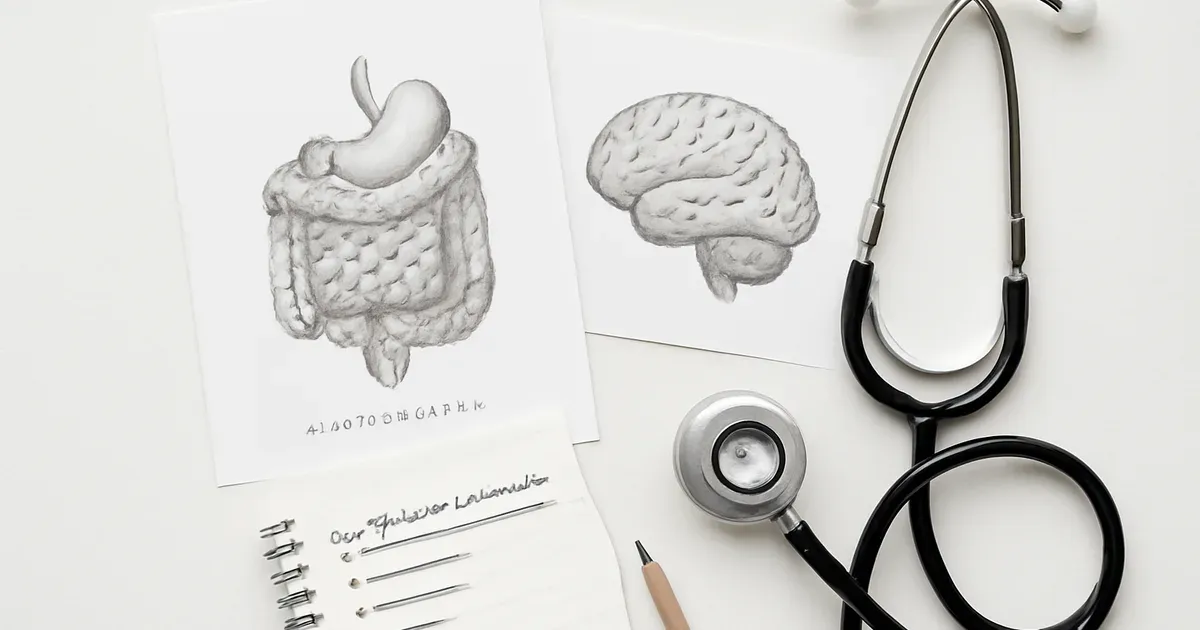
The gut-brain connection is a two-way communication network linking the central nervous system with the gastrointestinal tract, primarily via the vagus nerve and chemical messengers called neurotransmitters. It means your brain influences your gut — and your gut influences your brain.
This bidirectional highway is sometimes called the "microbiota-gut-brain axis." Roughly 95% of the body's serotonin, a key mood-regulating chemical, is produced in the gut. Disruptions to the gut microbiome can therefore ripple outward, affecting mood, cognition, and even immune response.
Researchers at King's College London and Imperial College London have been at the forefront of mapping how these signals travel. For health-conscious adults in the UK, understanding this axis is increasingly relevant — not just for digestive complaints, but for mental wellbeing and long-term disease prevention.
Can meditation actually change your gut microbiome?
Yes — emerging evidence suggests that long-term, regular meditation may genuinely alter the composition of the gut microbiome. This is not simply a relaxation effect; researchers believe the mechanism runs through the stress-response pathway, reducing cortisol and inflammation in ways that reshape the microbial environment of the gut.
Cortisol, released during chronic stress, is known to disrupt the balance of beneficial gut bacteria. By dampening the stress response over time, meditation may create conditions in which protective bacterial strains can thrive. This is consistent with what we know about the gut-brain connection more broadly.
It is worth emphasising that the research is still in early stages. Studies so far are small, and causality is difficult to establish. However, the biological plausibility is strong, and interest from UK microbiome research institutions is growing.

What did the Buddhist monk study actually find?
A study published in General Psychiatry found that Tibetan Buddhist monks who had meditated for at least two hours daily over several years showed markedly different gut microbiome profiles compared to their non-meditating neighbours. Stool and blood samples from 37 monks and 19 secular residents were compared after controlling for age, diet, blood pressure, and heart rate.
The monks showed enrichment of specific bacterial genera associated with:
- Reduced risk of anxiety and depression
- Improved immune function
- Lower markers of cardiovascular disease risk
- Enhanced anti-inflammatory pathways
The researchers also used predictive analytical techniques to identify which metabolic and chemical processes the enriched microbes might be supporting — findings pointed to protective, anti-inflammatory effects. The research team concluded that "long-term deep meditation may have a beneficial effect on gut microbiota, enabling the body to maintain an optimal state of health."
The study's authors were candid about limitations: the sample was small, all male, and participants lived at high altitude in Tibet — meaning the findings cannot be straightforwardly generalised to the broader UK population. Further research is needed.
How does gut health affect anxiety and depression?
Poor gut health — specifically an imbalanced gut microbiome — has been linked to higher rates of anxiety and depression through multiple biological pathways. The gut produces neurotransmitters including serotonin, dopamine, and GABA, all of which play a role in mood regulation. When the microbiome is disrupted, this production can falter.
Inflammation is another key mechanism. An imbalanced microbiome can trigger low-grade systemic inflammation, which is increasingly associated with depressive illness. UK Biobank data has contributed to large-scale investigations into how inflammatory markers correlate with mental health outcomes at a population level.
The British Gut Project, run out of King's College London, has gathered microbiome data from thousands of UK participants and found associations between gut diversity and reported wellbeing. Greater microbial diversity is generally considered a marker of a healthier gut — and this diversity appears to correlate with better mental health outcomes across multiple studies.
What are the best ways to improve gut health naturally in the UK?
To improve gut health naturally, UK health guidance consistently points to dietary diversity, adequate fibre, fermented foods, regular physical activity, good sleep, and stress management — with emerging evidence now placing meditation within that last category.
The NHS and the British Dietetic Association (BDA) recommend the following evidence-based strategies:
- Eat 30 different plant foods per week — a target popularised by the British Gut Project and endorsed by dietitians across the UK
- Prioritise fibre-rich foods in line with the UK Eatwell Guide: wholegrains, legumes, fruits, and vegetables (the UK recommendation is 30g of fibre daily; most adults fall short)
- Include fermented foods such as live yoghurt, kefir, kimchi, and sauerkraut, which introduce beneficial bacteria
- Limit ultra-processed foods, which UK dietary surveys repeatedly show are consumed at high rates and are associated with reduced microbial diversity
- Manage chronic stress through techniques such as mindfulness, yoga, or — as new research suggests — meditation
- Exercise regularly, as physical activity has an independent positive effect on the gut microbiome
These strategies work synergistically. No single intervention, including meditation, operates in isolation.
Meditation vs diet: which has a bigger impact on gut health?
Diet remains the single most influential modifiable factor for gut microbiome composition, but stress and mental practice are emerging as meaningful secondary contributors. The two are not mutually exclusive — and there is reason to believe they may amplify each other.
| Factor | Strength of Evidence | Mechanism | UK Relevance |
|---|---|---|---|
| Dietary fibre & diversity | Very strong | Feeds beneficial bacteria directly | UK adults average only 18g fibre/day vs 30g recommended |
| Fermented foods | Strong | Introduces live microorganisms | Kefir and live yoghurt widely available in UK supermarkets |
| Meditation / mindfulness | Emerging | Reduces cortisol, calms gut-brain axis | NHS IAPT services increasingly include mindfulness |
| Exercise | Strong | Increases microbial diversity | UK Chief Medical Officers recommend 150 mins/week |
| Sleep quality | Moderate-strong | Regulates circadian rhythm, affects microbiome | NHS Sleep Scotland and similar programmes address this |
The honest answer is that diet does the heavy lifting — but meditation may meaningfully support gut health via the stress pathway, particularly for people whose gut symptoms are worsened by anxiety or chronic stress. For the British diet gut health picture, improving fibre intake is the most impactful single change most adults can make.

Is there NHS or UK research backing the gut-brain connection?
Yes — UK microbiome research is among the most active in the world, and NHS pathways are beginning to reflect the gut-brain connection in clinical practice. Institutions including King's College London, the University of Oxford, University College London (UCL), and the University of Reading have all published significant work on the microbiota-gut-brain axis.
The Wellcome Trust and the Medical Research Council (MRC) have both funded microbiome research programmes in the UK. The BBSRC (Biotechnology and Biological Sciences Research Council) has supported work on how diet shapes the gut microbiome across the lifespan.
NHS IAPT (Improving Access to Psychological Therapies) services now routinely offer mindfulness-based cognitive therapy (MBCT), which has an established evidence base for preventing depressive relapse — though its specific effects on the gut microbiome in UK patients remain an open research question. The NHS recognises stress as a driver of irritable bowel syndrome (IBS), an explicit acknowledgement of the gut-brain connection in mainstream clinical guidelines.
How long do you need to meditate to see gut health benefits?
Based on current evidence, the gut microbiome changes associated with meditation appear to require consistent, long-term practice — not a weekend retreat. In the Buddhist monk study, participants had meditated for at least two hours daily for a minimum of three years, with some practising for up to 30 years.
This does not mean shorter-term meditation is without value. Research into mindfulness programmes — typically eight weeks in length, as in the NHS-endorsed Mindfulness-Based Stress Reduction (MBSR) format — consistently shows reductions in cortisol and perceived stress. Since cortisol disruption is one of the key pathways through which stress harms the gut microbiome, even shorter programmes may offer indirect benefits.
A pragmatic starting point for UK adults would be:
- Begin with 10–15 minutes of daily mindfulness meditation
- Use evidence-based apps or NHS-endorsed resources (the NHS website lists approved mental wellbeing apps)
- Combine with dietary improvements for synergistic gut health benefit
- View meditation as a long-term lifestyle practice rather than a quick fix
The science is early but directionally consistent: the gut-brain connection means that what calms your mind may, over time, also benefit your microbiome.

Bottom Line
- The gut-brain connection is real and well-supported by UK and international research — the gut and brain communicate constantly via the vagus nerve, neurotransmitters, and the immune system.
- A study in General Psychiatry found Buddhist monks who meditated long-term had significantly different — and apparently healthier — gut microbiomes than non-meditating neighbours, with lower markers for anxiety, depression, and cardiovascular disease.
- Diet remains the most powerful lever for gut health in the UK, but stress management through meditation may offer meaningful complementary benefits via the gut-brain axis.
- NHS pathways and UK microbiome research institutions are increasingly recognising the gut-brain connection, making this an area of rapidly evolving guidance.
- To improve gut health naturally, combine high-fibre dietary variety, fermented foods, regular exercise, good sleep, and consistent stress-management practices — including meditation if it suits you.
Feeling empowered to take your gut health seriously is exactly where to start. The science emerging from UK microbiome research — and from the gut-brain connection field more broadly — tells a consistent story: small, sustained daily habits compound into measurable biological change. Whether you begin with an extra portion of vegetables, a daily walk, or ten minutes of quiet breathing, your gut is listening.
You might also like
- How to Improve Gut Health Naturally in 6 Steps
- UK Diet Gaps Linked to Poor Gut Health
- 7 Gut Health Secrets Your Immune System Needs
96 Bacterial Strains. Two Shots a Day.
GOODIE is an award-winning fermented drink with 96 live bacterial strains — more than any yogurt or kombucha — never pasteurised, clinically tested, and 8 in 10 users felt less bloating within 14 days. Curious?