Gut-Brain Connection & Psychedelics: Your Questions Answered
Discover how the gut-brain connection links your microbiome to mental health and psychedelic therapy. UK-focused, evidence-based answers to your biggest questio

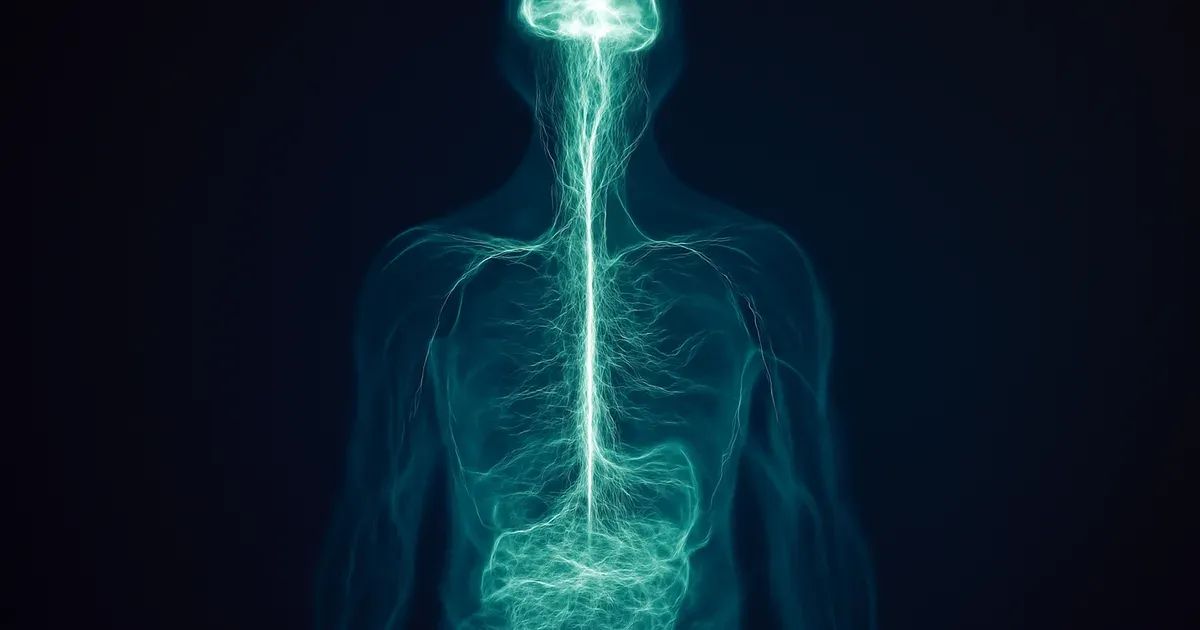
Science is moving fast — and the gut-brain connection is now at the centre of some of the most exciting mental health research of our time. If you've heard about psychedelic therapy and wondered what your gut microbiome has to do with it, you're not alone. This FAQ brings together the latest evidence to answer the questions people across the UK are genuinely asking, in plain language.
Quick Navigation
What is the gut-brain connection?
How does the gut microbiome affect mental health?
What is psychedelic therapy and is it available in the UK?
Can your gut microbiome change how psychedelics affect you?
What is the gut microbiome versus the gut-brain axis — are they the same thing?
How can you improve gut health naturally to support mental wellbeing?
Are microbiome-targeted interventions the future of mental health treatment?
What does UK microbiome research tell us right now?
What is the gut-brain connection?
The gut-brain connection refers to the continuous, two-way communication network linking your digestive system and your brain. Scientifically known as the gut–brain axis, it integrates neural, hormonal, and immunological signals — meaning your gut and brain are constantly "talking" to each other.
Key communication channels include the vagus nerve, the enteric nervous system (ENS), the autonomic nervous system (ANS), and the hypothalamic–pituitary–adrenal (HPA) axis. The ENS — sometimes called the "second brain" — controls gut motility, secretion, and absorption entirely independently of the central nervous system.
This axis has been implicated in anxiety, depression, cognitive function, stress responses, and even sleep quality. Far from being a one-way street, what happens in your gut influences your brain just as much as your brain influences your gut.
How does the gut microbiome affect mental health?
The gut microbiome — the trillions of microorganisms living in your gastrointestinal tract — plays a profound role in mental health by producing neurotransmitters, regulating immune responses, and generating metabolites that cross into the bloodstream and influence brain function.
Approximately 90% of the body's serotonin is produced in the gut, largely under the influence of gut bacteria. Microbiome imbalances (known as dysbiosis) have been associated with depression, anxiety, and cognitive difficulties. Research from King's College London and the British Gut Project has helped establish that gut microbial diversity is strongly linked to psychological resilience.
Key ways the microbiome influences mental health:
- Neurotransmitter production: Bacteria synthesise serotonin, GABA, and dopamine precursors
- Immune modulation: A balanced microbiome reduces neuroinflammation
- HPA axis regulation: Gut microbes influence cortisol (stress hormone) responses
- Metabolite signalling: Short-chain fatty acids produced by gut bacteria affect brain function
What is psychedelic therapy and is it available in the UK?
Psychedelic therapy involves the controlled, clinically supervised use of psychedelic substances — such as psilocybin, MDMA, or ketamine — to treat mental health conditions including depression, PTSD, and anxiety. The field has undergone a significant resurgence, often described as the "psychedelic renaissance."
In the UK, psilocybin remains a Class A, Schedule 1 controlled substance, meaning it is not yet routinely available via NHS pathways. However, clinical trials are underway. Imperial College London's Centre for Psychedelic Research is among the world's leading institutions investigating psilocybin for treatment-resistant depression, and the Wellcome Trust has funded related research.
The Medicines and Healthcare products Regulatory Agency (MHRA) has granted some trial licences, and there is growing pressure from researchers and clinicians for rescheduling. For now, access is limited to approved clinical settings and trials in the UK.
Can your gut microbiome change how psychedelics affect you?
Emerging evidence suggests that your individual gut microbiome composition may directly influence how your body metabolises psychedelic substances, and therefore how powerfully or differently those substances affect you. This is one of the most exciting — and least understood — frontiers in microbiome UK research.
A 2023 review published in Frontiers found that specific gut bacteria can modulate the metabolism of DMT (N,N-dimethyltryptamine), the psychoactive compound in ayahuasca, potentially altering its bioavailability and pharmacological effects in the individual. Because microbiome composition varies enormously from person to person, two individuals taking identical doses of a psychedelic substance may experience markedly different effects.
This has significant implications:
- Bioavailability: Gut bacteria may break down or activate psychedelic compounds before they reach the bloodstream
- Individual variability: Microbiome differences could explain why clinical trial participants respond so differently
- Personalised dosing: Future protocols might account for microbiome profiling before treatment
- Risk stratification: Certain microbiome profiles may be associated with adverse reactions

Gut Microbiome vs Gut-Brain Axis — Are They the Same Thing?
The gut microbiome and the gut-brain axis are related but distinct concepts. Understanding the difference is essential for making sense of mental health and nutrition science.
| Concept | What It Is | Key Components | Role in Mental Health |
|---|---|---|---|
| Gut Microbiome | The community of microorganisms in the gut | Bacteria, fungi, viruses, archaea | Produces neurotransmitters, regulates immunity |
| Gut-Brain Axis | The communication network between gut and brain | Vagus nerve, ENS, ANS, HPA axis | Transmits signals affecting mood, cognition, behaviour |
| Dysbiosis | Imbalance in microbiome composition | Reduced diversity, harmful species dominating | Linked to anxiety, depression, IBS |
| Psychobiotics | Microbiome-targeted interventions for mental health | Probiotics, prebiotics, dietary changes | May improve mood and cognitive outcomes |
In simple terms: the gut microbiome is a community of living organisms, while the gut-brain axis is the communication infrastructure. The microbiome is a key player within the gut-brain axis, shaping the signals that travel along it.
How can you improve gut health naturally to support mental wellbeing?
Improving gut health naturally starts with dietary diversity — the single most evidence-backed way to support a thriving microbiome and, by extension, a healthier gut-brain connection. The British Dietetic Association (BDA) and British Nutrition Foundation both emphasise fibre intake as foundational.
The UK Eatwell Guide recommends at least 30g of dietary fibre per day — yet surveys consistently show average UK adults consume only around 18g. Closing this gap is one of the most powerful steps you can take for gut health UK-wide.
Practical steps to improve gut health naturally:
- Eat 30+ plant foods per week (vegetables, fruits, wholegrains, legumes, nuts, seeds — variety matters)
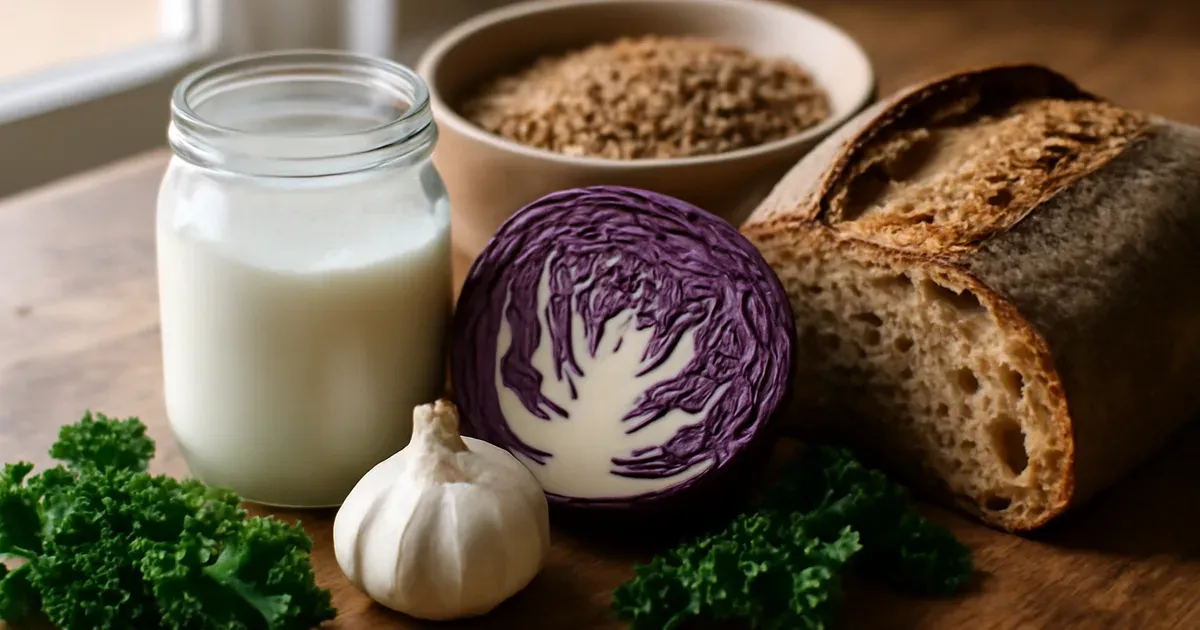
- Include fermented foods such as live yoghurt, kefir, kimchi, and sauerkraut (widely available in UK supermarkets)
- Limit ultra-processed foods, which reduce microbial diversity
- Manage stress actively — cortisol directly disrupts the gut-brain axis and alters microbiome composition
- Prioritise sleep — the gut microbiome follows circadian rhythms, and poor sleep destabilises it
- Consider a prebiotic-rich diet — foods like Jerusalem artichokes, oats, garlic, leeks, and bananas feed beneficial bacteria
These are accessible, NHS-aligned lifestyle changes that support both gut health and mental wellbeing — no supplements required.

Are microbiome-targeted interventions the future of mental health treatment?
Microbiome-targeted interventions — including probiotics, prebiotics, dietary programmes, and even faecal microbiota transplants (FMT) — are being actively researched as tools to enhance or modulate mental health treatment, including psychedelic therapy. This field is known as psychobiotics.
The logic is compelling: if gut bacteria influence how psychedelic substances are metabolised and how the gut-brain axis signals emotion and mood, then optimising the microbiome before or during therapy could improve outcomes. Researchers suggest that probiotic supplementation might one day be prescribed alongside psychedelic therapy to "prime" the gut environment.
In the UK, the MRC (Medical Research Council) and BBSRC are funding gut microbiome research that touches on psychiatric applications. Universities including Oxford, UCL, and the University of Nottingham are examining how gut interventions affect brain-based outcomes. This is still early-stage science, but the trajectory is clear: personalised medicine in mental health will increasingly account for microbiome data.
What does UK microbiome research tell us right now?
UK microbiome research is among the most advanced in the world, with large-scale projects revealing critical links between gut health and mental, metabolic, and neurological wellbeing. In the UK, initiatives like the British Gut Project (led out of King's College London) and UK Biobank data have been central to progress.
Key findings relevant to the gut-brain connection from UK-based research:
- Dietary fibre is consistently the strongest predictor of gut microbial diversity in UK adults
- Microbiome composition differs significantly across age groups, with implications for age-related mental health decline
- Stress and antibiotic use — both common in the UK — are among the most disruptive forces on microbiome balance
- The gut microbiome can be meaningfully shifted in as little as two to four weeks through dietary change
Importantly, UK researchers are beginning to examine how microbiome data might be used to personalise psychiatric treatment — including predicting who will respond to antidepressants, and potentially one day, who might respond best to psychedelic-assisted therapy.
Bottom Line
- The gut-brain connection is real, bidirectional, and central to mental health — your gut bacteria directly influence mood, cognition, and stress responses.
- Your microbiome may shape how your body responds to psychedelic substances, affecting metabolism, bioavailability, and therapeutic outcomes.
- Improving gut health naturally — through dietary diversity, fibre, fermented foods, and stress management — is the most evidence-based starting point available to UK adults right now.
- UK microbiome research from institutions like King's College London, Imperial College London, and UCL is helping establish how gut health interventions can support mental wellbeing.
- Microbiome-targeted therapies are an emerging frontier in personalised mental health treatment — watch this space.
Closing Thoughts
The science connecting gut health and mental wellbeing is no longer fringe — it's at the forefront of research in the UK and globally. Whether you're curious about psychedelic therapy or simply want to improve gut health naturally, understanding your gut-brain connection is a powerful starting point. Small, consistent dietary changes can meaningfully shift your microbiome — and with it, your mental resilience.
You might also like
- 7 Surprising Ways Your Gut Microbiome Shapes Your Mind
- Gut Health UK: Lifestyle Medicine & Your Microbiome
- Your Oral Microbiome & Gut Health: What to Know
96 Bacterial Strains. Two Shots a Day.
GOODIE is an award-winning fermented drink with 96 live bacterial strains — more than any yogurt or kombucha — never pasteurised, clinically tested, and 8 in 10 users felt less bloating within 14 days. Curious?