7 Gut Health Truths That Could Transform Your Oral Health
New science reveals that gut dysbiosis can drive oral disease. Here are 7 evidence-based truths every UK adult should know about the gut-oral connection.

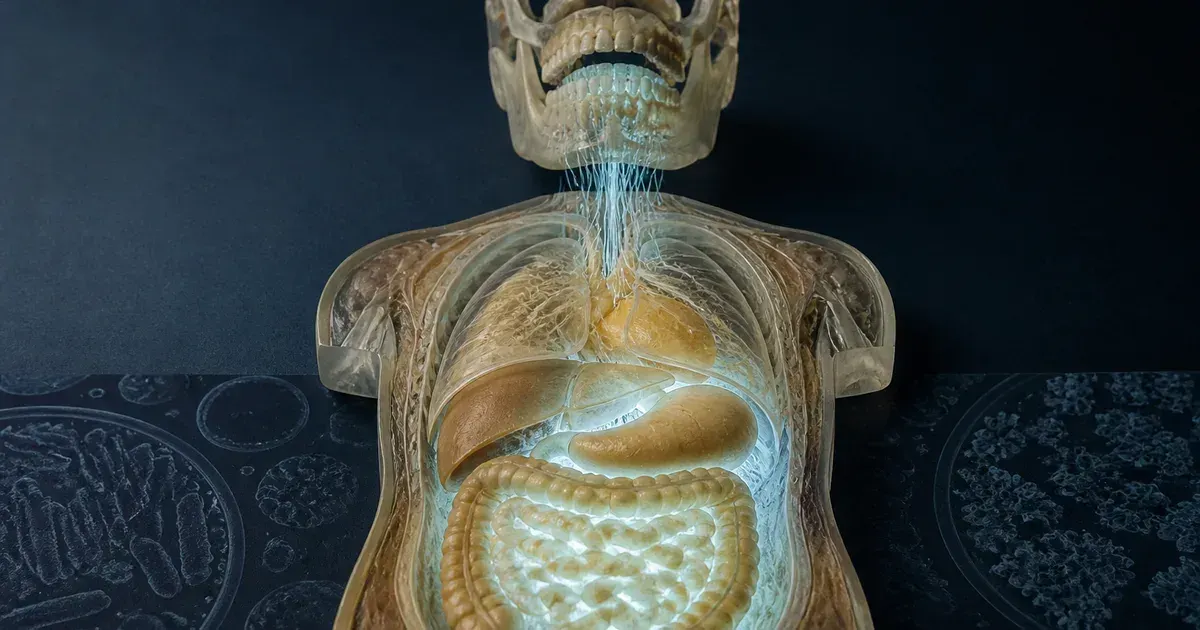
Your dentist checks your teeth. Your GP checks your digestion. But what if these two systems are far more intertwined than either has let on? Millions of people in the UK struggle with persistent gum disease, mouth ulcers, or dry mouth — and never consider their gut as a potential root cause. The science is now making that connection impossible to ignore. If you want to improve gut health naturally, the payoff may extend far beyond your stomach.
A landmark perspective paper published in Frontiers in Microbiology (June 2026) synthesises human microbiome, immunological, and genetic studies to propose that gut dysbiosis — an imbalance in gut microbial communities — can actively drive oral immune pathology, challenging decades of one-directional thinking about the oral-gut axis.
1. Your Gut and Mouth Are in Constant Conversation
Most people think of the mouth and gut as separate territories, but they form the two largest microbial reservoirs in the human body, housing trillions of bacteria between them. Research now confirms these ecosystems communicate through multiple channels: shared immune signalling, circulating metabolites, and even direct microbial migration. In the UK, gut health conversations have largely focused on digestion and mental wellbeing — but oral health is rapidly emerging as a third pillar. The actionable takeaway: treating your gut and mouth as isolated systems is a missed opportunity for whole-body health.
2. Gut Dysbiosis Can Prime Your Immune System Against Your Own Gums
When the gut microbiome falls out of balance, it doesn't stay quiet. It can trigger systemic immune priming — essentially putting your body's defences on a state of low-grade alert that radiates outward, including to oral tissues. This mechanism has been linked to autoimmune conditions with well-known oral manifestations, such as Sjögren's syndrome and periodontitis. UK microbiome research from institutions including King's College London has increasingly mapped these immune crosstalk pathways. If you're experiencing unexplained gum inflammation, consider asking your GP whether gut health could be a contributing factor — it's a conversation the NHS is beginning to take seriously.
3. Short-Chain Fatty Acids Are the Missing Link Most Dentists Never Mention
Short-chain fatty acids (SCFAs) — produced when gut bacteria ferment dietary fibre — are among the most potent anti-inflammatory compounds your body makes for free. These metabolites help regulate epithelial barrier function throughout the body, including in oral mucosa. When gut dysbiosis depletes SCFA-producing bacteria, the downstream loss of these compounds may leave oral tissues more vulnerable to inflammation and infection. The British Dietetic Association recommends adults consume 30g of fibre daily, yet average UK intake hovers around 20g. Eating more prebiotic-rich foods — oats, leeks, chicory, and Jerusalem artichokes — is one of the most evidence-aligned steps to improve gut health naturally and, potentially, your oral resilience.

4. Leaky Gut May Mean a Leaky Immune Barrier for Your Mouth Too
Gut barrier disruption — often called "leaky gut" in popular discourse — allows microbial products and inflammatory mediators to enter systemic circulation. Once in the bloodstream, these compounds can reach distant sites, including the oral cavity, perpetuating or worsening existing inflammation. A 2026 perspective study in Frontiers in Microbiology identifies this dysbiosis-associated barrier disruption as a convergent pathway linking gut imbalance to oral disease susceptibility. Prioritising gut lining integrity through fermented foods, adequate sleep, and stress reduction isn't just good for digestion — it may be protective for your gums and mucosa as well.
Key insight: In healthy individuals, the oral and gut microbiomes show minimal microbial overlap — suggesting that physiological compartmentalisation is a hallmark of good health, disrupted primarily when dysbiosis takes hold.
5. Mouth Ulcers May Signal a Gut Imbalance Worth Investigating
Recurrent aphthous ulcers — the painful mouth sores that seem to appear without warning — have long been dismissed as a stress response or minor nuisance. Emerging evidence now links them to gut microbial dysbiosis, with studies identifying distinct alterations in gut flora among people who experience frequent outbreaks. For anyone in the UK dealing with recurrent mouth ulcers, this finding opens a new avenue worth exploring with a healthcare professional. Keeping a food and symptom diary that tracks both gut and oral symptoms together may help identify patterns that neither a dentist nor a GP would spot in isolation. Probiotic supplementation and dietary fibre are among the approaches currently under investigation.
6. Long-Term Antibiotics Create a Gut-Oral Double Jeopardy
Systemic antibiotics are prescribed for a wide range of conditions across the NHS — from chest infections to acne — but their impact on the gut microbiome is rarely discussed in the context of oral health. Evidence now shows that prolonged antibiotic use can induce gut dysbiosis, which in turn disrupts oral microbial balance and immune regulation, potentially worsening periodontitis. This gut-brain-oral feedback loop matters: a compromised gut microbiome is less able to produce the metabolites and immune signals that keep oral tissues stable. If you're on a course of long-term antibiotics, ask your dentist or periodontist for a periodontal assessment — and consider supporting your gut with high-fibre foods or evidence-backed probiotics during and after treatment.

7. The Gut-Brain-Oral Axis: Why Mental Wellbeing Belongs in This Conversation
The gut-brain connection is well established, with the gut producing around 90% of the body's serotonin and communicating continuously with the central nervous system via the vagus nerve. What is less widely appreciated is how psychological stress — a known driver of gut dysbiosis — may cascade into oral health consequences. Stress disrupts the gut microbiome, reduces SCFA production, compromises immune regulation, and increases susceptibility to gum disease and mouth ulcers. In the UK, where stress and anxiety affect an estimated one in four adults annually (NHS data), this three-way gut-brain-oral axis deserves far greater clinical attention. Mind-gut practices such as mindfulness, regular physical activity, and adequate sleep are therefore not just mood management tools — they may be foundational to your oral immune health too.
The science is clear: gut health in the UK needs to be understood as a whole-body issue, not a digestive one. From immune priming to SCFA depletion, barrier disruption to antibiotic side effects, your gut microbiome is quietly influencing what happens inside your mouth every single day. The good news is that many of the strategies to improve gut health naturally — eating more fibre, managing stress, sleeping well, and using antibiotics judiciously — are within your reach right now. Don't wait for a dental crisis to start paying attention to what's happening in your gut.
You might also like
- New Mouth-to-Body Institute Links Oral and Gut Health
- Microbiome Science Drives Viome's Disease Prevention Push
- How to Improve Your Oral Microbiome for Gut Health
Frequently Asked Questions
Can gut dysbiosis really cause gum disease?
Emerging evidence suggests yes — though the relationship is indirect. Gut dysbiosis can trigger systemic immune dysregulation, deplete anti-inflammatory metabolites like short-chain fatty acids, and promote low-grade inflammation that affects oral tissues including the gums. While local oral hygiene remains essential, addressing gut health may be an important complementary factor, particularly in cases of treatment-resistant periodontitis.
What does "improve gut health naturally" actually mean in practice?
It means making consistent, evidence-based lifestyle changes rather than relying on supplements alone. The British Dietetic Association highlights fibre intake, fermented foods (such as live yoghurt, kefir, and sauerkraut), regular physical activity, adequate sleep, and stress management as the foundational pillars. These approaches support microbial diversity, SCFA production, and gut barrier integrity — all of which have knock-on benefits for oral and systemic health.
How is UK microbiome research advancing this field?
British institutions are at the forefront of human microbiome science. The British Gut Project (now part of the ZOE health study, based at King's College London) has generated some of the world's largest population-level microbiome datasets. The MRC and Wellcome Trust have both funded research linking gut microbial composition to immune function and chronic disease. These datasets are increasingly being used to explore oral-gut connections at a population level.
Should I tell my dentist about my gut health issues?
Yes — and your GP about your oral health too. The oral-gut axis research highlights a clear case for joined-up care. If you have a diagnosed gut condition such as IBS, IBD, or coeliac disease, your dentist should be aware, as these conditions may affect your oral immune environment. Conversely, recurrent gum disease or mouth ulcers may be worth flagging with your GP as a potential systemic signal.
Are probiotics useful for both gut and oral health?
The evidence is promising but still evolving. Certain probiotic strains have shown benefit in small clinical trials for both gut dysbiosis and oral conditions such as gingivitis and mouth ulcers. However, the NHS does not currently issue blanket recommendations for probiotics, and strain specificity matters enormously. Speak to a registered dietitian — via GP referral or privately — for personalised guidance rather than relying on off-the-shelf products.
96 Bacterial Strains. Two Shots a Day.
GOODIE is an award-winning fermented drink with 96 live bacterial strains — more than any yogurt or kombucha — never pasteurised, clinically tested, and 8 in 10 users felt less bloating within 14 days. Curious?