How to Meal Prep for Arthritis and Gut Health
Learn how to meal prep for arthritis and gut health in 5 simple steps — reduce inflammation, feed your microbiome, and protect your joints without the overwhelm

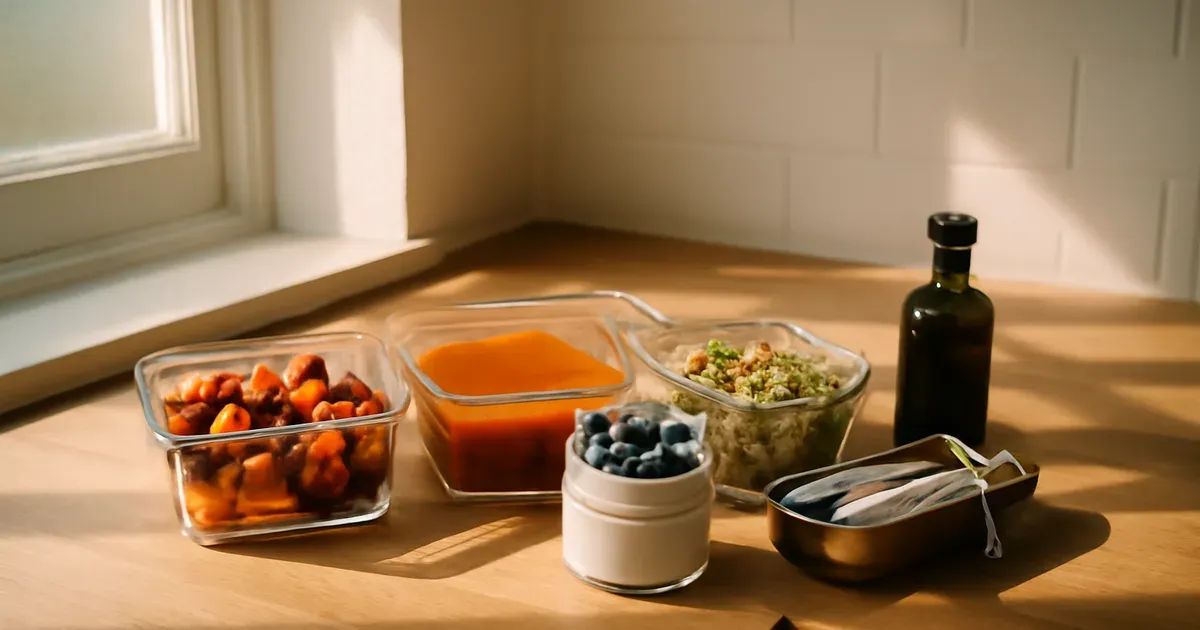
If you live with arthritis, you already know the cruel irony: the days you most need a nourishing meal are the days when chopping, stirring, and standing at the hob feel utterly impossible. You reach for whatever is easiest — a ready meal, a takeaway, something that requires zero effort — and then feel guilty about it afterwards.
But here is what most arthritis advice misses: the problem is not willpower. It is planning. And that same planning can do double duty, because the foods that calm joint inflammation are also the foods that feed your gut microbiome — the trillions of bacteria whose influence stretches far beyond digestion, all the way into your immune system, your mood, and your pain perception. This guide gives you a practical, pain-aware system for preparing anti-inflammatory, gut-friendly meals without the overwhelm.
Why Chronic Inflammation and Poor Gut Health Happen in the First Place
The standard Western diet is a double problem. High in processed meats, refined starches, added sugars, and unhealthy fats — and critically low in fibre and antioxidants — it simultaneously drives systemic inflammation and starves the beneficial bacteria in your gut. Research published in rheumatology literature confirms that dietary patterns are strongly associated with symptom severity in conditions like rheumatoid arthritis.
Your gut microbiome is a key player in your immune response. Around 70–80% of your immune cells live in your gut lining. When your microbiome is out of balance — a state researchers call dysbiosis — immune regulation falters, and inflammatory signals can intensify throughout the body, including in your joints. UK microbiome research from institutions such as King's College London and the British Gut Project has helped map the connection between low dietary diversity and reduced microbial richness.
The gut-brain connection adds another layer. Via the vagus nerve and a network of chemical messengers, your gut communicates directly with your brain. Chronic pain is processed partly through this axis, which means a disrupted microbiome can amplify pain sensitivity. Improving your gut health naturally through diet is therefore not just about digestion — it is about turning down the volume on inflammation from multiple directions at once.
- A diet low in fibre reduces the short-chain fatty acids (SCFAs) that gut bacteria produce to regulate inflammation
- Excess sugar and ultra-processed foods promote the overgrowth of harmful bacterial species
- Omega-3 deficiency removes a key brake on the inflammatory cascade
- Low polyphenol intake starves Bifidobacterium and Lactobacillus species that support immune balance
- Fatigue and pain create a cycle of convenience eating that deepens all of the above
Step 1: Simplify Your Ingredients to Protect Your Joints
The golden rule for arthritis-friendly meal prep is simplicity. Choose recipes with five to ten main ingredients, not counting herbs and spices. Fewer ingredients mean less chopping, less standing, and less cognitive load on the days when pain is loud.
This is not about eating boringly — it is about working with your body rather than against it. A sheet-pan dinner of salmon, cherry tomatoes, courgette, and olive oil with a handful of herbs is five ingredients. It is also rich in omega-3 fatty acids, polyphenols, and antioxidant vitamins A and C.
Invest in tools that reduce joint strain. Electric tin openers, jar-gripping aids, lightweight chopping boards, and ergonomic knives are widely available in the UK from retailers such as Lakeland and Amazon. The NHS occupational therapy pathway for arthritis often includes assistive kitchen devices — ask your GP or rheumatology team if you have not already explored this.
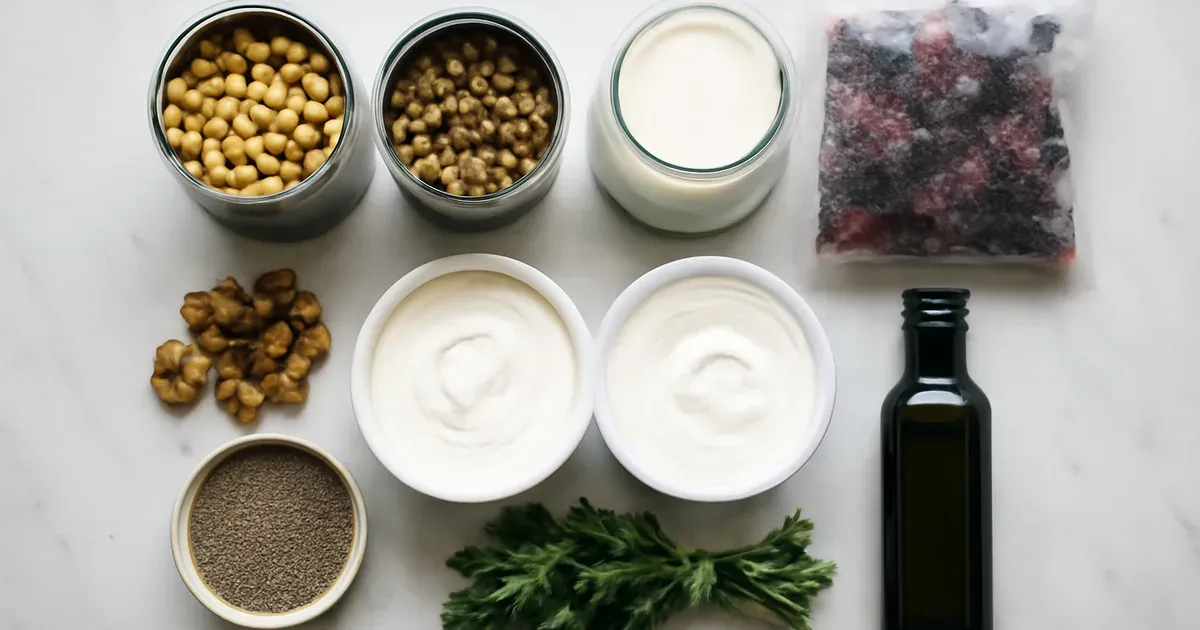
Pro tip: Write a "hero ingredients" list of five to eight items you will rotate each week. Tinned chickpeas, frozen spinach, oats, walnuts, olive oil, tinned sardines, lentils, and frozen berries can form the backbone of an entire week of anti-inflammatory, gut-supporting meals with minimal prep.
Step 2: Build a Gut-Friendly Convenience Store in Your Kitchen
Anti-inflammatory eating does not require fresh everything, every day. The goal is to keep fibre-rich, phytochemical-dense options within arm's reach so that on high-pain days, the easiest choice is still a good one.
Stock your freezer with frozen fruits and vegetables — frozen at peak ripeness, they retain their antioxidant content as effectively as fresh. Keep low-sodium tinned legumes (kidney beans, chickpeas, lentils) in the cupboard. Buy pre-cut salad bags, stir-fry mixes, and pre-washed spinach. These are not compromises; they are a strategy.
Fermented foods deserve a permanent spot in your fridge. Plain Greek yogurt, kefir, and fermented cheeses such as live-culture feta contain the live bacteria that directly support your gut microbiome. UK-based research from King's College London's PREDICT studies has shown that fermented foods measurably increase microbial diversity — one of the strongest markers of gut health in the UK Biobank and British Gut Project datasets. Aim for one or two servings of fermented dairy or plant-based alternatives daily.
Keep polyphenol-rich drinks available too. Green tea, herbal infusions, and coffee all contain antioxidant polyphenols — one comparison study found that cocoa prepared per cup serving had antioxidant activity comparable to tea and coffee, making a cocoa powder drink a genuinely functional addition to your anti-inflammatory routine. Limit caffeine to one or two cups a day and stay well hydrated with water throughout.
Step 3: Batch Cook Once a Week to Feed Your Microbiome All Week
Batch cooking is the single highest-impact habit you can adopt — and it fits naturally around the unpredictable energy patterns of arthritis. Pick one day each week when your pain and fatigue are at a manageable level. Cook double or triple portions of two or three core dishes, then refrigerate what you will eat in the next two days and freeze the rest.
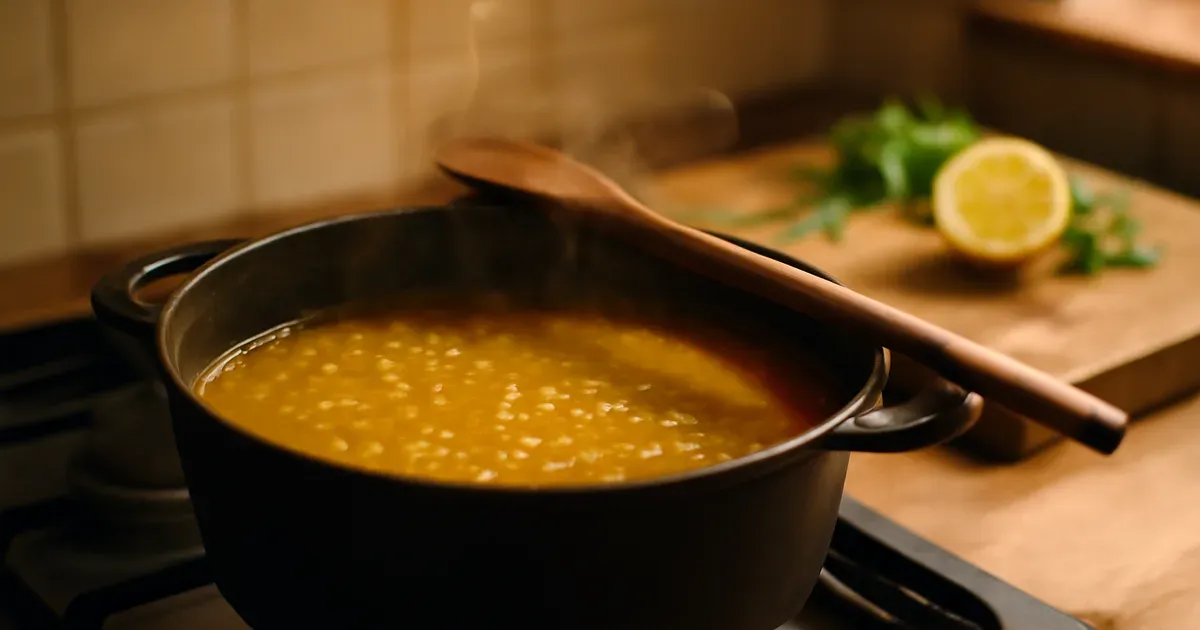
Choose batch-cook dishes that are naturally fibre-rich and diverse in plant ingredients — both qualities that research consistently links to a healthier microbiome. A large pot of turmeric-spiced lentil and barley soup ticks multiple boxes: barley feeds beneficial gut bacteria via its beta-glucan content, lentils are an outstanding source of prebiotic fibre, and turmeric provides curcumin, a polyphenol with documented anti-inflammatory properties.
A 2020 study on anti-inflammatory dietary design for rheumatoid arthritis patients highlighted the importance of consistent dietary patterns rather than individual "superfood" moments — which is exactly what batch cooking delivers. When your fridge is stocked with ready-made anti-inflammatory meals, the consistent pattern takes care of itself.
Sample batch-cook session (under 90 minutes):
- Cook a large batch of whole grains (pot barley, quinoa, or brown rice)
- Roast two trays of mixed vegetables with olive oil and herbs
- Simmer a pot of legume-based soup or stew
- Prepare a grain-based salad with walnuts, seeds, and a lemon-olive oil dressing
- Portion Greek yogurt with berries and a drizzle of maple syrup into individual containers
Step 4: Eat the Rainbow — One Meal or Snack at a Time
You do not need to overhaul everything at once. A far more sustainable approach — and one that is kinder to your nervous system and your gut microbiome alike — is to improve one meal or snack at a time. Start wherever feels most manageable.
The British Dietetic Association (BDA) and the UK Eatwell Guide both emphasise variety across food groups, which maps closely onto what microbiome science recommends: the more diverse your plant-food intake, the more diverse your gut bacteria. Researchers at the University of Reading and University of Nottingham have contributed extensively to understanding how plant diversity, not just quantity, drives microbial richness.
Here is how to eat the rainbow, meal by meal:
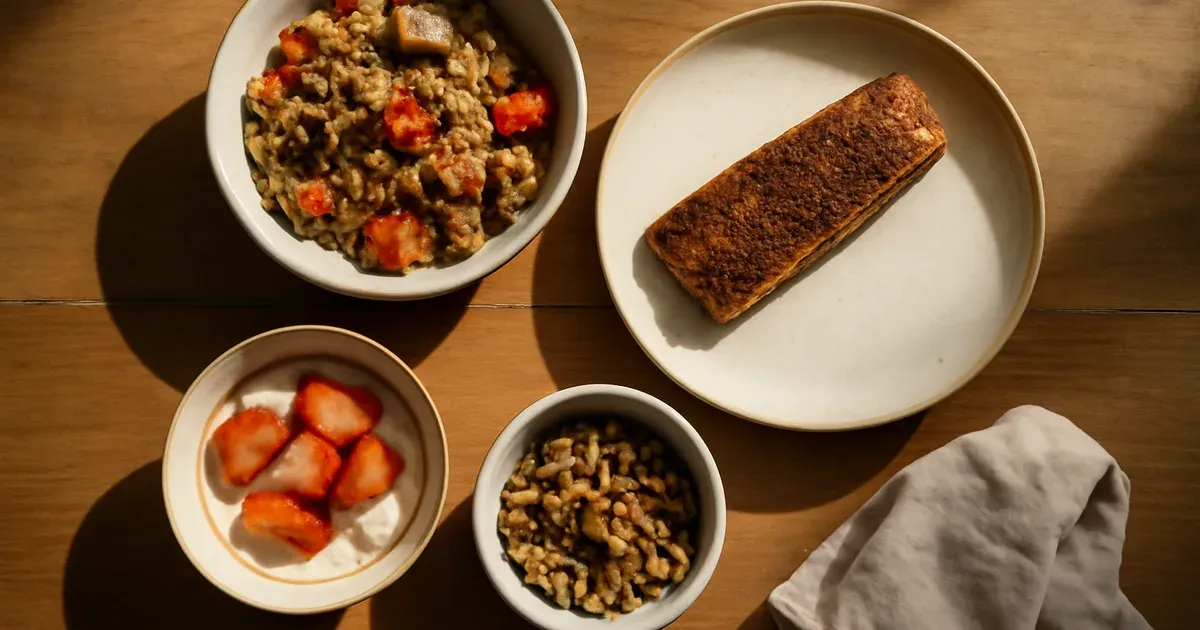
Breakfast: Swap sugary cereal for a crispy quinoa breakfast bowl with berries and chia seeds. Chia seeds provide omega-3 fatty acids and prebiotic fibre — a direct feed for gut bacteria. Half a cup of mixed berries adds anthocyanins, among the most potent polyphenols for gut health in the UK research literature.
Lunch: Build a plant-based pasta or grain salad using leftover batch-cooked grains, tinned legumes, cucumber, cherry tomatoes, avocado, and kalamata olives. Dress with extra virgin olive oil — the primary fat of the Mediterranean diet, rich in monounsaturated fats and oleocanthal, a natural anti-inflammatory compound.
Afternoon snack: Pair celery with almond butter, or enjoy a small pot of plain yogurt with a teaspoon of honey or maple syrup. This combination provides protein, fibre, and live cultures in a format that requires no cooking whatsoever.
Dinner: Flaxseed-crusted salmon with roasted vegetables is a template worth returning to weekly. Oily fish such as salmon, mackerel, and sardines are among the richest dietary sources of long-chain omega-3 fatty acids, which the NHS and British Nutrition Foundation both recommend specifically for their role in reducing inflammation.
Spice everything generously. Ginger, turmeric, garlic, cinnamon, rosemary, and thyme are rich in phytochemicals with antioxidant and anti-inflammatory properties. A review in the journal Food & Function confirmed that culinary herbs and spices contribute meaningfully to total polyphenol intake — a direct benefit for both joint inflammation and gut microbiome diversity.
Step 5: Match Your Meal Prep to Your Energy, Not the Ideal Week
Arthritis does not follow a calendar. Some weeks you will batch cook four dishes on a Sunday afternoon. Others you will open a tin of chickpeas, mash them with olive oil, lemon, and garlic, and call it a meal. Both are valid. The key is to remove the binary of "proper cooking" versus "giving up" — and replace it with a spectrum of effort where every point on the scale still serves your gut and your joints.
The NHS self-management framework for long-term conditions emphasises flexibility and pacing — the same principles apply to nutrition. Take advantage of lower-pain windows for bigger prep sessions, and have your convenience store (Step 2) ready for the harder days.
Build in variety across the week rather than perfection each day. The gut microbiome responds to cumulative dietary diversity over time. Eating 30 different plant foods across seven days — a target popularised by the British Gut Project — does not require a Michelin-star kitchen. A handful of mixed nuts, a different salad leaf, an extra sprinkle of seeds, a new tinned bean: these are the micro-decisions that, collectively, transform your microbiome UK-wide research continues to show matter most.
What to Expect: A Week-by-Week Guide
Week 1 — Foundations: Focus only on Step 1 and Step 2. Simplify one recipe and restock your cupboards and freezer. Notice which meals cause the most pain to prepare and identify where convenience alternatives can stand in.
Week 2 — First batch cook: Pick one day with lower pain and try your first batch-cook session. Even one large pot of soup and a tray of roasted veg counts. Observe how differently the week feels when lunch is already sorted.
Weeks 3–4 — Diversify: Begin adding one new plant food per week. Swap white pasta for whole-grain, add a tablespoon of ground flaxseed to your morning oats, try a different tinned legume. Each addition feeds a slightly different bacterial community in your gut.
Month 2 onwards — Rhythm and reflex: Meal prep becomes a rhythm rather than a chore. Many people report reduced bloating, improved energy, and a subjective sense of reduced joint stiffness at this point — consistent with what microbiome research predicts as microbial diversity improves and SCFA production increases.
Mistakes That Slow Your Progress
- Overcomplicating early recipes. A ten-ingredient sheet-pan meal is anti-inflammatory. A thirty-ingredient recipe that leaves your hands aching is counterproductive, however nutritious it looks on paper.
- Ignoring fermented foods. Many UK adults focus on fruits, vegetables, and omega-3s but overlook live-culture dairy and fermented foods — missing a direct route to microbiome improvement.
- All-or-nothing thinking. Missing a batch-cook session is not failure. It is Tuesday. Keep your convenience store stocked and move on.
- Relying on supplements alone. Omega-3 capsules and probiotic supplements have their place, but they cannot replicate the complexity of whole-food sources. The synergy between fibre, polyphenols, and live cultures in real food is what drives lasting change.
- Not seeking professional guidance. A Registered Dietitian (RD) — searchable via the British Dietetic Association directory — can tailor portion sizes, flag nutrient gaps, and adapt the plan to any other health conditions you manage alongside arthritis.
What Can Help You Get There Faster
Recipe resources aligned with UK dietary guidelines: The British Nutrition Foundation and NHS Live Well pages offer free, evidence-based recipe guidance. Look specifically for Mediterranean-style and plant-forward recipes that align with the UK Eatwell Guide.
Meal prep tools that protect your joints: Slow cookers and electric pressure cookers (such as the Instant Pot, widely available in the UK) allow batch cooking with minimal standing time and almost no active stirring. Silicone jar openers, electric can openers, and pre-portioned freezer containers reduce hand and wrist strain significantly.
Gut health tracking and community: The British Gut Project (now part of the ZOE citizen science programme) offers microbiome testing and data-backed dietary advice rooted in UK population science. Understanding your own microbial profile can help prioritise which dietary changes will have the most personalised impact on your gut health in the UK context.
Your Quick-Reference Summary
✅ Keep recipes to five to ten ingredients to protect joints and reduce fatigue ✅ Stock your kitchen with frozen veg, tinned legumes, and fermented foods as a backup layer ✅ Batch cook on your best-energy day — even one pot counts ✅ Improve one meal or snack at a time; start where effort feels most manageable ✅ Match prep sessions to your pain and fatigue levels — flexibility is the strategy ✅ Aim for 30 different plant foods across the week to maximise gut microbiome diversity ✅ Include oily fish at least once a week for long-chain omega-3s ✅ Use anti-inflammatory spices generously — they also feed gut bacteria ✅ Consult a Registered Dietitian (BDA-registered) for personalised guidance
Ready to Transform Your Plate — and Your Gut?
Every meal is a message to your microbiome. The changes you make this week — a tin of lentils here, a handful of walnuts there, a jar of kefir in the fridge — accumulate into a measurably different bacterial ecosystem within weeks. For people with arthritis living in the UK, that ecosystem shift can mean less inflammation, better energy, and a quieter nervous system. Start small. Start today.
You might also like
- How to Boost GLP-1 Naturally for Gut Health
- How to Improve Gut Health Naturally (No Fad Diets)
- Gut-Brain Connection & Psychedelics: Your Questions Answered
Frequently Asked Questions
Is an anti-inflammatory diet recommended by the NHS for arthritis?
The NHS acknowledges the role of diet in managing arthritis symptoms, particularly in reducing inflammation. While the NHS does not prescribe a single "anti-inflammatory diet," its guidance supports eating patterns high in fruit, vegetables, fibre, and oily fish — all central to the approach described here. For personalised dietary advice, the NHS pathway recommends referral to a Registered Dietitian.
How quickly can changing my diet improve gut health?
Research suggests the gut microbiome can begin to respond to dietary changes within 48–72 hours, though meaningful, stable changes in microbial diversity typically emerge over two to four weeks of consistent eating. Studies associated with the British Gut Project and the ZOE PREDICT research suggest that dietary diversity — particularly plant variety — is one of the fastest levers you can pull to improve gut health naturally.
Which foods are most important for the gut-brain connection in an arthritis diet?
Fermented foods, prebiotic fibre, and omega-3 fatty acids are the three most evidence-backed categories for supporting the gut-brain axis. Fermented yogurt and kefir introduce beneficial bacteria; prebiotic fibre from lentils, oats, barley, and chicory feeds them; and omega-3s from oily fish reduce the neuroinflammation that can intensify pain perception via the gut-brain connection.
Can meal prepping on a tight budget still support gut health in the UK?
Absolutely — some of the best gut-health foods are among the cheapest in British supermarkets. Dried lentils, tinned chickpeas, porridge oats, frozen spinach, tinned sardines, and natural yogurt are all budget-friendly and consistently available in UK supermarkets including Aldi, Lidl, and Tesco. The British Nutrition Foundation's budget eating guidance confirms that fibre-rich, plant-forward diets need not be expensive.
Do I need to take probiotic supplements if I eat fermented foods?
For most healthy adults in the UK, a diet rich in fermented foods and prebiotic fibre provides adequate support for gut microbiome diversity without supplementation. Probiotic supplements may offer targeted benefits in specific clinical situations — for example, following a course of antibiotics — but they cannot replicate the full complexity of whole-food sources. Discuss supplementation with your GP or a Registered Dietitian before investing.
96 Bacterial Strains. Two Shots a Day.
GOODIE is an award-winning fermented drink with 96 live bacterial strains — more than any yogurt or kombucha — never pasteurised, clinically tested, and 8 in 10 users felt less bloating within 14 days. Curious?