7 Body Type Truths You Need to Know
Discover how your body type and gut microbiome are connected — and how to use both to improve gut health naturally in the UK.


You train hard, eat reasonably well, and still feel like your body isn't responding the way it should. Sound familiar? Whether you struggle to build muscle, can't shift stubborn fat, or feel like your energy crashes after every meal, your body type — and your gut — may hold more answers than you realise. Understanding both could be the missing link between effort and real, lasting results. Don't skip this — the science is more connected than you'd expect.
Research confirms that somatotype (your body type) can predict up to a third of your strength potential, and emerging UK microbiome research from institutions like King's College London suggests that gut bacteria composition significantly influences metabolism, energy, and even mood — all factors that shape how your body responds to food and exercise.
1. Your Body Type Is a Real, Measurable Starting Point
Somatotypes aren't pseudoscience — at least not entirely. The three classic categories (ectomorph, mesomorph, and endomorph) were developed in the 1940s, and while parts of the original system have been debunked, contemporary research has confirmed meaningful links between body type and physical performance. A 2018 study in PLoS One found that mesomorphs outperformed ectomorphs on strength tests, with body type predicting roughly one-third of strength potential. Your body type is your baseline — not your ceiling.
Actionable takeaway: Before you overhaul your diet or training, take stock of your natural build. Knowing your starting point helps you set realistic, motivating goals rather than chasing someone else's results.
2. Ectomorphs Have a Fast Metabolism — But Their Gut Microbiome May Be Why
Ectomorphs tend to be naturally lean, with narrow frames, long limbs, and a frustratingly fast metabolism that resists weight and muscle gain. People in this category are often called "hardgainers" — they can eat large amounts and barely shift the scales. But the reason isn't purely genetic. Your gut microbiome plays a significant role in how efficiently your body extracts calories from food.
Research from King's College London — including work connected to the British Gut Project — has shown that microbiome diversity influences caloric absorption. Ectomorphs may harbour bacterial populations that are less efficient at energy extraction. Actionable takeaway: If you're an ectomorph trying to gain mass, focus not just on eating more, but on consuming fermented foods, diverse fibres, and prebiotic-rich vegetables to optimise your gut's ability to support muscle-building processes.

3. Mesomorphs Bounce Back Faster — But Gut Health Still Matters
Mesomorphs have the "middle ground" build — wide shoulders, narrow waist, round muscle bellies, and a natural tendency toward fitness. They tend to gain muscle and lose fat more easily than the other types, and can often recover from periods of inactivity more quickly. This can create a false sense of security around diet and lifestyle choices.
Even a naturally responsive body is affected by gut dysbiosis — an imbalance in the microbiome UK researchers have linked to inflammation, poor nutrient absorption, and disrupted energy regulation. The gut-brain connection also means that chronic stress and poor sleep (common in gym-focused individuals) can degrade your microbiome over time. Actionable takeaway: Mesomorphs should treat gut health as maintenance, not an afterthought — prioritising fibre intake, hydration, and sleep to keep that natural advantage working.
4. Endomorphs Don't Have a "Broken" Metabolism — Their Gut May Need Support
Endomorphs tend to gain weight more easily and struggle to lose it. Their build is typically wider — thicker ribcage, broader hips, shorter limbs — and their metabolism runs slower. In the UK, this body type is often unfairly stigmatised, but the British Dietetic Association (BDA) emphasises that metabolic rate is highly individual and modifiable. Endomorphs may actually carry more baseline muscle than other types, which is a genuine strength advantage.
Importantly, the gut microbiome of endomorphs may be predisposed to more efficient calorie extraction — the opposite of the ectomorph pattern. UK Biobank data and related microbiome UK studies suggest associations between certain bacterial profiles and increased fat storage. Actionable takeaway: Endomorphs benefit from a high-fibre diet aligned with the NHS Eatwell Guide, which supports a more balanced microbiome and can help regulate appetite hormones like leptin and ghrelin.
"Your gut microbiome is as unique as your fingerprint — and in the UK, research from the British Gut Project has shown that diet is the single most powerful tool for shaping it."
An estimated 13.6 million people in the UK are living with digestive problems, according to NHS data — many of whom may be unknowingly working against their own body type through poor gut health.
5. The Gut-Brain Connection Affects Every Body Type's Training Response
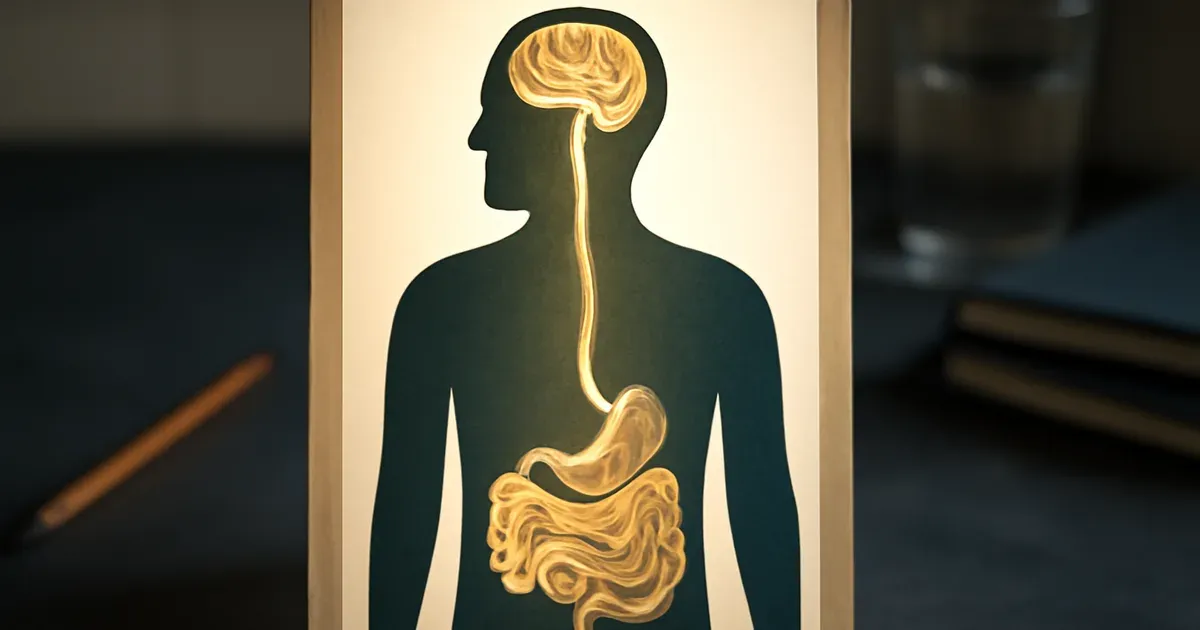
The gut-brain axis is a two-way communication highway between your digestive system and your brain, operating via the vagus nerve, immune signals, and neurotransmitters like serotonin — around 90% of which is produced in the gut. This connection directly affects motivation, recovery, perceived effort during exercise, and even how much you want to train. Poor gut health doesn't just affect digestion; it affects your drive to move.
For all three body types, chronic gut inflammation or dysbiosis can blunt the neurological rewards of exercise, making it harder to stay consistent. Research from UCL and the MRC has explored how gut bacteria influence stress hormones like cortisol, which in turn affects fat distribution and muscle recovery. Actionable takeaway: Improve gut health naturally by incorporating a daily dose of fermented foods (kefir, live yoghurt, kimchi) alongside a variety of plant-based fibres — aiming for 30 different plant foods per week, as recommended by gut health researchers in the UK.
6. Diet Can Actually Change Your Somatotype Over Time
Your body type is not fixed for life. Research has shown that consistent dietary changes and training can shift your body's composition and functional characteristics over months and years. The NHS recognises that sustained lifestyle interventions produce measurable metabolic change — meaning an endomorph can develop a faster metabolism, and an ectomorph can build a more muscular frame than their genetics initially suggested.
The British diet gut health connection is critical here. The typical UK diet — often low in fibre and high in ultra-processed foods — can entrench the worst characteristics of each body type by promoting gut dysbiosis, systemic inflammation, and poor hormonal signalling. Actionable takeaway: Shift incrementally toward a gut-supportive British diet gut health pattern: more wholegrains, legumes, seasonal vegetables, and fermented dairy. Even small changes compound powerfully over 12 weeks.
7. Knowing Your Body Type Helps You Personalise Your Microbiome Strategy
One-size-fits-all gut health advice ignores a fundamental truth — different metabolic profiles need different microbiome support strategies. An ectomorph may need to prioritise calorie-dense prebiotic foods to fuel both gut bacteria and muscle growth. A mesomorph benefits from maintaining microbial diversity to preserve their metabolic flexibility. An endomorph may need to focus on short-chain fatty acid production through resistant starch and soluble fibre to support insulin sensitivity.
UK microbiome research from the University of Reading and Imperial College London has highlighted how personalised dietary approaches outperform generic guidelines for body composition and metabolic health. The emerging field of precision nutrition — now being explored through NHS pilot programmes — aims to match dietary advice to individual gut profiles. Actionable takeaway: Use your body type as a lens to improve gut health naturally, tailoring your fibre sources, fermented foods, and meal timing to your body's specific metabolic tendencies.

Understanding your body type and your gut microbiome aren't separate pursuits — they're two sides of the same coin. Whether you're an ectomorph chasing gains, a mesomorph maintaining an edge, or an endomorph building sustainable leanness, your gut bacteria are active participants in every step. The science is clear: gut health UK is not a wellness trend — it's foundational biology. Start with your body type, support your microbiome, and work with your body rather than against it.
You might also like
- 7 High-Fibre Foods That Also Boost Your Gut Health
- How to Improve Gut Health Naturally in 6 Steps
- Gut Health UK: Improve Your Microbiome Naturally
Frequently Asked Questions
Can my gut microbiome really affect my body type?
Yes — and the evidence is growing. While your somatotype has a genetic component, UK microbiome research increasingly shows that the composition of your gut bacteria influences how efficiently you absorb calories, how your body stores fat, and how effectively you build muscle. This means two people with the same body type and diet can have very different outcomes based on their microbiome diversity.
How can I improve gut health naturally at home in the UK?
The most evidence-backed approach is to increase the diversity of plant foods in your diet — gut researchers recommend aiming for 30 different plant-based foods per week. Alongside this, incorporating fermented foods such as live yoghurt, kefir, sauerkraut, and kimchi helps introduce beneficial bacteria. The NHS Eatwell Guide provides a solid foundation, with an emphasis on wholegrains, legumes, and vegetables.
Is the gut-brain connection relevant if I'm just trying to lose weight?
Absolutely. The gut-brain axis regulates appetite hormones, stress responses, and motivation — all of which directly influence eating behaviour and exercise adherence. Poor gut health can increase cortisol levels, disrupt sleep, and heighten cravings for ultra-processed foods. Addressing your gut health is not separate from a weight management goal — it's central to it.
Are somatotypes (body types) scientifically valid?
Partially. The original somatotype system developed in the 1940s has been criticised, and some of its psychological claims have been debunked. However, the physical classifications retain some scientific utility. Contemporary research has confirmed that body type correlates with athletic performance and metabolic tendencies, making it a useful (if imperfect) starting framework for personalising diet and exercise strategies.
Does the NHS offer any gut health support or testing in the UK?
NHS gut health pathways primarily address diagnosed conditions such as IBS, IBD, and coeliac disease. For general microbiome optimisation, the NHS Eatwell Guide offers dietary foundations, and NHS-affiliated researchers are involved in ongoing studies through initiatives like the UK Biobank and British Gut Project. Private microbiome testing is also available in the UK, though clinical guidelines on interpreting results are still evolving.
96 Bacterial Strains. Two Shots a Day.
GOODIE is an award-winning fermented drink with 96 live bacterial strains — more than any yogurt or kombucha — never pasteurised, clinically tested, and 8 in 10 users felt less bloating within 14 days. Curious?